Summary
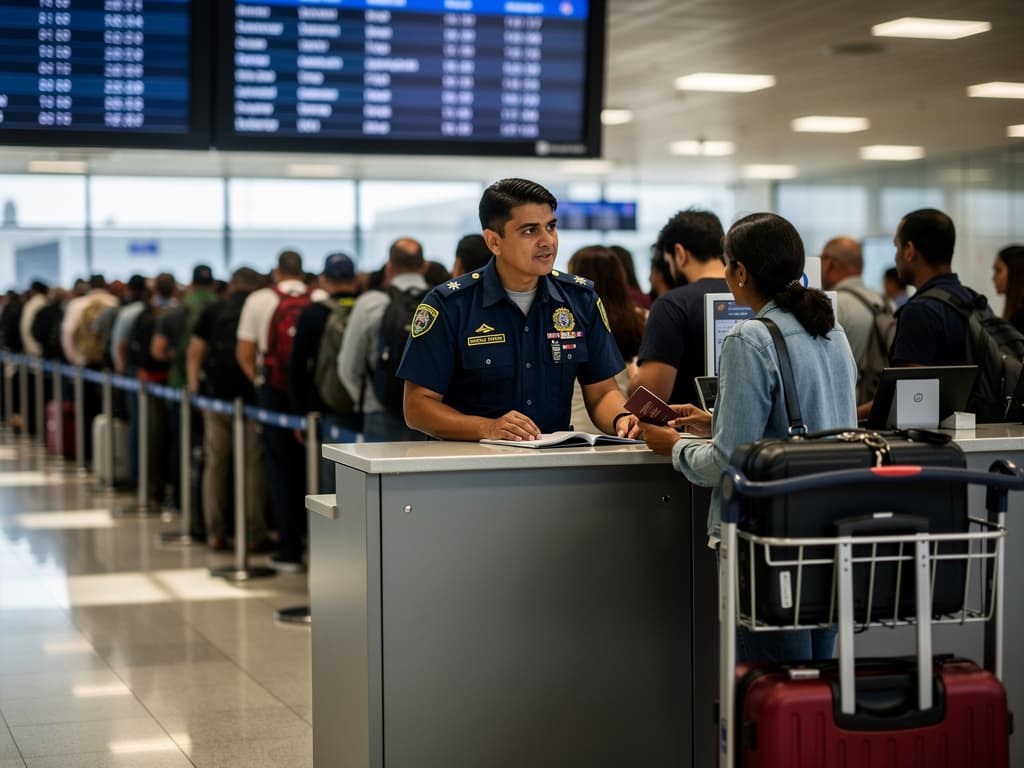
The European Union’s temporary suspension of biometric passport checks at overcrowded airports will expire in early September, risking a return to hours-long queues that have already caused missed flights at Athens and other Schengen gateways. Wait times at Athens International Airport have reached two hours, with one passenger reporting moving only about 30 metres in over an hour—forcing the airport to advise arrivals at least two and a half hours before departure.
The waiver, which allowed border police to skip fingerprint and facial scans during peak periods, ends with no permanent fix in place. Non-EU passport holders face the most direct impact as the system snaps back to full enforcement just as early-autumn business and leisure travel overlap.
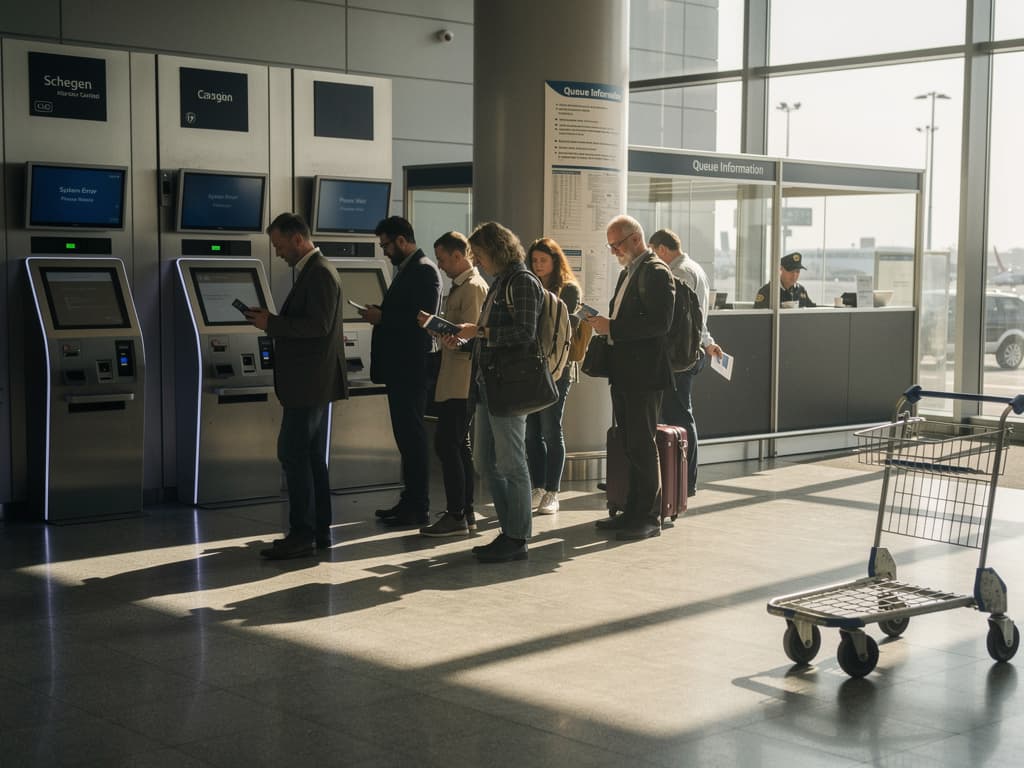
Passengers transiting Athens International Airport are enduring waits of up to two hours at passport control as the European Union’s Entry/Exit System strains under peak summer volumes. The Greek hub joins a growing list of Schengen gateways where biometric checks launched in April have overwhelmed border infrastructure, triggering operational chaos and a temporary relaxation of rules that now hangs in the balance.
With the European Commission’s permissive arrangement for member states to suspend biometric collection set to lapse in early September, airports face a binary choice: absorb the full processing burden or watch queues spiral again. Since the system’s April 10 go-live, scenes of serpentine lines at Athens, Faro, Tivat, and Kos have exposed systemic understaffing and unreliable kiosks.
The disruption has been most acute for non-EU travellers—from British holidaymakers to North American and Australian business flyers—who must register fingerprints and facial images the first time they cross an external Schengen border. A notice on the Athens airport website now recommends arriving at least two and a half hours prior to departure, though passenger anecdotes push that window to four hours. Airlines are also warning that they will not delay flights for passengers stuck in border queues, a stance made explicit by Ryanair’s CEO.
The EU Entry/Exit System was designed to tighten security and track overstays, but its operational rollout has become a stress test that the continent’s airports were not fully prepared to meet.
Processing gridlock and the expiration countdown
The EU’s temporary flexibility, granted under a European Commission agreement, let border police halt biometric checks when passenger volumes exceeded processing capacity. That relief has masked the severity of the problem. At Athens, the official guidance now factors in EES-related delays, but actual conditions can be far worse: queues have exceeded 90 minutes routinely, with peak days stretching past two hours, according to traveler reports aggregated by independent monitoring platforms.
A Guardian report citing a Greek airports boss confirmed that border police can suspend biometric checks at peak times, but that flexibility is set to lapse in September. Without an extension, every non-EU passport holder will again face the full procedure—fingerprint and facial-image capture—at every Schengen entry point, just as late-summer and early-autumn traffic keeps airports busy.
The operational strain has already drawn industry warnings about chronic understaffing, kiosk malfunctions, and passenger volumes that outstrip processing capacity. Airlines and airport associations have flagged these issues as threats to on-time performance and passenger experience. For passengers, the daily reality is captured in reports like those from Wego Travel Blog, which documented Athens peak waits hitting 2.5 to 3 hours during the summer crush.
| Date | Event | Impact | Status |
|---|---|---|---|
| 10 April 2026 | EU Entry/Exit System launches | Mandatory biometric checks for non-EU travellers cause immediate bottlenecks at multiple airports | Active |
| May–July 2026 | Member states deploy temporary biometric waiver | Airports intermittently suspend fingerprint/facial scans during peak hours, easing queues but masking underlying capacity gaps | Permitted |
| July 2026 | Greek airports boss warns checks are “unpleasant and dangerous” | Call for overhaul highlights systemic understaffing and kiosk reliability issues at Athens and other Greek gateways | Ongoing |
| Early September 2026 | EU temporary waiver expires (expected) | Full biometric enforcement likely returns; queues may surge at all Schengen airports unless extra resources are deployed | Pending |

Flight deals most people never see
Our AI monitors 150+ airlines for pricing anomalies that traditional search engines miss. Air Traveler Club members save $650 per trip per person on average: see how it works.
Each deal saves 40–80% vs. regular fares:

Why premium fares don’t shield you from passport control
The Athens bottleneck underscores a structural gap in premium travel: a business-class ticket or elite status offers no meaningful bypass at passport control unless you hold an EU, EEA, or Swiss passport eligible for e-gates. The airport’s self-service lanes are nationality-gated, not fare-gated. That means even the most expensive itineraries are just as exposed to multi-hour ground delays as leisure economy passengers.
This dynamic elevates the importance of travel insurance and credit card trip-delay benefits. Air Traveler Club’s examination of the TSA shutdown crisis in the US revealed how operational strain at screening points can cascade across an entire itinerary—and those same patterns are now echoing in Europe’s biometric border rollout.
How to stress-test your European itinerary before September
As the September waiver deadline approaches, travelers with non-EU passports should stress-test their European itineraries against the worst-case processing times being reported at major Schengen airports.
- Review your passport type and e-gate eligibility. Athens and many EU airports restrict automated lanes to EU/EEA/Swiss nationals. If you don’t qualify, factor in a manual processing buffer of at least two hours during peak periods, and confirm the latest advice from your departure airport’s website.
- Verify cancellation and rebooking policies now. Contact your airline or open your booking management page to understand your rights if you miss a flight because of border delays. Ryanair has already indicated it will not hold aircraft, making proactive rebooking essential.
- Priority boarding does not equal priority passport control. Most Schengen airports lack dedicated fast-track lanes for premium cabin passengers. Build extra time into your airport arrival and consider purchasing lounge access to make the wait more manageable.
- Check your credit card trip-delay coverage. Premium cards like the Chase Sapphire Reserve or Amex Platinum can reimburse meals, accommodations, and rebooking fees after delays typically of six hours or more—coverage that becomes relevant if queues balloon again in September.
- Monitor the waiver decision. A snapback to full biometric enforcement at all checkpoints would affect not just Athens but every Schengen gateway serving non-EU passengers. Adjust your arrival plans and consider flexible tickets for early-autumn travel.
Watch the first days of September closely; as airports reinstate full checks, fresh reports from Athens, Faro, and other Mediterranean hotspots will signal whether the system can handle the load.
FAQ
Do priority lanes or business-class tickets help me skip passport queues at Athens?
No. Athens International Airport’s e-Passport self-service lanes are open only to EU, EEA, and Swiss nationals over age 12. A premium cabin fare or elite status does not grant access to a separate, faster queue. All other passengers must go through standard passport control, where EES biometric procedures apply.
When exactly does the EU’s temporary biometric waiver expire?
The European Commission’s agreement allowing member states to intermittently suspend biometric checks is expected to end in early September 2026. No official extension has been announced. The exact date will be set by the Commission, and airports could return to full enforcement immediately thereafter.
What should I do if I miss my flight because of border queues?
Open your airline’s manage-booking page and contact the carrier’s reservations line immediately. If you have travel insurance or a premium credit card with trip-delay protection, file a claim for rebooking fees, meals, and accommodation, keeping all receipts. Many policies require a delay of six hours or more before benefits kick in, so review your specific terms before departing.
Read more