Summary
The European Commission’s summer suspension of biometric border checks expired on September 6, 2026, reinstating full Entry/Exit System requirements for non‑EU travelers at all Schengen airports. Ryanair has formally demanded the Commission restore that flexibility through April 2027, citing malfunctioning kiosks, staffing shortages, and e‑gate restrictions that caused two‑to‑four‑hour queues at airports including Milan, Lisbon, Rome, and Krakow this summer.
The airline warns passengers should not bear the cost of an unfinished rollout, and with no pre‑arrival action available, premium cabin or lounge access offers no bypass at the border. Travelers entering the Schengen Area this autumn face unpredictable processing times unless the EU acts.
For non‑EU travelers entering the Schengen Area, the brief summer reprieve from biometric border checks is over. As of September 6, the European Commission’s temporary flexibility that allowed airports to suspend the Entry/Exit System during peak congestion has expired, forcing all third‑country nationals back into full EES registration upon arrival.
Ryanair, Europe’s largest low‑cost carrier, has now publicly tied the operational failures — kiosk malfunctions, staffing gaps, and inconsistent e‑gate access — to a formal demand for an extension through April 2027, making it the first major airline to put a hard timeline on fixing the system. The airline’s chief operating officer described the EU’s handling of the rollout as “a shambles from start to finish,” warning that passengers should not be made to pay the price.
The change affects US, UK, Canadian, Australian, and New Zealand passport holders, who must now register biometrics at self‑service kiosks and then queue for an immigration officer, with no premium‑cabin or loyalty‑status shortcut. During summer 2026, wait times reached two to three hours at several airports, with peaks above four hours at some locations. The end of the suspension means those delays return just as autumn travel ramps up.
The details
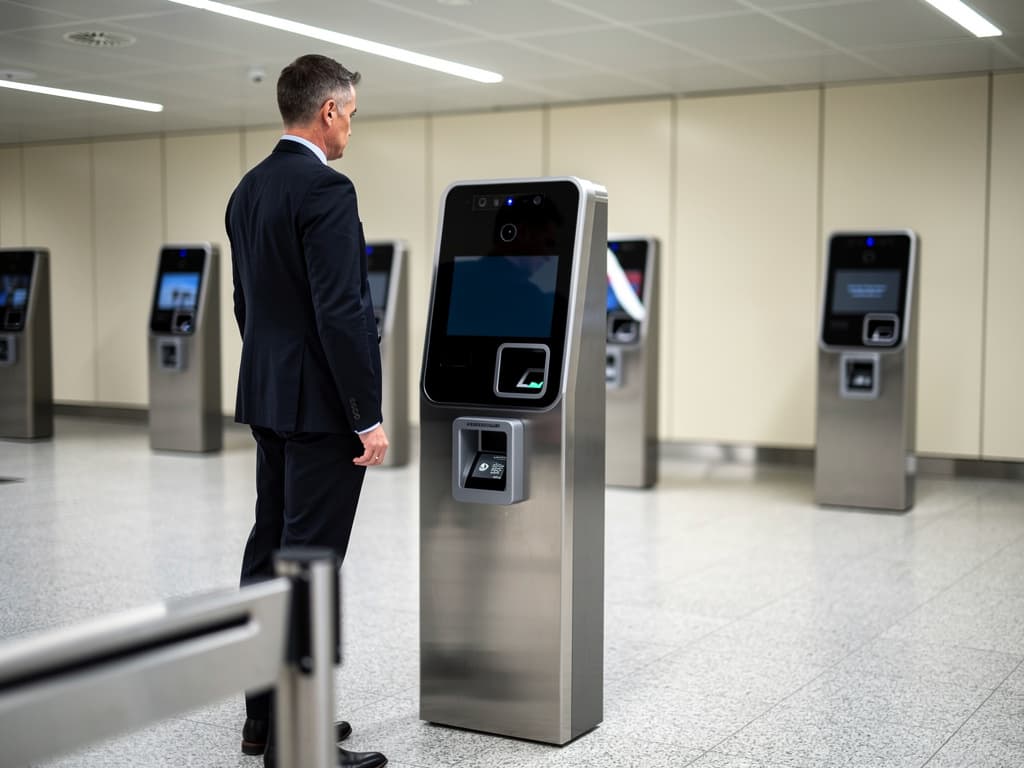
The Entry/Exit System replaces manual passport stamping with a shared EU‑wide database, applying to all non‑EU/EEA/Swiss nationals. Travelers must register biometrics — typically a face photograph and fingerprints — at a self‑service kiosk each time they arrive, then still line up to see an immigration officer for the final entry decision. Some EU governments allow non‑EU travelers to use e‑gates after registration, while others restrict e‑gates to EU citizens only, creating a second queue.
Ryanair formally asked the European Commission to reinstate the suspension flexibility and extend it through at least April 2027, citing ongoing kiosk failures, regional staffing shortages, and excessive processing times. The airline had previously pressed governments to pause the rollout during peak summer, indicating the current dispute is part of a longer readiness fight rather than a one‑off breakdown.
| Airport | Typical wait (summer 2026) | E‑gate access for non‑EU travelers | Notes |
|---|---|---|---|
| Milan (MXP/LIN/BGY) | 2–3 hours, peaks >4 hours | Varies; some terminals restrict e‑gates to EU citizens | Kiosk malfunctions reported |
| Lisbon (LIS) | 2–3 hours | Limited; often EU‑only | Staffing shortages cited |
| Rome (FCO/CIA) | 2–3 hours | Restricted in many lanes | Peak congestion during morning arrivals |
| Krakow (KRK) | 2–3 hours | Not consistently available | Smaller airport, fewer kiosks |

Flight deals most people never see
Our AI monitors 150+ airlines for pricing anomalies that traditional search engines miss. Air Traveler Club members save $650 per trip per person on average: see how it works.
Each deal saves 40–80% vs. regular fares:

The value-add
This is a floor issue, not a cabin issue. Premium‑economy, business‑class, first‑class, and loyalty elites all hit the same bottleneck once they reach passport control. The practical pinch point is the Schengen border hall, where the premium advantage stops unless an airport offers faster automated processing for some non‑EU arrivals. Ryanair’s complaints highlight the opposite end of the spectrum — queue management that remains unstable even after the system’s full deployment in April 2026.
The closest comparisons are other Schengen hubs where border processing is more established. London‑origin premium travelers connecting through Amsterdam, Paris, or Frankfurt will care most about whether the airport allows e‑gates for eligible arrivals. The airports Ryanair named — Milan, Lisbon, Rome, Krakow — sit at the strained end of that spectrum, and the airline’s demand for an extension through April 2027 signals it sees the system as operationally unfit for full deployment without further fixes.
How to navigate Schengen border delays this autumn
For premium travelers whose status and cabin class offer no queue‑skipping at immigration, the EES bottleneck demands pre‑trip planning rather than in‑airport fixes.
- Pad your connection times aggressively. Add at least two hours to any Schengen arrival before a connecting flight, and three hours if arriving at Milan, Lisbon, Rome, or Krakow during peak periods. The risk of misconnecting is real, and airlines are not obligated to hold flights for immigration delays.
- Choose your entry airport strategically. If your itinerary allows, route through hubs with established e‑gate access for non‑EU travelers, such as Amsterdam Schiphol or Frankfurt. These airports have invested in automated processing and generally report shorter queues.
- Check airport‑specific guidance before departure. Each Schengen country sets its own e‑gate policy for third‑country nationals. The UK government’s EES page confirms no pre‑arrival registration is needed, but local airport websites often publish real‑time wait estimates and lane restrictions.
- Monitor the EU Commission’s next move. Ryanair’s demand for an extension through April 2027 is now on the table. If Brussels reinstates the suspension tool, border processing could temporarily ease again — but until an official decision is announced, plan for full checks.
Watch for any European Commission move to restore the suspension flexibility — if it happens, it signals airports have won more time to stabilize biometrics before the next peak season. Also watch for additional airline statements joining Ryanair; broader industry escalation would indicate systemic concern over Schengen entry bottlenecks.
FAQ
Does EES apply to me if I’m flying business class?
Yes. The Entry/Exit System applies to all non‑EU/EEA/Swiss nationals regardless of cabin class, airline status, or fare type. Biometric registration and the immigration officer queue are mandatory for every third‑country traveler entering the Schengen Area.
Can I use fast track or lounge access to skip the biometric queue?
No. Fast track lanes at airports typically expedite security screening, not immigration. Lounge access provides pre‑flight comfort but does not bypass border control. The EES kiosk and immigration officer queues are separate processes that all non‑EU travelers must complete.
Which Schengen airports allow non‑EU travelers to use e‑gates?
Policies vary by country. Some airports, like Amsterdam Schiphol and Frankfurt, extend e‑gate access to eligible non‑EU passport holders after biometric registration. Others, including many of the airports flagged by Ryanair, restrict e‑gates to EU citizens only. Check your arrival airport’s official website before travel.
What should I do if I miss my connection due to border delays?
Immediately contact your airline’s rebooking desk. While EU passenger rights regulations may offer assistance, compensation for delays caused by immigration processing is not guaranteed. Having a longer connection buffer is the most reliable safeguard.
Read more