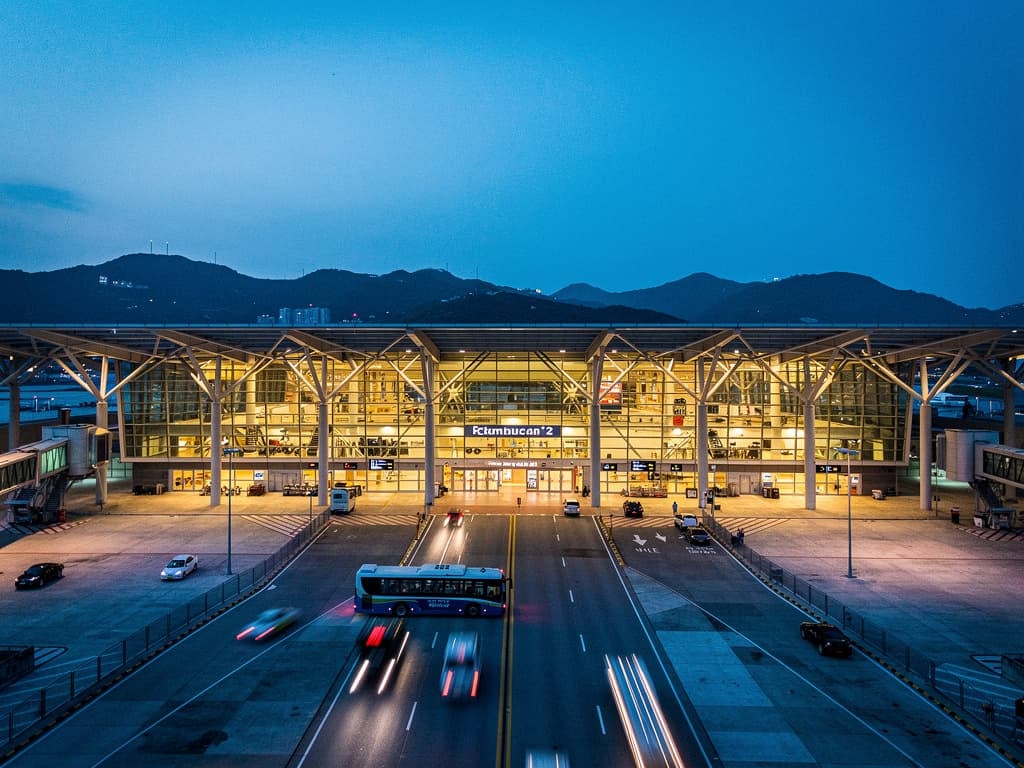
Summary
Noida International Airport in Jewar opened to commercial traffic on June 15, 2026, with IndiGo flight 6E-2278 becoming the first scheduled service to land — arriving from Lucknow before continuing to Bengaluru. Built under a Public–Private Partnership at a cost of approximately ₹11,200 crore, the airport enters Phase I with a capacity of 12 million passengers per annum and a 3,900-meter runway capable of handling wide-body aircraft, with a long-term buildout target of 70 MPPA.
The launch schedule is domestic-only, meaning Delhi NCR’s premium long-haul network remains anchored at Indira Gandhi International Airport for now. The critical question is whether airlines commit wide-body international service to Jewar within the next 12 months.
India’s most-watched airport infrastructure project just moved from ribbon-cutting to runway operations. Noida International Airport — built on farmland in Jewar, Gautam Buddha Nagar — received its first commercial landing on the morning of June 15, 2026, when IndiGo flight 6E-2278 touched down from Lucknow’s Chaudhary Charan Singh International Airport, inaugurated by Union Civil Aviation Minister Ram Mohan Naidu.
The symbolism ran deeper than the tarmac. Approximately 170 farmers from the Jewar region — including 20 women who surrendered their land for the project — boarded the inaugural return service to Lucknow to meet Chief Minister Yogi Adityanath, led by Jewar legislator Dhirendra Singh. It was a deliberate opening act: the people who made the airport possible were its first passengers.
For Delhi NCR’s aviation market, the operational significance is substantial even if the immediate premium impact is measured. Jewar gives the National Capital Region a second major airport for the first time, positioned to serve the eastern NCR corridor — Noida, Greater Noida, and western Uttar Pradesh — that has historically faced a long surface journey to IGI Airport.
The first published service — departing Noida at 8:35 a.m. and arriving Bengaluru at 11:05 a.m. — signals the airport’s opening posture: domestic connectivity first, international ambition later.
What the Jewar airport opening actually delivers
Phase I of Noida International Airport represents one of India’s largest greenfield aviation investments, developed under a PPP model at approximately ₹11,200 crore. The infrastructure spec is built for scale: a 3,900-meter primary runway with Instrument Landing System capability supports all-weather, round-the-clock operations and can handle the widest commercial aircraft currently in service.
The cargo ecosystem is equally ambitious. A Multi-Modal Cargo Hub with an Integrated Cargo Terminal is designed to process over 2.5 lakh metric tonnes annually, expandable to roughly 18 lakh metric tonnes at full buildout. A dedicated 40-acre MRO facility adds maintenance capacity that could attract airline basing decisions over time.
Architecturally, the terminal draws from Indian heritage — ghats and havelis inform the design language — while the operational framework targets net-zero emissions status, integrating energy-efficient systems throughout the facility.
| Parameter | Phase I (current) | Full buildout target | Status |
|---|---|---|---|
| Passenger capacity | 12 million MPPA | 70 million MPPA | Operational from June 15, 2026 |
| Runway length | 3,900 meters | Additional runways planned | Wide-body capable, ILS equipped |
| Cargo throughput | 2.5 lakh MT/year | 18 lakh MT/year | Integrated terminal operational |
| MRO facility | 40 acres dedicated | Expandable | Included in Phase I |
| Total PPP investment | ₹11,200 crore | Additional phases TBC | Phase I complete |

Flight deals most people never see
Our AI monitors 150+ airlines for pricing anomalies that traditional search engines miss. Air Traveler Club members save $650 per trip per person on average: see how it works.
Each deal saves 40–80% vs. regular fares:

The premium travel calculus for Delhi NCR flyers
India’s domestic capacity environment adds a layer of context to Jewar’s opening. Air Traveler Club’s reporting on Indian carrier capacity cuts documents how Air India, IndiGo, and Air India Express are trimming roughly 250 domestic flights daily through September 2026 — a fuel-cost-driven reduction that makes any new airport’s route-building task harder in the near term. Jewar opens into a market where airlines are conserving capacity, not expanding it freely.
That context shapes the realistic premium outlook. The airport’s infrastructure — a wide-body-capable runway, a scalable terminal, and a serious cargo hub — is built for a future that includes international flying. But the opening schedule reflects where airlines are today: cautious on new capacity, domestic-first, and watching demand signals before committing wide-body lift to an unproven catchment.
The 12-to-70 MPPA buildout range tells the real story. Jewar is designed to grow into a major hub, not to arrive as one.
What the Jewar opening means for NCR premium travelers over the next 12 months
The airport’s domestic-first launch is not a limitation — it is the standard playbook for major greenfield openings in India, and it sets a realistic timeline for when the premium impact becomes tangible. For frequent flyers and business-class travelers based in eastern NCR, the near-term opportunity is reduced surface travel time to domestic connections, with international optionality arriving later.
- Watch the airline roster: IndiGo’s domestic launch is the starting point. A second carrier — particularly a full-service airline with international ambitions — would signal that Jewar is building a genuine network, not just a single-carrier domestic spoke.
- Track international route announcements: The 3,900-meter runway can handle Boeing 777 and Airbus A350 operations today. The first wide-body international announcement — likely a Gulf hub or Southeast Asia connection — would mark the transition from domestic utility to premium-market relevance.
- Monitor IGI pressure: If Jewar absorbs meaningful domestic traffic from IGI, it could improve slot availability and reduce congestion at IGI — indirectly benefiting premium travelers who continue to use IGI for long-haul flying.
- Assess ground access: Surface connectivity to Jewar will shape how useful the airport becomes for NCR travelers. Watch for metro or expressway access developments that close the gap with IGI’s established transport links.
Watch for a premium carrier commitment — wide-body service, an international bank, or a Gulf hub tie-up — within the next 12 months. That announcement, if it comes, would mark the moment Noida International Airport moves from infrastructure milestone to genuine premium-travel option for Delhi NCR.
FAQ
Which airlines currently fly from Noida International Airport in Jewar?
As of the June 15, 2026 commercial launch, IndiGo is the sole confirmed carrier operating from Noida International Airport, with an initial domestic schedule linking Lucknow and Bengaluru. No additional airline commitments or international routes have been announced as of the opening date.
Does Noida International Airport offer international flights?
No international routes have been announced or confirmed for Noida International Airport as of its June 15, 2026 opening. The airport’s Phase I infrastructure — including a 3,900-meter wide-body-capable runway — is built to support international operations, but the launch schedule is domestic-only. International service will depend on airline demand assessments over the coming months.
How does Noida International Airport compare to IGI Airport for premium travelers?
Indira Gandhi International Airport remains the clear choice for premium and international travel from Delhi NCR. IGI supports the full international business-class network — including nonstop long-haul service from Air India, Emirates, Lufthansa, and Singapore Airlines — while Jewar currently offers only domestic connectivity via IndiGo. Jewar’s primary advantage today is geographic convenience for eastern NCR residents, not network depth.
Read more