Summary
The Boeing 787 Dreamliner now operates seven routes exceeding 8,400 miles in 2026, led by Qantas‘ Perth–London Heathrow service at 8,988 miles with daily frequencies offering 81,420 outbound seats annually. United Airlines dominates trans-Pacific ultra-long-haul capacity with San Francisco–Singapore generating 1.58 billion available seat miles despite ranking seventh by distance, while Melbourne–Dallas/Fort Worth at 8,973 miles operates just 193 annual flights reflecting premium-focused scheduling over mass-market volume.
These routes represent the outer limits of 787-9 range capabilities at approximately 7,635 nautical miles, with flight times reaching 18 hours depending on jet stream patterns. Award space on low-frequency services like Dallas/Fort Worth–Sydney requires booking 330 days in advance.
When Boeing launched the 787 Dreamliner program in 2004 following a massive order from All Nippon Airways, the design brief centered on opening point-to-point routes that previously required stopover refueling or deployment of larger four-engine aircraft. That ambition materialized into operational reality by 2018, when Qantas inaugurated nonstop Perth–London service.
The International Air Transport Association projects global air travel will more than double by 2050, increasing from 9 trillion passenger kilometers in 2024 to approximately 20.8 trillion. This demand trajectory positions ultra-long-haul 787 routes as critical infrastructure for premium travel markets connecting Australia, North America, Europe, and Asia-Pacific hubs.
Analysis of 2026 operational data reveals seven routes where the 787 operates at maximum range capabilities, with stage lengths between 8,440 and 8,988 miles. These services concentrate on Qantas‘ Australia–North America network and United Airlines‘ trans-Pacific operations, supplemented by Air New Zealand‘ sole New York–Auckland connection.
The routes demonstrate divergent capacity strategies: high-frequency services like San Francisco–Singapore prioritize available seat miles through 730 annual flights, while low-frequency operations such as Dallas/Fort Worth–Sydney at 19 annual flights target premium business demand with minimal schedule dilution.
The seven longest 787 routes in operation
Perth–London Heathrow anchors the list at 8,988 miles average stage length, operating daily on Qantas 787-9 aircraft with 81,420 outbound seats generating 731,802,960 available seat miles annually. The route evolved from the historic “Kangaroo Route” that began in 1947 with four-day journeys requiring nine refueling stops, progressing through single-stop 747 operations before achieving nonstop capability on March 25, 2018.
Melbourne–Dallas/Fort Worth ranks second at 8,973 miles with 193 annual flights in both directions, offering 45,548 seats per direction and 408,702,204 available seat miles. Jet stream patterns create significant directional time variance: eastbound flights from Melbourne complete the sector in approximately 15 hours 45 minutes, while westbound returns from Dallas require 17 hours 15 minutes fighting headwinds at cruise altitude.
Perth–Paris Charles de Gaulle operates at 8,847 miles with 156 outbound and 157 return flights annually, generating 325,711,152 outbound available seat miles and 327,799,044 on return sectors. The directional variance reflects scheduling optimization for fleet utilization, time zone management, and crew rotation requirements across Qantas‘ European network.
| Route | Airline | Stage length | Annual flights |
|---|---|---|---|
| Perth–London Heathrow | Qantas | 8,988 miles | 365 each direction |
| Melbourne–Dallas/Fort Worth | Qantas | 8,973 miles | 193 each direction |
| Perth–Paris CDG | Qantas | 8,847 miles | 156 outbound, 157 return |
| New York JFK–Auckland | Air New Zealand | 8,813 miles | 362 each direction |
| Sydney–Houston | United Airlines | 8,587 miles | 154 each direction |
| Dallas/Fort Worth–Sydney | Qantas | 8,569 miles | 19 each direction |
| San Francisco–Singapore | United Airlines | 8,440 miles | 730 each direction |
New York JFK–Auckland operates at 8,813 miles with 362 annual flights generating 83,970 seats and 740,027,610 available seat miles. Air New Zealand launched the route in September 2022 after pandemic-related delays, with the inaugural flight from Auckland carrying the prestigious NZ2 flight number typically reserved for flagship services. The first return flight from JFK encountered operational drama when strong headwinds forced route adjustments, requiring offloading of approximately 65 passengers’ checked luggage to accommodate additional fuel reserves.
Sydney–Houston ranks fifth at 8,587 miles with 154 annual flights offering 39,578 seats and 339,856,286 available seat miles. The service functions as a feeder into United Airlines‘ extensive domestic network at George Bush Intercontinental Airport, positioning the route as both point-to-point premium service and connection hub for onward North American travel. This dual function justifies the commercial viability of operating an 18-hour flight at relatively modest frequency compared to higher-volume Pacific routes.
Dallas/Fort Worth–Sydney operates at 8,569 miles with just 19 annual flights in both directions, generating 4,484 seats and 38 million available seat miles. The minimal frequency reflects the extreme operational demands of a 17-hour journey where the 787-9 operates at range limits, requiring enhanced crew planning, extended maintenance intervals, and premium-focused passenger targeting rather than mass-market volume strategies.
San Francisco–Singapore completes the list at 8,440 miles but leads in capacity deployment with 730 annual flights generating 187,610 seats and 1.58 billion available seat miles. The route demonstrates United Airlines‘ strategy of maximizing frequency on high-demand trans-Pacific corridors, operating approximately two daily departures in each direction to serve both business travelers requiring schedule flexibility and leisure passengers connecting through Singapore to Southeast Asian destinations.

Flight deals most people never see
Our AI monitors 150+ airlines for pricing anomalies that traditional search engines miss. Air Traveler Club members save $650 per trip per person on average: see how it works.
Each deal saves 40–80% vs. regular fares:

What separates these routes from standard long-haul operations
The 787-9 variant operates all seven routes, leveraging its maximum range capability of approximately 7,635 nautical miles in standard two-class configuration with roughly 290 passengers. This positions the aircraft at the intersection of range and capacity optimization—sufficient payload for commercial viability while maintaining nonstop capability on routes approaching 9,000 statute miles.
Competitive dynamics reveal Qantas‘ dominance on Australia–North America and Australia–Europe ultra-long-haul services, operating Perth–London without direct competition and Melbourne–Dallas/Fort Worth as an alternative to Sydney–Los Angeles connecting itineraries. United Airlines leads trans-Pacific capacity through San Francisco–Singapore’s high-frequency deployment and Sydney–Houston’s hub connectivity, while Air New Zealand maintains the sole 787 option between New York and Auckland versus competing routings through Sydney requiring domestic connections.
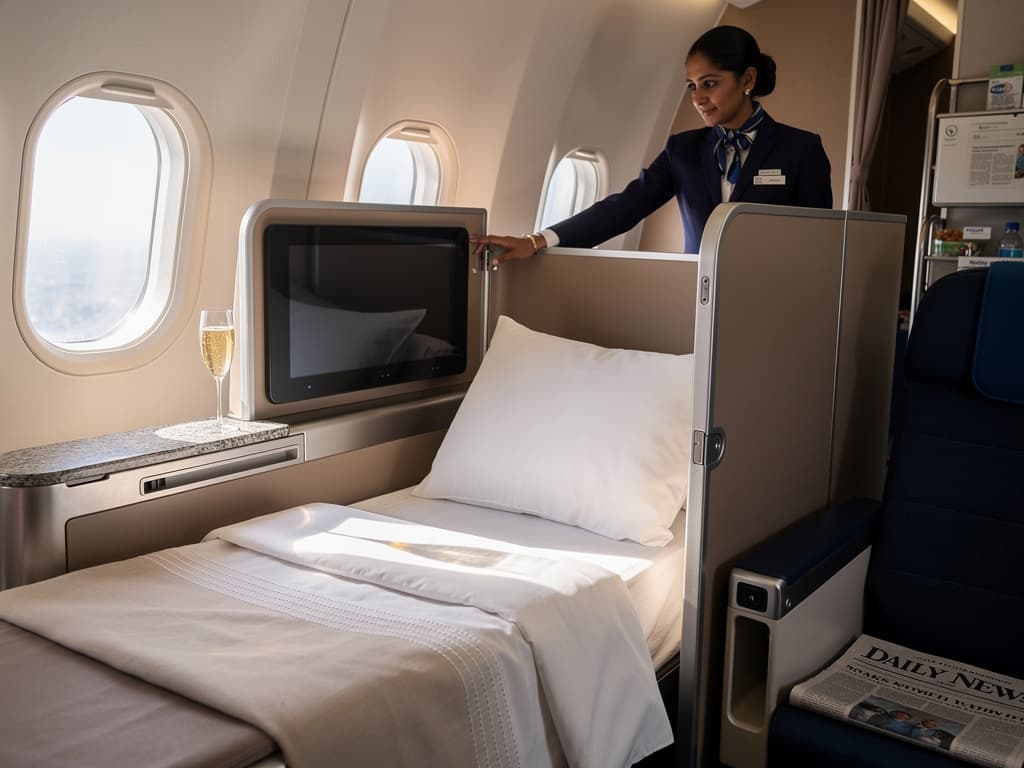
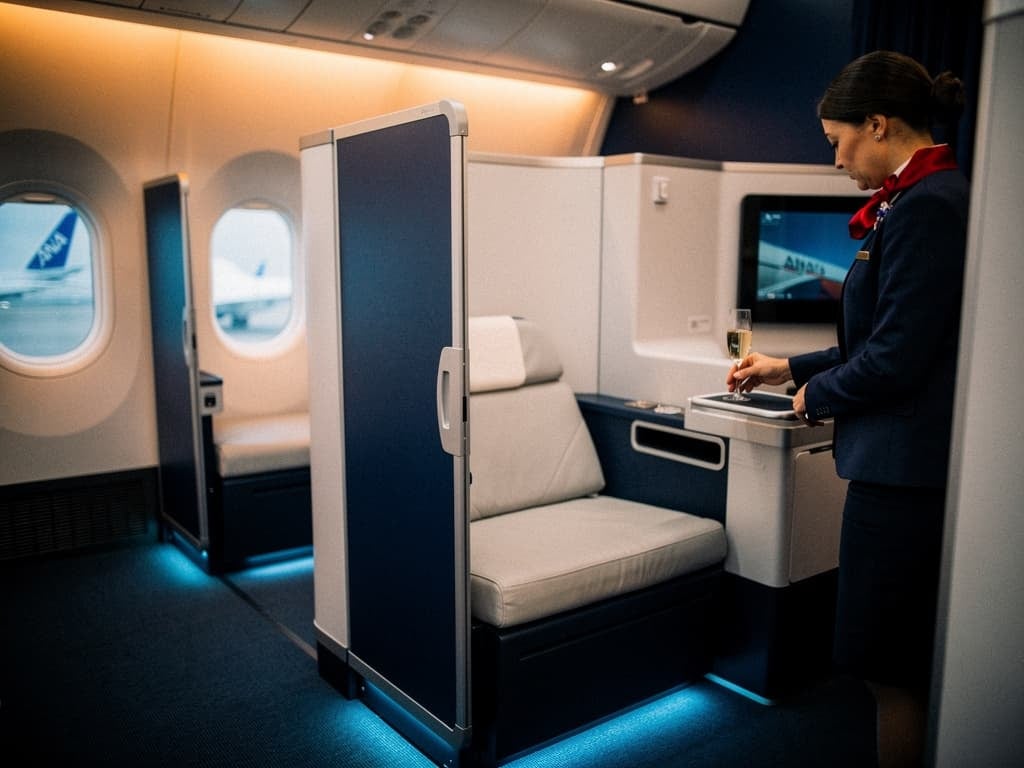
Premium cabin configurations on these routes feature standard 787-9 business class products optimized for 17-18 hour durations, with Qantas and United offering lie-flat seats, higher cabin humidity levels, and larger window dimensions compared to previous-generation widebody aircraft. This contrasts with Airbus A350 ultra-long-range variants operating Singapore Airlines’ 18+ hour services with more premium-exclusive cabin layouts featuring 67 business class seats versus the 787’s capacity-focused approach supporting higher available seat mile generation.
The routes demonstrate Boeing’s original 2004 design thesis: enabling point-to-point connectivity that bypasses traditional hub-and-spoke routing through Middle Eastern or Asian transfer points. Perth–London eliminates the Dubai or Singapore stopover that characterized pre-2018 Australia–Europe travel, while Melbourne–Dallas/Fort Worth provides direct access to United Airlines‘ domestic network without Los Angeles connections.
Strategic implications for premium cabin bookings
Low-frequency routes operating fewer than 200 annual flights require booking action within 48 hours of the 330-day advance window opening, particularly for peak travel periods when business class inventory on services like Dallas/Fort Worth–Sydney exhausts 6-8 months before departure.
- Prioritize direct airline bookings through Qantas.com for Perth–London, Melbourne–Dallas/Fort Worth, and Dallas/Fort Worth–Sydney using Classic Flight Rewards, or United.com for San Francisco–Singapore and Sydney–Houston via MileagePlus awards, ensuring access to full award inventory before partner airlines receive allocation.
- Target shoulder season departures from March through May and September through November when premium cabin pricing drops 20-30% below peak periods and award space remains available 3-4 months out on high-frequency routes, with mid-week Tuesday and Wednesday flights showing consistently better availability.
- Monitor jet stream impact on directional flight times, particularly Melbourne–Dallas/Fort Worth where eastbound sectors complete in 15 hours 45 minutes versus 17 hours 15 minutes westbound, affecting connection viability and crew rest requirements that occasionally trigger schedule adjustments.
- Leverage oneworld and Star Alliance partnerships for award redemptions, with American Airlines and British Airways accessing Qantas inventory at standard rates, while ANA and Lufthansa provide alternative redemption paths for United-operated services at potentially lower mileage costs during off-peak periods.
- Book connecting itineraries separately when ultra-long-haul routes serve as positioning flights, avoiding single-ticket risk on 17-18 hour sectors where weather delays or mechanical issues create missed connection exposure, particularly on low-frequency services with 24+ hour gaps between departures.
Watch for Boeing 787 production rate announcements in second-half 2026—accelerated deliveries signal expanded ultra-long-haul capacity for Qantas and United Airlines, potentially stabilizing premium cabin inventory availability as older widebody aircraft retire from competing carriers’ fleets.
FAQ
Which 787 variant operates these ultra-long routes and why not the 787-8 or 787-10?
The Boeing 787-9 operates all seven routes due to its optimal balance of range (7,635 nautical miles) and passenger capacity (approximately 290 seats in two-class configuration). The shorter 787-8 lacks sufficient range for 8,400+ mile sectors, while the larger 787-10 sacrifices range for capacity, limiting it to routes under 7,400 nautical miles.
How do award redemption rates compare across these routes for business class?
Award pricing varies significantly by program and route. Qantas Classic Flight Rewards typically prices Perth–London at 108,000-144,000 points one-way in business class depending on season, while United MileagePlus charges 80,000-110,000 miles for San Francisco–Singapore. Partner redemptions through ANA or Virgin Atlantic sometimes offer 15-20% lower rates during off-peak periods, though inventory access may be restricted compared to direct airline bookings.
What happens if weather forces a fuel stop on these maximum-range flights?
Airlines build contingency fuel reserves into flight planning for ultra-long routes, but extreme headwinds occasionally necessitate technical stops. Common diversion airports include Honolulu for trans-Pacific routes and Dubai or Singapore for Australia–Europe services. Passengers remain onboard during refueling stops lasting 45-90 minutes, with the airline typically providing meal vouchers and rebooking assistance if connections are missed due to delays exceeding two hours.
Are premium economy cabins available on these 787 routes?
Premium economy availability varies by airline and route. Qantas operates premium economy on Perth–London and Melbourne–Dallas/Fort Worth, while United offers Premium Plus on San Francisco–Singapore and Sydney–Houston. Air New Zealand includes premium economy on New York–Auckland. Seat pitch ranges from 38-42 inches with 18-19 inch width, positioned as a middle-ground option for passengers seeking enhanced comfort without business class pricing on 17-18 hour sectors.
Read more