Summary
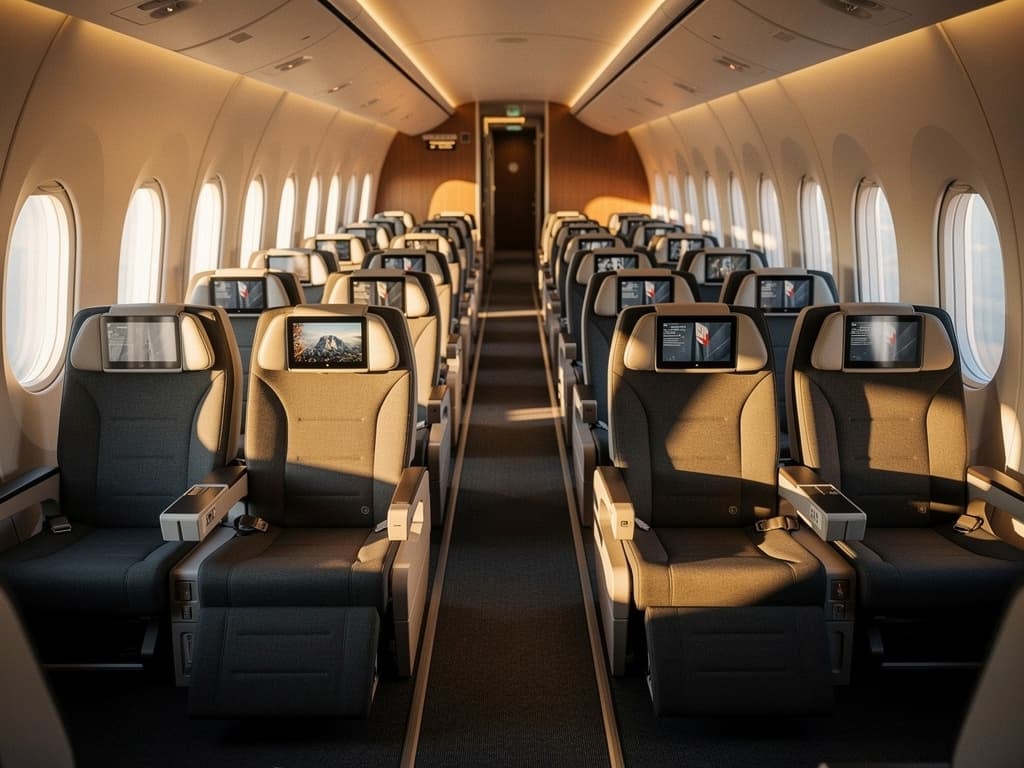
China Airlines has unveiled a redesigned premium economy cabin for its incoming Boeing 787 Dreamliner fleet, featuring 28 seats in a 2-3-2 layout, a six-way headrest with integrated surround shielding, and a 15.6-inch 4K display with Bluetooth connectivity — the latter an industry first allowing passengers to control in-flight entertainment directly from their phones or tablets. The cabin spans 24 Dreamliners, comprising 18 Boeing 787-9s and 6 Boeing 787-10s, and draws its design language from a “Starlit Mountain City” theme that fuses Taiwanese cultural symbolism with contemporary materials.
The new product is aircraft-specific, meaning the cabin is only available on flights operated by the new 787 subfleet. Travelers should confirm equipment type before booking to ensure they’re purchasing the upgraded experience.
China Airlines has drawn a clear line between its legacy premium economy offering and what comes next. The carrier’s new Boeing 787 premium economy cabin — unveiled publicly at Computex in Taipei and detailed in a formal media release — represents the most significant hard-product refresh the airline has made to this cabin class in years, and it arrives as APAC carriers are increasingly competing on seat privacy and entertainment quality rather than pitch alone.
The cabin seats 28 passengers in a 2-3-2 configuration, with metallic chrome detailing offset by warm leather textures and persimmon wood-grain tray tables — a deliberate nod to Taiwanese symbolism associated with prosperity. That design specificity matters: it signals a carrier investing in identity, not just specification sheets.
What makes the product technically notable is the IFE package. The 15.6-inch 4K display with Bluetooth connectivity allows passengers to use their own phones or tablets as a remote control — a feature the airline describes as an industry first. Noise-canceling headphones, complimentary Wi-Fi at a service level consistent with business class, and a rose-gold reading lamp round out the experience. The six-way adjustable headrest with integrated surround shielding addresses the privacy gap that has historically separated premium economy from business class in meaningful ways.
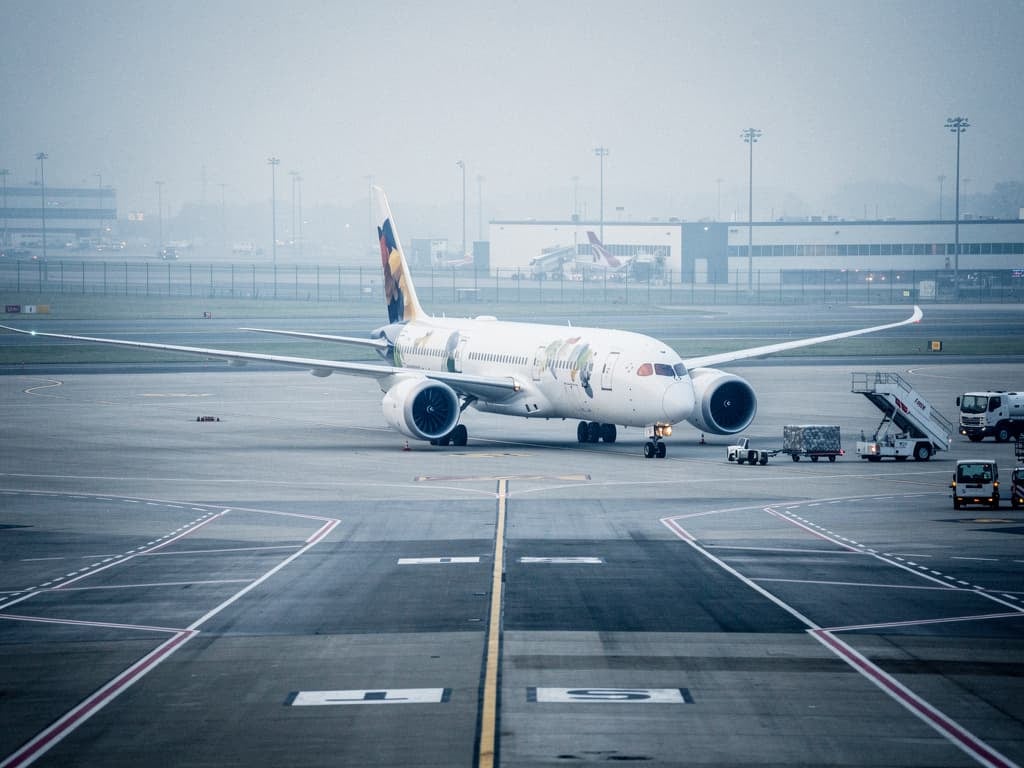
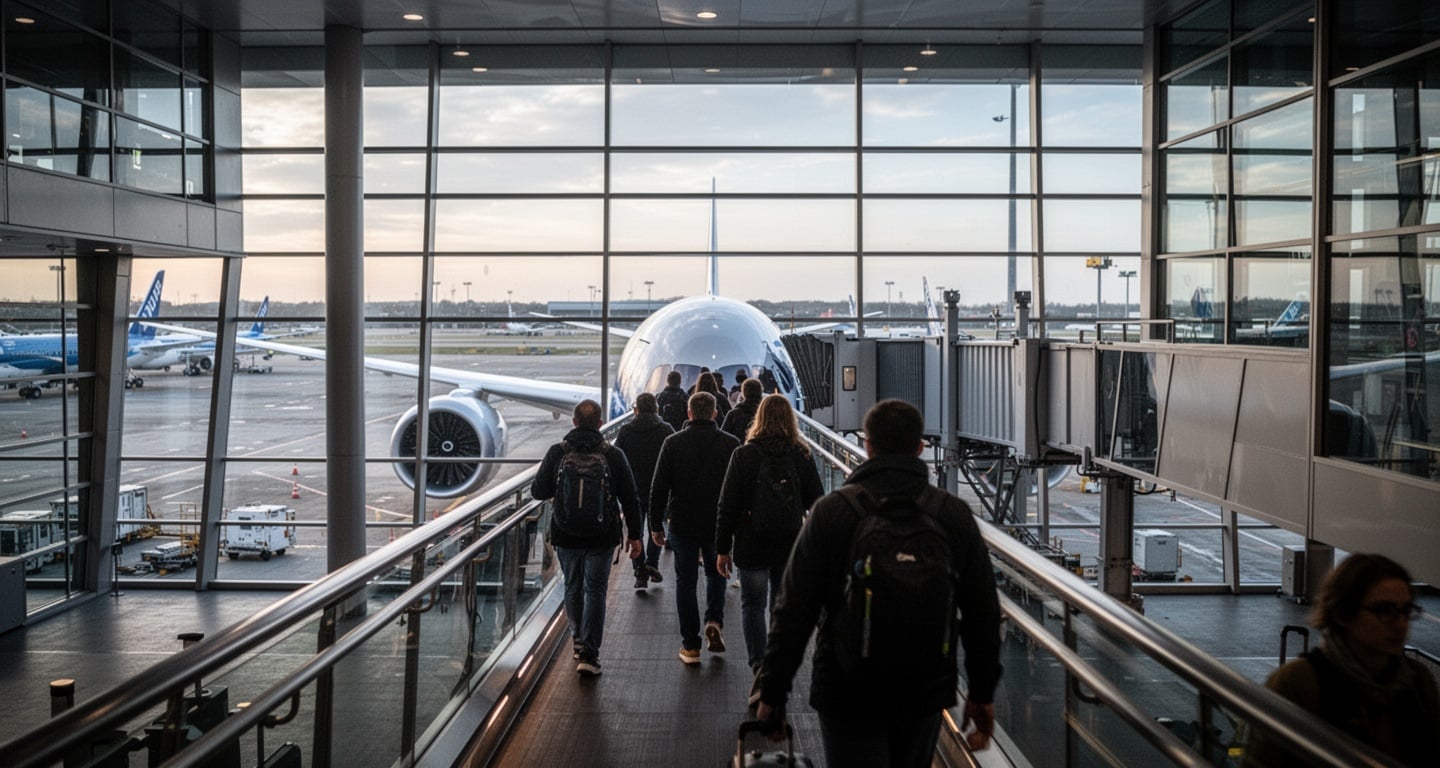
The new cabin is rolling out across 18 Boeing 787-9s and 6 Boeing 787-10s, making this a fleet-wide commitment rather than a single showcase aircraft.
The details: what’s inside the new cabin
The airline’s official media release confirms the full specification: a leather footrest beneath the seat, a tray table engineered with an anti-slip surface that doubles as a device stand, and Bluetooth connectivity supporting both headphone pairing and smart-device IFE control. The persimmon wood-grain tray table is not purely decorative — it carries cultural weight as a symbol of fulfillment in traditional Taiwanese design, and its anti-slip surface makes it functional for device placement on turbulent long-haul sectors.
The six-way headrest with integrated surround shielding is the seat’s most consequential privacy feature. Unlike simple adjustable wings, the surround shielding creates a defined personal zone — particularly relevant in the middle seats of the 2-3-2 layout, where passengers have historically had the least visual separation from neighbors.
| Feature | Specification | Notable detail |
|---|---|---|
| Seat count | 28 seats | 2-3-2 configuration |
| Headrest | 6-way adjustable | Integrated surround shielding for privacy |
| IFE display | 15.6-inch 4K HD | Bluetooth connectivity; phone/tablet IFE control |
| Audio | Noise-canceling headphones | Bluetooth pairing supported |
| Connectivity | Complimentary Wi-Fi | Business-class service level |
| Footrest | Leather under-seat footrest | Long-haul comfort feature |
| Tray table | Persimmon wood-grain finish | Anti-slip surface; doubles as device stand |
| Fleet deployment | 24 Dreamliners total | 18 Boeing 787-9s and 6 Boeing 787-10s |

Flight deals most people never see
Our AI monitors 150+ airlines for pricing anomalies that traditional search engines miss. Air Traveler Club members save $650 per trip per person on average: see how it works.
Each deal saves 40–80% vs. regular fares:

Where this sits in the APAC premium economy market
China Airlines is not entering premium economy for the first time — the carrier has operated the cabin across its widebody fleet for years. What the new 787 product represents is a deliberate repositioning toward the upper end of the APAC premium economy tier, where EVA Air and ANA have long set the benchmark.
EVA Air’s premium economy is widely regarded as one of the stronger propositions in the region, built on a generous seat footprint and consistent soft product. ANA competes on service quality and seat comfort across its long-haul fleet. China Airlines’ differentiator here is not pitch or width — those figures remain unverified — but the combination of privacy-focused headrest shielding and a genuinely modern IFE package. A 4K display with Bluetooth IFE control is a meaningful step beyond what most legacy premium economy cabins offer, where 1080p screens and wired audio remain standard.
Air Traveler Club’s long-haul aircraft comfort analysis identifies the 787 fuselage itself as a structural advantage — higher cabin pressure, improved humidity, and larger windows contribute to passenger comfort independent of seat specification. China Airlines is building its new premium economy on an already favorable platform.
The product sits clearly above basic premium economy — larger pitch, recline, and a meal service upgrade — but below true business-class suites with lie-flat beds and direct aisle access. For travelers who want a meaningful step up from economy on a 10-to-14-hour sector without paying business-class fares, the new cabin is a credible option. Whether it surpasses EVA Air’s established product will depend on seat dimensions that have not yet been independently confirmed.
How to book the new cabin — and avoid the old one
The new premium economy is aircraft-specific, which means booking strategy starts with equipment confirmation, not just route selection. Travelers who book a China Airlines long-haul flight without verifying the scheduled aircraft may end up on an older widebody with a different cabin configuration entirely.
- Confirm the aircraft type at booking: Look for flights explicitly operated by Boeing 787-9 or Boeing 787-10 equipment. China Airlines’ booking engine and third-party tools like Google Flights display aircraft type on most itineraries — use that information before purchasing.
- Check the seat map: A 28-seat premium economy cabin in a 2-3-2 layout is visually distinct from older configurations. If the seat map shows a different layout or seat count, the flight is likely on a different aircraft.
- Use the official premium economy page: China Airlines’ premium economy booking page is the most reliable starting point for identifying eligible routes and confirming the cabin product before ticketing.
- Expect limited inventory initially: With 24 Dreamliners in the fleet, the new cabin will be concentrated on specific routes. Availability will expand as the 787-9 and 787-10 deliveries are integrated into the schedule, but early bookings may find fewer options than the full fleet eventually supports.
- Watch for route-by-route aircraft assignments: China Airlines has not yet published a comprehensive schedule showing which specific routes will be operated by the new 787 subfleet. When that information becomes available, it will allow travelers to target the new cabin with precision rather than booking speculatively.
Watch for China Airlines to update its route map and aircraft assignment pages as the 787-9 and 787-10 deliveries progress through 2026. That will be the clearest signal that the new premium economy is reliably bookable on specific corridors.
Read more