Summary
Aeroplan’s June 2026 award chart overhaul raised transpacific partner business class awards by as much as 66.7%, pushing the 7,501–11,000 mile band to 102,500 points one‑way — a 17% jump. Meanwhile, premium economy redemptions have held firm, with programs like Flying Blue and AAdvantage now offering seats at 40,000 miles or fewer, roughly half the cost of devalued business class on key North America–Asia and transatlantic routes.
Although premium economy cabins traditionally offered a modest upgrade over economy, airlines are now expanding these sections and investing in seat designs that rival older business class standards. With carriers releasing far more premium economy award seats than business class savers, families and point‑conscious travelers can finally book multi‑seat redemptions without exhausting their mileage balances.
When Air Canada Aeroplan reset its transpacific award chart in June 2026, the ripple effects redrew the map for long‑haul mileage redemptions. Business class prices spiked, but the quiet winner emerged directly behind the premium curtain — premium economy. The math now overwhelmingly favors the middle cabin, making it the sharpest tool in any frequent flyer’s award kit.
After the overhaul, the popular 7,501–11,000 mile partner business class band climbed to 102,500 points one‑way, while some ultra‑long‑haul premium redemptions surged 66.7%.
In contrast, premium economy award pricing across major programs has remained nearly static. Air France‑KLM Flying Blue routinely opens transatlantic premium economy space at 40,000 miles — and its monthly Promo Rewards slash that to 30,000 miles on select routes like Los Angeles. American Airlines AAdvantage keeps a published saver tier of 40,000 miles one‑way across the Atlantic, with upgrades from economy starting at just 15,000 miles. The numbers are stark: a family of four can cross the Pacific in premium economy for roughly the points one person would now spend in business class.
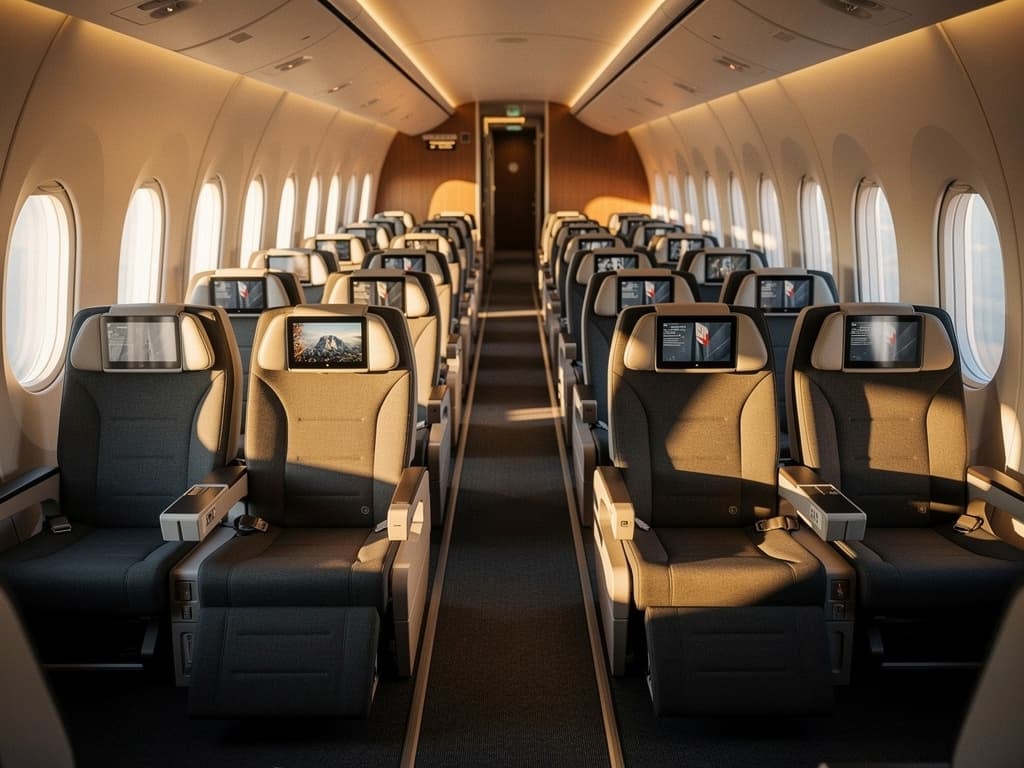
Premium economy seats are no longer just a few extra inches. EVA Air fits its newest configurations with 42 inches of pitch — a full foot more than standard economy — plus dedicated check‑in and upgraded meal service. Airlines have also started releasing far more premium economy award inventory, easing the headache of finding multiple business class savers for family trips. On routes from Denver and Seattle to Paris and Amsterdam, two or more seats are often available year‑round.
The trend extends beyond the Pacific. SAS EuroBonus, now fully inside the SkyTeam alliance, offers a fixed, zone‑based award chart and the Fly Premium benefit for Scandinavian cardholders, which allows premium cabin bookings at economy‑level points. While accumulating EuroBonus points outside Northern Europe remains a challenge, the program underscores how alliance overlaps are carving new value pockets for premium economy.
The details
The revised Aeroplan reward chart confirms the 17% increase for transpacific partner business class awards, while premium economy points remain conspicuously untouched. Industry insiders note that premium economy per‑square‑foot profitability now exceeds that of standard economy, prompting carriers to expand these cabins rather than jack up award prices. The result is a widening value gap that shows no sign of closing in 2026.
Flying Blue’s dynamic pricing hides a floor of 40,000 miles for transatlantic premium economy, with Promo Rewards delivering 25% discounts on at least one route each month. Meanwhile, AAdvantage resists the shift to fully dynamic models, maintaining a fixed 40,000‑mile saver tier that’s easy to search.
Air Traveler Club’s breakdown of the Aeroplan overhaul warned of these increases back in May, outlining the 17% spike that has now materialized. That analysis, combined with current data, makes one thing clear: the premium economy sweet spot is real, durable, and vastly undervalued by many points collectors.
| Program | Route type | Premium economy (one‑way) | Business class (one‑way, after June 2026) | Notes |
|---|---|---|---|---|
| Air Canada Aeroplan | Transpacific (7,501–11,000 mi) | ~50,000 points | 102,500 points (fixed, up 17%) | Partner awards; premium economy approximated from partner charts |
| Air France‑KLM Flying Blue | Transatlantic | 40,000 miles (30,000 with Promo) | From 80,000 miles (dynamic) | Monthly Promo Rewards offer 25‑50% discounts |
| American Airlines AAdvantage | Transatlantic | 40,000 miles (saver) | 57,500 miles (saver, dynamic increases possible) | Upgrade from economy starts at 15,000 miles |

Flight deals most people never see
Our AI monitors 150+ airlines for pricing anomalies that traditional search engines miss. Air Traveler Club members save $650 per trip per person on average: see how it works.
Each deal saves 40–80% vs. regular fares:

The value-add
The June 2026 Aeroplan reset is not an isolated event. It crystallizes a trend that has been building since airlines began treating premium economy as a standalone premium product rather than a slightly better economy seat. Across alliances, the points‑to‑comfort ratio has never been so lopsided in favor of the middle cabin. Business class redemptions now demand balances that edge toward the aspirational, while premium economy delivers the most tangible improvement — seat pitch, priority services, and far better award availability — at a cost most frequent flyers can reach without years of hoarding.
For the traveler who values both comfort and flexibility, this moment redefines mileage strategy. The old mantra of “always redeem for business or first” is giving way to a more nuanced calculation: book premium economy, keep half your points, and still enjoy a product that rivals yesterday’s domestic first class. And because transferable points from Amex, Chase, and Capital One flow into all the key programs, switching to this new sweet spot requires no heavy lifting — just a willingness to reconsider what a “best use” of points really means.
Reframing your 2026 award strategy around the premium economy surge
The Aeroplan devaluation and stable premium economy pricing create a clear framework for award bookings through 2027.
- Prioritize Flying Blue Promo Rewards: Target the monthly 25% discount on routes like Los Angeles to Europe, transferring Amex points instantly to lock in 30,000‑mile one‑ways. Book exactly when the promo goes live — inventory can vanish within 48 hours.
- Use AAdvantage for family transatlantic trips: The fixed 40,000‑mile saver tier works for up to four passengers on the same flight, a rarity in business class. Upgrade from economy with 15,000 miles if your base fare is inexpensive.
- Chase EVA Air via Aeroplan for the best hard product: The 42‑inch pitch seat is unmatched. Search using Aeroplan’s calendar view 3–6 months out, especially on North America–Taipei–Southeast Asia routings, where availability remains strong.
- Book early to secure multi‑seat space: Premium economy award seats disappear faster now that savvy travelers are shifting away from business class. Aim for Tuesday/Wednesday departures 4–5 months ahead for peak season travel.
Watch for Aeroplan’s next award chart update. If premium economy pricing holds, the 2:1 ratio will remain the industry’s best long‑haul value for years. Any move to adjust the middle cabin upward would signal that airlines have caught on — so lock in your bookings while the gap is at its widest.
FAQ
Is premium economy worth the points over economy?
On long‑haul routes, premium economy typically costs 2–3 times as many points as economy but delivers a step‑change in comfort — seats with 38–42 inches of pitch, a wider recline, dedicated check‑in, and upgraded meals. For flights over eight hours, the extra space transforms the experience, making it the strongest comfort‑per‑point upgrade on the aircraft.
How does premium economy compare to business class for award redemptions?
Premium economy now costs roughly half the points of a devalued business class ticket on key routes (40,000 miles vs. 80,000+), while offering a product that rivals older business class standards. Availability is also far broader: families can often find four premium economy seats on a single flight, a near‑impossibility with business class savers.
Will other airlines devalue business class awards like Aeroplan?
Historical patterns suggest yes. Aeroplan’s 2026 hike follows earlier devaluations across major programs, and the shift to dynamic pricing means business class costs will continue to climb. Premium economy has so far been shielded because cabins are expanding and carriers want to fill the new seats; any future devaluation would likely start with a modest 10‑15% bump in programs like Aeroplan or AAdvantage.
Read more