Summary
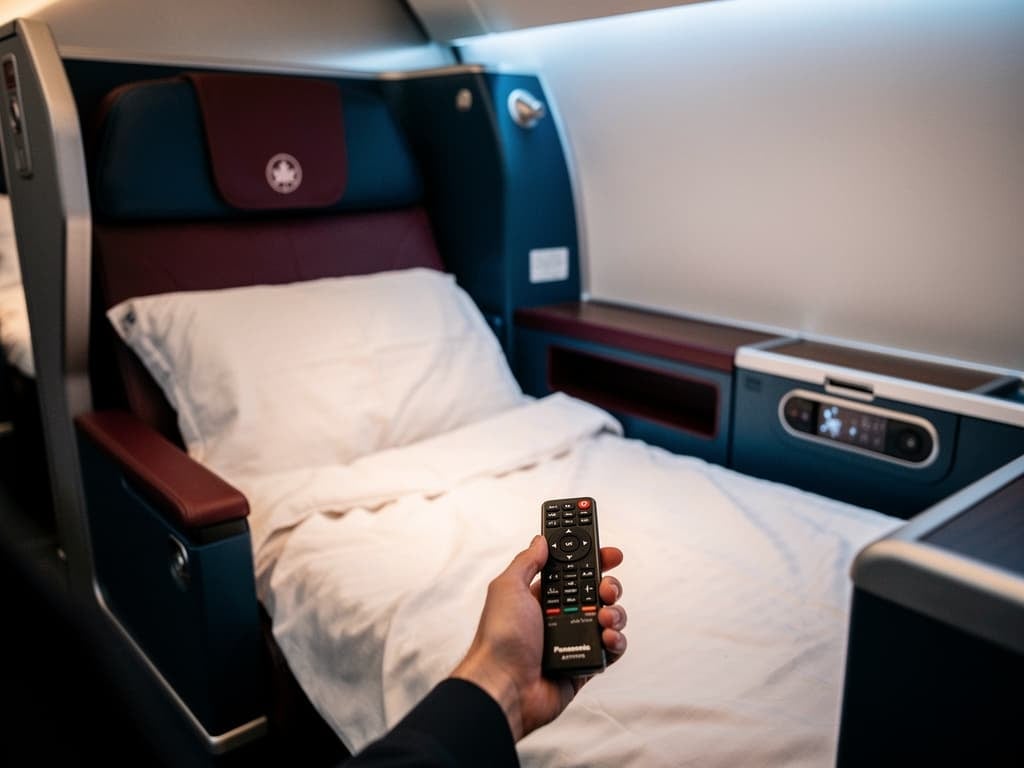
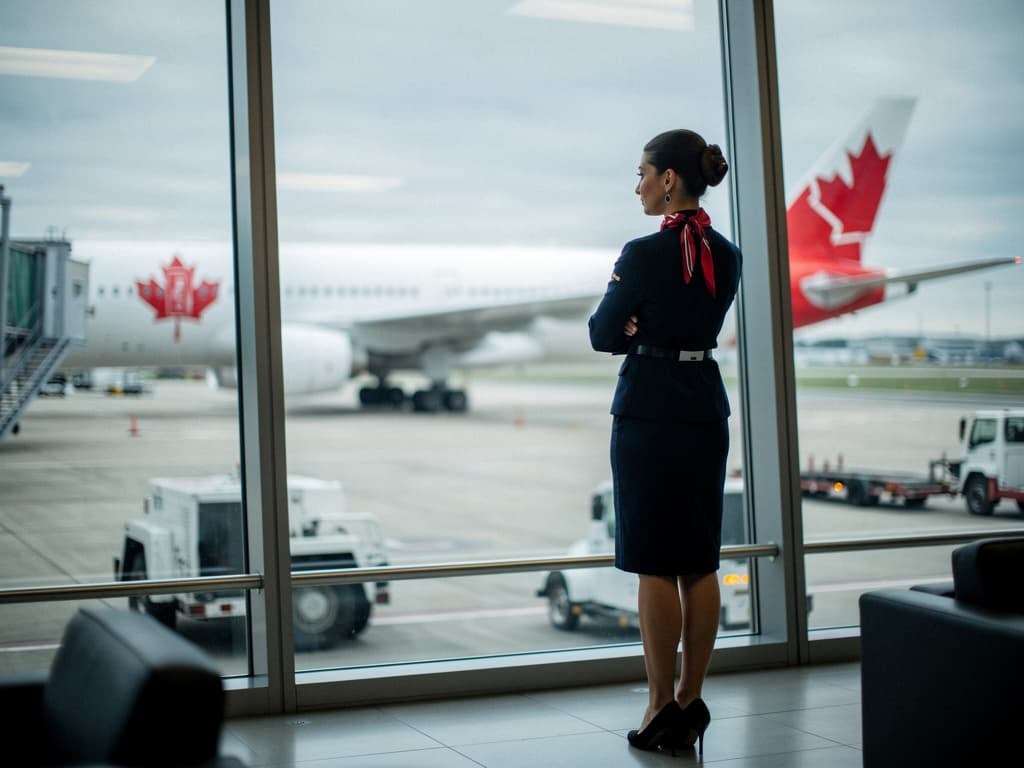
Air Canada unveiled its Signature Plus Suite at the Aircraft Interiors Expo in April 2026 — four front-row suites embedded within the business class cabin of its incoming Boeing 787-10 fleet. Each suite delivers a 2-meter lie-flat bed, quartzite-topped dining table, dedicated companion seat, and a 27-inch 4K OLED display, positioning the product squarely in first-class territory without carrying the first-class label. The carrier has 14 Boeing 787-10s on order, making this a long-term fleet commitment rather than a one-off experiment.
The 787-10 enters service post-2026, with flagship transatlantic routes — including Vancouver to London and Frankfurt — the likely launch corridors. Aeroplan award rates on those routes are rising sharply on June 1, 2026, making early positioning critical.
Air Canada has spent years building a credible premium product without the operational overhead of a true first class cabin. The Signature Plus Suite, revealed publicly at the Aircraft Interiors Expo on April 14, 2026, is the clearest expression yet of where that strategy leads — and it’s more ambitious than anything the carrier has attempted before.
Four suites occupy the first row of the 787-10’s forward business class section. They are not marketed as first class. That omission is deliberate. By avoiding the label, Air Canada sidesteps the dedicated crew ratios, separate galley requirements, and demand volatility that have driven North American carriers away from true first class over the past decade. What remains is a product that delivers most of what first class passengers actually want — space, privacy, premium materials, and flexibility — inside a business class operational framework.
The broader cabin carries 42 business class seats in total, with the four Signature Plus Suites anchoring the front row and 38 standard Signature Class seats in a reverse herringbone 1-2-1 layout behind them. Add 28 premium economy and 262 economy seats, and the 787-10 configuration totals 332 passengers — noticeably denser than the carrier’s existing 787-9 at 298 seats, reflecting the economic calculus underpinning the entire design.
This is not Air Canada chasing a trend. It is the airline making a calculated long-haul bet, backed by 14 aircraft on order and a design language — the “Glowing Hearted” cabin standard — that will define its premium identity well into the 2030s.
What the Signature Plus Suite actually delivers
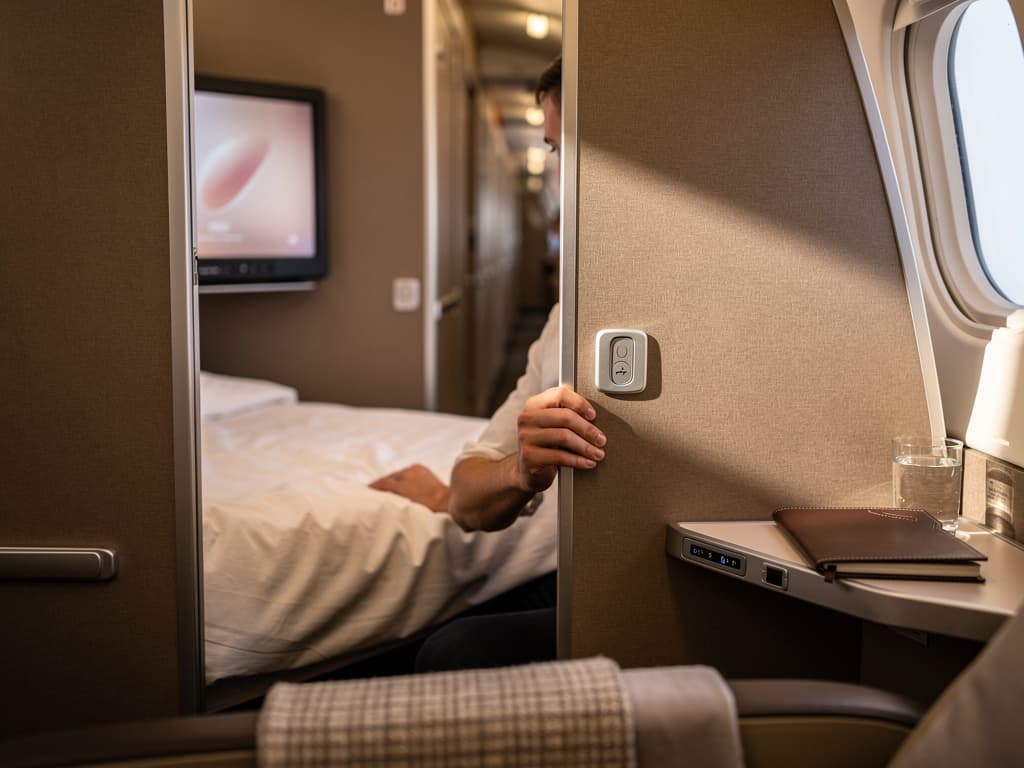
The physical specifications place these four suites in a category of their own on any North American carrier. The 2-meter (78.7-inch) bed is among the longest in business class globally, and the suite’s elevated walls create genuine enclosure without requiring a fully closing door — a distinction that matters more in practice than it might appear on a spec sheet.
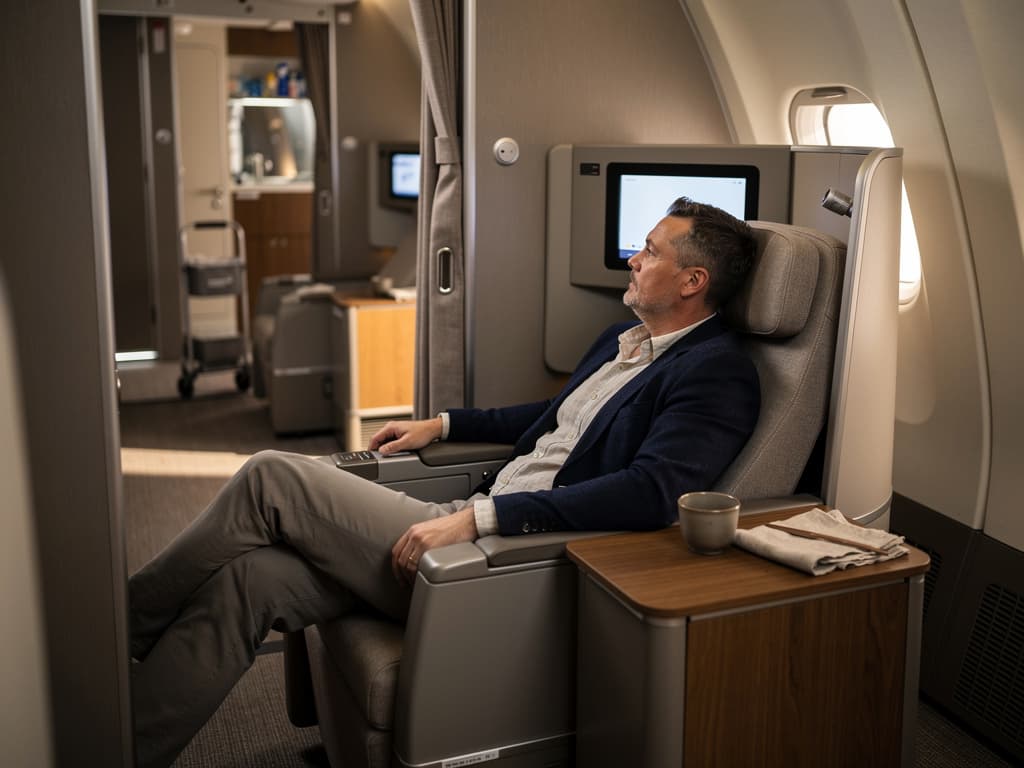
The quartzite-topped table is the detail that signals intent most clearly. Quartzite is a material choice borrowed from residential and hospitality design — durable, tactile, and visually distinct from the laminate surfaces standard in even premium business class products. Combined with a dedicated companion seat that folds in for dining or conversation, the suite replicates a first-class dining dynamic that most business class configurations cannot accommodate.
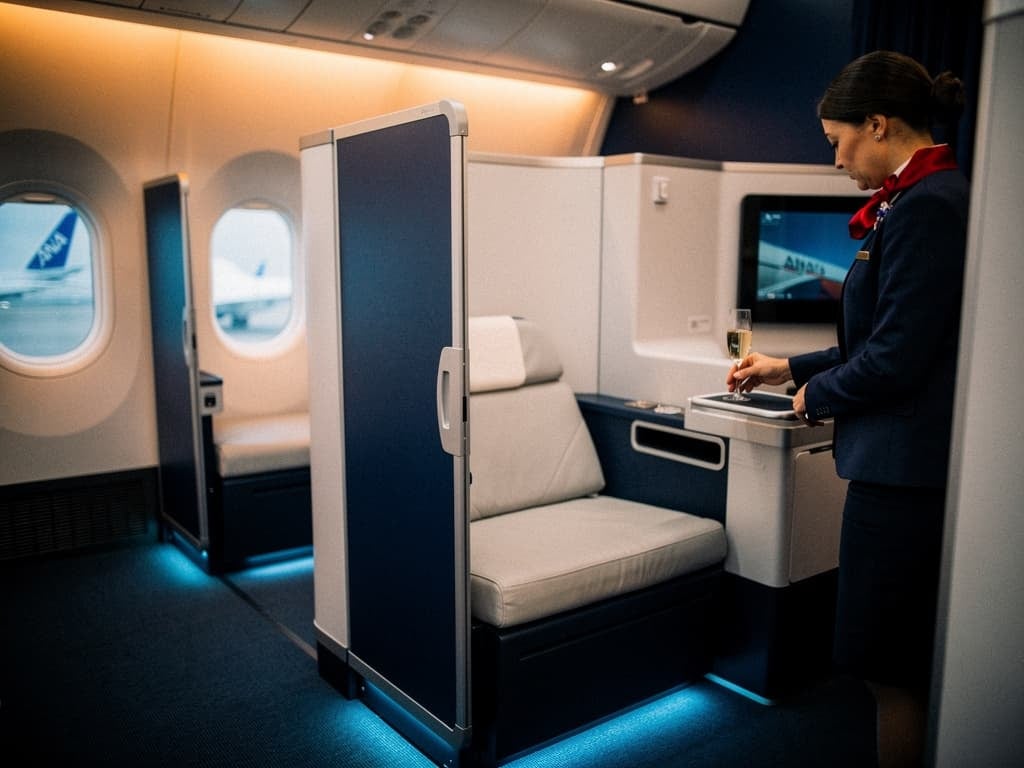
The two center suites add a feature with no direct equivalent in competing North American products: fully retractable privacy panels that open into a shared social space during cruise. Up to four passengers can configure the area as a semi-private lounge, a capability that traditional first class cabins — with their rigid, isolated layouts — rarely offer. For families or small groups, this flexibility represents a genuine differentiator.
Technology specifications reinforce the premium positioning. Each suite carries a 27-inch 4K OLED display with Bluetooth audio connectivity and USB-C power — meaningfully larger than the screens found in most competing business class products. Air Canada confirmed these specifications in its official Glowing Hearted cabin announcement.
| Aircraft | Total seats | Business class | Premium economy | Economy | Ultra-premium tier |
|---|---|---|---|---|---|
| Boeing 787-10 (incoming) | 332 | 42 (incl. 4 Signature Plus) | 28 | 262 | 4 Signature Plus Suites |
| Boeing 787-9 (current) | 298 | Signature Class 1-2-1 | 21 | ~245 | None |
| Boeing 787-8 (current) | 255 | Signature Class 1-2-1 | 21 | ~196 | None |

Flight deals most people never see
Our AI monitors 150+ airlines for pricing anomalies that traditional search engines miss. Air Traveler Club members save $650 per trip per person on average: see how it works.
Each deal saves 40–80% vs. regular fares:

Where Signature Plus sits in the competitive landscape
The honest competitive read is that Air Canada‘s Signature Plus Suite matches United Airlines‘ Polaris on the 787-10 in most measurable dimensions — and edges ahead on social flexibility — while trailing Qatar Airways‘ Qsuite on door closure and lounge access. That’s a respectable position for a carrier that has never operated true first class on widebody aircraft.
United‘s Polaris on the 787-10 offers full closing doors and Saks Fifth Avenue bedding, with a bed length of 78 to 80 inches depending on configuration. The Signature Plus Suite matches that bed length and adds the companion seat and retractable social panels — features absent from Polaris. On the lounge side, United‘s Polaris Lounge network currently outpaces Air Canada‘s Maple Leaf Lounge offering at most North American hubs.
Against Qsuite, the gap is more pronounced. Qatar‘s product on the Airbus A350 and Boeing 777 delivers full closing doors, a quad-suite social configuration, and access to the Al Mourjan Business Lounge in Doha — widely regarded as the benchmark ground product globally. Pricing on Qatar routes runs approximately 20% higher than comparable Air Canada transatlantic fares, which currently sit around $8,500 CAD round-trip on Vancouver–London.
Air Traveler Club’s analysis of the June 2026 Aeroplan award devaluation is essential context here — North America–Pacific business class awards in the 7,501–11,000 mile band jump to 102,500 points after June 1, a 67% increase that makes pre-devaluation bookings on 787-10 routes significantly more valuable.
How to position for Signature Plus before the window closes
The 787-10 enters service post-2026, but the Aeroplan award environment is changing now — and the booking strategy for these suites needs to account for both timelines simultaneously.
- Book Aeroplan awards before June 1, 2026: The upcoming devaluation raises North America–Pacific business class awards by up to 67%. Locking in current rates on Star Alliance partner redemptions — even on existing 787-9 routes — preserves significant value while the 787-10 fleet ramps up.
- Target J and Z fare classes for paid Signature Class: Signature Plus Suites will be bookable within the Signature Class fare bucket on aircanada.com. Watch for early-bird pricing on inaugural 787-10 routes, where airlines historically offer promotional fares to drive load factor on new equipment.
- Monitor YVR-LHR and YVR-FRA for 787-10 deployment: Vancouver–London and Vancouver–Frankfurt are the most likely launch corridors for the 787-10 based on route economics and competitive pressure from WestJet. These routes also carry the strongest Aeroplan award availability historically.
- Aeroplan 50K+ status holders get upgrade priority: Elite members at the 50,000 Aeroplan point threshold and above receive priority upgrade consideration on Signature Class. On a four-suite sub-cabin, upgrade inventory will be extremely limited — status positioning matters more here than on standard business class routes.
- Use Star Alliance partner programs as a hedge: United MileagePlus and Lufthansa Miles & More can book Air Canada Signature Class award space in U fare class. Partner availability is often more accessible than Aeroplan’s own inventory on high-demand routes.
Watch for the first 787-10 delivery confirmation — if Air Canada accelerates the timeline into mid-2026, expect a short booking window before Aeroplan award rates reset and paid fares firm up on inaugural routes.
FAQ
Will Signature Plus Suites be available for Aeroplan award redemptions?
Yes. Signature Plus Suites are bookable within the Signature Class fare bucket, which means Aeroplan award redemptions in U fare class apply. However, with only four suites per aircraft, award inventory will be extremely limited — particularly on launch routes. Star Alliance partner programs including United MileagePlus and Lufthansa Miles & More can also access this inventory, so checking multiple programs simultaneously improves the odds of finding space.
How does the Signature Plus Suite differ from standard Signature Class on the same aircraft?
The four Signature Plus Suites in row one offer a quartzite-topped dining table, a dedicated companion seat for a second passenger, higher walls for enhanced enclosure, and retractable center panels that create a social space for up to four travelers. Standard Signature Class seats — the 38 Adient Ascent reverse-herringbone seats behind row one — include sliding privacy doors and direct aisle access but lack the companion seat, quartzite table, and expanded footprint of the front suites. Both tiers share the same 27-inch 4K OLED IFE standard across the cabin.
Which routes will the Boeing 787-10 operate when it enters service?
Air Canada has not confirmed specific route assignments as of May 2026. Based on fleet economics and competitive dynamics, Vancouver–London Heathrow and Vancouver–Frankfurt are the most likely initial deployments. The 787-10’s higher-density 332-seat configuration suits high-frequency transatlantic routes where yield management across four cabin classes is most effective. Route announcements are expected closer to the first delivery, anticipated in late 2026.
Read more