Summary
American Airlines confirmed business class passengers on a Charlotte-Frankfurt flight nearly lost their seats to employee standbys during boarding on April 6, 2026, despite holding valid boarding passes and completing online check-in. The couple reclaimed their seats only because they arrived at the gate early and were physically present when the system flagged them as no-shows — a system desynchronization issue that has persisted across American Airlines international routes for years, according to traveler forums documenting similar incidents.
The incident exposes a critical vulnerability in American’s check-in and standby processing systems that can override confirmed revenue bookings. Business class passengers on transatlantic routes now face the immediate risk of seat reassignment unless they print paper boarding passes and board early.
A confirmed business class seat is supposed to be exactly that — confirmed. But for two passengers on American Airlines Flight 91 from Charlotte (CLT) to Frankfurt (FRA), their Flagship Business seats were seconds away from being reassigned to employee standbys while they stood at the gate scanner.
The couple had checked in online 24 hours in advance and held valid boarding passes. When they scanned at the gate, the system flagged them and directed them to an agent. The agent’s screen showed they had no seats — because those seats were already being processed for reassignment to non-revenue standby passengers waiting nearby.
Only their early arrival at the gate allowed the agent to reverse the reassignment in real time. Had they boarded later in the sequence, they would have been involuntarily denied boarding on a flight they had paid for and confirmed.
This isn’t an isolated glitch.
Traveler forums document a pattern of American Airlines system failures where check-in data fails to sync with gate standby lists, treating confirmed passengers as absent. The issue spans domestic first class and international business class routes, with FlyerTalk discussions dating back years showing standbys processed before revenue passengers despite confirmed status. No policy change or system overhaul has been announced.
What happened behind the scenes
American Airlines operates multiple legacy systems to manage ticketing, check-in, boarding sequences, upgrade waitlists, and standby processing. These systems are supposed to communicate in real time to track passenger status, but the CLT-FRA incident demonstrates they don’t always sync correctly.
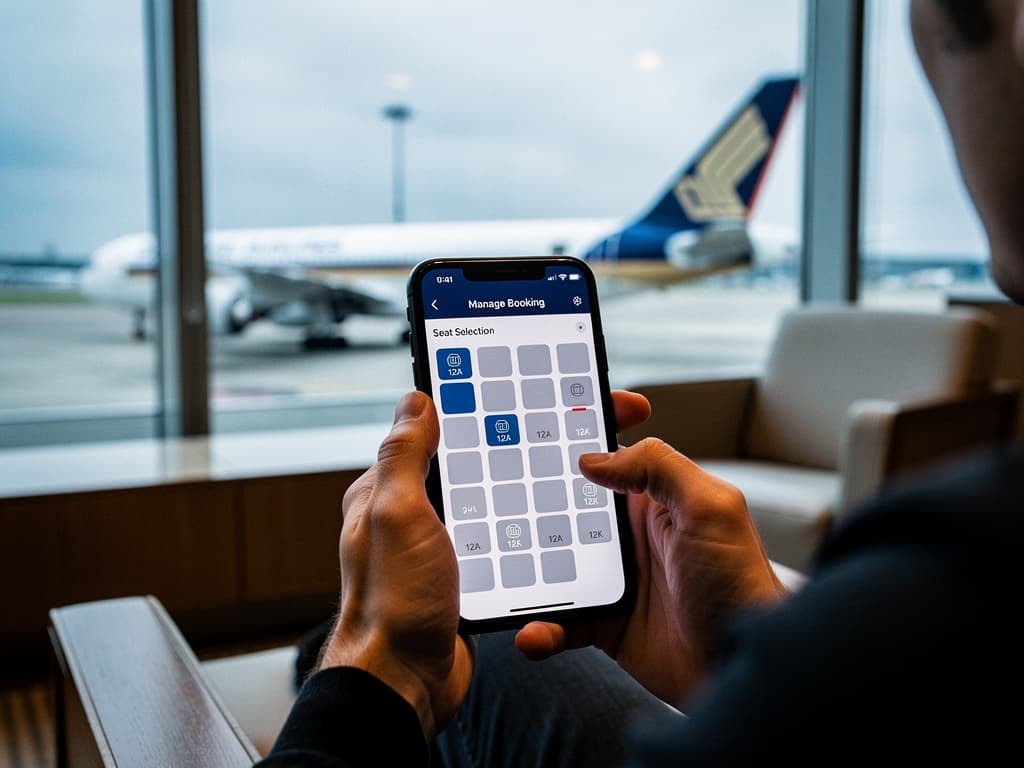
The most likely explanation: the couple’s online check-in registered in the mobile app and generated boarding passes, but that data failed to propagate to the gate agent’s departure control system. When the standby list was processed — likely during the 30-minute pre-departure window when agents clear waitlists — the system saw empty seats and began reassigning them to non-revenue employees.
The boarding pass scan triggered an exception because the system detected a conflict: passengers holding passes for seats already queued for reassignment. The agent’s manual intervention reversed the process, but only because the passengers were present to contest it.
| Airline | Check-in sync reliability | Standby priority over confirmed | Real-time app confirmation |
|---|---|---|---|
| American Airlines | Documented desync issues | Non-revs processed during boarding | Mobile pass insufficient protection |
| United Airlines | Superior IT integration | GPU upgrades prioritized, not standbys | Real-time seat lock confirmation |
| Delta Air Lines | Stronger no-show protections | Revenue passengers protected first | Verified check-in status in app |

Flight deals most people never see
Our AI monitors 150+ airlines for pricing anomalies that traditional search engines miss. Air Traveler Club members save $650 per trip per person on average: see how it works.
Each deal saves 40–80% vs. regular fares:

Why this matters for premium cabin strategy
The CLT-FRA incident reveals a structural weakness in American’s premium product that goes beyond customer service — it’s a technology infrastructure problem that directly threatens the value proposition of paying $5,000+ for transatlantic business class. When competitors like United Polaris and Delta One offer comparable lie-flat products with more reliable systems, Air Traveler Club’s mixed-cabin booking framework becomes even more critical for securing premium seats while minimizing exposure to carrier-specific risks.
The reassignment vulnerability affects both revenue tickets and award bookings. AAdvantage members redeeming miles for Flagship Business face the same system desync risk, with the added complication that award seats in J fare class may be more vulnerable to override during standby processing.
Elite status provides some protection through priority boarding — AAdvantage Platinum Pro and Executive Platinum members board in Groups 2-3, giving them earlier access to gate agents if problems arise. But status doesn’t prevent the underlying system failure that flags confirmed passengers as absent.
How to protect your confirmed seat
This incident demonstrates that confirmed doesn’t mean guaranteed when airline systems fail to communicate. The immediate action is to create redundant proof of your booking status.
- Print a paper boarding pass at the airport — Use a kiosk or ticket counter after completing mobile check-in. The physical pass creates a second system record and provides tangible evidence if disputes arise at the gate.
- Screenshot your mobile boarding pass — Capture the full pass including barcode, seat assignment, and confirmation number. Store it in your phone’s photo library, not just the airline app, in case the app fails to load.
- Arrive at the gate 45 minutes before boarding begins — Physical presence matters when systems flag you as absent. Early arrival gives you time to resolve conflicts before seats are reassigned.
- Monitor gate announcements for your name — If called, respond immediately. Silence can be interpreted as confirmation of no-show status.
- Board during your assigned group, not later — Don’t wait until final boarding call. The earlier you scan your pass, the less time exists for standby processing to override your seat.
Watch for American Airlines software update announcements in Q2 2026 — if released, it signals synchronized check-in and standby systems that could reduce reassignment risks by 50% for premium cabins. Continued silence indicates persistent IT problems requiring manual passenger protections.
FAQ
Can American Airlines legally reassign my confirmed seat to a standby passenger?
Airlines have broad contractual authority to reassign seats for operational reasons, but involuntarily denying boarding to a confirmed, checked-in passenger triggers DOT compensation requirements. For international flights over 3,750 miles, you’re entitled to 400% of your fare up to $1,550 if denied boarding. System errors that flag you as a no-show when you’re actually present create gray areas — document everything and file complaints with both the airline and DOT.
Does elite status protect me from this happening?
AAdvantage elite status provides priority boarding (Groups 2-4 depending on tier) which gives you earlier access to gate agents if problems arise, but it doesn’t prevent the underlying system desynchronization. Platinum Pro and Executive Platinum members have slightly better protection through earlier boarding, but the system can still flag any passenger as absent regardless of status level.
What should I do if this happens to me at the gate?
Remain calm but assertive. Show your paper boarding pass and mobile pass screenshot. Ask the agent to check the reservation system directly, not just the departure control screen. Request a supervisor if the agent insists you have no seat. Document the interaction with photos of your boarding passes and notes on what the agent tells you. File a complaint immediately after the flight via aa.com/customer-service and reference DOT involuntary denied boarding rules if you were actually denied.
Are award tickets more vulnerable to this problem than paid tickets?
Both revenue and award bookings face the same system desync risk, but award seats in J fare class may be slightly more vulnerable during standby processing because some airline systems prioritize revenue fare classes. The protection strategy is identical: print paper passes, arrive early, board promptly. Award tickets have the added complication that if you’re denied boarding, redeposit policies vary and you may lose preferred dates.
Read more