Summary
Singapore Airlines has pushed the first retrofitted Airbus A350-900 with its next-generation first and business class cabins to Q1 2027, a nine-month slip from the original Q2 2026 target. The delay affects a S$1.1 billion (approximately US$863 million) retrofit programme covering 41 A350-900 aircraft, driven by industry-wide supply chain constraints and a certification setback on one of the new seat designs. Passengers booked on SIA’s long-haul A350 routes will fly the current 2013-era cabin product for at least eight additional months beyond the original schedule.
A formal product unveiling remains planned for later in 2026, which will confirm exact seat specifications ahead of the Q1 2027 entry into service. The A350-900ULR timeline will be communicated separately.
One of aviation’s most anticipated cabin upgrades just got pushed back — again. Singapore Airlines confirmed on Wednesday that the retrofitted Airbus A350-900 carrying its next-generation first and business class products will not enter service until Q1 2027, slipping nine months from the previously announced Q2 2026 target. The airline cited industry-wide supply chain bottlenecks and a certification delay affecting one of the new seat designs.
The postponement lands squarely in the middle of a S$1.1 billion cabin overhaul programme — one of the most ambitious premium product investments in SIA’s history. Spanning 41 A350-900 aircraft, the programme was announced in November 2024 with full completion targeted by end-2030. What was supposed to be a competitive statement against Qatar Airways‘ Qsuite and Emirates‘ Game Changer first class now faces an extended runway.
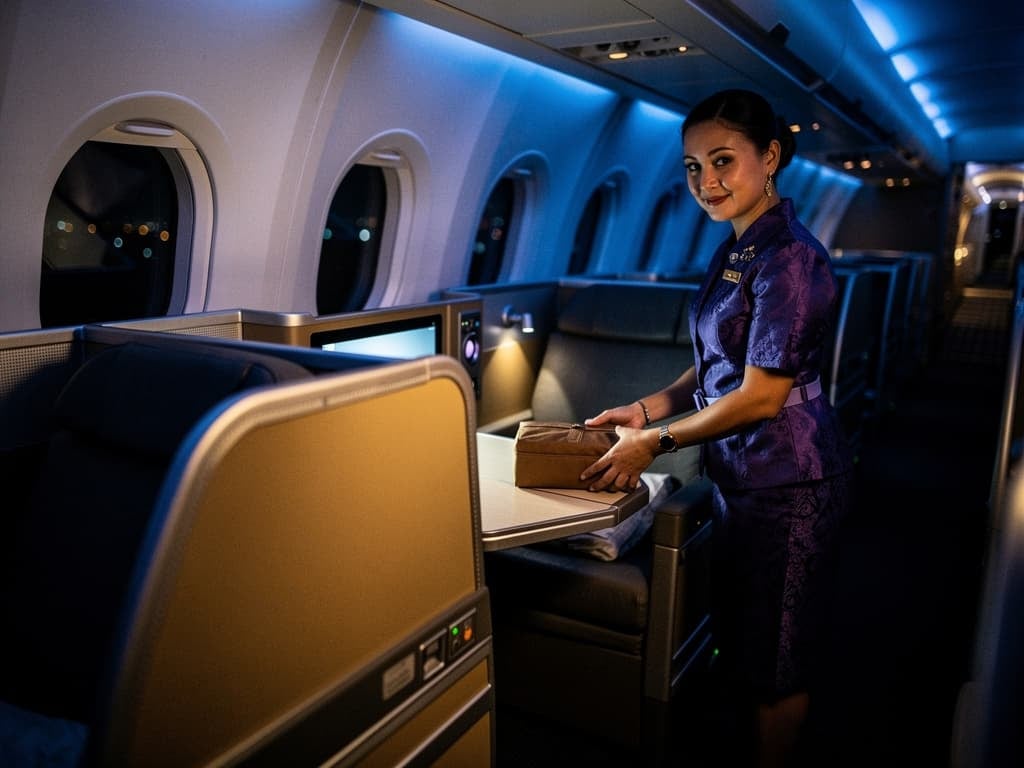
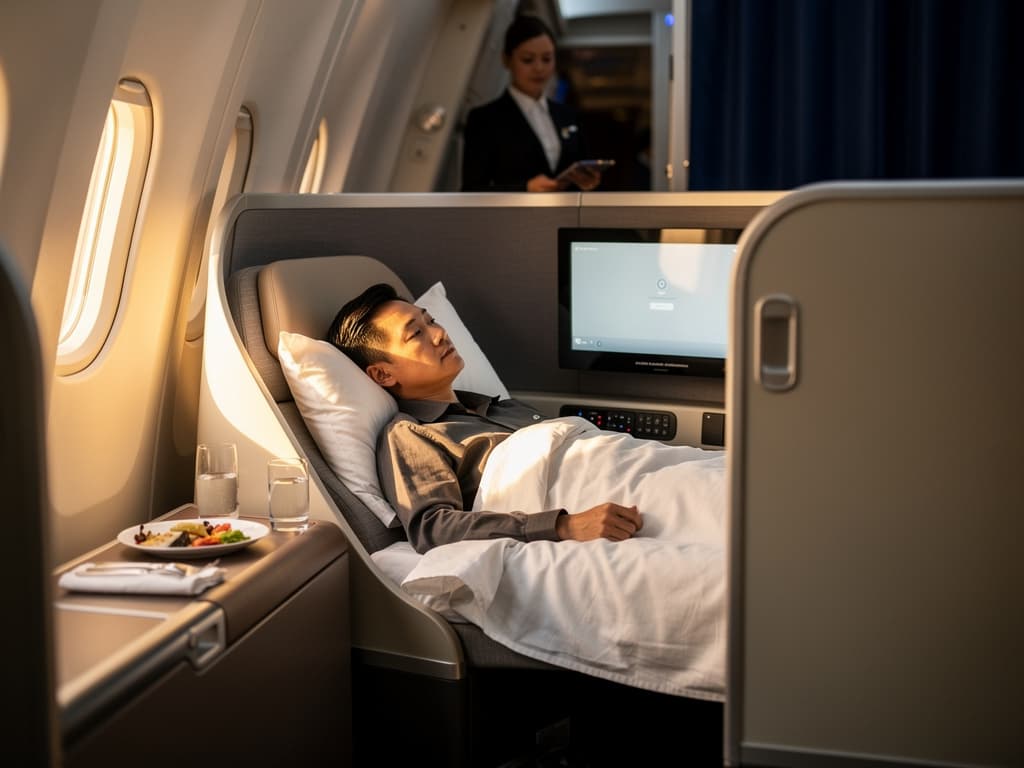
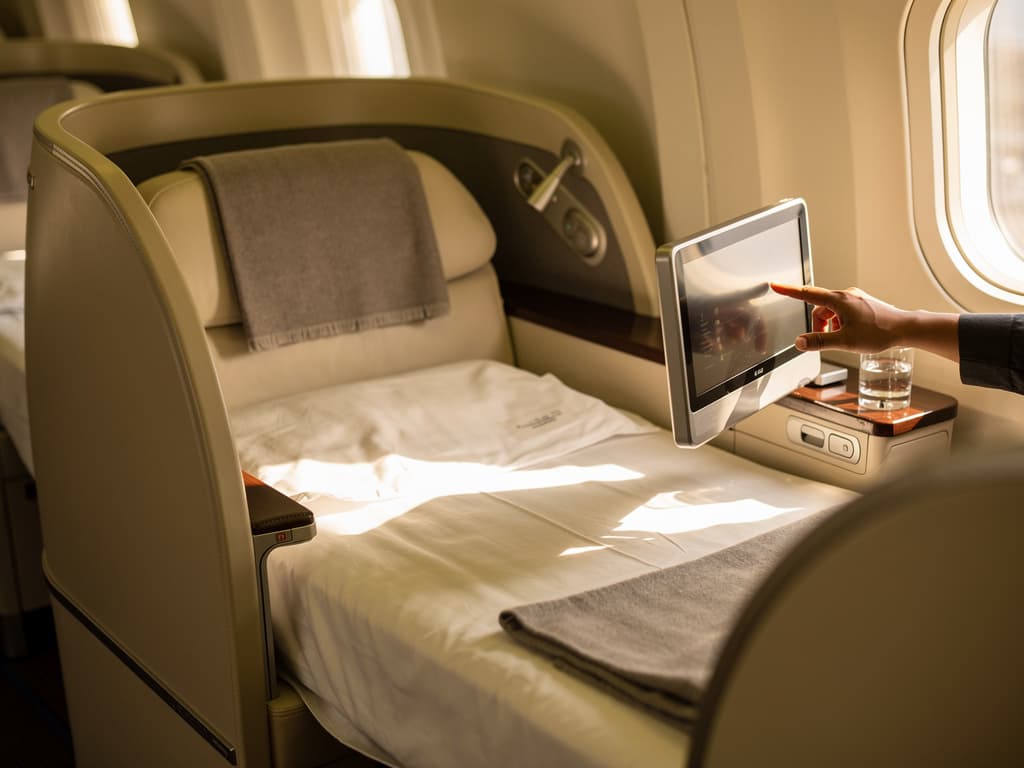
The stakes are significant. SIA’s current A350 business class — a 2013-era product without privacy doors — has been outpaced by rivals on key long-haul corridors. A 2024 teaser of the new business class showed seats with privacy doors bearing a clear resemblance to Qsuite, signalling SIA’s intent to close that gap. That gap now stays open through at least early 2027.
Seven A350-900ULR aircraft — operating routes including Singapore–New York — will receive a separate timeline update, with no confirmed entry-into-service date announced.
The details: what’s delayed, what’s confirmed, and what’s still unknown
The airline confirmed the revised schedule in a statement Wednesday, noting that regulatory approvals remain a prerequisite for Q1 2027 entry into service. The product unveiling — which will reveal final seat specifications and configurations — is still expected in the second half of 2026, giving prospective passengers a preview window before the first retrofitted aircraft enters revenue service.
Post-refurbishment configurations are confirmed for the standard A350-900 fleet: 34 aircraft will carry 42 business class seats, 24 premium economy seats, and 192 economy seats. The seven A350-900ULR aircraft will be configured with 4 first-class suites, 70 business class seats, and 58 premium economy seats — a notably intimate first-class offering on ultra-long-range routes. Refurbishment work is being handled by SIA Engineering Company in Singapore, as confirmed when the programme launched.
Regulatory filings and airline communications confirm the delay stems from two distinct pressures: the broader supply chain environment affecting seat component manufacturing across the industry, and a specific certification issue with one of the new seat designs. The airline has not identified which seat product — first or business — is the certification bottleneck.
Air Traveler Club’s detailed breakdown of the A350 retrofit programme covers the full nine-month slip, what passengers holding 2026 bookings should expect, and the KrisFlyer award availability outlook for the new cabins post-launch.
| Aircraft variant | Fleet count | First class | Business class | Premium economy | Economy | Entry into service |
|---|---|---|---|---|---|---|
| A350-900 (long-haul) | 34 | — | 42 seats | 24 seats | 192 seats | Q1 2027 (subject to regulatory approval) |
| A350-900ULR | 7 | 4 suites | 70 seats | 58 seats | — | Timeline update pending |
| Current A350-900 (pre-retrofit) | 41 | — | 42 seats (2013 product) | 24 seats | 187 seats | In service through at least Q4 2026 |

Flight deals most people never see
Our AI monitors 150+ airlines for pricing anomalies that traditional search engines miss. Air Traveler Club members save $650 per trip per person on average: see how it works.
Each deal saves 40–80% vs. regular fares:

The competitive cost of nine months
Nine months is a long time in premium cabin competition. While SIA’s new product sits in certification limbo, Qatar Airways‘ Qsuite continues to set the benchmark on overlapping routes — a 79-inch bed, 21.5-inch seat width, privacy doors, and double-bed configuration for couples. Emirates‘ first class on the A380 retains its shower spa advantage. ANA‘s “The Room” business class offers floor-to-ceiling privacy doors and an 84-inch bed on select long-haul routes.
SIA’s current A350 business class — no doors, 78-inch bed — is not uncompetitive on service quality or lounge access. But the hardware gap is real, and the delay extends it. The airline’s KrisFlyer programme and Solitaire PPS Club elite tier continue to offer strong redemption value on existing inventory, but the product upgrade that was supposed to anchor premium bookings through 2027 and beyond is now a 2027 story at the earliest.
The broader supply chain context matters here. Premium seat manufacturers — including major suppliers to SIA’s programme — have faced persistent component shortages and extended lead times since 2022. Certification timelines have also lengthened as regulators work through post-pandemic backlogs. SIA’s delay is consistent with industry-wide patterns, not an outlier.
What the 2027 timeline means for bookings and award strategy
The delay creates a clear decision point for anyone targeting SIA’s new premium product on long-haul A350 routes. Passengers booking 2026 travel on SIA’s A350 network will fly the current cabin — confirmed. Those targeting the new product should plan around a realistic Q1 2027 entry, with the caveat that further slippage remains possible if certification issues persist.
- 2026 bookings on A350 routes: Expect the 2013-era business class product. The current cabin is not a poor product — 78-inch bed, direct aisle access, strong service — but it lacks privacy doors. Book accordingly, or consider Qatar Airways‘ Qsuite on overlapping routes if door privacy is a priority.
- KrisFlyer award space: No changes to current award availability from the delay. KrisFlyer redemptions on A350 routes remain bookable at standard rates; the new cabin will not generate a separate award category at launch. Expect tight availability for 6–12 months post-launch as demand concentrates on retrofitted aircraft.
- A350-900ULR routes (SIN-JFK, SIN-EWR): The ULR timeline is explicitly unconfirmed. Passengers targeting the new four-suite first-class product on ultra-long-range routes should not assume Q1 2027 applies — a separate update is coming.
- Product unveiling in H2 2026: The formal reveal will confirm seat dimensions, privacy features, and IFE specs. This is the moment to reassess whether the new product genuinely closes the gap with Qsuite or simply matches existing standards.
Watch: if the H2 2026 unveiling reveals specifications that materially exceed current rivals — particularly on bed length and suite enclosure — expect a surge in KrisFlyer redemption demand and cash fare premiums on retrofitted aircraft from Q1 2027 onward.
FAQ
Will passengers booked on SIA A350 routes in 2026 receive any compensation for flying the old cabin?
SIA has not announced any compensation or fare adjustment for passengers who booked expecting the new cabin product. The airline’s standard policy applies: the seat class booked is guaranteed, but specific aircraft type and cabin generation are not. Passengers with strong product preferences may wish to rebook on alternative carriers or wait for post-2027 availability.
Does the delay affect Singapore Airlines’ A350-900ULR routes like Singapore–New York?
Yes, but separately. The Q1 2027 timeline announced applies to the standard A350-900 long-haul fleet. SIA stated the A350-900ULR entry-into-service date — covering routes like SIN-JFK and SIN-EWR — will be communicated at a later date. No confirmed timeline exists for the ULR’s four-suite first-class product.
When will Singapore Airlines reveal the actual seat specifications for the new first and business class?
The airline has confirmed a product unveiling is planned for the second half of 2026, ahead of the Q1 2027 entry into service. That reveal is expected to confirm seat dimensions, privacy features, IFE specifications, and other product details that have not been disclosed since the programme was announced in November 2024.
Is the S$1.1 billion programme still on track for full completion by end-2030?
The airline has not revised the end-2030 full-programme completion target. The Q1 2027 delay affects the first aircraft entry into service, not the overall programme endpoint — though a nine-month slip at the start of a multi-year rollout covering 41 aircraft could compress the retrofit schedule if further delays accumulate.
Read more