Summary
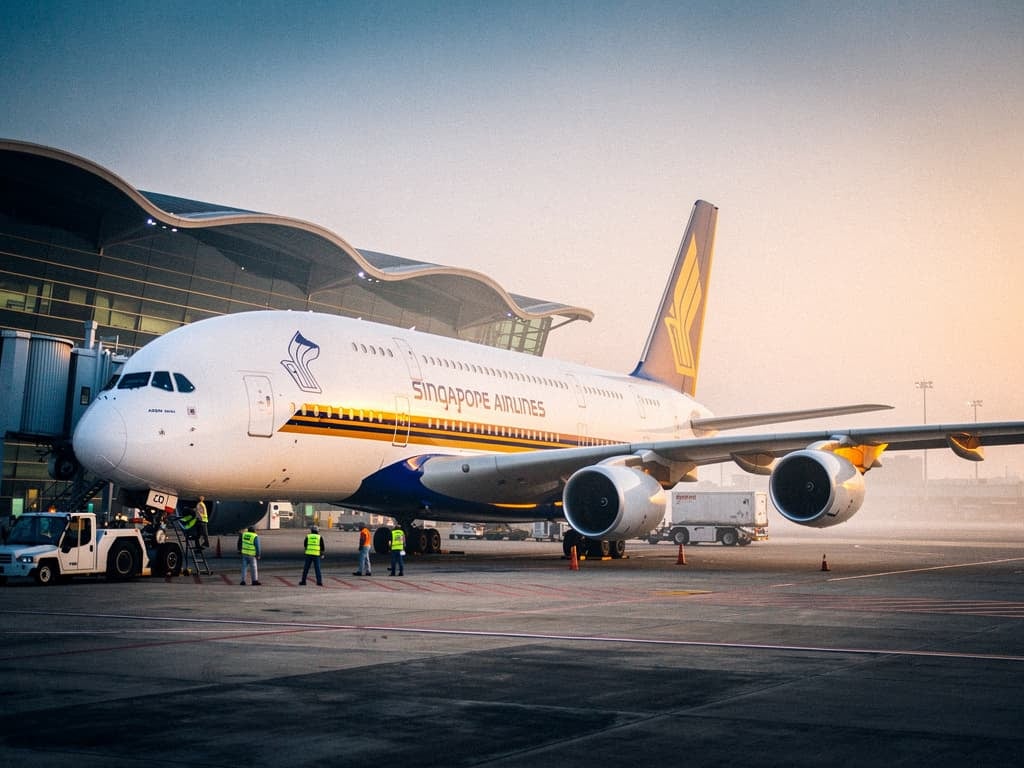
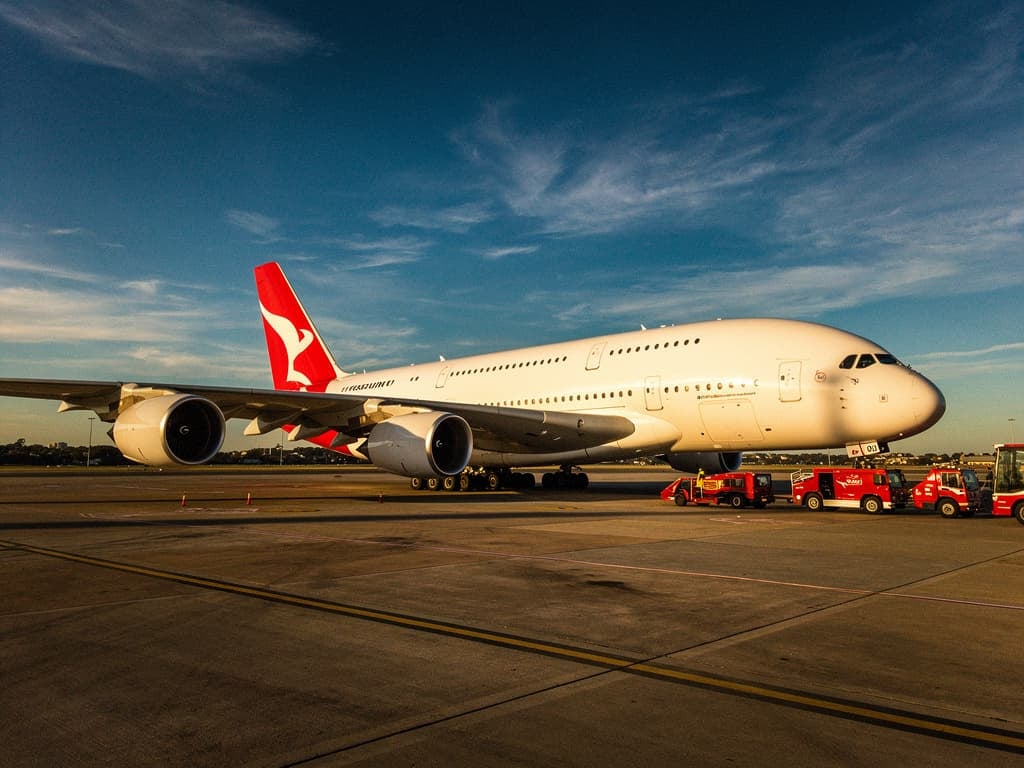
Singapore Airlines has pushed the restart of its suspended Singapore–Dubai service to August 3, 2026, the fourth delay since the original March 29 launch date — but the more consequential development is buried in the winter schedule. Booking data shows the airline has pulled all First Class and Premium Economy inventory from flights SQ494 and SQ495 across the entire October 25, 2026–March 27, 2027 northern winter season, a near-certain signal that the Airbus A380 is being dropped from the route and replaced by a two-class narrowbody, most likely the A350 Medium Haul.
Passengers holding premium cabin bookings on SIN-DXB this winter face a significant product downgrade — or need to rebook now. The Riyadh route is showing identical booking restriction patterns, suggesting a November 2026 launch is more realistic than the current September target.
Four delays in under two months. Singapore Airlines‘ Dubai restart has become one of the most-postponed route relaunches in the carrier’s recent history, and the latest slip — from June 1 to August 3, 2026 — follows a pattern that is starting to look less like cautious scheduling and more like structural retreat from the Middle East.
The summer picture, at least, is clear. Flights SQ494 and SQ495 will operate on a four-class Boeing 777-300ER from August 3 through October 24, 2026, offering First Class, Business, Premium Economy, and Economy. That’s the good news.
The winter picture is a different story entirely. Despite the A380 still appearing in the filed schedule for the October 25, 2026–March 27, 2027 season, the airline has stopped selling First Class and Premium Economy on every single Dubai departure across that five-month window. Both fare class families — F and A in First, S, T, and P in Premium Economy — have been pulled completely. The superjumbo is almost certainly not flying this route this winter.
This is not speculation. It is the same tell-tale inventory signal SIA used ahead of the summer 2026 A380 removal, when First Class was capped at four seats per flight before the formal reversion to the 777-300ER. The winter signal is stronger: both premium cabins gone, across the full season, simultaneously.
The most likely replacement is the two-class A350 Medium Haul — the same aircraft that served Dubai from the post-COVID restart in January 2021 through March 2025. A Boeing 787-10 is a secondary possibility, but the A350 MH fits the route’s recent operational history more cleanly. Either way, passengers flying SIN-DXB this winter are looking at a Business Class product with no suite doors, no First Class option, and no Premium Economy buffer — on a sector that runs 7 hours 40 minutes gate-to-gate westbound.
The details: what the schedule actually shows
The summer restart on August 3 represents the fourth iteration of a launch date that began at March 29, moved to April 30, then June 1, and has now landed on August 3. Industry sources confirm the ongoing Middle East geopolitical situation — specifically the airspace constraints following regional tensions earlier this year — remains the primary driver. The suspension has already eliminated 14 weekly direct flights, with passengers rerouting through Doha and Abu Dhabi at fare premiums of 20–30%.
The summer 777-300ER operation runs daily in both directions: SQ494 departs Singapore at 14:40, arriving Dubai at 18:00 (7h20m); SQ495 departs Dubai at 19:45, arriving Singapore at 07:30 the following morning (7h45m). Four-class configuration, full inventory available.
From October 25, the filed schedule shows the A380 — but with no First or Premium Economy seats for sale. The departure times shift slightly: SQ494 at 14:30 to Dubai 18:10 (7h40m), SQ495 at 19:50 to Singapore 07:15 (7h25m). The aircraft type listed is almost certainly a placeholder.
| Period | Aircraft (filed) | Likely actual | Cabins available | Flight duration |
|---|---|---|---|---|
| Aug 3 – Oct 24, 2026 | Boeing 777-300ER | Boeing 777-300ER | First, Business, Premium Economy, Economy | 7h20m–7h45m |
| Oct 25, 2026 – Mar 27, 2027 | Airbus A380 | Likely A350 Medium Haul | Business, Economy only (F and PE pulled) | 7h25m–7h40m |
| Sep–Oct 2026 (Riyadh) | Boeing 777 | Likely delayed to Nov 2026 | Flexi codes only (Z/Y restricted) | ~6h30m |

Flight deals most people never see
Our AI monitors 150+ airlines for pricing anomalies that traditional search engines miss. Air Traveler Club members save $650 per trip per person on average: see how it works.
Each deal saves 40–80% vs. regular fares:

The value-add: what this means for the A380 fleet and where it goes next
The Dubai withdrawal effectively frees one A380 frame for redeployment elsewhere in the NW26/27 winter schedule. Singapore Airlines currently has A380 operations planned for Auckland, Delhi, Frankfurt (until mid-January only), London Heathrow, Mumbai, Shanghai, and Sydney. Melbourne — the unexpected beneficiary of the Dubai disruption this summer, with the superjumbo restored from March 29 — is the most logical candidate to retain the type through winter, particularly given Australia’s peak summer travel season running December through February.
Auckland is another strong candidate. The route currently sees part-season A380 operation, with a switchover from Frankfurt in mid-January. With an extra frame available, both Auckland and Frankfurt could potentially run the superjumbo for the full winter season rather than splitting the aircraft between them.
Hong Kong and Tokyo Narita are darker horses — both have seen A380 deployments during peak demand windows historically, and the Chinese New Year period in late January 2027 creates a natural demand spike that could justify a temporary superjumbo assignment.
Air Traveler Club’s analysis of British Airways’ parallel Gulf capacity cuts — a 67% reduction on Dubai and 50% cuts to Doha and Riyadh — underscores how broadly carriers are pulling back from Middle East premium capacity this cycle. SIA’s A380 withdrawal from Dubai fits a wider pattern of airlines treating the Gulf as a variable-capacity market until geopolitical conditions stabilize.
Formal winter aircraft allocations typically firm up around August. But given the volume of advance bookings at stake, SIA may signal the Melbourne or Auckland decision sooner.
How to navigate SIN-DXB bookings through March 2027
Passengers with existing premium cabin bookings on SIA’s Dubai route this winter need to act before the formal aircraft swap is announced — at which point rebooking options narrow and alternatives fill up.
- Check SQ494/495 booking status immediately: Any itinerary on SIN-DXB between October 25, 2026 and March 27, 2027 should be treated as a downgrade risk. If you hold a First Class or Premium Economy booking, the airline will be obligated to rebook or refund — but proactive action gets better alternatives.
- Summer window is still viable: The August 3–October 24 period on the 777-300ER offers full four-class service. If your travel is flexible, shifting to this window preserves First Class and Premium Economy access on a competitive product.
- KrisFlyer award holders should search now: Business Class award space on Emirates and Qatar Airways for the SIN-DXB sector tightens significantly once SIA formally announces the downgrade. Search via partner programs — United MileagePlus can surface Singapore Airlines award space, while Avios accesses Qatar inventory.
- Riyadh travelers: assume November: The Flexi-only booking restriction on SIA’s Riyadh service through October 2026 mirrors the pattern that preceded every prior Dubai postponement. A November 2026 launch is the more realistic planning assumption.
- Watch August for Melbourne/Auckland confirmation: If SIA locks in year-round A380 service to Melbourne or extends Auckland’s superjumbo season, it signals the Dubai displacement is settled for the full winter — and those routes become the premium APAC alternatives worth booking early.
Watch: SIA’s formal winter schedule confirmation, expected by August 2026, will clarify both the Dubai aircraft type and where the freed A380 lands. Any announcement before then — particularly on Melbourne — would be an early signal worth acting on for southern hemisphere premium bookings.
FAQ
Will passengers already booked on SIA Dubai flights this winter get a refund or rebook?
Singapore Airlines’ standard advisory for suspended or downgraded services offers affected passengers either rebooking on alternative flights or a full refund. Passengers holding First Class or Premium Economy bookings for the October 25, 2026–March 27, 2027 period should contact the airline directly — or their booking agent — before the formal aircraft change is announced, as alternative premium inventory on competing carriers will tighten once the downgrade is public.
Is the August 3, 2026 restart date reliable, or could it slip again?
Given that the Dubai restart has already moved four times — from March 29 to April 30, then June 1, and now August 3 — the August date cannot be treated as firm. The underlying driver is Middle East geopolitical instability and airspace constraints, neither of which operates on a predictable timeline. Passengers planning travel in August should book refundable fares or monitor SIA’s schedule updates closely through June and July.
Which route is most likely to receive the freed A380 this winter?
Melbourne is the leading candidate, having already received the A380 at short notice from March 29, 2026 as a direct consequence of the Dubai disruption. Australia’s peak summer travel season runs December through February, aligning well with the NW26/27 winter period. Auckland is the second most likely option, potentially moving from part-season to full-season A380 operation. Hong Kong and Tokyo Narita are possibilities during the Chinese New Year peak in late January 2027. Formal confirmation is expected around August 2026.
Read more