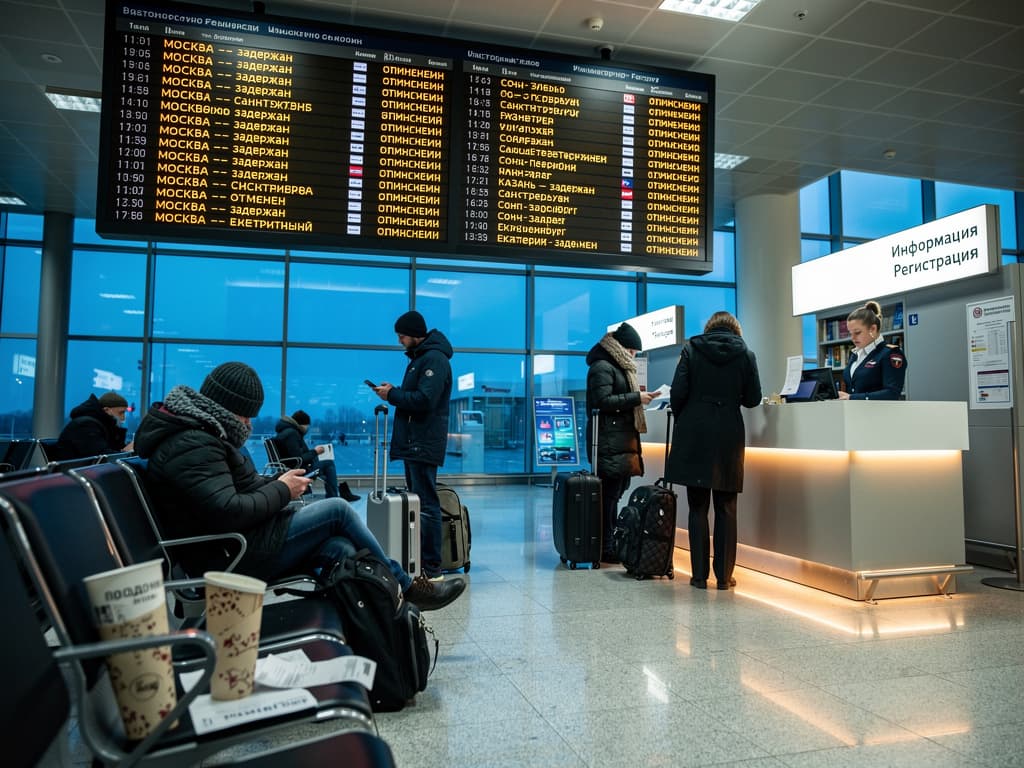
On March 23, 2026, 462 flight cancellations and 3,621 delays across Shanghai Pudong, Delhi, Jakarta, Dubai, and other Asia-Pacific hubs have stranded thousands of passengers. ANA Wings, Air China, Air India, Emirates, and Qatar Airways are among the carriers affected by cascading disruptions linked to ongoing Middle East airspace restrictions forcing Gulf carriers to reroute or cancel services.
All 49 China-Japan routes remain suspended through at least February 28 with no March resumption confirmed, eliminating key rerouting options. Travelers with bookings through affected hubs must contact airlines within 24 hours for rebooking or refunds.
A wave of flight cancellations swept across Asia-Pacific on March 23, grounding passengers at major hubs from Shanghai to Dubai. The disruption — 462 cancellations and 3,621 delays — stems from Middle East airspace restrictions that have forced Gulf carriers like Emirates and Qatar Airways to cancel or reroute over 100 flights, triggering crew and aircraft shortages at connecting hubs.
Passengers holding tickets on ANA Wings, Air China, Air India, and Gulf carriers through Shanghai Pudong (PVG), Delhi (DEL), Jakarta (CGK), or Dubai (DXB) face delays of 6–12 hours or overnight strandings.
The disruption affects travelers across all three ATC departure regions — North America, Europe, and Australasia — with connections through Asian hubs now subject to rolling delays as airlines reposition crews and aircraft. Recovery is expected within 2–5 days based on similar events in late February, but passengers with imminent travel must act now to secure alternative routings.
What triggered the cascade across multiple hubs
Middle East airspace restrictions — linked to ongoing regional conflict — forced Gulf carriers to cancel or reroute flights, creating a domino effect across Asia-Pacific hubs that rely on Gulf connections for crew rotations and aircraft positioning. When Emirates and Qatar Airways pulled flights from their Dubai and Doha hubs, airlines at Shanghai, Delhi, and Jakarta lost the crew and aircraft needed to operate their own services.
This is the third major disruption wave in under a month. On February 28, Indonesia, Japan, and China saw 58 cancellations and 2,120 delays at Jakarta, Kuala Lumpur, and Tokyo Haneda, with Batik Air canceling 18 flights at Jakarta alone. A similar cascade on March 12 produced over 150 cancellations at Jakarta, Kuala Lumpur, and Hong Kong.
The suspension of all 49 China-Japan routes — still in effect with no March resumption confirmed — has eliminated key rerouting options that airlines typically use during disruptions, forcing diversions through Singapore or Hong Kong and compounding delays. Previous disruptions in late February took 2–3 days to resolve as crews repositioned, but the lack of China-Japan alternatives is extending recovery timelines.
Bangkok’s Suvarnabhumi Airport reported 32 cancellations (16 inbound, 16 outbound) between February 28 and March 1, with extra staff mobilized to assist stranded passengers. Similar aid stations have been activated at affected airports today, with water and meal service available at Bangkok Gates 1 and 10.
| Hub | Cancellations | Delays | Primary carriers affected |
|---|---|---|---|
| Shanghai Pudong (PVG) | 118 | 892 | Air China, China Eastern |
| Delhi (DEL) | 94 | 731 | Air India, IndiGo |
| Jakarta (CGK) | 87 | 654 | Batik Air, Garuda Indonesia |
| Dubai (DXB) | 76 | 589 | Emirates, flydubai |
| Bangkok (BKK) | 52 | 441 | Thai Airways, Qatar Airways |
| Kuala Lumpur (KUL) | 35 | 314 | Malaysia Airlines, AirAsia |

Flight deals most people never see
Our AI monitors 150+ airlines for pricing anomalies that traditional search engines miss. Air Traveler Club members save $650 per trip per person on average: see how it works.
Each deal saves 40–80% vs. regular fares:

How this affects travelers from each region
The disruption hits differently depending on where you’re flying from. North American travelers connecting through Shanghai or Tokyo face the longest delays — the suspension of China-Japan routes eliminates the fastest Pacific crossings, forcing diversions through Seoul or Taipei that add 4–6 hours. United and ANA codeshare passengers should request rerouting via Seoul Incheon on Korean Air, which maintains stable schedules.
European travelers using Gulf hubs — Dubai, Doha, Abu Dhabi — for Asia connections are seeing the highest cancellation rates. Emirates and Qatar Airways have pulled multiple daily frequencies to Jakarta, Bangkok, and Delhi. Rebook via Singapore on Singapore Airlines or via Hong Kong on Cathay Pacific, both of which report minimal disruptions and maintain high-frequency A350 and A330 services.
Australian travelers face fewer direct impacts — Qantas and Singapore Airlines services from Sydney and Melbourne to Asia remain largely unaffected. However, connections through Bangkok and Jakarta for onward travel to India or the Middle East are experiencing 8–12 hour delays. Consider direct routings to Singapore and rebooking from there.
Within-Asia travelers — particularly those on budget carriers like AirAsia, IndiGo, and Batik Air — are seeing the highest delay rates as these airlines operate point-to-point networks with limited spare aircraft. If your flight is delayed more than 6 hours, request a full refund and rebook on a full-service carrier with available capacity.
Rebooking options and passenger rights
Airlines are issuing disruption waivers that allow free rebooking or full refunds for affected flights. Call the airline directly — do not wait for an email notification, as phone queues are growing by the hour.
Alternative routings: Singapore Airlines operates high-frequency A350 and B787 services through Singapore Changi with minimal disruptions and premium cabin availability. Korean Air via Seoul Incheon maintains stable B777 and A380 schedules to Jakarta, Delhi, and Shanghai, with competitive pricing for North American and European passengers. Cathay Pacific at Hong Kong offers frequent A330 connections to Dubai and Jakarta with strong business class positioning.
- Contact your airline within 24 hours to secure rebooking priority — waiver policies typically expire 48–72 hours after the disruption.
- Request routing via Singapore, Seoul, or Hong Kong if your original itinerary used Shanghai, Delhi, Jakarta, or Dubai as a connection point.
- Document all expenses if you’re stranded overnight — hotels, meals, ground transport. EU/UK passengers may qualify for €250–600 compensation under EU261 if the delay exceeds 3 hours and is not deemed extraordinary circumstances, though airspace restrictions typically fall into that category.
- Check airspace closure impacts if your rerouting involves Russian airspace — some carriers still operate over Siberia while others detour south, adding 2–4 hours to flight times.
- Monitor airline apps and SMS alerts for real-time updates — recovery schedules are fluid and flights may be reinstated or further delayed with 2–4 hours’ notice.
Watch: Civil Aviation Administration of China (CAAC) and India’s Directorate General of Civil Aviation (DGCA) statements on airspace normalization — expected within 48 hours. If issued, full resumption at Shanghai and Delhi is likely by March 25. If not, expect 3–5 days of rolling cancellations as crews and aircraft reposition.
Are airlines required to compensate passengers for these delays?
EU and UK passengers may qualify for €250–600 compensation under EU261/UK261 if delays exceed 3 hours, but airspace restrictions typically qualify as extraordinary circumstances, exempting airlines from compensation. US and Canadian passengers are entitled to refunds for cancellations but not compensation. Australian and New Zealand passengers can claim refunds and rebooking under consumer protection laws. All passengers should request meal vouchers and hotel accommodation if stranded overnight.
How long will it take for schedules to return to normal?
Based on similar disruptions on February 28 and March 12, recovery typically takes 2–5 days as airlines reposition crews and aircraft. The suspension of China-Japan routes is extending recovery timelines by eliminating key rerouting options. Expect rolling delays through March 25–27, with full normalization dependent on Middle East airspace reopening.
Should I cancel my trip if I’m flying through an affected hub in the next week?
If your departure is within 48 hours and uses Shanghai, Delhi, Jakarta, or Dubai as a connection point, contact your airline immediately to reroute via Singapore, Seoul, or Hong Kong. If your departure is 3–7 days out, monitor airline notifications — schedules may stabilize by March 25. Do not cancel without contacting the airline first, as you may forfeit refund rights.
Read more