Summary
Kuala Lumpur International Airport Terminal 1’s baggage handling system failed on April 18, 2026, forcing arriving passengers to wait 2-4 hours for checked luggage after a substation trip disabled backup power units. Transport Minister Anthony Loke convened an emergency meeting on April 20 and directed Malaysia’s Civil Aviation Authority to investigate punitive action against airport operator Malaysia Airports Holdings Bhd for the breakdown — the latest in a pattern of infrastructure failures at KLIA that now threatens the hub’s viability for premium cabin itineraries.
The incident hit business class passengers on Malaysia Airlines, Singapore Airlines, and Emirates hardest, disrupting tight connections to lounges and ground transport. No compensation framework has been announced.
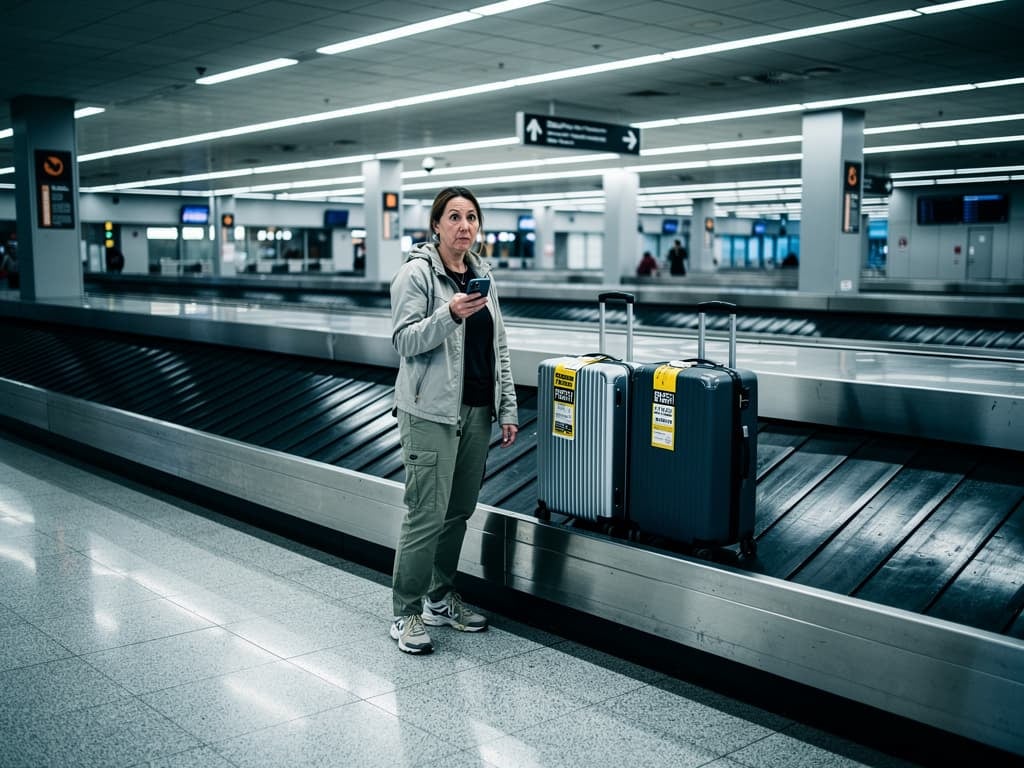
Premium travelers arriving at Kuala Lumpur International Airport on the evening of April 18 faced a scenario no business class fare should ever include: standing in baggage claim for up to four hours while the airport’s handling system remained offline. The breakdown, caused by a substation electrical trip that knocked out six backup power units, left passengers from regional and long-haul flights stranded without luggage — and without answers.
The disruption affected Terminal 1, KLIA’s primary international gateway serving Malaysia Airlines business class, Emirates First Class, and Star Alliance premium cabins. While the system was restored the same evening, the damage extended beyond missed hotel check-ins: passengers with tight connections to domestic flights or onward travel faced cascading delays, and elite flyers accustomed to priority baggage tags discovered those privileges meant nothing when the entire system goes dark.
Transport Minister Anthony Loke’s response was swift but familiar. He ordered an emergency meeting for April 20 to review standard operating procedures governing breakdown management, with specific focus on response time, passenger communication, and contingency protocols. The Civil Aviation Authority of Malaysia now has a mandate to investigate whether Malaysia Airports Holdings Bhd — KLIA’s operator — should face punitive action for what Loke called a failure that “passengers who travel through our national gateway” should never experience.
This isn’t KLIA’s first operational meltdown. The airport’s Aerotrain system collapsed in October 2025, forcing passengers to walk the tracks between terminals. A March 2026 disruption preceded this baggage failure. The pattern suggests systemic infrastructure neglect rather than isolated technical faults — a distinction that matters when you’re booking premium cabin tickets through a hub that can’t guarantee basic ground services.
The breakdown sequence and regulatory response
The April 18 failure began with a substation trip that caused a voltage dip across Terminal 1’s baggage handling infrastructure. Six backup power units failed to engage, leaving the automated sorting system offline for the entire evening arrival wave. Passengers reported waiting between two and four hours in baggage claim, with no communication from airport staff about estimated restoration times or alternative retrieval options.
Malaysia Airports Holdings Bhd restored the system the same evening, but Minister Loke made clear that technical fixes don’t close the matter. “The incident points to something that must be addressed at a deeper level,” he stated, directing CAAM to examine whether the operator’s service delivery failures warrant enforcement action under Malaysia’s Quality of Service standards for airport operations.
The regulatory investigation will focus on MAHB’s compliance with established service standards, including timely and efficient baggage handling. CAAM has confirmed it will “take appropriate regulatory and enforcement actions in the event of any non-compliance,” though the authority has not specified potential penalties or timelines for its review.
| Airport | Average baggage delivery | Premium cabin priority | Recent major disruptions |
|---|---|---|---|
| KLIA Terminal 1 | 2-4 hours (April 18) | Priority tags ineffective during outage | April 2026, March 2026, October 2025 |
| Singapore Changi T1 | Under 30 minutes | Automated fast-track for Star Alliance Gold | None in past 12 months |
| Doha Hamad | 20-25 minutes | Dedicated belts for Qatar Qsuite/First | None in past 12 months |
| Dubai International | 25-35 minutes | Emirates First/Business priority belts | Minor delays during peak hours only |
The emergency meeting scheduled for April 20 will include the ministry’s secretary-general and relevant agencies, with a mandate to undertake what Loke described as “a thorough review of the existing SOPs.” The minister emphasized that “a national gateway cannot afford repeated lapses of this nature” — language that suggests the government recognizes KLIA’s infrastructure problems have reached a threshold that threatens Malaysia’s aviation competitiveness.
For context, Air Traveler Club’s coverage of the initial breakdown documented how the power failure disabled not just the baggage system but also passenger communication channels, leaving travelers without status updates or alternative instructions during the four-hour wait.

Flight deals most people never see
Our AI monitors 150+ airlines for pricing anomalies that traditional search engines miss. Air Traveler Club members save $650 per trip per person on average: see how it works.
Each deal saves 40–80% vs. regular fares:

What this means for premium cabin routing decisions
KLIA’s repeated infrastructure failures create a specific problem for business class and first class passengers: the airport’s operational unreliability now carries a higher cost than the premium cabin fare differential you’re paying to avoid exactly these kinds of disruptions. When you book Malaysia Airlines business class or connect through KLIA on Singapore Airlines KrisFlyer awards, you’re accepting exposure to an airport operator that has demonstrated it cannot maintain basic ground services.
The competitive context matters here. Singapore Changi Terminal 1 delivers baggage in under 30 minutes with automated fast-track for Star Alliance Gold members. Doha’s Hamad International operates dedicated belts for Qatar Airways Qsuite and First Class passengers, with 20-25 minute average delivery times. Dubai International maintains 25-35 minute standards even during peak hours. KLIA’s April 18 performance — 2-4 hours with zero communication — places it in a different operational category entirely.
For premium travelers booking Southeast Asia itineraries, the calculus now includes infrastructure risk assessment. Malaysia Airlines Enrich Platinum and Singapore Airlines KrisFlyer PPS Club members discovered on April 18 that elite status offers no protection when the airport’s physical systems fail. Priority baggage tags become meaningless when the entire handling system is offline.
Strategic guidance for bookings through May 2026
The Civil Aviation Authority investigation creates a decision point for premium travelers with KLIA itineraries: wait for regulatory outcomes or reroute now to avoid exposure to an airport operator that has failed three times in six months.
- Reroute existing bookings: Singapore Airlines KrisFlyer awards rebook free within 12 months if you can document delay concerns; Malaysia Airlines protects business class fares to same cabin on next available flight. Contact airlines within 24 hours to explore Singapore Changi or Bangkok Suvarnabhumi alternatives on the same alliance.
- Avoid Terminal 1 arrivals until infrastructure upgrades confirmed: MAHB has not announced capital expenditure plans or backup power system replacements. Until the Civil Aviation Authority investigation concludes and specific remediation measures are implemented and tested, KLIA Terminal 1 carries unacceptable operational risk for premium cabin itineraries.
- Verify baggage insurance coverage: Standard travel insurance policies exclude “normal” baggage delays under four hours. Premium credit card trip delay coverage (Chase Sapphire Reserve, Amex Platinum) typically requires six-hour delays. The April 18 incident fell into a coverage gap for most travelers.
- Prioritize carry-on strategies: If KLIA routing is unavoidable, minimize checked baggage exposure. Malaysia Airlines business class allows two carry-on pieces; Singapore Airlines permits one carry-on plus personal item. Ship bulky items separately via courier to destination hotels.
Watch for the Civil Aviation Authority’s ruling by May 2026. If CAAM imposes financial penalties and mandates infrastructure upgrades, expect gradual service improvements by third quarter 2026. If the investigation produces no enforcement action, KLIA’s operational problems will likely accelerate as deferred maintenance compounds.
FAQ
Can I claim compensation for the April 18 baggage delays at KLIA?
Malaysia has no statutory compensation framework for baggage delays under four hours. File claims through your operating airline within 24 hours, citing missed connections or documented expenses. Malaysia Airlines and Singapore Airlines may offer goodwill gestures for elite members, but no automatic compensation applies.
Will Malaysia Airlines or Singapore Airlines rebook me away from KLIA for free?
Singapore Airlines KrisFlyer awards allow free rebooking within 12 months if you document operational concerns; contact the airline with your reservation number. Malaysia Airlines typically requires schedule changes exceeding 60 minutes for no-fee rebooking, but elite members can request routing changes citing the April 18 incident. Success depends on available inventory and fare class protection.
How does KLIA’s baggage handling compare to other Southeast Asian hubs?
Singapore Changi delivers baggage in under 30 minutes with automated systems and dedicated premium cabin belts. Bangkok Suvarnabhumi averages 35-45 minutes. KLIA’s April 18 failure — 2-4 hours with no passenger communication — represents the worst performance among major Southeast Asian hubs in the past 12 months. The pattern of repeated outages (October 2025, March 2026, April 2026) suggests systemic infrastructure problems rather than isolated incidents.
Should I avoid booking premium cabin tickets through KLIA until the investigation concludes?
Yes, if alternative routing exists. Until Malaysia Airports Holdings Bhd announces specific infrastructure upgrades and the Civil Aviation Authority investigation produces enforcement action, KLIA Terminal 1 carries unacceptable operational risk for business class and first class itineraries. Reroute via Singapore Changi or Bangkok Suvarnabhumi on Star Alliance partners, or use Doha Hamad for oneworld connections. The cost of missed connections and ground transport delays exceeds any fare savings from KLIA routing.
Read more