Summary
Emirates has returned its first Airbus A380 to service equipped with Starlink satellite Wi-Fi, delivering more than 2 Gbps of total aircraft bandwidth — a thousand-fold improvement over legacy systems that topped out below 1 Mbps. The service is free across all cabin classes, with no login required on personal devices. The rollout follows 25 Boeing 777-300ERs already fitted with Starlink, which have collectively served more than 650,000 passengers since deployment began.
Additional A380s will be retrofitted through 2026 at Emirates Engineering facilities in Dubai, meaning equipped aircraft remain scarce in the near term. Knowing which flights operate the Starlink-fitted A380 is the difference between a productive long-haul and a frustrating one.
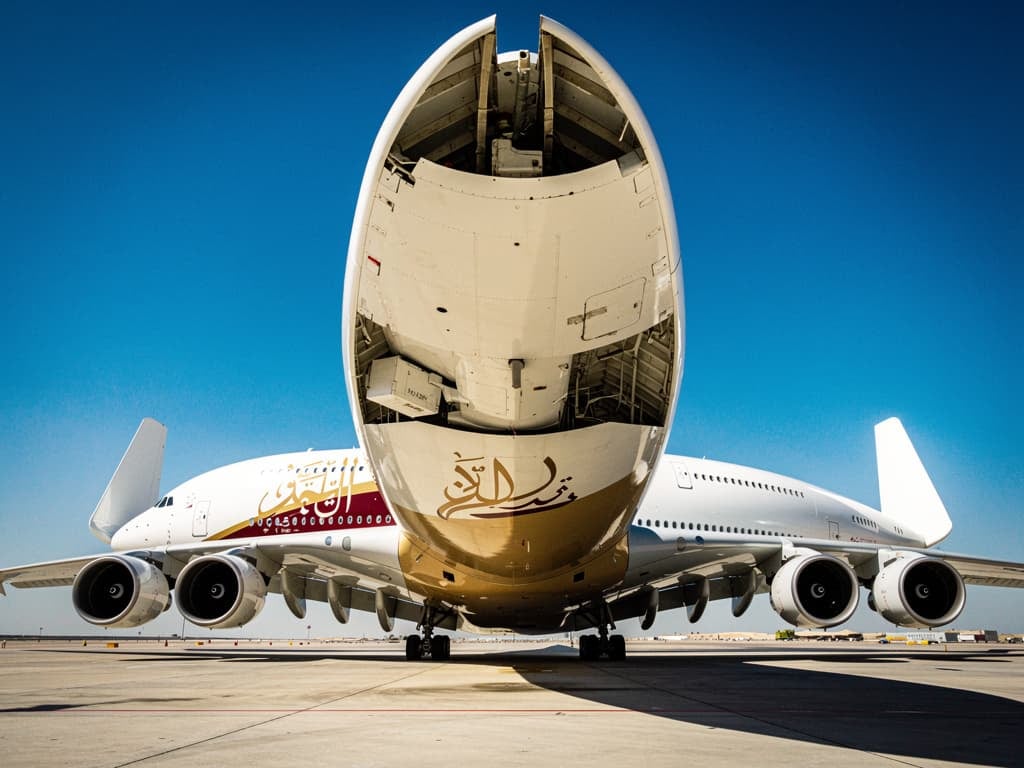
Free, ground-speed internet at 40,000 feet just became real on the world’s largest passenger aircraft. Emirates confirmed this week that its first Starlink-equipped Airbus A380 — registration A6-EEA — has returned to Dubai following installation and certification work in Newquay, United Kingdom, marking the opening move in a fleet-wide connectivity overhaul that will reshape expectations for long-haul travel.
Three Starlink antennas mounted on each A380 push total aircraft bandwidth past 2 Gbps, compared with the sub-1 Mbps ceiling that defined onboard internet for most of the past decade. That is not an incremental upgrade. Streaming 4K video, joining video calls, and running cloud-based work applications simultaneously — activities that would have saturated an entire aircraft’s legacy connection — now fall comfortably within a single passenger’s bandwidth budget.
The service carries no fare class restriction and no paywall. Every passenger, from economy to First, connects on personal devices at no charge. Emirates has already validated the model: the earlier Starlink deployment across 25 Boeing 777-300ERs generated more than 650,000 user sessions before the A380 program even launched. The A380 rollout accelerates through the rest of 2026, with retrofit work shifting from Newquay to Emirates Engineering’s own facilities in Dubai.
Live TV streaming via Starlink is also in the pipeline — initially on personal devices, with integration into seatback screens planned as a subsequent phase.
The Starlink A380 upgrade in detail
The technical gap between what Starlink delivers and what came before it is difficult to overstate. Emirates’ original A380 Wi-Fi systems, introduced in the late 2000s, enabled basic email on a good day. Ku-band upgrades that followed — including OnAir systems — offered paid plans that rarely exceeded a few Mbps under real load. The Emirates media centre announcement describes the Starlink installation as delivering a “better than at home” experience, a claim the bandwidth numbers support: three low-earth-orbit antennas per aircraft, aggregating to more than 2 Gbps shared across the cabin.
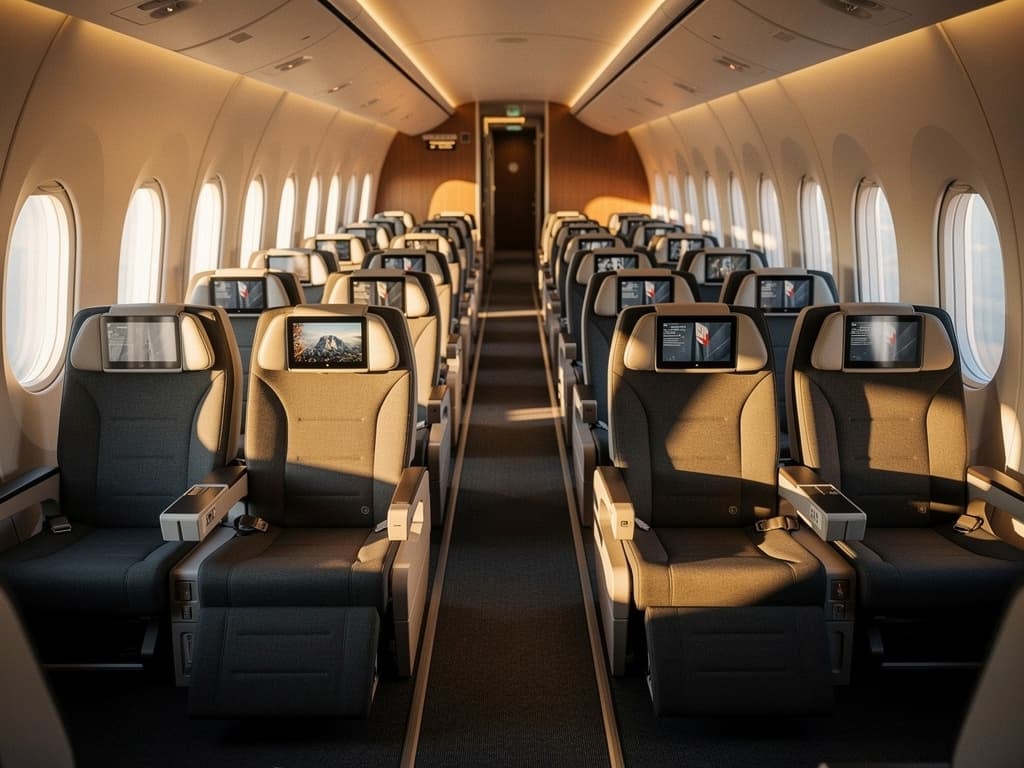
The A380 configuration uses one additional antenna compared to the two-antenna setup on the 777-300ER fleet — a deliberate choice given the double-decker aircraft’s larger passenger count. A typical Emirates A380 carries 14 First Class suites, 76 Business Class seats, and 427 Economy seats, meaning the connectivity load is substantially higher than on a narrowbody or single-aisle aircraft.
| Airline / Aircraft | Connectivity system | Peak bandwidth | Cost to passenger | Seatback integration |
|---|---|---|---|---|
| Emirates A380 (Starlink) | Starlink LEO (3 antennas) | >2 Gbps aircraft total | Free, all cabins | Planned (phase 2) |
| Emirates 777-300ER (Starlink) | Starlink LEO (2 antennas) | >1 Gbps aircraft total | Free, all cabins | Not announced |
| Qatar Airways A380 (Qsuite routes) | Hughes Connect Ku-band | ~50–100 Mbps peak | Paid plans | Yes |
| Etihad Airways 777 | Viasat Ka-band | Variable | Paid plans | Yes |
| Singapore Airlines 777-300ER (Suites) | Hughes Ka-band | ~100 Mbps peak | Free (Suites class) | Yes |

Flight deals most people never see
Our AI monitors 150+ airlines for pricing anomalies that traditional search engines miss. Air Traveler Club members save $650 per trip per person on average: see how it works.
Each deal saves 40–80% vs. regular fares:

Why free 2 Gbps changes the competitive calculus
Connectivity has long been the soft underbelly of premium long-haul travel. Carriers invested heavily in flat beds, direct-aisle access, and champagne service while quietly charging $20–$40 for Wi-Fi that struggled to load a webpage at cruise altitude. Emirates is dismantling that model entirely — and doing so on an aircraft that carries more than 500 passengers per flight.
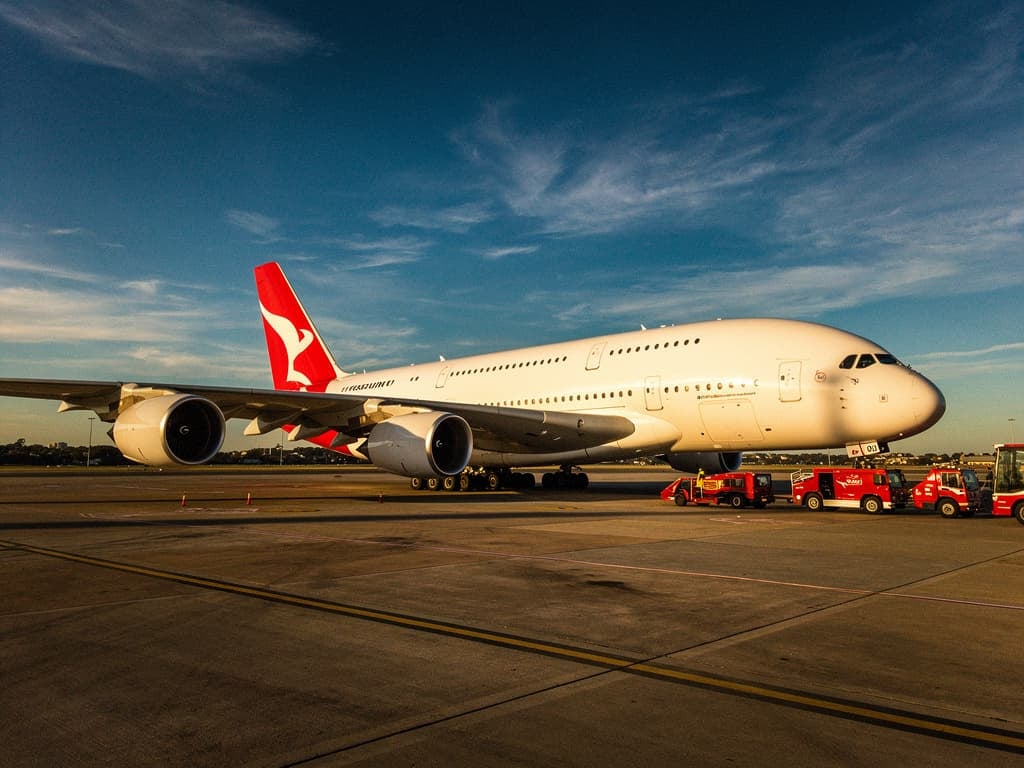
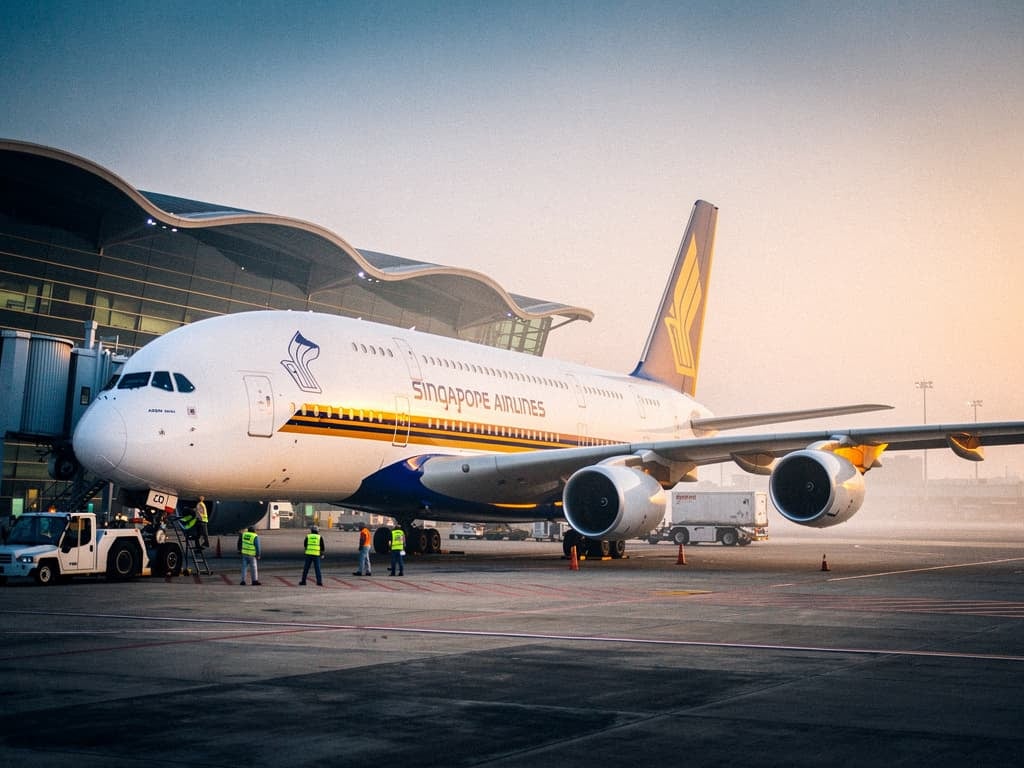
The competitive pressure this creates is immediate. Qatar Airways‘ Qsuite product remains the benchmark for business class hardware — 78-inch beds, closing doors, a convertible double — but its Hughes Connect system tops out around 100 Mbps across the aircraft and remains a paid service. Singapore Airlines offers free connectivity in Suites class, but that benefit is cabin-restricted. Emirates is offering the same bandwidth floor to the passenger in 58K economy as to the one in the First Class shower suite.
Air Traveler Club’s analysis of the A380 Starlink installation notes that the aircraft registration A6-EEA is the first of what Emirates intends as a full-fleet program — making this week’s return to service the opening data point in a multi-year connectivity transformation.
The business traveler calculus shifts meaningfully once Starlink becomes standard across the A380 fleet. A Dubai–London or Dubai–New York sector at 13–14 hours with genuine broadband access is no longer dead time. It is a working day — one that does not require a business class seat to access.
How to find and book a Starlink-equipped Emirates A380
Equipped aircraft are scarce right now — one A380 confirmed, with additional retrofits accelerating through the rest of 2026. Identifying the right flight before booking is worth the extra step.
- Check the aircraft registration at booking: A6-EEA is the first confirmed Starlink A380. Emirates.com seatmaps and the Emirates app display equipment type; a Starlink indicator is expected to be added as the rollout expands. Cross-reference with flight status tools that show tail numbers.
- Target high-frequency A380 routes: Dubai–London Heathrow, Dubai–New York JFK, Dubai–Sydney, and Dubai–Paris operate A380s on multiple daily frequencies. These are the most likely early recipients of additional retrofits given passenger volume and route prestige.
- Prioritize A380 over 777-300ER for connectivity parity: The 777-300ER Starlink fleet (25 aircraft, two antennas) already delivers strong performance. But the A380’s three-antenna configuration and larger cabin make it the higher-bandwidth option per passenger once equipped.
- Monitor Emirates Engineering retrofit pace: Work has shifted from Newquay to Dubai, which should accelerate throughput. A meaningful portion of the A380 fleet — Emirates operates more than 100 — could be equipped by late 2026 if the pace holds.
- Watch for live TV integration timing: The seatback screen Starlink integration is a separate phase. Passengers wanting that feature should wait for Emirates to confirm which aircraft have completed the full upgrade, not just the antenna installation.
FAQ
Is the Starlink Wi-Fi on Emirates A380 really free for all passengers?
Emirates has confirmed the service is complimentary across all cabin classes — First, Business, and Economy — with no login required on personal devices. The airline’s existing paid Wi-Fi plans on non-Starlink aircraft are being phased out as the retrofit program expands.
How do I know if my Emirates flight has Starlink installed?
Currently, only one A380 (registration A6-EEA) is confirmed Starlink-equipped. Check the Emirates app or Emirates.com for aircraft type and tail number information closer to departure. Emirates has indicated a Starlink indicator will be added to booking tools as the rollout scales through 2026.
How does Emirates Starlink compare to what Qatar Airways and Singapore Airlines offer?
Qatar Airways uses Hughes Connect Ku-band on A380 routes, delivering roughly 50–100 Mbps aircraft-wide on a paid basis. Singapore Airlines offers free Hughes Ka-band in Suites class, capped around 100 Mbps. Emirates Starlink delivers more than 2 Gbps total aircraft bandwidth at no charge to any passenger, regardless of cabin — a significant lead on both speed and access model.
When will live TV streaming via Starlink be available on Emirates A380s?
Emirates has confirmed live TV streaming via Starlink will launch first on personal devices, with seatback screen integration planned as a subsequent phase. No specific date has been announced for either milestone as of late April 2026.
Read more