Summary
Emirates president Tim Clark has confirmed the airline is actively exploring private en-suite bathrooms inside individual first-class suites — a concept that would represent the most significant leap in commercial cabin design since the carrier introduced shared onboard shower spas on the Airbus A380 in 2008. The target platform is the Boeing 777 Game Changer first class, where just six fully enclosed suites in a 1-1-1 layout create the spatial conditions that make the concept architecturally plausible.
No timeline has been confirmed, and significant engineering hurdles remain. The Boeing 777X delivery window of 2026–2027 is the most credible trigger for any prototype testing.
The shared shower spa has defined Emirates first class for nearly two decades. That may be about to change.
Speaking at an industry event in Berlin, Emirates president Tim Clark revealed the airline is actively working on the concept of private en-suite bathrooms integrated directly into individual first-class suites — a move that would eliminate the one remaining communal element of the carrier’s most exclusive cabin. Clark made clear the airline views standing still as a competitive liability, not a strategy.
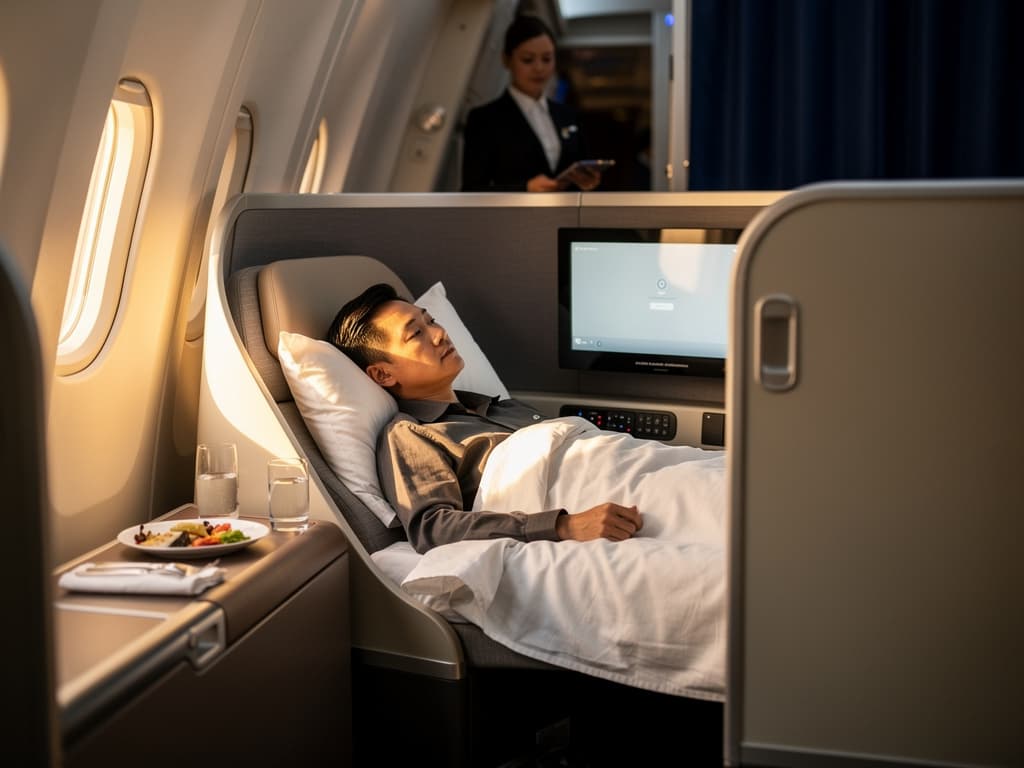
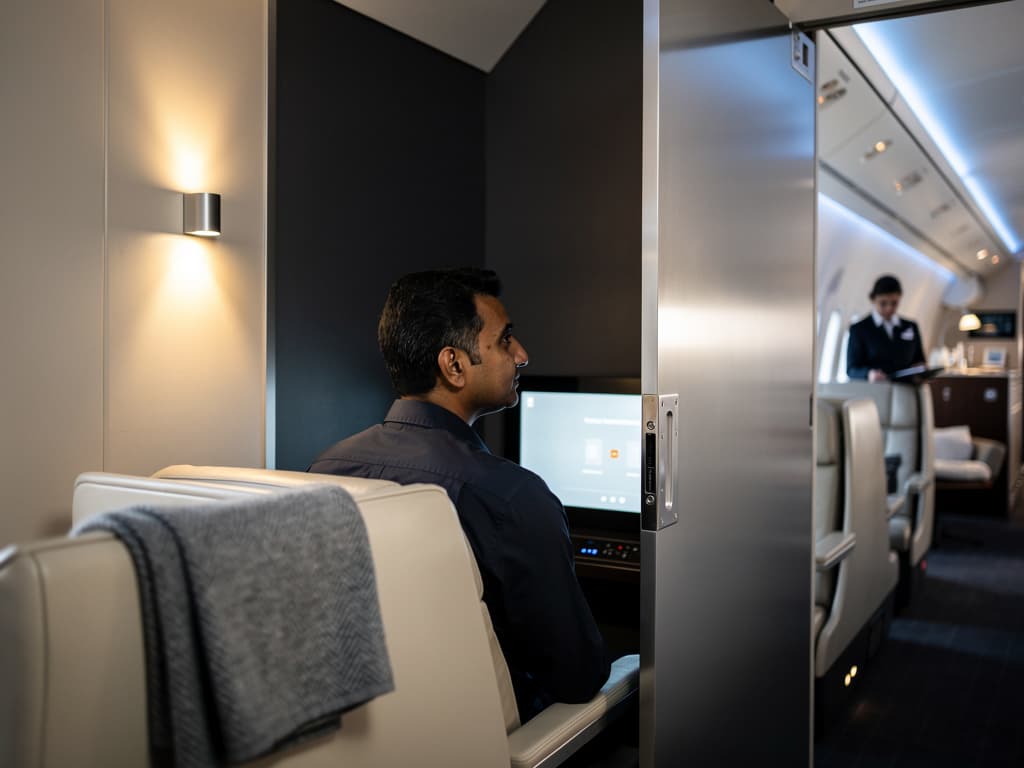
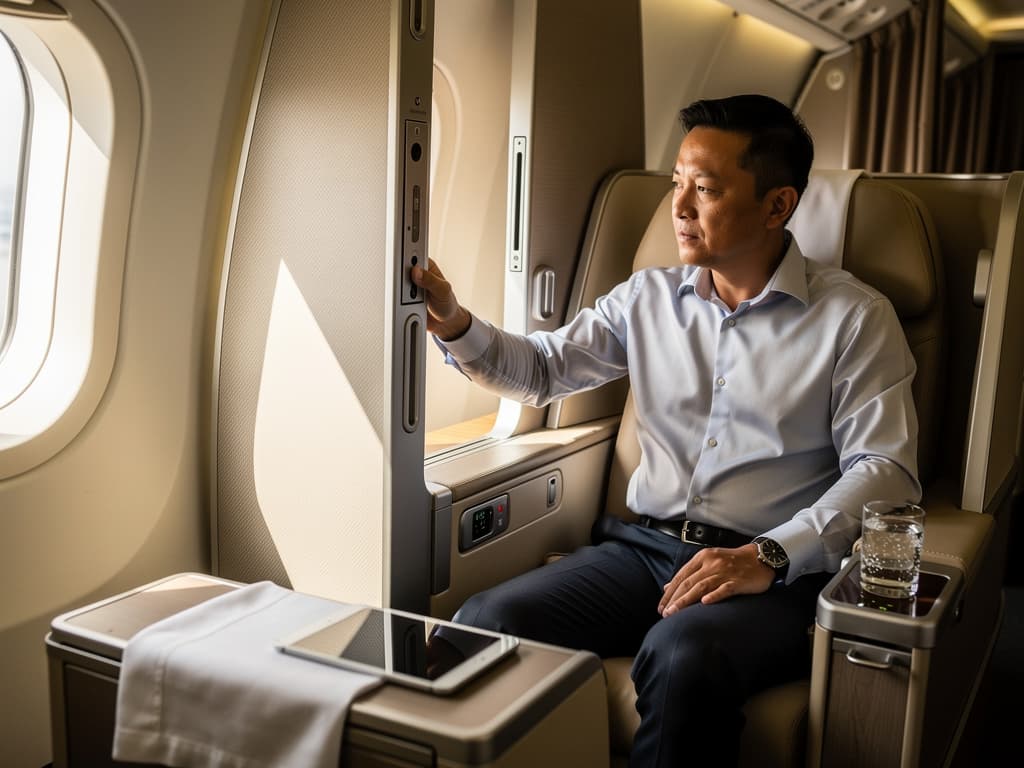
The target is the Boeing 777-300ER Game Changer configuration, which already offers the most enclosed, private-jet-adjacent experience in commercial aviation. With just six suites in a 1-1-1 layout, each measuring approximately 40 square feet with floor-to-ceiling walls and sliding privacy doors, the cabin has the geometry that makes private wet facilities conceivable — if not yet certifiable.
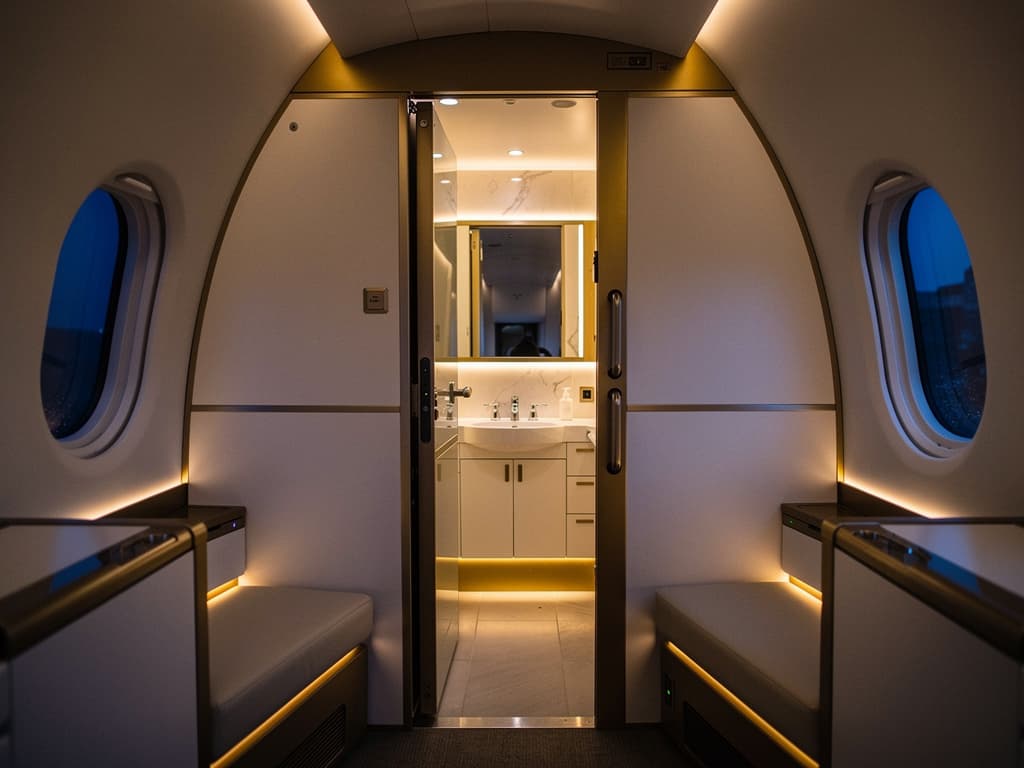
The contrast with the A380 product is instructive. Emirates’ flagship widebody carries two shared shower spas at the front of the first-class cabin, each offering 5-minute shower slots with heated floors and attendant service. Elegant, yes — but communal. The Game Changer suites on the 777 took a different design philosophy entirely, prioritizing absolute enclosure over shared amenities. Private bathrooms would complete that logic.
What the concept actually involves
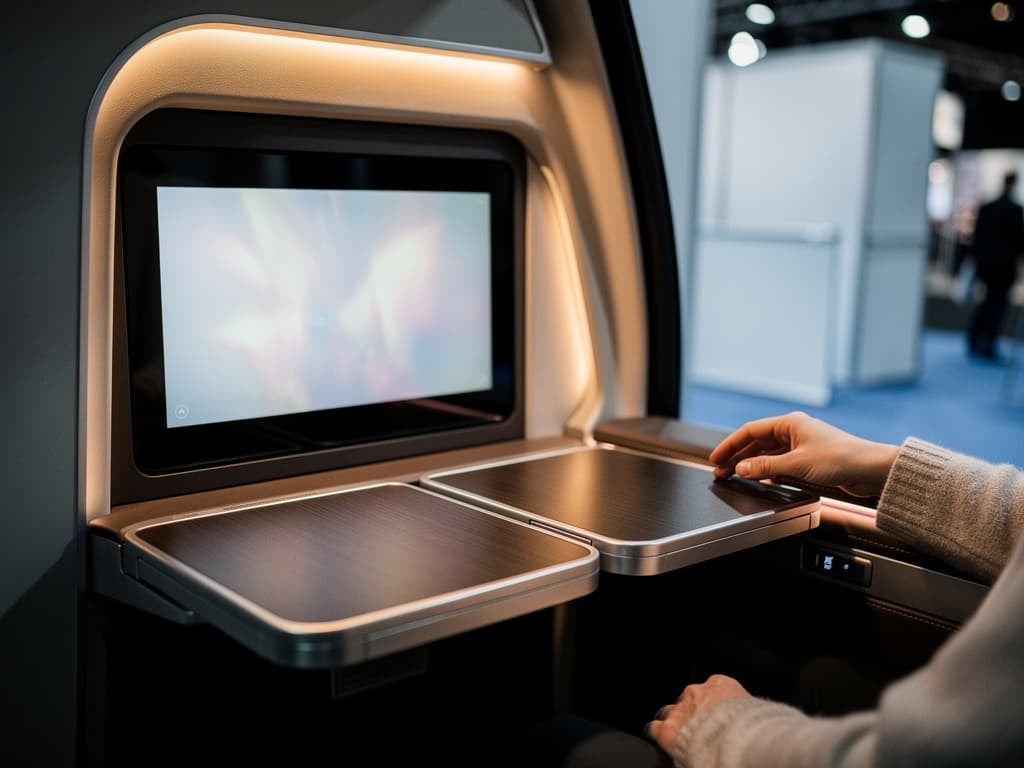
Emirates has operated two distinct first-class products simultaneously for years, and understanding the difference matters here. The A380 product offers spacious but semi-open suites, a bar and lounge, and those shared shower spas — a social luxury experience. The Game Changer suites on the 777-300ER took a fundamentally different approach: maximum enclosure, a crew service window that eliminates the need to open the door for meal delivery, and a do-not-disturb function that makes the suite genuinely self-contained.
Adding a private bathroom to that architecture would require solving three distinct engineering problems: water weight (each fixture adds an estimated 500+ lbs to the aircraft), plumbing integration within existing fuselage constraints, and FAA/EASA recertification — a process that typically spans two to three years from prototype to approval.
| Airline / Product | Suite size | Privacy level | Private wet facilities | Approximate cash fare (one-way) |
|---|---|---|---|---|
| Emirates Game Changer (777-300ER) | ~40 sq ft | Full door, floor-to-ceiling walls | None (shared A380 spa on separate aircraft) | $10,000–$15,000 DXB–LAX |
| Singapore Airlines Suites (A380) | ~50 sq ft | Full sliding door, 1-2-1 layout | None (shared lavatory) | ~$15,000 DXB–SIN |
| Etihad The Residence (A380) | 125 sq ft | Standalone apartment, full door | Private shower and bedroom | ~$25,000 AUH–LHR |
| Emirates A380 First Class | ~35 sq ft (suite) | Partial walls, sliding door | Shared shower spa (2 units, 5-min slots) | $8,000–$12,000 DXB–JFK |

Flight deals most people never see
Our AI monitors 150+ airlines for pricing anomalies that traditional search engines miss. Air Traveler Club members save $650 per trip per person on average: see how it works.
Each deal saves 40–80% vs. regular fares:

Why this matters beyond the headline
The competitive context makes Clark’s statement more than aspirational marketing. Etihad‘s Residence — a 125-square-foot standalone apartment with a private shower, separate bedroom, and dedicated butler — has occupied a unique position at the very top of commercial aviation for years. Emirates has matched it on privacy and surpassed it on route network, but the wet-room gap has remained. Private en-suite bathrooms on the Game Changer would eliminate that distinction entirely, on a product available across a far wider network than the Residence’s limited A380 deployment.
Air Traveler Club’s analysis of Gulf carrier premium pricing from European departure points highlights how Emirates and Etihad compete aggressively on both product and price — context that matters when evaluating whether a bathroom upgrade translates into fare premium or becomes a baseline expectation.
The 777X delivery timeline is the real signal to watch. If Emirates receives its first Boeing 777X aircraft in 2026 or 2027 as currently projected, that new platform — with a wider fuselage and redesigned cabin architecture — provides the most credible opportunity to prototype wet-room integration without retrofitting existing aircraft.
What the 777X timeline means for Game Changer passengers
This remains an exploration, not an announcement — and the distinction matters for anyone making booking decisions today. The current Game Changer product is exceptional on its own terms, and no confirmed upgrade path exists for existing 777-300ER aircraft.
Watch for Emirates’ 777X delivery confirmation, expected in the 2026–2027 window. If the carrier announces a new first-class cabin architecture alongside that delivery — rather than a straight carry-over of the existing Game Changer design — that would be the first credible signal that private bathroom prototypes have cleared initial engineering review. An FAA or EASA supplemental type certificate application would confirm the concept has moved from concept to hardware.
Until then, passengers seeking private wet facilities in commercial aviation have one option: Etihad‘s Residence, available on select A380 routes from Abu Dhabi, at fares starting around $25,000 one-way. Emirates’ shared A380 shower spas — available in 5-minute slots with heated floors and attendant service — remain the carrier’s current answer to that standard.
Read more