Summary
Prince Harry and Meghan Markle flew Qantas first class from Los Angeles to Melbourne on April 14, 2026, occupying seats 3E and 3F in the carrier’s premium A380 cabin — a departure from their 2018 royal tour arrival via private suite but not the economy-class optics some outlets suggested. The couple’s choice of commercial first class over private aviation positions them within the accessible-luxury tier while maintaining the fully enclosed suites, caviar service, and 6’7″ lie-flat beds that define transpacific premium travel.
Royal commentators frame the move as strategic image management amid financial scrutiny. The four-day privately funded visit includes stops at Melbourne’s Royal Children’s Hospital, speaking engagements in Canberra, and a luxury women’s retreat in Sydney with tickets reaching $2,250.
When Prince Harry and Meghan Markle touched down in Melbourne on April 14, fellow passengers didn’t immediately recognize the Duke and Duchess of Sussex. One American traveler told Australian media it wasn’t until deplaning that the couple’s presence became clear — a stark contrast to their 2018 arrival, when they stepped off a Qantas private suite into a media scrum announcing Meghan’s pregnancy with Archie.
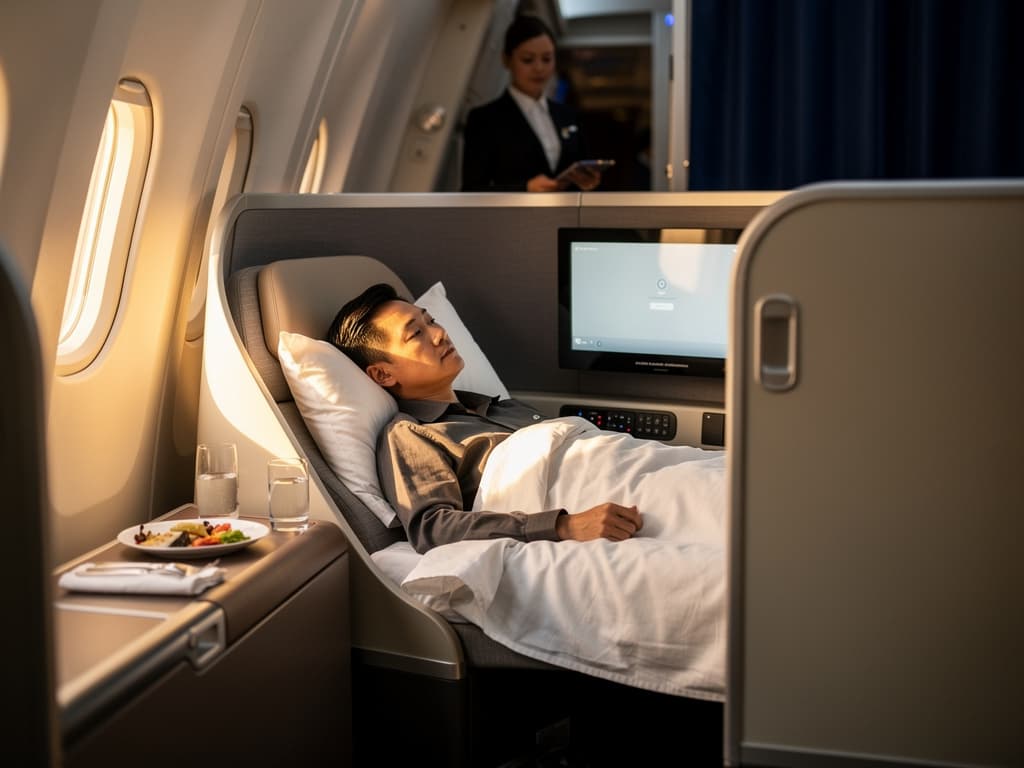
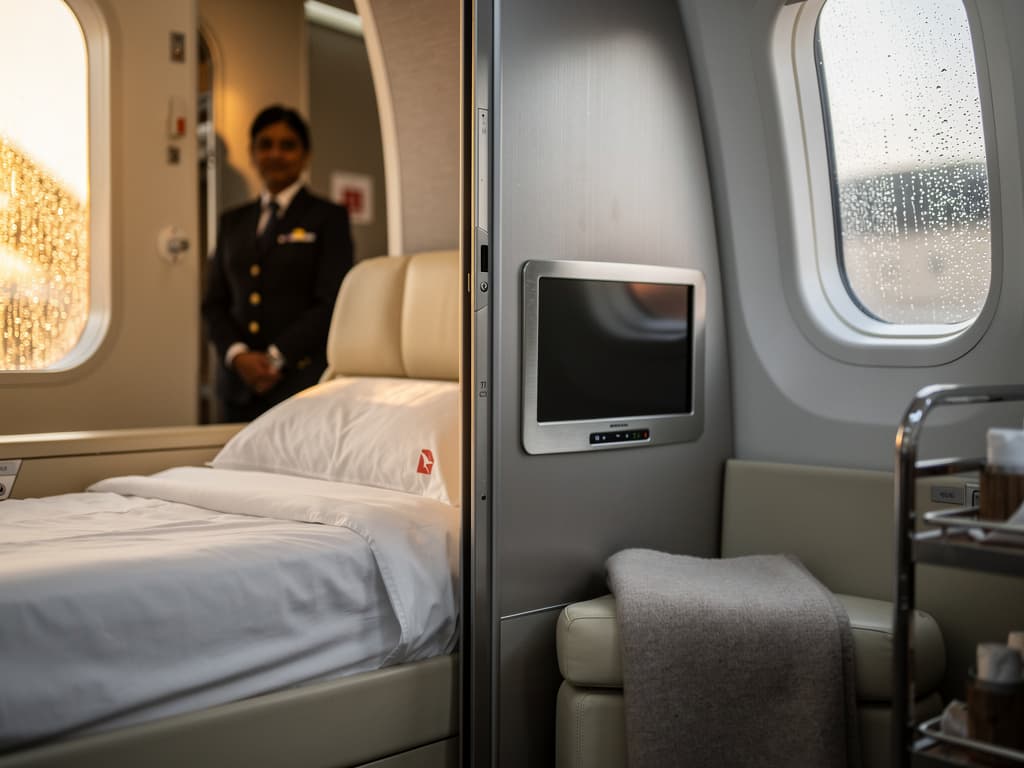
This time, the Sussexes occupied row three on a Qantas commercial flight from Los Angeles, according to Australian outlet Sunrise, which reported the couple in first class seats 3E and 3F. The cabin choice matters: Qantas A380 first class delivers fully enclosed suites with doors, multi-course dining, and pajamas — positioning well above the business class products some outlets initially reported.
The shift from private suite to commercial premium cabin arrives as the couple faces ongoing commentary about their travel choices and financial positioning. Royal broadcaster Ian Pelham Turner told media the commercial flight decision “was a very good move on their part as they continue to be seen as part of the people rather than in some privileged position.”
Their April 2026 visit spans Melbourne, Canberra, and Sydney across four days. Harry serves as keynote speaker at the InterEdge Psychosocial Safety Summit addressing workplace mental health, while Meghan headlines a women’s retreat at Sydney’s InterContinental Coogee Beach with VIP packages priced at $2,250 including gala dinner access. The trip is privately funded, though local authorities provide security for public events — a point drawing taxpayer-cost debate in Australian media.
The cabin choice and route context
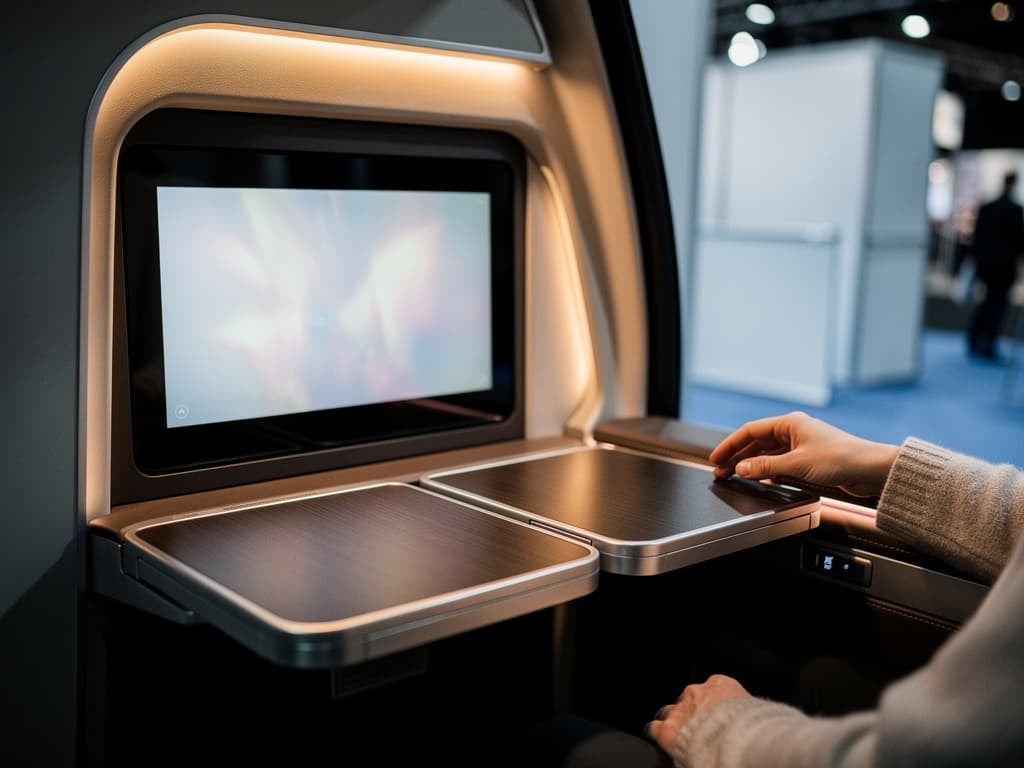
The Los Angeles to Melbourne route represents one of the Pacific’s most competitive premium corridors, with Qantas holding the nonstop advantage via A380 service. The airline’s first class product on this 15-hour flight offers 100-inch pitch, 23-inch width seats converting to 6’7″ beds, and full privacy doors — specifications that separate it from the carrier’s business class herringbone configuration lacking door enclosures.
Australian media confirmed the couple’s row three placement, positioning them in the forward first class cabin where suite doors provide maximum privacy from fellow passengers. An Australian traveler who spotted Harry remarked he’d “never seen anyone step off a flight looking so refreshed” — a testament to the product’s lie-flat capabilities on the overnight westbound routing.
The choice contrasts with their October 2018 royal tour arrival, when they accessed Qantas‘ private suite service reserved for dignitaries and high-profile travelers requiring complete cabin separation. That visit, marking their last trip to Australia before stepping back from royal duties in 2020, drew larger crowds than Prince William and Kate’s tours and established their peak visibility in the country.
| Airline | Seat product | Key specifications | Approximate pricing |
|---|---|---|---|
| Qantas A380 | First class suite | 100″ pitch, full doors, 6’7″ bed, nonstop | $12,000-$18,000 RT |
| Qantas A380 | Business Skybed | 80″ pitch, herringbone no doors, 6’4″ bed | $6,000-$10,000 RT |
| United 787-9 | Polaris business | Door suites, SFO connection, 9hr total | ~$7,000 RT |
| American 787 | Business (QF codeshare) | Saucer seats no doors, nonstop | ~$6,500 RT |

Flight deals most people never see
Our AI monitors 150+ airlines for pricing anomalies that traditional search engines miss. Air Traveler Club members save $650 per trip per person on average: see how it works.
Each deal saves 40–80% vs. regular fares:

The strategic calculation
British royals expert Hilary Fordwich told media the commercial first class choice “was an extremely good move” that “was received well by the public, obviously far better than flying private.” She questioned whether the decision was “deliberately done to garner public support,” adding “if it was, it certainly was a successful strategy.”
The calculation reflects broader scrutiny of the Sussexes’ travel patterns. Fordwich noted their “failed deals and lack of large income stream” alongside “huge overhead costs” including their 16-bedroom Montecito home and security expenses. Commercial premium positioning allows them to maintain the comfort standards expected of their profile while avoiding the private aviation optics that have drawn criticism.
Air Traveler Club’s analysis of premium cabin booking strategies shows high-profile travelers increasingly opt for commercial first class on long-haul routes where product quality rivals private aviation comfort. The Qantas A380 first class suite delivers privacy levels approaching fractional jet programs at a fraction of the cost — particularly relevant for travelers managing public perception alongside travel budgets.
The couple skipped traditional airport photo opportunities, departing in a convoy of vehicles without stopping for press. Their first engagement took them to Melbourne’s Royal Children’s Hospital, where they walked hand-in-hand through halls greeting patients and families — the same facility Princess Diana and then-Prince Charles visited during their 1985 Australian tour.
What premium travelers should monitor
The Sussex travel pattern establishes commercial first class as viable for high-security profiles on major routes. Qantas A380 first class delivers the enclosed-suite privacy and service quality that makes 15-hour transpacific flights manageable without private aviation.
- Book Qantas first class via qantas.com in J/F fare classes, with Platinum One elite status providing priority access. Partner programs including American AAdvantage access inventory via codeshares, though award space remains tight year-round on this high-demand route.
- Monitor LAX-MEL load factors through April-May 2026 for signals that premium cabins see increased high-profile bookings following the Sussex precedent. If commercial first becomes the preferred celebrity choice, expect tighter award availability but potentially more upgrade opportunities from business class.
- Consider United Polaris via San Francisco for better MileagePlus award availability at approximately 100,000 miles one-way, though the connection adds time versus Qantas‘ nonstop advantage.
- Watch for Qantas pricing adjustments if demand increases for row 3-4 first class suites following publicity around privacy and celebrity usage patterns on the route.
The couple’s itinerary continues through April 18 with Canberra speaking engagements and Sydney events. Their children, Archie (6) and Lilibet (4), remained in California.
Read more