Summary
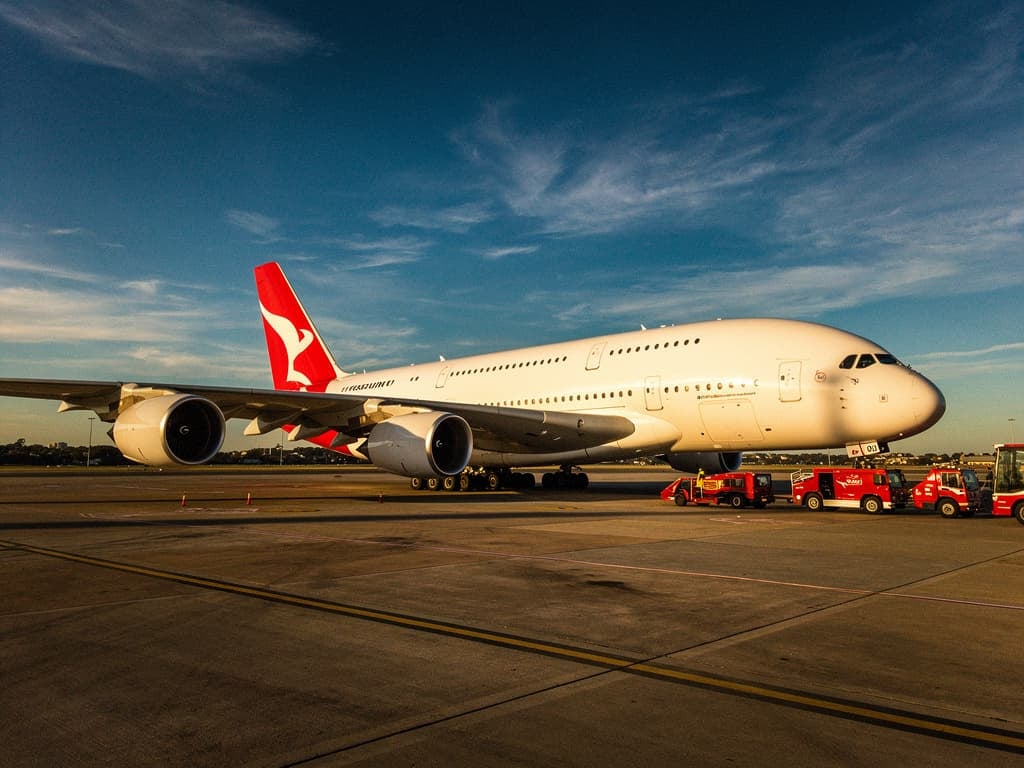
Of the 159 Airbus A380s operating commercially in 2026, only a handful still carry a genuine first-class cabin — and that number is shrinking. Emirates, Singapore Airlines, Lufthansa, ANA, JAL, Etihad Airways, Qantas, Asiana, and Korean Air represent the remaining carriers offering true first-class products on the type, defined by enclosed suites, dedicated service rituals, and in Emirates’ case, onboard shower suites. The Airbus A380 has become the last great theater for airborne luxury precisely because so many airlines have quietly retired the product in favor of premium business class.
Award inventory on these cabins is tight and concentrated on a small number of flagship routes. Booking windows run long, and availability is not guaranteed year-round on any carrier.
First class on the Airbus A380 is disappearing — not in a single dramatic announcement, but through a slow, deliberate retreat that has been reshaping the top of commercial aviation for nearly a decade. Airlines that once competed on the exclusivity of their upper-deck cabins have quietly reconfigured, retired, or simply stopped selling the product, redirecting premium-cabin investment toward business class products that yield better load factors and lower operating costs.
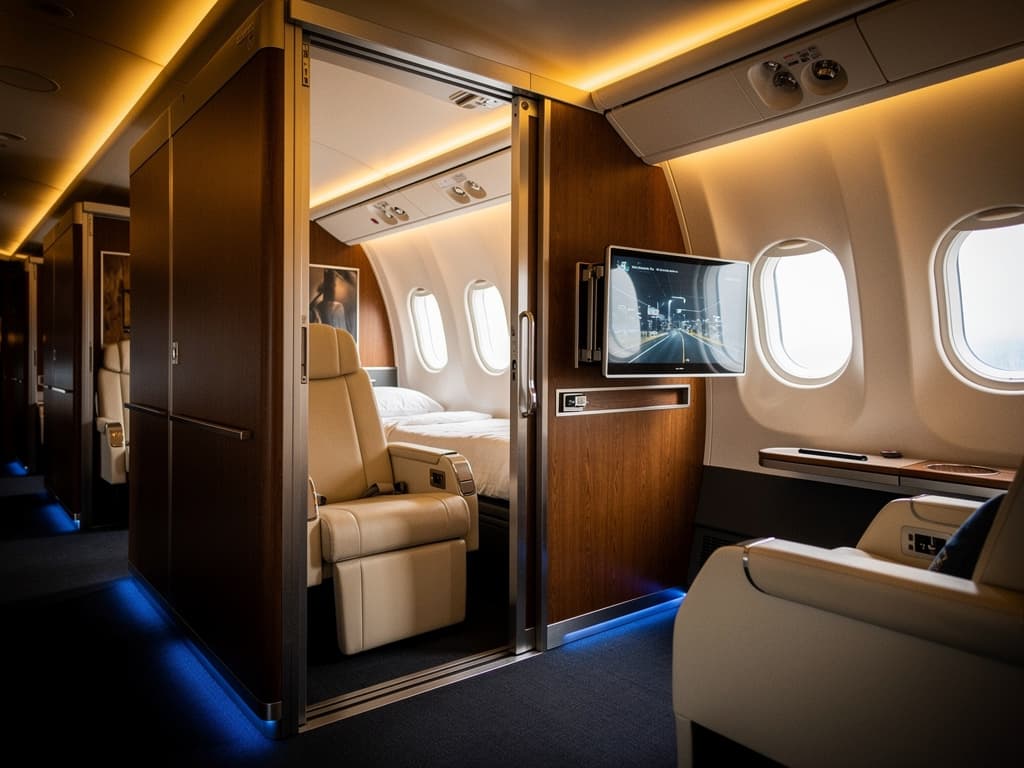
What remains is genuinely rare. The carriers still operating A380 first class in 2026 are doing so as a deliberate statement — a signal to the highest-yield passengers that the product is worth the premium over even the best business-class suites on the market. Emirates anchors that argument with shower suites and a dedicated onboard bar. Singapore Airlines‘ A380 Suites product, introduced in 2017, blurs the line between first class and private-room travel. Etihad Airways‘ three-room The Residence — available on select A380 routes — remains the most extreme expression of commercial cabin luxury ever offered at scale.
Understanding which airlines still offer the product, which routes it actually flies, and how to access it through cash or award bookings is now specialized knowledge. The field has narrowed enough that a wrong assumption — booking a flight expecting first class and finding a reconfigured aircraft — is a real risk.
The A380 first-class landscape in 2026
Industry operator data confirms that the active A380 fleet in 2026 spans a relatively small group of carriers, with Emirates operating the largest share by a significant margin. The airline has made the A380 the centerpiece of its long-haul premium strategy, deploying it on high-demand routes where the combination of shower suites, a dedicated first-class lounge, and a 14-seat cabin creates a product that has no direct equivalent in commercial aviation.
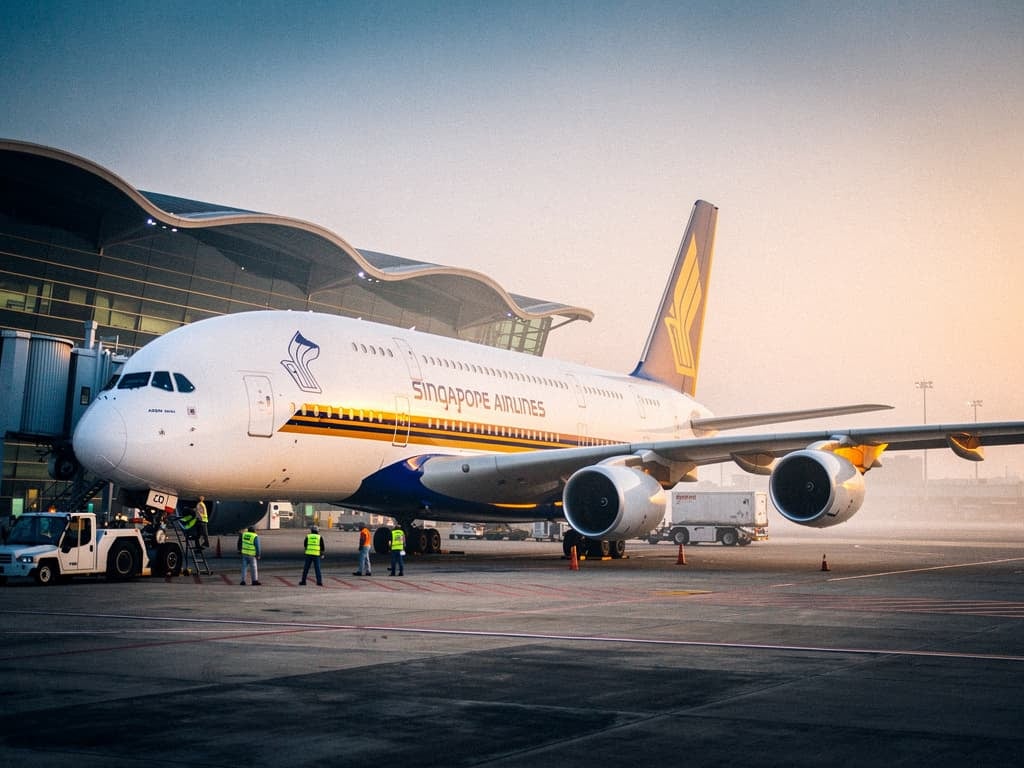
Singapore Airlines‘ position is more nuanced. The carrier retired its original A380 first-class configuration and its older Suites product years ago. What flies today is the 2017-generation Suites cabin, which occupies the forward section of the upper deck and offers fully enclosed double suites — effectively a private room for two passengers — on routes including Singapore–London and Singapore–Sydney. It is classified as first class in terms of pricing and positioning, but the product architecture is closer to a private suite than a traditional first-class row.
Qatar Airways‘ A380 first class, once described as the only true first-class product in the carrier’s fleet, has effectively exited regular service. Those aircraft were withdrawn, and the product should not be treated as bookable for planning purposes in 2026.
| Airline | First-class product | Key differentiator | Status in 2026 |
|---|---|---|---|
| Emirates | First Class Suite | Onboard shower suites, dedicated bar lounge | Active — flagship deployment |
| Singapore Airlines | Suites (2017 generation) | Fully enclosed double-suite configuration, ~50 sq ft | Active — select long-haul routes |
| Etihad Airways | The Residence / First Apartment | Three-room private suite, onboard shower | Active — limited A380 routes |
| Lufthansa | First Class | Traditional enclosed suite, strong soft product | Active — Frankfurt hub routes |
| ANA | The Suite | 33-inch seat width, 43-inch 4K screen | Active — Tokyo Narita routes |
| Qantas | First Class Suite | Enclosed suite, strong Australian network reach | Active — select international routes |
| Korean Air | First Class | Enclosed suite, SkyTeam alliance access | Active — Seoul hub routes |
| Qatar Airways | First Class (A380) | Was sole first-class aircraft in fleet | Effectively retired from regular service |

Flight deals most people never see
Our AI monitors 150+ airlines for pricing anomalies that traditional search engines miss. Air Traveler Club members save $650 per trip per person on average: see how it works.
Each deal saves 40–80% vs. regular fares:

Why the shrinking field matters for booking strategy
The retreat of first class from the A380 is not a random product decision — it reflects a structural shift in how airlines monetize premium cabins. Business class on the best current products delivers comparable privacy and comfort at lower price points, with far better load factors. For most carriers, the economics of maintaining a 6- to 14-seat first-class cabin on a 500-seat aircraft simply do not justify the space allocation when that same square footage can generate more revenue as business-class berths.
That logic is exactly why the remaining A380 first-class operators are worth paying attention to. Air Traveler Club’s analysis of the most private first-class suites in 2026 identifies the five products — including Singapore Airlines A380 Suites and Etihad The Residence — that have crossed the threshold from premium seat to private room, with paid fares running $12,000–$18,000 one-way on long-haul routes and The Residence commanding $20,000+.
The competitive pressure from business class is real. Emirates‘ own business-class product on the A380 is strong enough that many passengers who could afford first class choose not to pay the premium. The carriers that have retained first class are betting that a specific segment — corporate travelers on expense accounts, ultra-high-net-worth leisure travelers, and mileage collectors targeting aspirational redemptions — will continue to fill those seats at rates that justify the product.
How to approach A380 first-class bookings before the window closes further
The trajectory is clear: A380 first class is a contracting product, not an expanding one. Booking decisions should reflect that scarcity. Several strategic points apply across all remaining operators.
- Confirm aircraft type and cabin configuration before booking. Airlines occasionally swap aircraft on routes, and a reconfigured A380 may not carry first class even if the route historically has. Check the operating carrier’s seat map at booking and again closer to departure.
- Start award searches at the 330–360 day window. First-class award space on flagship carriers — particularly Emirates and Singapore Airlines — is released selectively and often disappears quickly on high-demand routes. Early search is not optional; it is the baseline.
- Use the operating carrier’s own booking engine first. Alliance partner searches sometimes surface space that the carrier’s own engine shows as unavailable, but the reverse is also true. Run both searches before concluding a date is blocked.
- Compare cash versus points only after confirming award availability. The cents-per-point calculation is irrelevant if the award space doesn’t exist. Verify inventory first, then assess whether the redemption rate justifies the points outlay versus a cash fare.
- Watch for A380 retirement or reconfiguration announcements. Any carrier that removes first class from its A380 fleet reduces the total available inventory permanently. If a route you’re targeting loses first class, alternative options on the same carrier may not exist on the same aircraft type.
Watch: any announcement of A380 cabin reconfiguration from Lufthansa, Qantas, or Korean Air in the next 12–18 months would signal that the active first-class operator list is contracting further — and that the window for booking these products at current availability levels is narrowing.
FAQ
Which airline has the best A380 first-class product in 2026?
Emirates offers the most differentiated product through its onboard shower suites and dedicated first-class lounge — features unavailable on any other commercial aircraft in regular service. Singapore Airlines‘ 2017 Suites cabin competes on privacy, with fully enclosed double suites measuring approximately 50 square feet. Etihad‘s The Residence is the most extreme option, but it is limited to select routes and commands fares above $20,000 one-way.
Can I still book Qatar Airways A380 first class in 2026?
Qatar Airways’ A380 first-class product has effectively exited regular service. The aircraft were withdrawn from scheduled operations, and the product should not be treated as bookable for current travel planning. Qatar Airways‘ active premium product is now centered on Qsuite business class across its widebody fleet.
How far in advance should I search for A380 first-class award space?
The evidence supports treating A380 first-class award space as tight inventory requiring early action. A search window of 330–360 days before departure is the practical baseline for flagship routes on Emirates and Singapore Airlines. Space is not guaranteed year-round on any carrier, and availability patterns vary significantly by route, season, and whether the operating carrier releases space to alliance partners.
Read more