Summary
Qantas is committing its fleet of 10 Airbus A380s through the 2030s — refurbishing cabins, returning every stored aircraft to service, and deploying the superjumbo on its highest-volume trunk routes including Sydney–Los Angeles, Sydney–Dallas/Fort Worth, and Sydney–Johannesburg. The carrier’s 14 First Class suites exist exclusively on the A380, making the aircraft irreplaceable until A350-1000 deliveries begin in 2028. This is a deliberate strategic choice, not a stopgap.
The commitment runs counter to the airline’s own decade-long skepticism about the type. For travelers booking premium cabins on Australia’s busiest long-haul corridors, the A380’s continued operation locks in the highest premium seat density in the Qantas fleet — for now.
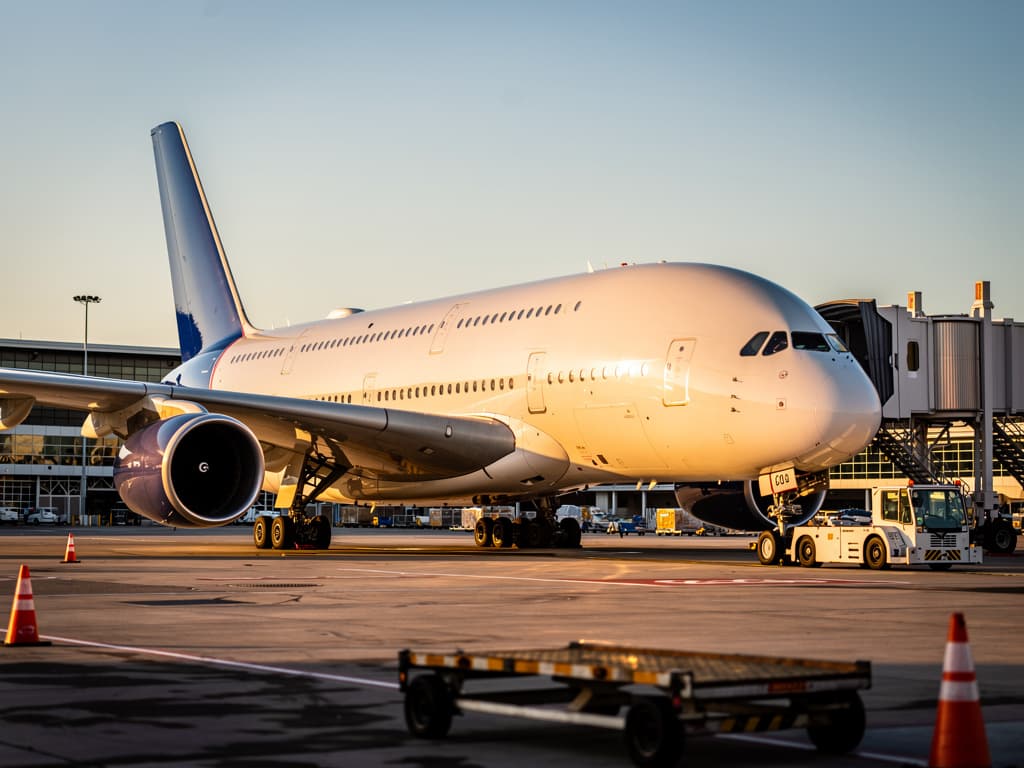
Few aircraft reversals in modern aviation carry the weight of irony that Qantas‘s A380 story does. The carrier’s former CEO publicly wished for a time machine to undo the original order. The pandemic offered a clean exit. And yet, as of December 2025, all 10 remaining Airbus A380s are back in the sky — refurbished, redeployed, and explicitly retained until the 2030s.
The decision isn’t sentiment. It’s capacity math.
Qantas retired its Boeing 747-400 fleet at the pandemic’s start, leaving the A380 as the only large widebody in a network built around slot-constrained airports and high-volume trans-Pacific and trans-Indian Ocean routes. Without it, the carrier would face a structural capacity gap on Sydney–Los Angeles and Sydney–Dallas/Fort Worth that no combination of 787-9s could fill within existing slot allocations.
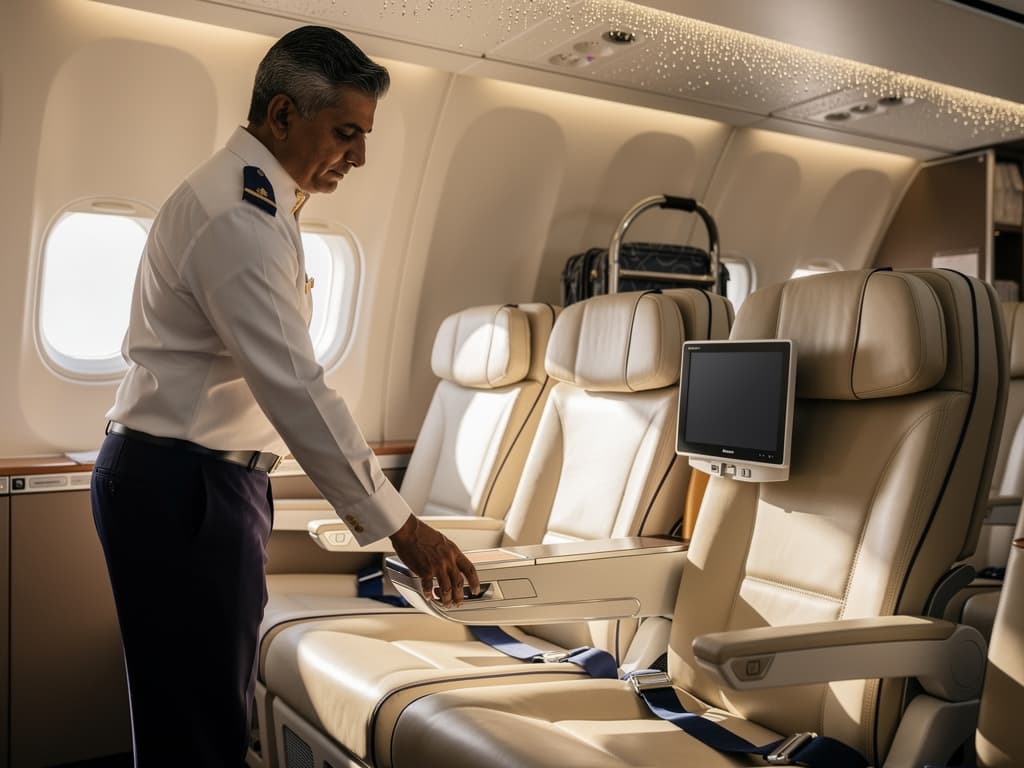
The strategic picture extends beyond raw seat count. The A380 is the only aircraft in the Qantas fleet offering First Class — 14 suites per flight — and the carrier has invested in refurbishing the product rather than winding it down. New business class seats, an upgraded onboard lounge, and an expanded premium footprint signal an airline treating the superjumbo as a revenue asset, not a liability to be managed out.
The fleet logic behind the commitment
Qantas’s widebody fleet tells the story clearly. The carrier operates 16 A330-200s, 10 A330-300s, and 14 787-9s — all mid-size widebodies configured for 230–300 passengers. The A380, at 485 seats in Qantas’s current 14-70-60-341 configuration, sits in an entirely different capacity tier. No other aircraft in the current fleet comes close.
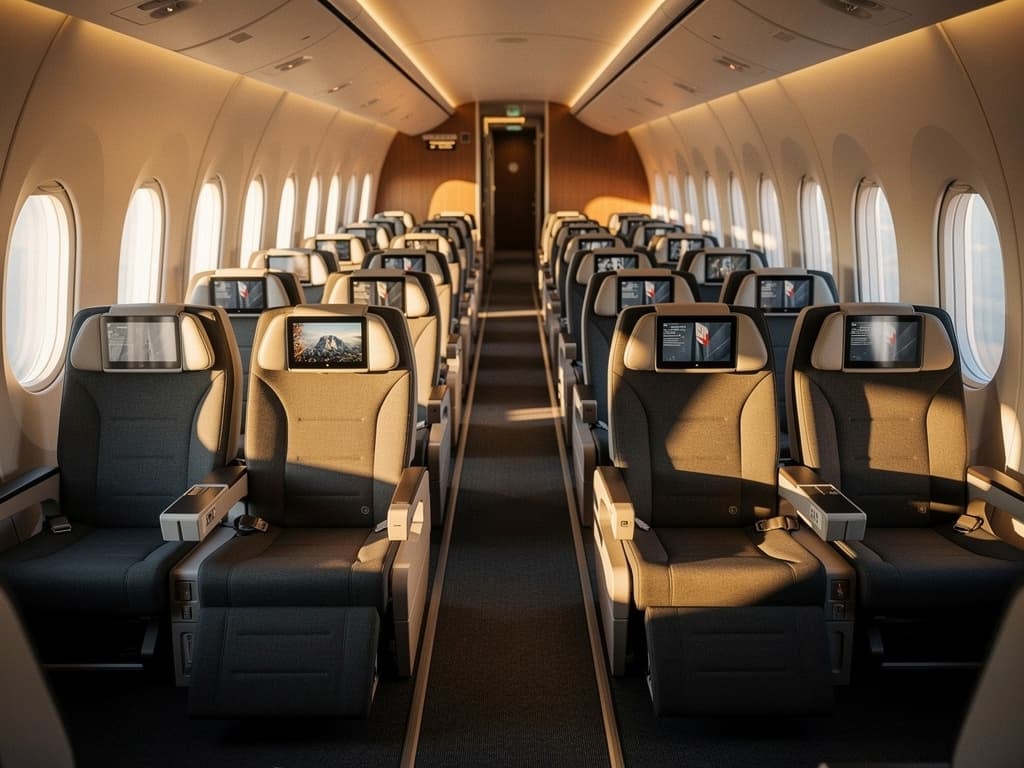
The Qantas A380 fleet page confirms the cabin breakdown: 14 First suites, 70 Business seats in a refurbished 1-2-1 reverse herringbone layout, 60 Premium Economy, and 341 Economy. That Business cabin alone — 70 seats — exceeds what two 787-9s could realistically deliver on a single daily frequency at a slot-controlled airport.
Sydney Kingsford Smith operates under strict slot controls, as do London Heathrow and Los Angeles International. Adding a second daily frequency on these routes isn’t a scheduling decision — it requires slot acquisition that may not be available. The A380 solves the problem by concentrating capacity into a single operation.
| Route | Flight numbers | Distance (nm) | Distance (km) |
|---|---|---|---|
| Sydney–Los Angeles | QF11/QF12 | 6,507 | 12,051 |
| Sydney–Dallas/Fort Worth | QF7/QF8 | 7,454 | 13,804 |
| Sydney–Johannesburg | QF63/QF64 | 5,963 | 11,044 |
| Sydney–Singapore (via LHR) | QF1/QF2 | 3,395 (SYD–SIN leg) | 6,288 |
| Sydney–Singapore (additional) | QF81/QF82 | 3,395 | 6,288 |

Flight deals most people never see
Our AI monitors 150+ airlines for pricing anomalies that traditional search engines miss. Air Traveler Club members save $650 per trip per person on average: see how it works.
Each deal saves 40–80% vs. regular fares:

Why the A380 still earns its place in 2026
The economics of the A380 were never as straightforward as its critics suggested. Former CEO Alan Joyce’s 2017 observation — that two 787s cost less to operate than one A380 — is technically accurate but strategically incomplete. At slot-constrained airports, you cannot simply add a second 787. The relevant comparison isn’t two aircraft versus one; it’s one A380 versus a smaller plane leaving revenue on the table.
At near-full loads on routes like Sydney–Los Angeles, the A380’s cost-per-available-seat-mile becomes genuinely competitive. Qantas is filling these aircraft — and filling them with a premium cabin mix that generates disproportionate revenue per flight. The 70 Business seats and 14 First suites on a single A380 departure represent a revenue concentration that no twin-aisle in the current fleet can match.
Air Traveler Club’s deep analysis of the A380 versus 787 development battle provides essential context here — the superjumbo’s commercial struggles were always about network fit, not aircraft quality. Qantas, operating from a geographically isolated hub with slot-constrained destinations, represents precisely the use case where the A380’s economics hold.
The Sydney–Johannesburg route adds another dimension. The A380’s four-engine configuration delivers superior hot-and-high performance — a meaningful operational advantage at Johannesburg’s elevation of 5,558 feet — while its range of nearly 8,000 nautical miles handles the sector with comfortable margins that a 777-300ER would approach at its limits.
What the A350 timeline means for A380 premium capacity
The A380’s continued operation is a bridge strategy — and the bridge has a known endpoint. Qantas begins taking A350-1000 deliveries in 2028, with those aircraft initially replacing the A330 fleet rather than the A380. Purchase rights for A380 replacement aircraft exist but won’t convert to firm orders until the carrier is ready to accelerate the transition.
- Book First Class now, not later: The A380 is the only Qantas aircraft with First suites. Once A350-1000 trunk-route variants arrive in scale — likely post-2030 — First Class availability will depend entirely on how the new aircraft are configured. Lock in award or revenue First bookings on QF11/QF12 and QF7/QF8 while the product is confirmed and available.
- Sydney-origin routes are stable; Melbourne is not: MEL-LAX loses A380 service from October 24, 2026. Sydney-origin A380 routes have no announced changes. If your itinerary is flexible, position through Sydney to guarantee the superjumbo product.
- Award inventory opens 353 days out: Qantas Frequent Flyer Platinum and Platinum One members access the full booking window. First Class award space on SYD-LAX is historically tight — search at the opening of the window and set ExpertFlyer alerts for F-class availability.
- Monitor 2028 A350 deployment announcements: If Qantas assigns high-density A350-1000s (not the 238-seat ULR variant) to trunk routes, it signals A380 phase-out acceleration. That transition would temporarily compress premium seat count before the new product scales.
Watch the Qantas A350 fleet page for configuration announcements on the non-ULR variant — the seat count and cabin layout on those aircraft will determine how quickly the A380 era ends.
FAQ
Which Qantas routes still operate the A380 in 2026?
As of May 2026, Qantas deploys the A380 on Sydney–Los Angeles (QF11/QF12 daily), Sydney–Dallas/Fort Worth (QF7/QF8), Sydney–Johannesburg (QF63/QF64), and Sydney–Singapore including the London Heathrow via Singapore service (QF1/QF2). Melbourne–Los Angeles loses A380 service from October 24, 2026, replaced by smaller aircraft.
Does Qantas still offer First Class, and on which aircraft?
Yes. As of 2026, First Class — 14 suites per aircraft — exists exclusively on the Qantas A380. No other aircraft in the current Qantas fleet carries a First Class cabin. The incoming A350-1000ULR for Project Sunrise will introduce a new First Class product, but those aircraft are configured for ultra-long-haul non-stop operations, not the existing trunk routes where the A380 operates.
When will Qantas retire the A380?
Qantas has not committed to a specific retirement date but has confirmed the A380 will remain in service into the 2030s. The carrier holds purchase rights for A350-1000 aircraft to eventually replace the superjumbo, but those deliveries won’t arrive in sufficient numbers to displace the A380 before the early 2030s at the earliest. The 2028 A350-1000 deliveries are specifically designated to replace the A330 fleet first.
How do I confirm my Qantas flight will operate an A380?
Check the seatmap during booking at qantas.com — the A380’s two-deck layout is visually distinct from any other aircraft in the fleet. You can also search by flight number (QF11, QF7, QF63) and verify the equipment code. For ongoing monitoring closer to departure, ExpertFlyer allows equipment-specific alerts if you want to confirm the A380 hasn’t been swapped for a smaller type.
Read more