Summary
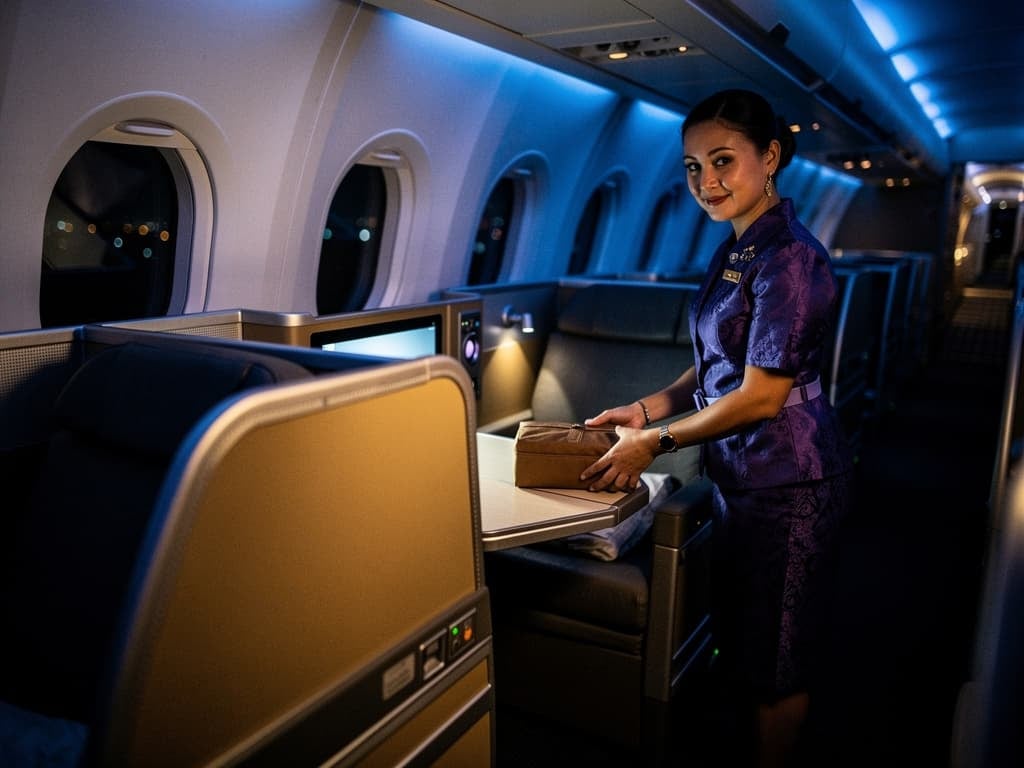
Emirates’ new Airbus A350-900 business class — branded the S-Lounge — delivers 32 lie-flat seats in a 1-2-1 configuration, giving every passenger direct aisle access for the first time on an Emirates widebody. The cabin pairs 20-inch 4K screens, wireless charging, and a Mercedes-Benz S-Class-inspired interior against the airline’s older Boeing 777 business class, which still operates a 2-3-2 layout on most aircraft — a format that has not materially changed since before Qatar Airways launched QSuites in 2017.
The A350 closes the layout gap with top-tier rivals but ships without a sliding privacy door, a feature competitors introduced years ago. Emirates began A350 commercial service on January 3 from Dubai to Edinburgh, with Mumbai, Kuwait, Bahrain, and Colombo among the next markets in the expansion.
For years, the single most defensible criticism of Emirates business class was structural: the 2-3-2 layout on most of its Boeing 777 fleet meant that a meaningful share of passengers could not reach the aisle without disturbing a neighbor. On a daytime sector that is an inconvenience. On a red-eye from Dubai to a secondary European city, it is a fundamentally different product from what rivals have been selling since 2017.
The A350 S-Lounge corrects that. Every one of the 32 business class seats has direct aisle access — no middle-seat negotiations, no climbing over a sleeping neighbor at 2 a.m. That single structural change moves Emirates into the same competitive tier as Cathay Pacific, Singapore Airlines, and Japan Airlines on layout, regardless of what else the cabin does or does not offer.
What it does not offer is a closing door.
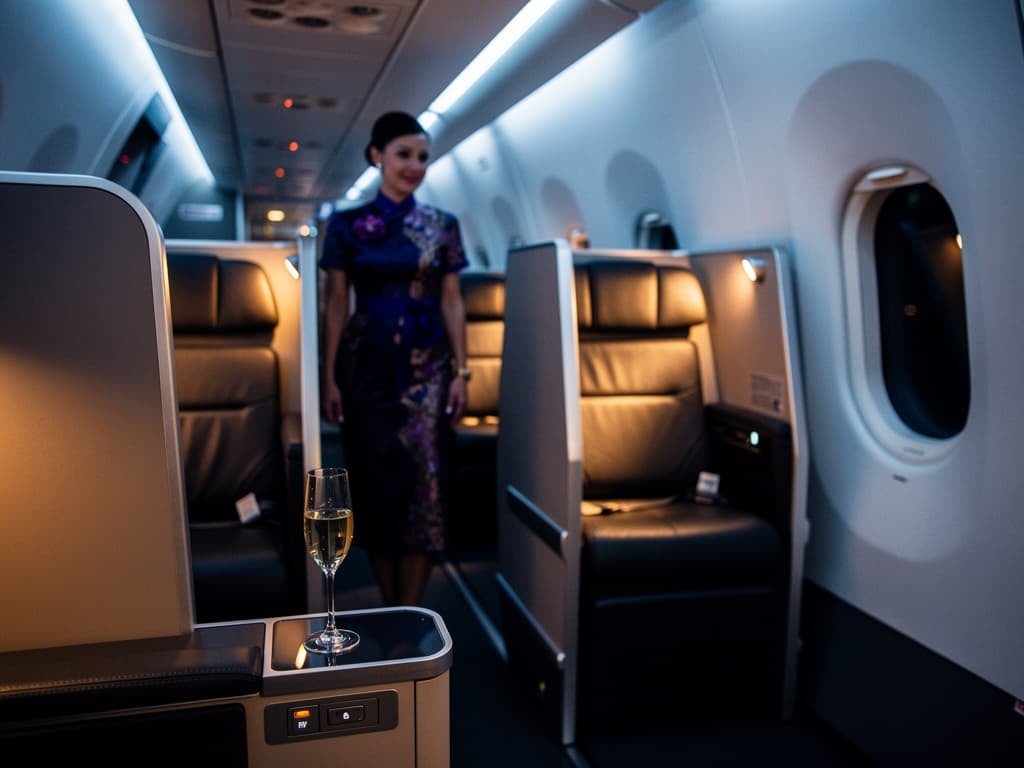
The S-Lounge is an open-suite product. The seat shell creates separation from the aisle and neighboring passengers, but there is no sliding privacy panel — a feature Qatar Airways introduced with QSuites nearly a decade ago and that Delta Air Lines, Cathay Pacific, and Japan Airlines have since matched or exceeded. For a cabin launching in 2025 on a brand-new aircraft type, that omission is the defining limitation, and it is the primary reason the S-Lounge lands as a genuine step forward rather than a category-defining product.
The routes matter here. Emirates has positioned the A350 on thinner short-to-medium-haul markets — Edinburgh, Mumbai, Ahmedabad, Kuwait, Bahrain, Colombo, Lyon, Muscat, and Bologna — where the airline’s larger A380 and 777-300ER cannot operate economically. Whether the open-suite design holds up as the fleet grows depends entirely on whether Emirates keeps the type on those shorter sectors or eventually assigns it to longer overnight routes where a door becomes a genuine differentiator.
The details: what changed and what did not
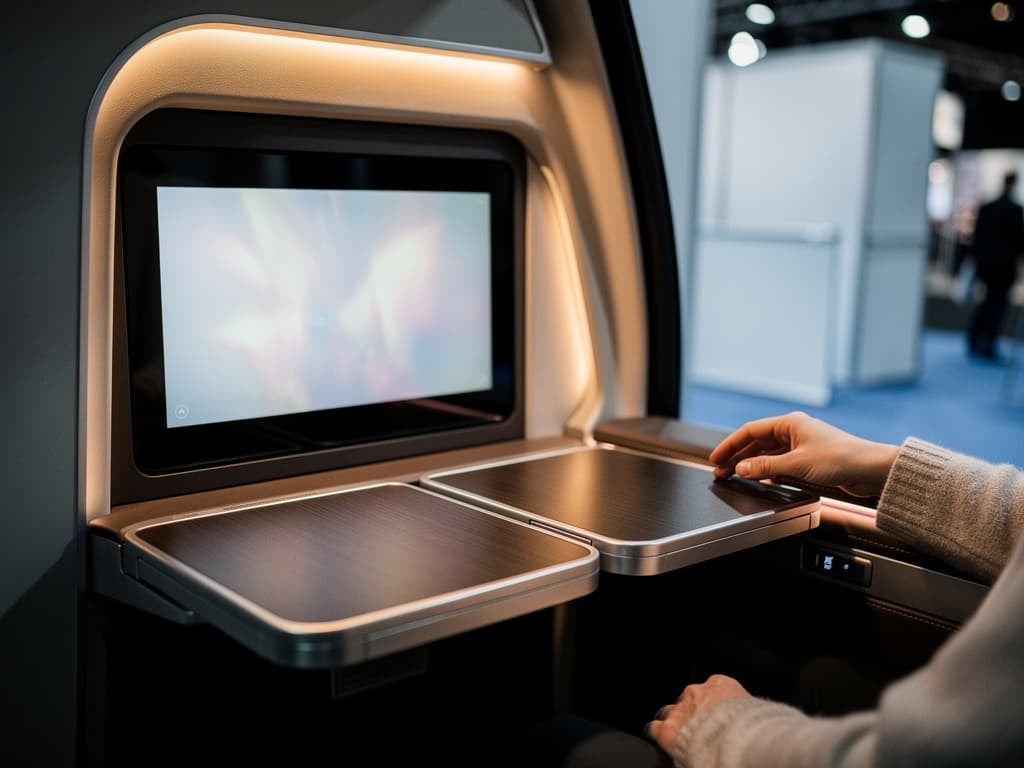
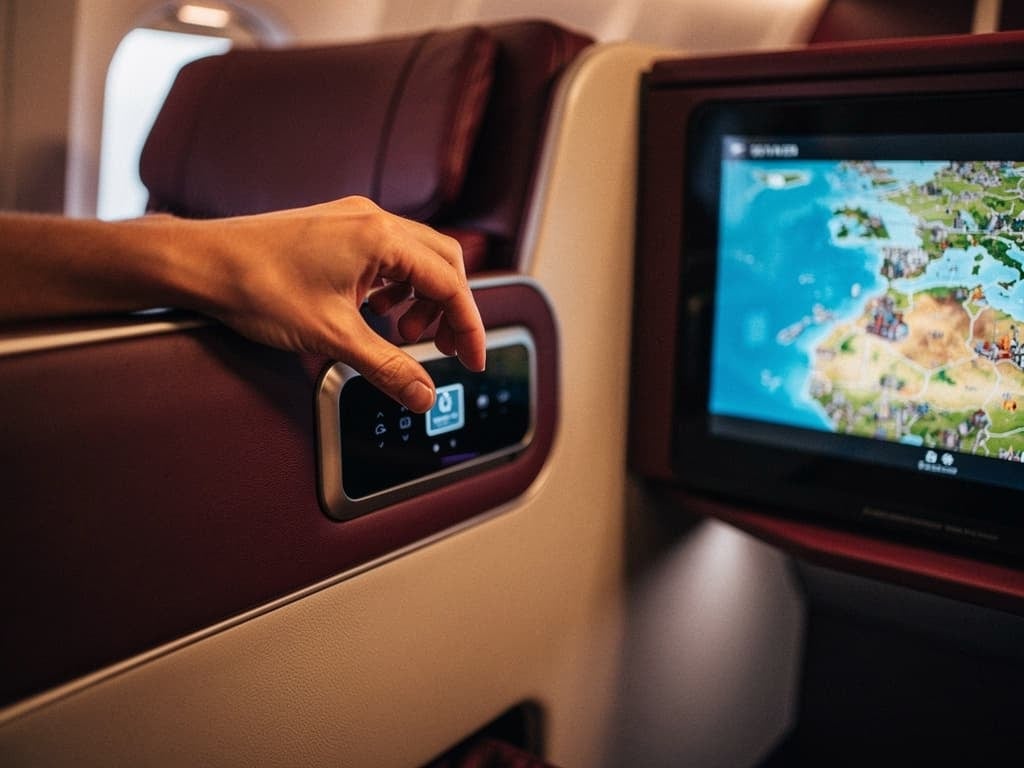
The A350 S-Lounge seat measures 21 inches (53 cm) wide with 44 inches (111 cm) of pitch, converting to a fully flat bed — a meaningful upgrade from the angled lie-flat configuration found on many 777 business class configurations. The entertainment system is a generation ahead: a 20-inch 4K HD screen with Bluetooth audio pairing, wireless charging built into the cocktail table, and both USB-C and USB-A ports for wired charging. Connectivity runs through ViaSat GX, which Emirates confirms delivers faster speeds across all destinations including northbound North American routes.
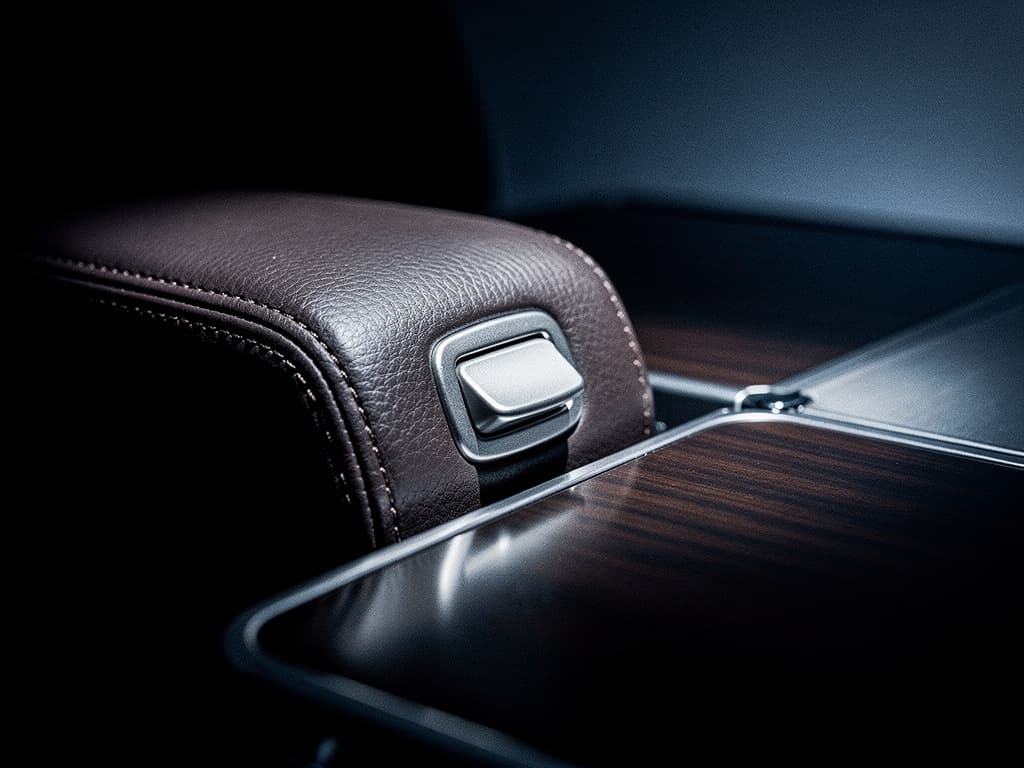
The design language draws explicitly from the Mercedes-Benz S-Class partnership, with soft cream leather, wooden finishes, and silver metal trims throughout the cabin. Emirates has promoted the aesthetic heavily, and the execution is consistent with the airline’s broader brand positioning — though the open-suite format means the visual impression of privacy is not matched by physical enclosure.
The older 777 business class, by contrast, uses entertainment hardware that predates current screen resolution standards, offers wired-only audio on most aircraft, and provides no wireless charging. The 2-3-2 layout leaves center-block passengers without aisle access. Emirates introduced its “Game Changer” first class suites on the 777-300ER in 2017, but the business class cabin on those same aircraft was not redesigned to the same degree — leaving a fleet where cutting-edge first class and a dated business class coexist on the same aircraft.
| Feature | A350 S-Lounge | 777 business class (majority of fleet) |
|---|---|---|
| Seat configuration | 1-2-1 (all aisle access) | 2-3-2 (limited aisle access) |
| Seat count per aircraft | 32 | Varies; typically 42–58 |
| Seat width | 21 in (53 cm) | Approximately 20 in (51 cm) |
| Seat pitch | 44 in (111 cm) | Approximately 40 in (102 cm) |
| Bed type | Fully flat | Angled lie-flat (most configurations) |
| IFE screen | 20-inch 4K HD, Bluetooth audio | Smaller screen, wired audio only |
| Wireless charging | Yes | No |
| Privacy door | No | No |

Flight deals most people never see
Our AI monitors 150+ airlines for pricing anomalies that traditional search engines miss. Air Traveler Club members save $650 per trip per person on average: see how it works.
Each deal saves 40–80% vs. regular fares:

The strategic picture: what Emirates is actually building
The A350 is not Emirates’ attempt to build its best cabin. It is the airline’s attempt to build its most efficient premium cabin for markets that its A380 and 777-300ER cannot serve economically. That distinction matters for anyone trying to understand where the S-Lounge fits in the competitive landscape — and where it does not.
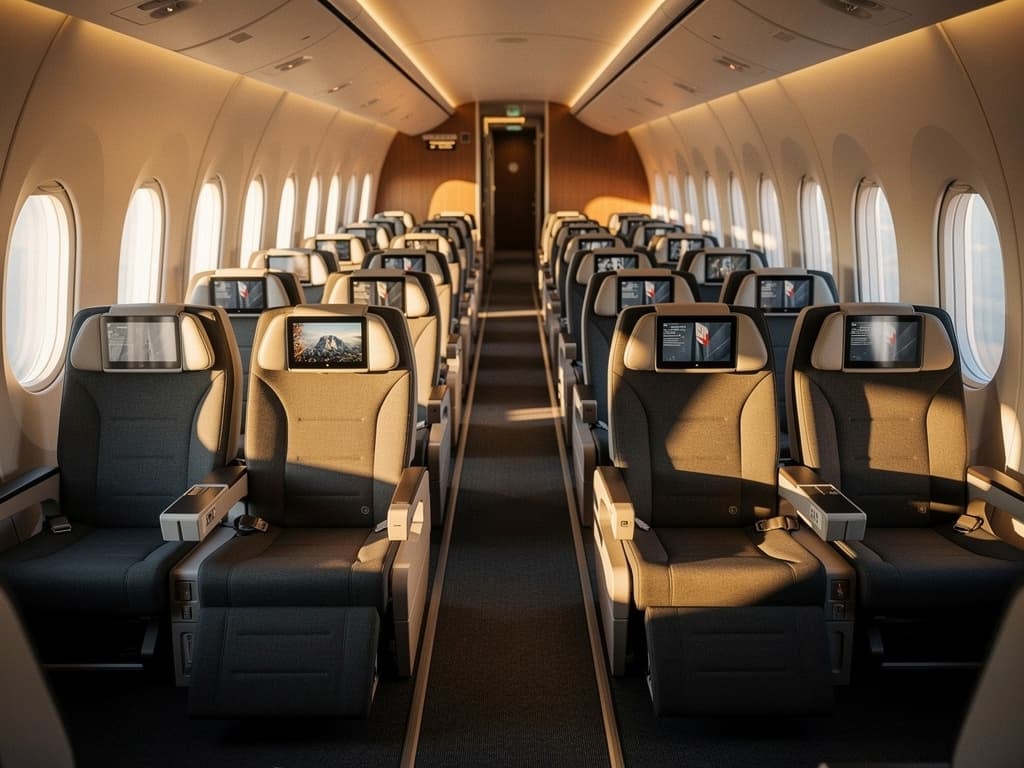
Emirates has built its network around aircraft that carry 350 to 500 passengers, a strategy that works on trunk routes between major hubs but fails on thinner markets where demand cannot fill that capacity. The A350-900, configured with 32 business class seats, 21 premium economy seats, and 259 economy seats, is viable on routes like Edinburgh, Mumbai, and Bahrain where premium demand exists but not at A380 scale. The 65 aircraft on order give Emirates enough A350 capacity to build a meaningful secondary network — routes the airline could not previously serve with a consistent premium product.
Air Traveler Club’s analysis of Emirates’ A380 retrofit program provides useful context here: the airline is simultaneously upgrading its flagship widebodies with premium economy while using the A350 to extend its premium reach into thinner markets. These are parallel tracks of the same yield strategy — revenue per square meter now outranks maximum seat count across the Emirates network.
Against Qatar Airways QSuites and Cathay Pacific Aria suites, the S-Lounge is competitive on layout and technology but weaker on privacy. Against the older Emirates 777 business class, it is a clear and unambiguous upgrade. The honest competitive position is “solid open-suite premium” — above the midfield, below the most enclosed products, and deliberately positioned for routes where flight times make a privacy door less decisive than it would be on a 14-hour overnight sector.
How to make sure you book the right Emirates cabin
The product difference between Emirates’ A350 and 777 business class is significant enough that aircraft type should be a primary factor in the booking decision — not an afterthought. Here is what to verify before confirming any Emirates business class purchase.
- Check the aircraft type at booking: Emirates displays the aircraft type on its booking engine and seat map. Look for “A350-900” specifically. The Emirates A350 fleet page confirms the cabin configuration and current route assignments.
- Verify the seat map before selecting: A 1-2-1 seat map confirms A350 service. A 2-3-2 or 2-4-2 map indicates an older 777 or A380 configuration. On the 777, avoid center-block seats (the three-seat middle section) if aisle access matters to you.
- Target A350 routes for the best current product: Edinburgh, Mumbai, Ahmedabad, Kuwait, Bahrain, Colombo, Lyon, Muscat, and Bologna are the confirmed or expected A350 markets. These are also routes where the older 777 product was the only option until now.
- Award travelers should verify aircraft type separately: Award inventory and aircraft assignments can differ from cash bookings. Confirm the aircraft type on your specific flight number and date — not just the route — before redeeming miles.
- Watch for aircraft swaps: Emirates has a history of substituting aircraft types on short notice. If the A350 is the reason you booked, check the seat map again 24–48 hours before departure and at check-in.
Watch for whether Emirates assigns the A350 to longer-haul routes as the fleet grows toward its 65-aircraft order target. If that happens, the open-suite design will face harder scrutiny against competitors who have offered closing doors for nearly a decade.
FAQ
Does Emirates’ A350 business class have a privacy door?
No. The A350 S-Lounge is an open-suite product. The seat shell provides separation from the aisle and neighboring passengers, but there is no sliding privacy door. This places it below the most enclosed business class products currently available, including Qatar Airways QSuites, Delta One suites, and Cathay Pacific Aria suites, all of which offer closing doors.
Which routes does Emirates currently fly with the A350?
Emirates launched A350 commercial service on January 3 with the Dubai–Edinburgh route. The airline has confirmed or indicated expansion to Mumbai, Ahmedabad, Kuwait, Bahrain, Colombo, Lyon, Muscat, and Bologna in the months following launch. The A350 is positioned on thinner short-to-medium-haul markets where the airline’s larger A380 and 777-300ER cannot operate economically.
How do I know if my Emirates flight uses the A350 or the older 777?
Check the aircraft type displayed on Emirates’ booking engine and seat map before confirming your booking. A 1-2-1 seat map confirms A350 service; a 2-3-2 or 2-4-2 map indicates an older 777 or A380 configuration. Emirates’ official A350 fleet page lists current route assignments. Verify again 24–48 hours before departure, as aircraft swaps can occur on short notice.
Is the A350 business class better than the 777 business class for overnight flights?
Yes, materially so. The 1-2-1 layout gives every passenger direct aisle access — eliminating the need to climb over a neighbor — and the fully flat bed replaces the angled lie-flat found on most 777 configurations. The 4K screen with Bluetooth audio and wireless charging also represent a significant technology upgrade. The only meaningful limitation for overnight travel is the absence of a closing privacy door, which competing carriers have offered since 2017.
Read more