Summary
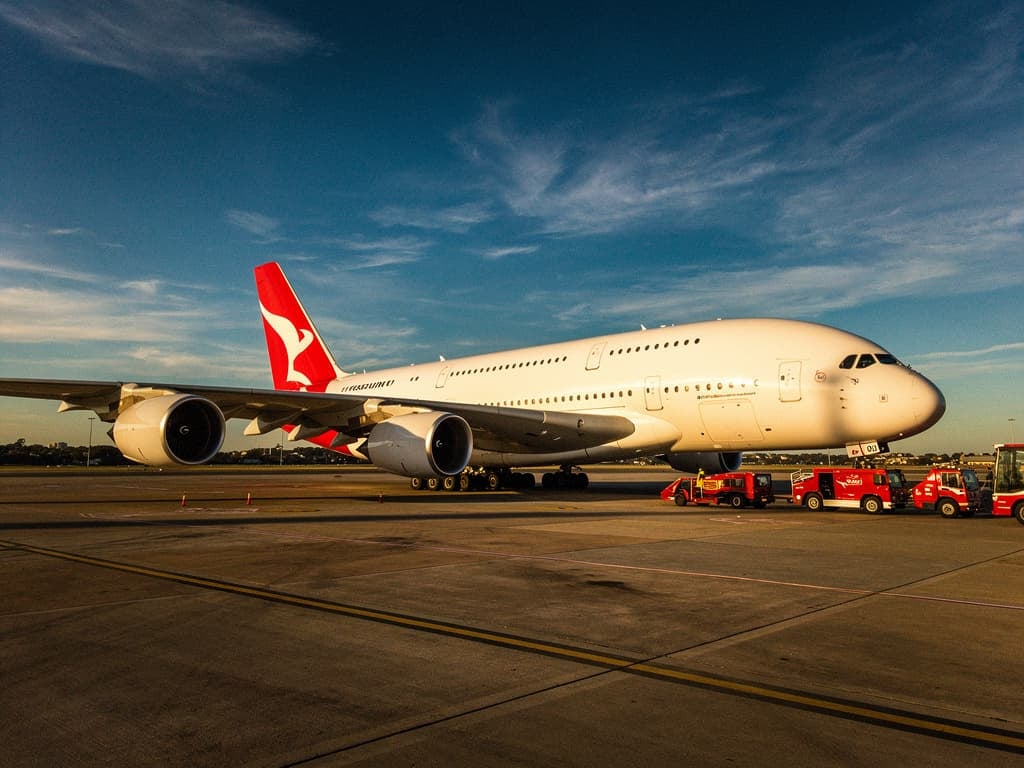
Qantas Airways will begin retiring its 10 Airbus A380 aircraft from 2028, accelerating the superjumbo’s phase-out by four years. The decision, driven by a 13.8% drop in underlying profit to A$2.06 billion and a roughly A$420 million impact from fuel costs and Middle East conflict, marks the beginning of the end for the world’s largest passenger aircraft at the Australian carrier.
The earlier exit clears a faster path for next-generation A350 and 787 twin-engine widebodies. Qantas is discussing converting about 20 purchase options into firm orders, with deliveries anticipated from 2030, while its dedicated Project Sunrise A350-1000ULR jets are set to debut on nonstop Sydney–London flights from October 2027.
The double-deck A380 has anchored Qantas’ premium long-haul strategy for over a decade, but its four-engine economics have become increasingly difficult to justify. Rising maintenance and disruption costs on an aging fleet — combined with Airbus ending A380 production in 2021 — have forced management’s hand. The airline now faces the complex task of unwinding its superjumbo operations while simultaneously introducing two new widebody types across its most lucrative international corridors.
The fleet transformation carries significant implications for premium cabin availability on Australia–Europe and Australia–North America routes. Qantas’ current 10 A380s operate high-density services from Sydney Kingsford Smith Airport, offering substantial first class and business class capacity that cannot be directly replicated by smaller twin-engine replacements. The airline’s incoming A350-1000ULR aircraft, configured with just 238 seats including six First suites and 52 Business suites, represents a dramatic reduction in total premium inventory compared to the A380’s much larger footprint.
Additional Boeing 787-9 deliveries are expected from 2027, while the existing A330 fleet begins retirement from 2026. The overlapping timelines create both opportunity and uncertainty for travelers booking premium cabins during the transition period. Qantas forecasts an 8 to 10 percent increase in revenue per available seat across domestic and international operations in the first half of fiscal 2027, suggesting strong demand will continue to pressure award and upgrade availability even before the A380 phase-out begins.
The details
The accelerated timeline emerged alongside Qantas’ full-year financial results, which revealed the extent of external pressures on the carrier’s international operations. Underlying pre-tax profit fell to A$2.06 billion, with management linking approximately A$420 million of adverse impact to higher fuel prices and the Middle East conflict. The airline expects its fuel bill to rise by about A$1 billion in the first half of the new fiscal year, though hedging is expected to absorb much of the increase.
Qantas had previously indicated its A380 retirement program would begin around 2032. The four-year acceleration reflects both immediate cost pressures and a strategic bet on twin-engine efficiency. With Airbus having ceased A380 production in 2021, the global fleet depends entirely on existing airframes and parts — a supply chain reality that makes maintenance increasingly expensive and logistically challenging as the type ages.
The replacement strategy centers on two aircraft families. Qantas has ordered 12 specially configured A350-1000ULR aircraft for Project Sunrise ultra-long-haul operations, with the first nonstop Sydney–London service planned for October 2027. These aircraft feature a wellbeing zone designed for flights exceeding 20 hours. Simultaneously, the airline is discussing converting approximately 20 existing purchase options into firm orders split between additional A350s and 787s, with deliveries expected from 2030.
| Aircraft type | Current fleet | Retirement begins | Replacement aircraft | Key routes affected |
|---|---|---|---|---|
| Airbus A380 | 10 | 2028 | A350-1000ULR, 787-9 | SYD-LAX, SYD-LHR, SYD-SIN |
| Airbus A330 | Fleet active | 2026 | 787-9, potential A350s | Asia-Pacific regional |
| Boeing 787-9 | Fleet active (236 seats) | N/A | Additional 787-9s from 2027 | SYD-SFO, SYD-DFW, MEL-LAX |
| A350-1000ULR | 12 on order | N/A | First delivery 2027 | SYD-LHR, SYD-JFK (Project Sunrise) |
The A380 will remain in Qantas’ international network for several more years, with the phase-out running progressively from 2028. The airline has not disclosed how many aircraft will be withdrawn each year or which routes lose the type first — details that will significantly affect premium capacity planning on key corridors.

Flight deals most people never see
Our AI monitors 150+ airlines for pricing anomalies that traditional search engines miss. Air Traveler Club members save $650 per trip per person on average: see how it works.
Each deal saves 40–80% vs. regular fares:

The value-add
Qantas’ move fits a broader industry pattern rather than representing an isolated shock. Airlines worldwide have been shrinking A380 fleets as twin-engine economics improve and premium demand consolidates around fewer, more efficient aircraft. What distinguishes Qantas’ situation is timing: the carrier must manage this transition while simultaneously launching its most ambitious route expansion in history — nonstop Sydney–London and Sydney–New York services that demand entirely new aircraft and cabin products.
The practical consequence for premium travelers is a capacity squeeze during the overlap period. The A350-1000ULR’s 238 seats represent a fraction of the A380’s typical configuration, meaning fewer premium seats overall even as the product itself improves dramatically. Air Traveler Club’s analysis of Qantas’ A350 deployment strategy suggests advance booking windows of 60–120 days will become essential for securing award space on these aircraft.
How to position for the fleet transition
The overlapping retirement and delivery schedules create specific booking considerations for premium travelers on Qantas’ long-haul network. Award space and upgrade availability will tighten as A380 capacity exits before replacement aircraft fully arrive.
- Lock in A380 premium cabins while they last. If you value the superjumbo’s spacious first class suites or upper-deck business cabin, book travel through 2027 on routes like Sydney–Los Angeles and Sydney–Singapore. Once retirement begins in 2028, these products disappear permanently from the Qantas network.
- Monitor Project Sunrise award release patterns. The A350-1000ULR’s 58 premium seats (six First, 52 Business) will be among the most sought-after award redemptions in commercial aviation. Expect limited initial availability when Sydney–London bookings open, likely requiring flexibility on dates.
- Compare one-stop alternatives for backup inventory. Singapore Airlines and Emirates offer substantially more premium seats on Kangaroo Route itineraries. Building transferable points balances across programs provides options if Qantas award space proves elusive during the transition.
- Watch for equipment swaps on existing 787-9 routes. As A380s exit and new aircraft arrive, Qantas may temporarily shift 787-9s onto routes previously served by larger aircraft. This could mean last-minute downgrades from first class to business-only configurations on some sectors.
Watch for Qantas’ formal fleet update — expected around the first A350 handover in 2027 — which should clarify the year-by-year A380 withdrawal schedule and confirm whether the 20 purchase options convert to firm orders.
FAQ
When will Qantas retire its last A380?
Qantas has not announced a final retirement date for its last A380. The phase-out begins in 2028, four years earlier than the previously planned 2032 start, but the airline has not disclosed how many aircraft will be withdrawn each year or when the final superjumbo will leave the fleet.
What replaces the A380 on Qantas’ longest routes?
The dedicated Project Sunrise A350-1000ULR will operate nonstop Sydney–London and Sydney–New York services from October 2027. Additional A350 and 787 aircraft — potentially from a conversion of 20 existing purchase options — would replace A380s on other long-haul routes from 2030.
Will Qantas still offer first class after the A380 retires?
Yes. The A350-1000ULR features six enclosed First suites, preserving a first class product on Project Sunrise routes. However, total first class capacity will decrease significantly compared to the A380, and it remains unclear whether replacement A350s and 787s on other routes will include first class cabins.
Read more