Summary
Starting December 7, 2026, Qantas will operate the Airbus A380 on 13 of 14 weekly Sydney–Singapore flights, replacing the smaller A330 and delivering an 86% surge in first-class capacity and a 37% jump in business-class seats on the corridor. The move reshapes premium access on a route where corporate demand remains resilient, giving Qantas a sharper edge against Singapore Airlines.
The superjumbo shift pulls A380s from a softening Los Angeles market while the fleet’s retirement clock now ticks toward 2028 — four years earlier than previously planned. For premium travelers, this creates a defined window to experience Qantas first-class suites on a five-hour hop before the double-deckers leave the fleet.
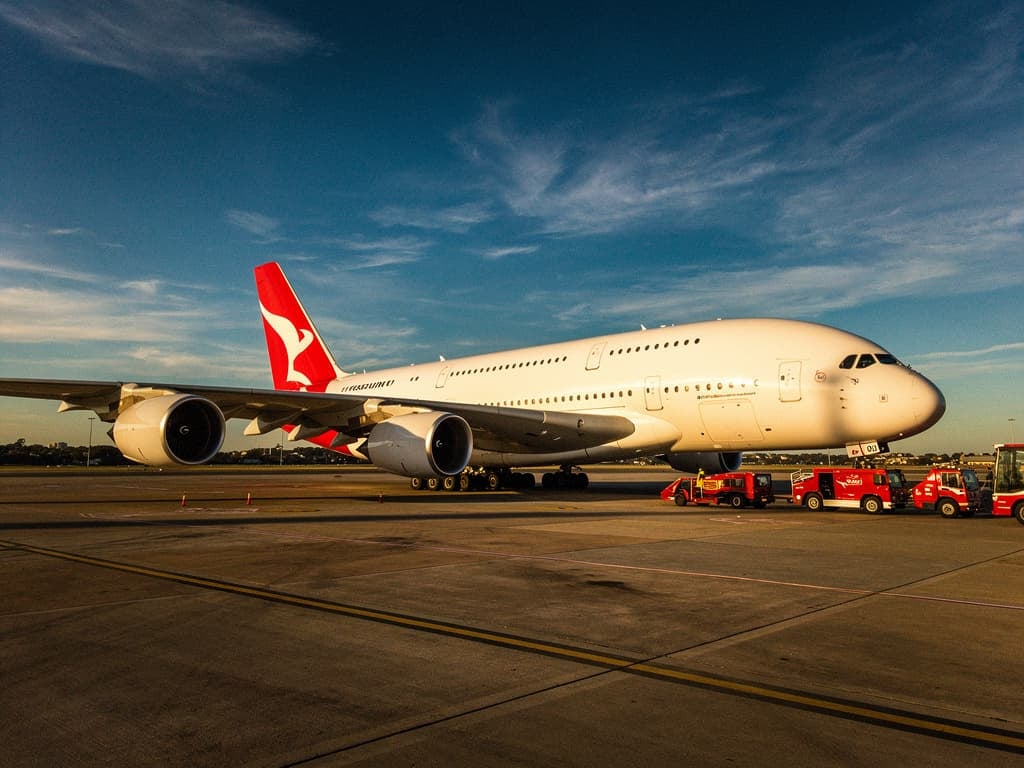
Qantas is turning its Sydney–Singapore trunk route into a superjumbo-heavy premium battleground. Effective December 7, 2026, the airline will deploy the Airbus A380 on 13 of 14 weekly QF81/QF82 services, replacing the twin-jet Airbus A330 that currently flies the corridor with only 28 lie-flat business seats and no first or premium economy cabin. The schedule change, confirmed in Qantas’ latest timetable filings, injects 14 first-class suites, 70 business-class seats, and 60 premium economy seats onto each of those 13 frequencies, lifting total weekly seat capacity by 23% to more than 6,580 seats in each direction.
The pivot is as much about fleet economics as it is about market positioning. Qantas is pulling its ten A380s off Los Angeles routes, where a weak Australian dollar and softer leisure demand have eroded the yields needed to fill a 485-seat quadjet on 7,500-mile Transpacific crossings. By concentrating the superjumbos on the 4,498-mile Singapore–Sydney hop, the airline captures dense corporate traffic and high-value belly freight while slashing per-seat operating costs on a far shorter stage length.
For premium travelers, the calculus is immediate. First-class inventory on the route jumps from zero to 182 suites per week in each direction, and business-class seats rise from 392 to 536. The change also cements Singapore Changi as Qantas’ primary international hub outside Australia, with 20 weekly A380 departures once the new schedule takes hold — 13 to Sydney plus seven existing A380 rotations on the London Heathrow service.
The move arrives as Qantas accelerates the retirement of its A380 fleet. In its FY2026 earnings, management told investors the ten aircraft will begin leaving the fleet in 2028, roughly four years earlier than the previous 2032 target. Higher maintenance costs, the complexity of supporting a discontinued type, and the availability of more efficient Airbus A350-1000 and Boeing 787-9 replacements are driving the earlier phase-out. That makes the Singapore–Sydney A380 uplift a bridge strategy — a high-density profit driver that keeps the superjumbos working hard until Project Sunrise nonstops arrive later this decade.
The details
Qantas’ schedule filing shows the A380 will operate QF81 and QF82 on all but one weekly rotation, which remains on the A330. The cabin upgrade is stark: the outgoing A330 offers a two-class layout with 28 business seats and an all-economy main cabin, while the A380 brings a four-class product with 14 first-class suites, 70 lie-flat business seats, 60 premium economy recliners, and 341 economy seats. The result is an 86% weekly increase in first-class capacity and a 37% increase in business-class capacity on the corridor.
Supporting the expanded operation, Qantas is opening its first dedicated Singapore-based cabin crew base in September 2026, initially recruiting 120 crew and scaling to 650 over five years. The base will also offer positions to Jetstar crew as part of a group restructuring, and it gives Qantas operational resilience — localized crew can rapidly cover delays or swaps without flying in replacements from Australia.
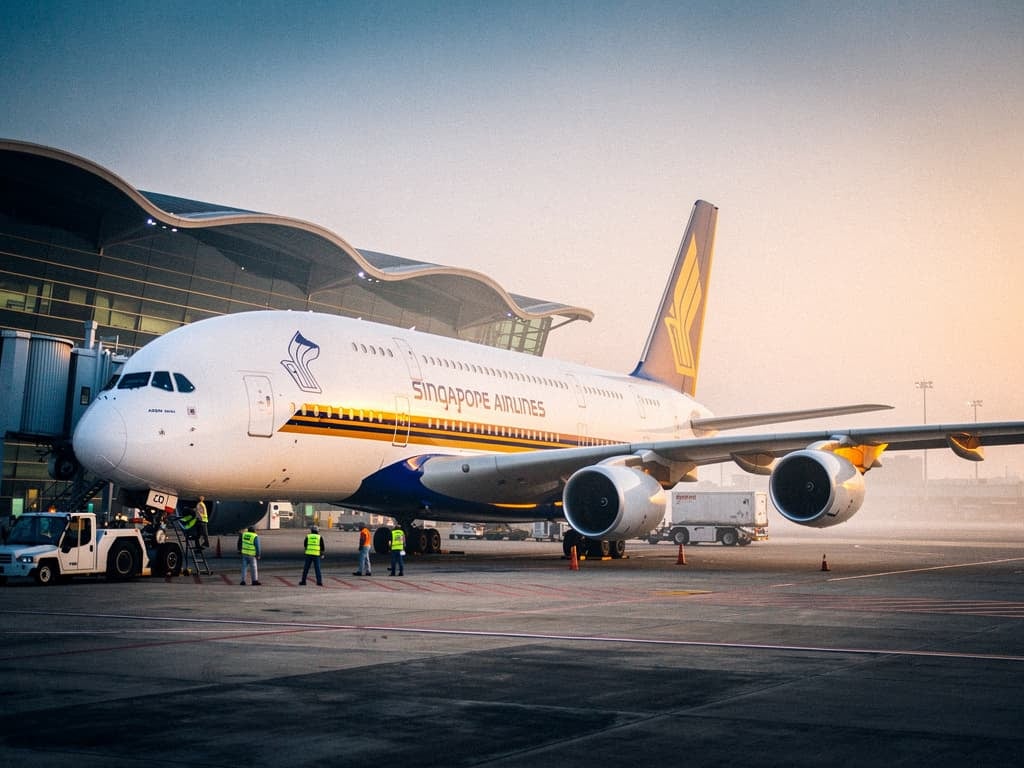
On the ground, Qantas operates dedicated first and business lounges in Changi Terminal 1, directly serving up to 84 premium passengers per A380 departure. That puts it head-to-head with Singapore Airlines’ SilverKris lounges in Terminal 3, where the competitor flies its own A380s and Boeing 777-300ERs on the same city pair.
| Airline | Aircraft | First | Business | Premium Economy | Economy | Total Seats |
|---|---|---|---|---|---|---|
| Qantas | A330-300 | — | 28 | — | 269 | 297 |
| Qantas | A380 | 14 | 70 | 60 | 341 | 485 |
| Singapore Airlines | A380 | 6 | 78 | 44 | 343 | 471 |

Flight deals most people never see
Our AI monitors 150+ airlines for pricing anomalies that traditional search engines miss. Air Traveler Club members save $650 per trip per person on average: see how it works.
Each deal saves 40–80% vs. regular fares:

The value-add
What makes this more than a capacity bump is the narrowing window to fly the A380 at all. Qantas’ accelerated retirement timeline means the superjumbo’s remaining years are now formally numbered, and the Singapore–Sydney deployment concentrates the fleet where premium demand is thickest. For travelers, that translates into a rare opportunity to book a first-class suite on a five-hour regional hop — a product normally reserved for ultra-long-haul sectors — with a single connection onward to London or across Asia.
Air Traveler Club’s analysis of Qantas’ A380 deployment on Singapore–Sydney examines how the capacity injection reshapes award availability and premium access across the Asia-Pacific corridor. With 182 first-class suites per week now bookable on the route, redemption odds improve markedly, especially for those willing to search across partner programs.
How to lock in premium seats before the A380 retires
The schedule change is a clear booking signal: first-class suites on a short regional route won’t last forever, and the 2028 retirement deadline adds urgency for anyone who wants to experience the product.
- Book early for first-class suites. Qantas releases first-class award space to its own members 330 days ahead, and the 182 weekly suites will get snapped up quickly on peak corporate travel days. Set a calendar alert for December 2026 dates now.
- Check partner programs for better redemption rates. American AAdvantage and Alaska Mileage Plan often offer lower mileage prices than Qantas’ own program, and their award charts treat Sydney–Singapore as a single region, avoiding the carrier’s dynamic pricing spikes.
- Consider a London connection to stretch the experience. The A380 also operates QF1/QF2 to London Heathrow, so booking Sydney–Singapore–London on a single ticket lets you sample the first-class suite on a longer sector while still enjoying the short-hop convenience.
- Watch for Singapore Airlines’ competitive response. The capacity injection could trigger fare wars or bonus mile promotions on the route. If Qantas fills its premium cabins aggressively, Singapore Airlines may adjust pricing or award space to defend its share.
Watch for Qantas’ next fleet update — if the 2028 retirement language holds in subsequent filings and A350-1000 deliveries stay on track, the Singapore–Sydney A380 bridge will remain a temporary but highly valuable premium access point.
FAQ
When does the Qantas A380 start flying Sydney–Singapore?
The schedule change takes effect on December 7, 2026, with 13 of 14 weekly QF81/QF82 services operated by the A380. One weekly rotation remains on the Airbus A330.
How many first-class seats are added on the route?
The switch from A330 to A380 adds 14 first-class suites per flight, for a total of 182 suites per week in each direction — an 86% increase from the previous zero first-class capacity.
Will Qantas retire the A380 earlier than 2028?
Qantas has confirmed the fleet will begin retiring in 2028, four years ahead of the original 2032 plan. No earlier phase-out has been announced, but higher maintenance costs and the arrival of A350-1000s could accelerate individual airframe withdrawals.
How can I book a first-class award on this route?
Search Qantas Frequent Flyer at 330 days out for 108,000 points one-way, or check American AAdvantage (110,000 miles) and Alaska Mileage Plan (from 60,000 miles for business; first-class partner awards may vary). Partner programs sometimes show inventory not available to Qantas members.
Read more