Summary
On July 4, 2026, Europe’s aviation safety regulator issued an urgent update warning that satellite navigation jamming and spoofing attacks are growing in both “severity” and sophistication, particularly over conflict-adjacent airspace. EASA’s revised Safety Information Bulletin instructs flight crews to immediately verify positions using alternative navigation aids when operating near the Black Sea, Eastern Mediterranean, and Baltic regions.
The guidance is not a formal mandate, but operators face immediate pressure to equip fleets with anti-spoofing technology. Premium long-haul routes crossing these zones are already experiencing delays and re-routings as airlines scramble to comply.
A sharp escalation in GNSS jamming and spoofing events over three continents has forced regulators into action. On July 4, 2026, the European Union Aviation Safety Agency (EASA) updated its Safety Information Bulletin (SIB 2022-02R3), warning that these interference events are no longer isolated to a few hotspots around Ukraine. They now spread across the Mediterranean, Black Sea, Middle East, Baltic Sea, and even the Arctic — a geographic expansion that threatens the primary navigation backbone of modern commercial aviation.
The core insight: flight crews can no longer trust their GPS alone. Both EASA and the U.S. Federal Aviation Administration (FAA), which issued its own updated guidance in March, now call for immediate use of conventional navaids — VOR/DME stations and inertial reference systems — to verify position in real time. For hundreds of daily flights crossing Eastern Europe and the Levant, that means a temporary return to older, less precise navigation.
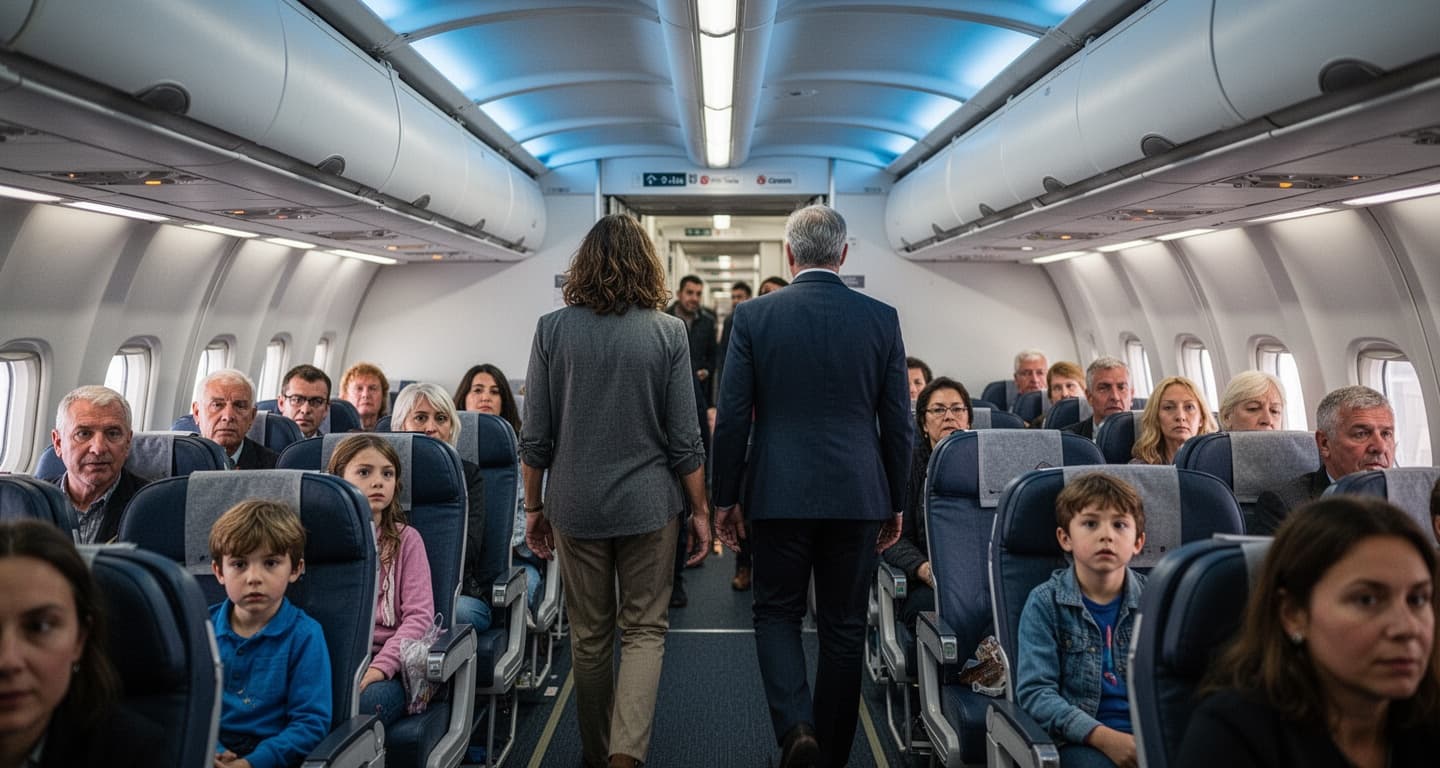
Operators of premium widebody services are scrambling. The affected airspace corridors are among the busiest for flights connecting Europe with Asia, the Gulf, and Africa. A Lufthansa A350 departing Frankfurt for Bangkok, or an Emirates 777 crossing the Black Sea toward Dubai, now routinely navigates through a zone where spoofed signals could show the aircraft in a false location — a risk that flight decks must actively counter with backup procedures.
EASA’s updated guidance and the global interference spike
The revised SIB, published directly by EASA, emphasizes that the threat has evolved beyond simple jamming. Spoofing — which generates false satellite signals to deceive aircraft systems — has become more sophisticated, sometimes mimicking genuine GPS constellations. EASA’s bulletin urges air operators to use Type B electronic flight bag (EFB) applications that display near real-time radio frequency interference along the route, so crews can anticipate trouble before entering affected areas. The FAA similarly recommends using tablets with separate GPS inputs and moving map software as detection tools.
The industry is already mobilizing. Honeywell Aerospace, recently spun off from its parent, is developing advanced anti-spoofing receivers, multi-sensor fusion platforms, and smart antennas designed to detect, mitigate, and recover from these attacks. Another longer-term fix sits with Iridium Communications, now being acquired by Rocket Lab. Iridium plans to deliver a tiny PNT ASIC chip — a positioning, navigation, and timing microchip — that would give aircraft an encrypted backup signal from its low-earth-orbit satellite network, roughly 1,000 times stronger than GPS. The chip could reach flight decks via a pilot’s EFB as early as 2027 and later be integrated directly into satcom boxes.
| Date | Event | Impact | Status |
|---|---|---|---|
| March 2022 | EASA first warns of GPS jamming near Ukraine | Operators alerted to Black Sea and Eastern Mediterranean risks | Initial advisory |
| March 2025 | FAA publishes updated Interference Resource Guide | U.S. operators guided on EFB-based detection and non-GNSS procedures | Guidance issued |
| July 4, 2026 | EASA updates SIB 2022-02R3 | Expands high-risk zones to include Baltic Sea and Arctic; stresses severity | Current guidance |
| 2026 (ongoing) | Honeywell Aerospace develops anti-spoofing receivers & multi-sensor fusion | Enhanced recovery and detection for aircraft in jamming zones | In development |
| Projected 2027 | Iridium PNT ASIC chip integration into pilot EFBs | Encrypted LEO backup to GNSS, 1,000x stronger signal | Planned |

Flight deals most people never see
Our AI monitors 150+ airlines for pricing anomalies that traditional search engines miss. Air Traveler Club members save $650 per trip per person on average: see how it works.
Each deal saves 40–80% vs. regular fares:

The long arc of a navigation crisis
This threat didn’t appear overnight. EASA first flagged GPS jamming around conflict zones in March 2022, specifically citing the Black Sea and Eastern Mediterranean. Four years later, the problem has metastasized: jamming and spoofing are now a persistent operational reality, not a temporary disturbance. Air Traveler Club’s in-depth analysis of Russian airspace closures and associated GNSS risks reveals how navigation interference has become part of a broader degradation of flightpath integrity across Eurasia — an issue that directly affects schedule reliability for premium cabins on the world’s busiest east-west corridors.
The regulatory push is accelerating, but the hardware response is still catching up. Honeywell’s suite of anti-spoofing solutions and Iridium’s planned ASIC chip represent the two most tangible countermeasures, yet neither will be a standard fit across global fleets for at least 18 months. Until then, flight crews are the first and last line of defense.
How to protect your itinerary on conflict-adjacent routes
The immediate threat is not a sudden loss of navigation but the inevitable operational disruptions — re-routings, holding patterns, and delays — that follow any jamming event. Smart booking and real-time monitoring can reduce your exposure.
- Monitor your routing: Use Flightradar24 or your airline’s app to check if your flight is filed over high-risk regions like the Black Sea. If so, ask your travel manager about alternative connections.
- Book the newest metal: For trans-Eurasian trips, search for flights operated by A350s or 787-9s; these aircraft have the most robust IRS backup. Avoid 777-200s on these segments unless the airline confirms a recent avionics upgrade.
- Identify aircraft at booking: Seat maps (1-2-1 business class indicates a newer model, 2-4-2 suggests an older one) are a quick proxy. Sites like SeatGuru and ExpertFlyer can reveal the type before you pay.
- Consider nonstop alternatives: A routing that avoids the Black Sea entirely — say, Frankfurt to Dubai nonstop with an A380 — eliminates the exposure. Nonstop flights over less-contested airspace are your safest bet.
- Enable carrier alerts: Most major airlines now push real-time gate changes and delay notifications via their apps. Ensure push notifications are on so you’re not caught off-guard by a sudden re-timing.
If Iridium’s PNT ASIC arrives on flight decks by 2027 as planned, encrypted LEO backup could slash re-routing risks, but for the next 12 months, vigilance is your best insurance.
FAQ
What exactly is GNSS jamming and spoofing?
Jamming blocks satellite signals, rendering GPS receivers useless. Spoofing generates counterfeit signals that trick an aircraft into believing it’s in a different location. Both can cause navigation errors and force crews to switch to backup instruments.
Should I cancel my flight if it crosses the Black Sea?
No. Airlines have robust backup navigation procedures. However, you may experience delays; factor extra connection time for airports like Istanbul or Riga where re-routings are most common.
Are some airlines better prepared than others?
Yes. Carriers with modern fleets — Lufthansa, Emirates, Qatar Airways — have already integrated enhanced IRS and are actively testing anti-spoofing receivers. Look for newer aircraft types in your booking for the best protection.
Read more