Summary
Aer Lingus failed to load a business class couple’s priority-tagged luggage onto four consecutive flights — three times in San Francisco, once in Brussels — despite AirTag screenshots proving the bags’ exact locations. The airline then issued a written promise to pay $265 in reimbursement, went silent for six months, and unilaterally closed the case without transferring a cent. Third-party advocacy intervention finally forced payment, exposing a pattern of deliberate claim abandonment that affects any international passenger with a delayed baggage claim.
Under the Montreal Convention, airlines are legally bound by written reimbursement commitments, and passengers have 21 days from bag receipt to file formal claims. The Hamanns’ case closed only after a consumer advocate contacted the airline directly — a step most passengers never take.
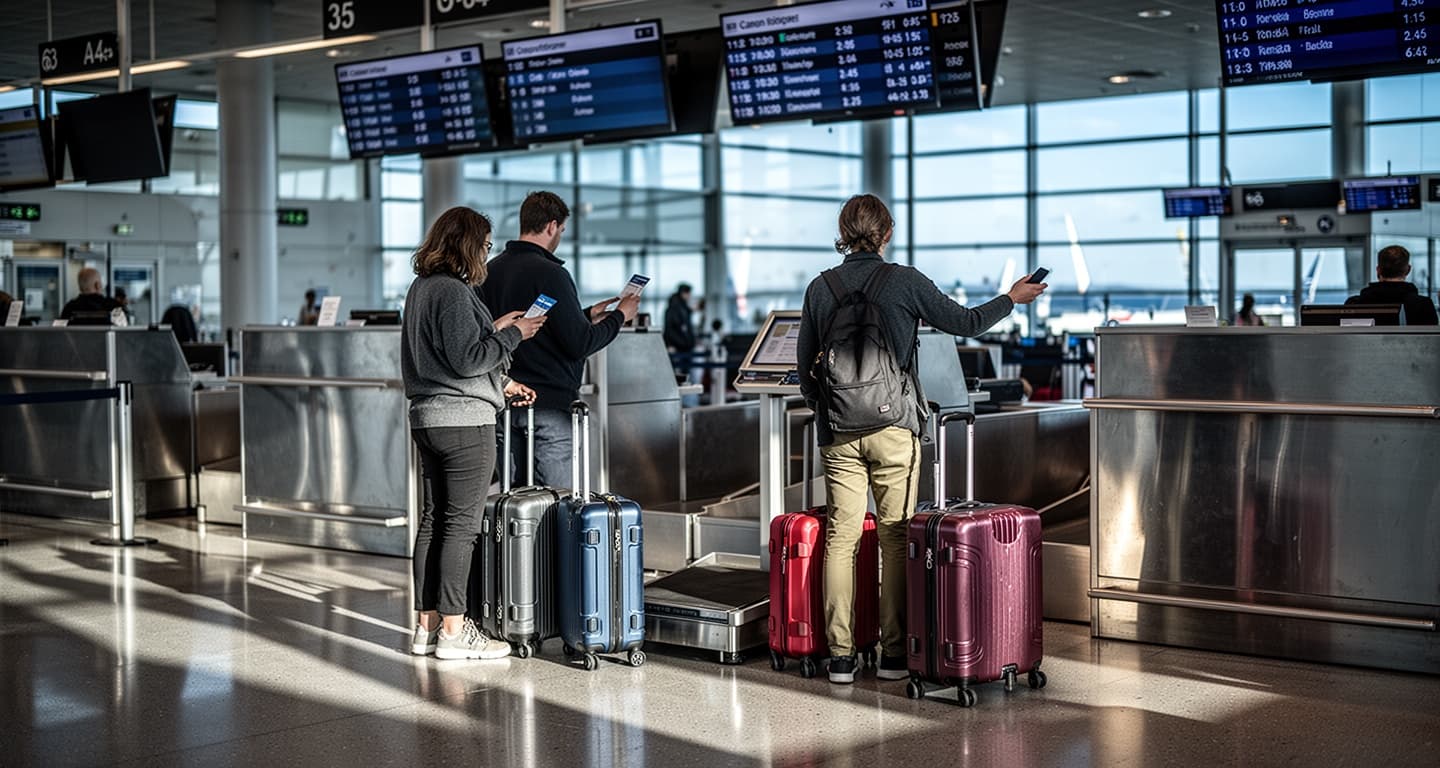
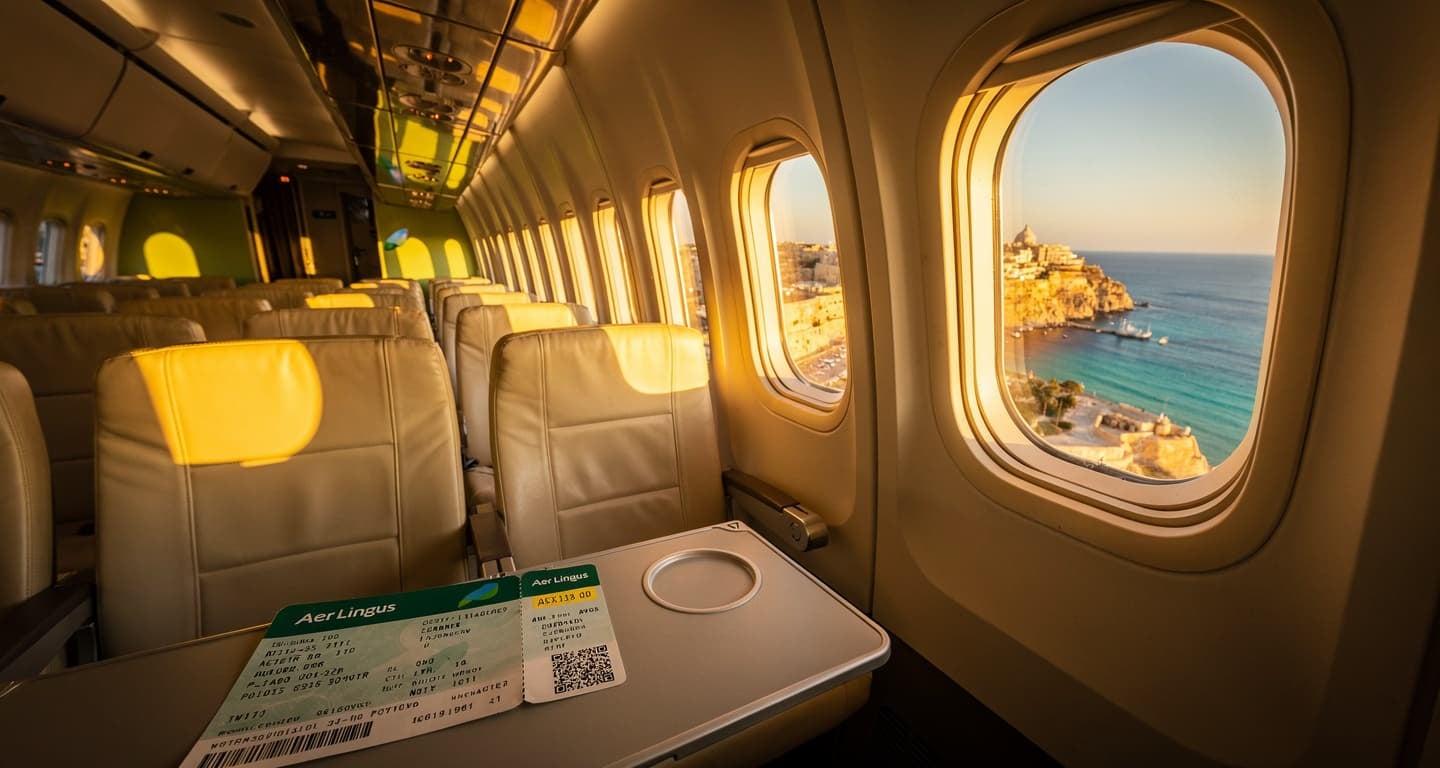
A couple’s 50th anniversary trip to Europe became a masterclass in airline accountability failure. Jack and Leslie Hamann paid for business class seats on Aer Lingus from Redmond, Oregon, to Brussels via San Francisco and Dublin — priority tags on their bags, AirTags inside them, comprehensive travel insurance in hand. None of it mattered. Their luggage sat visible in airport baggage areas for five consecutive days while the airline called, emailed, and texted daily with assurances that were, by the Hamanns’ own account, “mostly untrue.”
What followed was worse than the delay itself.
After the bags finally arrived, Aer Lingus issued a written promise to reimburse $265 for replacement clothing, medications, and toiletries — then vanished. Four months passed without payment. When the Hamanns escalated, the airline’s response was to mark the case closed. It took a consumer advocacy organization and a full 64-email paper trail to force the airline to complete what turned out to be an incomplete payment transfer form.
This case matters beyond one couple’s ordeal. It documents a specific airline behavior pattern — written commitment, deliberate non-payment, administrative closure — that any international passenger can face. It also confirms that the Montreal Convention’s liability framework only functions when passengers know how to use it, and when to stop waiting.
What actually happened — and what the airline was required to do
The Hamanns’ itinerary collapsed at the first connection. Their bags never made the initial flight, and for the next four days, Aer Lingus ground staff at San Francisco International failed to load them onto three successive departures. A fourth loading failure occurred in Brussels. The bags contained cold-weather clothing and daily prescription medications — items the couple had reasonably placed in checked luggage given their business class allowance and priority handling promise.
The Montreal Convention’s Article 19 establishes clear liability for baggage delays on international flights. Passengers must file a written complaint within 21 days of receiving their bags, and the airline’s maximum exposure is 1,519 Special Drawing Rights per passenger — approximately $2,175 USD at current rates. The Hamanns filed promptly, submitted receipts, and provided bank transfer details when requested. Aer Lingus confirmed receipt and issued written approval for the $265 claim within 30 days.
That approval email contained errors — wrong flight dates, incorrect flight numbers, wrong departure airports. The Hamanns flagged none of this as a red flag at the time. They should have. Those errors pointed to a claims processing system operating without adequate quality control, and they foreshadowed exactly what came next: the payment transfer was never properly completed because the paperwork was never correctly filed internally.
The Aer Lingus delayed baggage process requires passengers to report via airport agents, kiosks, or the ReportMyBag form using their baggage tag number, with updates tracked through WorldTracer. The airline states that the majority of bags are returned within 24 hours. For the Hamanns, that figure was off by four days.
| Date / Period | Event | Impact | Status |
|---|---|---|---|
| Day 1 of travel | Bags not loaded at Redmond; missed first SFO connection | No cold-weather clothing or prescription medications | PIR filed at airport |
| Days 2–4 | Three additional SFO loading failures despite AirTag confirmation | Forced daily schedule changes; replacement purchases required | Daily airline contact — no resolution |
| Day 5 | Fourth failure in Brussels; bags finally delivered | Five days without luggage on anniversary trip | Bags received; expense claim filed |
| ~30 days post-travel | Aer Lingus issues written $265 reimbursement approval | Written contractual obligation created | Payment promised within 30 days |
| Months 2–4 | No payment; follow-up emails unanswered | Couple out-of-pocket; claim in limbo | Ghosted |
| Month 6 | Aer Lingus closes case unilaterally without payment | Claim administratively terminated | Case “closed” — no funds transferred |
| Post-advocacy intervention | Incomplete transfer paperwork identified and corrected | $265 transferred immediately upon form completion | Resolved |

Flight deals most people never see
Our AI monitors 150+ airlines for pricing anomalies that traditional search engines miss. Air Traveler Club members save $650 per trip per person on average: see how it works.
Each deal saves 40–80% vs. regular fares:

Why a written promise isn’t enough — and what competitors do differently
The Hamanns’ $265 reimbursement sits well below the Montreal Convention’s ~$2,175 per-passenger ceiling, which means the airline had significant room to pay more and chose not to. It also chose not to pay what it had already approved. That distinction matters: this wasn’t a dispute over claim validity. Aer Lingus had already accepted liability. The failure was purely administrative — and the airline’s response to that failure was to close the case rather than correct it.
Competitor carriers handle this differently in practice. British Airways Club World passengers report typical swift payouts closer to €500 for comparable delay scenarios, processed without advocacy intervention. Lufthansa first and business class claims routinely see “reasonable expense” interpretations reaching €1,000. Delta One’s baggage tracking integration allows real-time claim initiation via app, with faster average resolution than phone-based systems. None of these carriers are immune to baggage failures — but their claims resolution infrastructure is more automated and less dependent on individual agents completing paperwork correctly.
Air Traveler Club’s EU261 compensation analysis for Lufthansa’s CityLine grounding illustrates how European passenger rights frameworks create harder enforcement deadlines than the Montreal Convention alone — a structural advantage that transatlantic passengers on US-originating itineraries don’t automatically inherit.
The Hamanns’ case also exposes a specific vulnerability in Aer Lingus‘s ground handling at San Francisco International. Four consecutive loading failures on a single itinerary — with AirTag confirmation of the bags’ location provided to baggage services each day — suggests a systemic disconnect between tracking data and ramp operations, not a one-off error.
How to force payment when an airline closes your claim without paying
A “case closed” notification from an airline is a customer service tactic, not a legal determination. Passengers who receive one after a written reimbursement approval have several escalation paths that carry real consequences for the carrier.
- File a DOT complaint immediately: The U.S. Department of Transportation tracks baggage complaints and has issued enforcement actions against Aer Lingus previously. Filing at secure.dot.gov/air-travel-complaint creates a formal record and triggers airline response requirements. Include every email, receipt, and the written approval notice.
- Cite the written approval explicitly: When contacting airline executives, reference the specific email date, the approved amount, and the stated 30-day payment window. Frame it as breach of written agreement, not a baggage dispute — that changes the legal register of your complaint.
- Act within the Montreal window: If you haven’t yet received your bags, the 21-day clock starts on delivery. If you have received them and the window is closing, file a formal written complaint to the airline’s legal department, not customer service, to preserve your claim.
- Contact a consumer advocacy organization: The Hamanns’ case resolved within weeks of advocacy intervention after six months of direct contact failed. Airlines respond differently to third-party escalation because it introduces reputational and regulatory risk that individual complaints don’t.
- Document the “case closed” notice: Screenshot it immediately. An airline closing a case without honoring a written payment commitment strengthens, not weakens, your legal position — it demonstrates willful non-payment rather than administrative delay.
Watch the DOT’s 2026 enforcement calendar. If the agency moves forward with mandatory 30-day reimbursement deadlines for international baggage claims — a measure under active consideration following 2024 enforcement actions — airlines that currently rely on claim abandonment as a cost-reduction strategy will face automatic penalty exposure for exactly the behavior documented in this case.
FAQ
Can Aer Lingus legally close a baggage claim after issuing written reimbursement approval?
A written reimbursement approval creates a contractual obligation that survives administrative case closure. Aer Lingus — or any carrier — cannot extinguish a payment commitment by marking a case closed in its internal system. Passengers who receive a “case closed” notice after written approval should file a DOT complaint immediately and reference the approval email as a binding written agreement, not merely a customer service communication.
What is the 21-day Montreal Convention deadline and when does it start?
Under Article 19 of the Montreal Convention, passengers must file a written complaint with the airline within 21 days of receiving their delayed bags. The clock starts on delivery date, not travel date. Missing this deadline eliminates your right to claim under the Convention for that incident. Filing promptly in writing — not by phone — is essential, as verbal complaints do not satisfy the treaty’s written notice requirement.
Does business class priority tagging guarantee bags are loaded first?
Priority tags indicate handling preference to ground crews but do not constitute a contractual guarantee of loading sequence. In the Hamanns’ case, priority-tagged bags were visible in the baggage area and confirmed by AirTag for four consecutive days without being loaded. Passengers should treat priority tags as a service expectation, not a performance guarantee, and use AirTags or similar trackers to maintain independent location verification throughout their journey.
How much can I actually recover for delayed baggage on an international flight?
The Montreal Convention caps liability at 1,519 Special Drawing Rights per passenger — approximately $2,175 USD — for documented, reasonable expenses incurred during the delay. Airlines determine what qualifies as “reasonable,” which gives them significant discretion to limit payouts. The Hamanns received $265 for clothing, medications, and toiletries — well within the cap but reflecting the airline’s narrow interpretation of reasonable replacement costs. Passengers with higher documented expenses should itemize every purchase and push back on low initial offers in writing.
What should I do if my bags are delayed and I need prescription medication?
Contact the airline’s baggage desk immediately and document the medical necessity in writing — this strengthens your claim for medication replacement costs. Visit a local pharmacy and obtain a written receipt; in many countries, a pharmacist can provide an emergency supply of common medications with a valid prescription. Never pack irreplaceable or life-critical medications in checked luggage. Keep at minimum a 48-hour supply in your carry-on for any international itinerary.
Read more