Summary
American Airlines is rolling out a new individual performance scoring system for flight attendants — called me@work — built on 12 months of data and weighted across five metrics: Individual CSS Score (30%), Customer Complaints (25%), FA Reports By Flight (20%), MyFlight App Use (15%), and Pre-Departure Beverage Survey (10%). The system marks the first individual cabin crew scoring program at a major U.S. legacy carrier, and flight attendants are already pushing back hard.
Scores are currently informational — no direct link to pay, scheduling, or discipline has been announced. The Association of Professional Flight Attendants has not yet issued a formal statement, but rank-and-file opposition surfaced publicly within hours of the program being flagged on April 21, 2026.
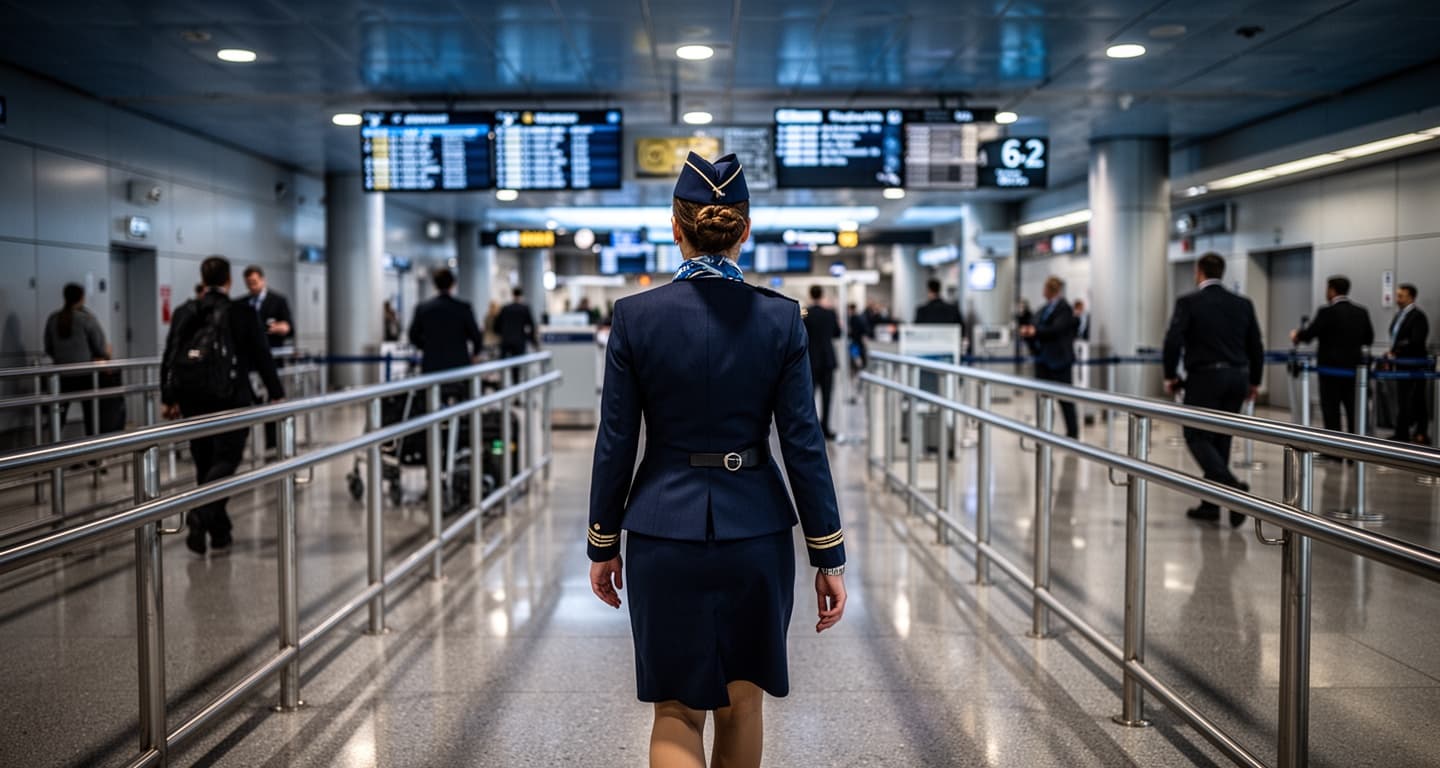
American Airlines just handed its flight attendants a report card — and the cabin crew isn’t grading it kindly. The carrier has begun issuing individual performance scores to flight attendants through an internal platform called me@work, a data-driven ranking system that blends passenger feedback, operational metrics, and app usage into a single composite score for each crew member.
The move is a significant departure from how U.S. legacy carriers have historically managed cabin crew performance. For decades, seniority has been the dominant organizing principle — who flies which routes, who gets preferred schedules, who holds the most leverage in the workplace. Introducing a numerical score that ranks flight attendants against one another upends that framework in ways that go well beyond accountability.
The program draws on roughly 12 months of collected data. Customer experience — weighted heaviest at 30% through the Individual CSS Score — relies on anonymized Net Promoter Score surveys sent to passengers after flights. Customer Complaints account for another 25%. The remaining three metrics cover FA Reports By Flight, MyFlight App engagement, and a Pre-Departure Beverage Survey. For those flying American Airlines Flagship Business or Flagship First, the implications for service consistency are real — and not yet clear.
The details: what me@work actually measures
The scoring breakdown reveals both the ambition and the vulnerability of the system. Passenger NPS surveys are notoriously blunt instruments — they capture overall flight satisfaction, not individual crew performance. A broken Boeing 787 inflight entertainment system, a catering shortfall, or a delayed departure can all suppress a passenger’s post-flight rating regardless of how well a specific flight attendant performed. Industry sources confirm the scores are currently informational, with no announced link to pay, route assignments, or disciplinary action — but that framing can shift quickly once a system is embedded in HR infrastructure.
What makes this structurally different from broad compliance audits is the ranking component. Flight attendants are being measured against each other, not against an absolute standard. That creates competitive pressure within crews — and, critics argue, incentivizes behaviors that score well on surveys rather than behaviors that improve actual safety or service quality.
The APFA contract currently ties flight attendant compensation to IPD/NIPD structures with no performance-linked pay provisions. APFA’s published pay framework makes no reference to scoring metrics — which means any future attempt to connect me@work scores to compensation or scheduling would require contract renegotiation, a process that could trigger formal grievances or work action.
| Metric | Weight | Data source | Key vulnerability |
|---|---|---|---|
| Individual CSS Score | 30% | Anonymized post-flight NPS surveys | Captures flight experience, not individual FA performance |
| Customer Complaints | 25% | Passenger-submitted complaints | Subject to passenger bias; no context weighting |
| FA Reports By Flight | 20% | Internal operational reports | Definition and attribution methodology not publicly disclosed |
| MyFlight App Use | 15% | App engagement data | Measures tool adoption, not service quality |
| Pre-Departure Beverage Survey | 10% | Passenger survey responses | Narrow task metric; penalizes boarding delays outside FA control |
Flight deals most people never see
Our AI monitors 150+ airlines for pricing anomalies that traditional search engines miss. Air Traveler Club members save $650 per trip per person on average: see how it works.
Each deal saves 40–80% vs. regular fares:

The competitive context: why AA is an outlier here
United Airlines evaluates Polaris cabin crews on a team basis — no individual rankings, no passenger NPS input tied to personal scores. Delta Air Lines uses compliance audits for Delta One crews without ranking individuals against each other. Both approaches preserve crew cohesion and avoid the attribution problem that plagues passenger surveys. Emirates does score cabin crew individually and ties bonuses to performance thresholds, but operates within a fundamentally different labor structure — no union, direct employment contracts, and a service culture built around individual accountability from day one.
American is attempting to import elements of the Emirates model into a unionized U.S. labor environment. That tension is not theoretical. Air Traveler Club’s coverage of the FAA’s $255,000 enforcement action against American Airlines over flight attendant drug testing violations illustrates the already-strained relationship between AA management and its cabin crew — a relationship that a ranking system is unlikely to repair.
The pre-departure beverage metric is particularly revealing. Scoring flight attendants on whether passengers receive drinks before departure ties individual performance to a task that depends on gate agents, boarding pace, and catering delivery — none of which the flight attendant controls. It measures the flight, not the person flying it.
What the me@work rollout means for AA’s labor relationship
This is an awareness story with real forward stakes. The scores are informational today — but the infrastructure now exists to make them consequential. The critical variable is the APFA’s formal response, which had not been issued as of April 22, 2026.
If investigators — or in this case, union negotiators — identify the scoring methodology as a unilateral change to working conditions, expect a formal grievance under the existing collective bargaining agreement within 30 to 60 days. That filing would likely freeze any expansion of the system pending arbitration, preserving the status quo on premium route assignments and crew selection.
Watch the Q2 2026 contract negotiation calendar. An APFA vote to formally contest me@work would be the clearest signal that AA’s service accountability push has collided with the structural limits of its labor environment — and that premium cabin consistency on high-yield transatlantic and transcontinental routes will remain variable through at least the end of 2026.
FAQ
What is American Airlines’ me@work scoring system?
Me@work is an internal performance scoring platform that assigns individual scores to American Airlines flight attendants based on five weighted metrics: Individual CSS Score (30%), Customer Complaints (25%), FA Reports By Flight (20%), MyFlight App Use (15%), and Pre-Departure Beverage Survey (10%). The system draws on 12 months of collected data and currently produces informational scores with no announced link to pay, scheduling, or discipline.
Are flight attendant scores currently tied to pay or route assignments?
No. As of April 22, 2026, the scores are informational only. American Airlines has not announced any mechanism connecting me@work scores to compensation, scheduling, or disciplinary action. The APFA contract does not include performance-linked pay provisions, meaning any future connection would require contract renegotiation.
How does this compare to how other U.S. airlines evaluate flight attendants?
United Airlines evaluates Polaris cabin crews on a team basis without individual rankings. Delta Air Lines uses compliance audits for Delta One crews without passenger NPS input tied to personal scores. American’s individual ranking approach is the first of its kind among major U.S. legacy carriers for cabin crew, though some international carriers — notably Emirates — have used individual scoring systems for years.
What happens if the APFA formally challenges the system?
A formal APFA grievance would likely freeze any expansion of me@work pending arbitration under the existing collective bargaining agreement. That outcome would keep scores informational indefinitely and preserve seniority-based route assignments. If the union accepts the framework with modifications, high-scoring flight attendants could be prioritized on premium routes within six months.
Read more