Summary
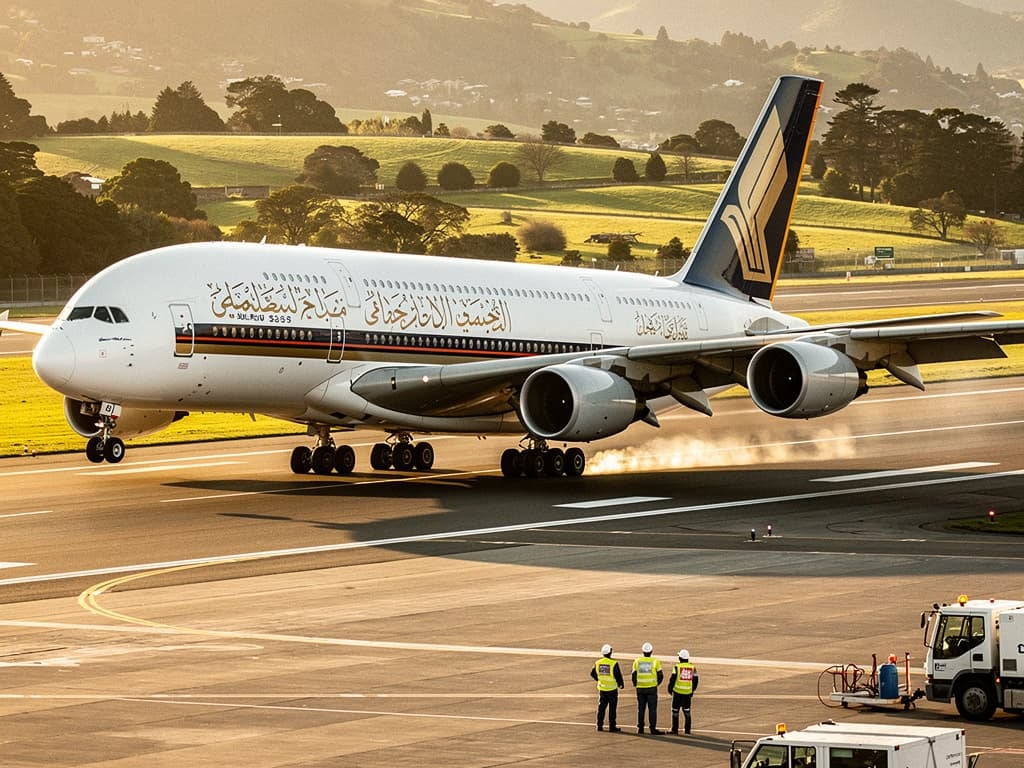
Malaysia Airlines and Tourism New Zealand formalized a two-year strategic partnership on May 5, 2026, targeting coordinated demand stimulation on the Kuala Lumpur–Auckland corridor through joint marketing campaigns, travel agent familiarization trips, and co-developed market programs. The deal positions Malaysia Airlines as a primary APAC gateway to New Zealand for travelers connecting through Kuala Lumpur, with the airline’s oneworld membership enabling onward connectivity via partner carriers.
The partnership is marketing-led, not a capacity commitment — no new frequencies or aircraft upgrades have been announced. Those planning business class travel to New Zealand should monitor Q3 2026 for promotional inventory before potential demand-driven tightening.
Malaysia Airlines is making a calculated bet on New Zealand. The carrier’s two-year partnership with Tourism New Zealand, announced May 5, 2026, is the most structured demand-stimulation effort the airline has mounted on the Kuala Lumpur–Auckland corridor in recent memory — and it signals something more than a press release.
The agreement covers joint marketing programs, coordinated travel agent familiarization trips, and development of what both parties describe as “markets of common interest.” That last phrase is the tell. It suggests Malaysia Airlines and Tourism New Zealand are aligning on specific origin markets — likely Southeast Asia and the Middle East — where the airline’s network can funnel travelers into New Zealand more efficiently than competing APAC carriers.
For those considering New Zealand on business class, the timing matters. The Kuala Lumpur–Auckland route is secondary-tier for all carriers operating it, with limited nonstop options and constrained premium cabin inventory year-round. A coordinated push by both the airline and the destination’s official tourism body creates a specific window — roughly the next six months — before any demand response materializes in pricing or award availability.
Malaysia Airlines is a full oneworld Alliance member, meaning connectivity to Auckland extends well beyond its own metal. Partner airlines including American Airlines, Cathay Pacific, and Qantas all participate in the alliance’s award booking infrastructure, giving travelers multiple redemption pathways on this routing.
What the partnership actually covers
The formal agreement, confirmed by both parties and detailed in trade reporting, centers on three operational pillars: joint marketing investment, travel trade education, and route development advocacy. The familiarization trip component is particularly significant — these programs directly influence how travel agents position and sell a carrier’s product, with downstream effects on corporate booking volumes that can outlast any single promotional campaign.
No new codeshare with an airline partner has been announced. The “strategic airline partnership” framing in early coverage reflects the airline’s role as the deal’s primary commercial engine, not a new interline or joint venture agreement with another carrier.
| Airline | Aircraft | Routing | Key differentiator | Approx. business class (roundtrip) |
|---|---|---|---|---|
| Malaysia Airlines | Airbus A350-900 | KUL–AKL nonstop | Direct Kuala Lumpur gateway, oneworld integration, competitive pricing | $5,500–$7,200 (unverified) |
| Singapore Airlines | Airbus A350 | SIN–AKL with connection | Superior seat privacy, service quality, schedule frequency | $6,500–$8,500 (unverified) |
| Air New Zealand | Boeing 787-9 | Multiple APAC hubs | Domestic NZ connections, premium economy alternative | $4,800–$6,800 (unverified) |
| Qantas | Boeing 787-9 | SYD/MEL–AKL | Frequency, competitive pricing for Australian-based travelers | Data pending verification |

Flight deals most people never see
Our AI monitors 150+ airlines for pricing anomalies that traditional search engines miss. Air Traveler Club members save $650 per trip per person on average: see how it works.
Each deal saves 40–80% vs. regular fares:

What this means before the demand curve shifts
Airline-tourism board partnerships in Australasia have a documented pattern: demand stimulation precedes capacity decisions, not the other way around. The two-year term here is deliberate — it gives Malaysia Airlines enough runway to measure incremental bookings before committing to additional frequencies or aircraft upgrades on a route that currently operates at secondary-tier volumes.
The real mechanism worth watching is the travel agent familiarization program. When agents experience a product firsthand, corporate booking volumes on that route typically follow within two to three quarters. That’s a slower burn than a fare sale, but it’s structurally more durable — and it’s the kind of demand shift that eventually justifies a second daily frequency.
Air Traveler Club’s analysis of Malaysia Airlines’ pricing advantage on Australia routes illustrates the carrier’s consistent strategy: undercut premium competitors on price while leveraging the Kuala Lumpur hub for efficient connections. The New Zealand partnership fits the same playbook — use Tourism New Zealand’s marketing infrastructure to drive awareness, then convert that awareness into bookings at a price point that Singapore Airlines and Qantas can’t easily match.
Award space is the near-term variable. If the partnership drives measurable demand in Q3–Q4 2026, expect oneworld partners to tighten business class award inventory on KUL–AKL before the end of the year.
How to position your New Zealand booking in the next 60 days
The partnership creates a specific booking opportunity: a six-month window before demand stimulation affects pricing and award availability on the KUL–AKL corridor. Those with New Zealand travel in Q4 2026 or early 2027 should act on current conditions rather than wait for promotional fares that may not materialize — or may come with tighter inventory than expected.
- Award bookings: open at 330 days. oneworld partner award space on KUL–AKL averages 2–4 business class seats per week on peak days. Book immediately upon the 330-day window opening via American Airlines AAdvantage or the Qantas Frequent Flyer portal for best availability.
- Cash fares: target 60–90 days out. Historically the optimal window for lowest business class pricing on this route. March–May and October–November represent the softest seasonal pricing; July–September and December–January command peak premiums.
- Watch for Q3 2026 promotional inventory. The partnership’s co-marketing programs may trigger limited-time promotional fares on MalaysiaAirlines.com; monitor the airline’s fare alerts and AAdvantage partner offers for co-branded promotions tied to the Tourism New Zealand campaign.
- Tuesday–Wednesday departures have historically priced 5–10% below weekend flights on this routing — a meaningful saving on a long-haul business class ticket.
- Corporate travelers: the travel agent familiarization program will increase Malaysia Airlines visibility in Australian and New Zealand travel trade channels. Expect improved corporate rate availability through managed travel programs by Q4 2026.
Watch: if Malaysia Airlines files a schedule change or capacity increase on KUL–AKL before September 2026, award space will tighten rapidly. That’s the trigger to accelerate any pending booking decisions.
FAQ
Is this a new codeshare between Malaysia Airlines and another airline?
No. The partnership announced May 5, 2026, is between Malaysia Airlines and Tourism New Zealand — a destination marketing organization, not an airline. No new airline-to-airline codeshare or joint venture was announced as part of this agreement. Malaysia Airlines’ existing codeshare and oneworld Alliance partnerships remain unchanged.
Which oneworld partners can I use to book Malaysia Airlines business class to Auckland?
American Airlines AAdvantage, Cathay Pacific Asia Miles, and Qantas Frequent Flyer all allow award bookings on Malaysia Airlines metal as oneworld partners. Award space on the Kuala Lumpur–Auckland route is limited — typically 2–4 business class seats per week on peak days — so booking at the 330-day window opening is strongly recommended.
Will this partnership result in new Malaysia Airlines flights to New Zealand?
No new frequencies or routes have been announced. The two-year partnership is demand-stimulation focused: joint marketing, travel agent education, and route development advocacy. If the partnership generates measurable booking growth, a schedule expansion announcement could follow by Q4 2026 — but no capacity commitment has been made public as of May 2026.
Read more