Summary
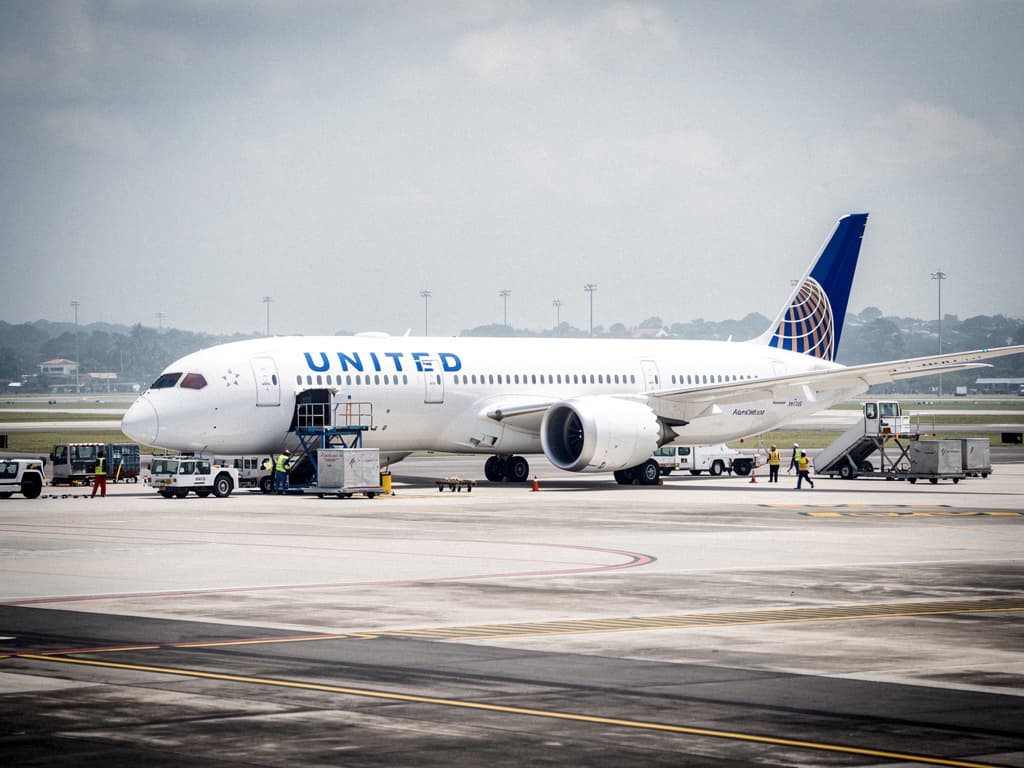
United Airlines flew N774UA — the oldest active Boeing 777 in the world and line number two off the production line — from San Francisco to Paine Field on May 14, 2026, for what the airline internally described as a press event. The move reunites the original launch customer’s earliest surviving 777 with its birthplace, arriving at a moment when Boeing is finally closing in on 777X certification and no U.S. carrier has placed an order for the type.
The visit is almost certainly a heritage moment rather than an order signal. But United’s aging 777-300ER fleet will eventually need a replacement, and the 777X remains the only Boeing answer on the table.
Three decades after United Airlines launched the Boeing 777 program, the carrier sent one of its oldest surviving examples back to where it was built. N774UA, a 777-200 and the second aircraft off the Everett production line, flew north from San Francisco to Paine Field as UA3821 on May 14, 2026 — a flight that would be unremarkable on any other aircraft, but carries considerable symbolic weight on this one.
The timing is hard to ignore. Boeing is pushing the 777X toward FAA type certification, targeting approval in the second half of 2026 with passenger service beginning in 2027. Lufthansa, Emirates, Qatar Airways, and Cathay Pacific are all waiting. Not a single U.S. airline has signed an order.
United’s position has been consistent: the 777X is too large for a multi-hub network that doesn’t funnel traffic through a single mega-hub. Patrick Quayle, United’s Senior Vice President of Global Network Planning and Global Alliances, has made that case publicly and repeatedly. The 787 Dreamliner — flexible, efficient, right-sized — has been the answer.
But “not the right fit today” and “never” are different statements. N774UA’s return to Paine Field reopens a question the industry has been asking for years: will United eventually come home to the 777 family’s next chapter?
The details: what N774UA’s visit actually tells us
N774UA is not just old — it is historically significant. As line number two from the 777 production line, the aircraft represents United’s foundational role in one of commercial aviation’s most successful programs. The airline was the 777‘s launch customer, and the type has anchored its longhaul network ever since. Flying that specific airframe back to Paine Field for a corporate event is a deliberate choice, not a scheduling coincidence.
Boeing’s 777X program page confirms the 777-9 is configured for up to 426 passengers in a two-class layout with a range of 7,285 nautical miles — figures that position it well above United’s current 787 family on raw capacity, though not necessarily on network flexibility. The program has accumulated more than $15 billion in development charges across its certification journey, with cracked engine thrust links, flight control issues, and a cargo door failure among the documented hurdles. Air Traveler Club’s coverage of the 777X certification timeline and delay costs provides useful context on what Boeing is still working through before the type enters service.
United’s widebody strategy, meanwhile, has moved decisively toward the 787. The carrier operates both the 787-9 and 787-10, with recent order shifts favoring the larger -10 variant on high-demand routes. The 787-10 trades some range for additional seats and belly cargo — a sensible tradeoff on trunk routes like Newark–London or San Francisco–Tokyo, but less useful on thinner or ultra-long-haul markets where the 787-9 remains the better tool.
| Aircraft | Typical two-class capacity | Range (nautical miles) | United fleet role |
|---|---|---|---|
| Boeing 777-9 (777X) | Up to 426 passengers | 7,285 nm | Not ordered — potential 777-300ER successor |
| Boeing 787-10 | ~318 passengers | ~6,430 nm | High-density longhaul trunk routes |
| Boeing 787-9 | ~296 passengers | ~7,530 nm | Premium longhaul, thinner international routes |
| Boeing 777-200ER | ~269 passengers | ~7,065 nm | Aging longhaul fleet, Polaris-equipped |
| Boeing 777-300ER | ~386 passengers | ~7,370 nm | High-capacity longhaul, eventual replacement candidate |

Flight deals most people never see
Our AI monitors 150+ airlines for pricing anomalies that traditional search engines miss. Air Traveler Club members save $650 per trip per person on average: see how it works.
Each deal saves 40–80% vs. regular fares:

The value-add: why the 777X debate is more nuanced than it looks
The standard argument against a United 777X order is straightforward: the aircraft is too big, too specialized, and too contrary to the multi-hub flexibility that defines United’s network. That argument is largely correct — but it obscures a more interesting question about what United’s fleet looks like in the 2030s.
United’s 777-300ER fleet will age out. When it does, the carrier faces a choice: replace like-for-like with a large twin-aisle, or absorb that capacity into a larger 787 order. The 787-10 can cover many of those missions, but not all. Routes like Newark–Tel Aviv, Newark–London Heathrow, and San Francisco–Hong Kong carry deep premium demand and significant belly cargo revenue — exactly the profile where a 777-9’s extra seats and cargo volume generate real yield advantage over a Dreamliner.
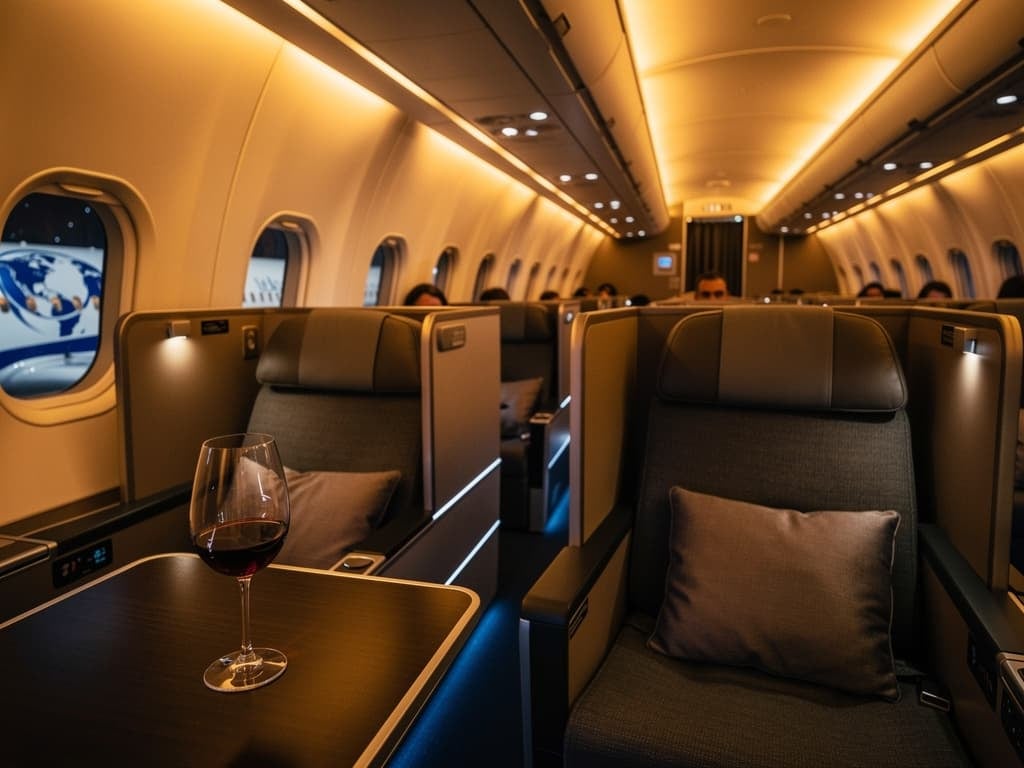
The competitive picture sharpens that point. Lufthansa‘s Allegris 777-9 cabin is built around enclosed suites and privacy-forward business class — a genuine hard-product statement. Qatar Airways is tying its 777X order directly to Qsuite, extending the most consistently praised business-class product in the market onto a larger platform. Both carriers are using the 777X as a flagship signal, not just a capacity tool.
United’s competitive answer has historically been network breadth and schedule frequency rather than hard-product leadership — a defensible strategy, but one that leaves the door open for rivals to claim the premium flagship narrative on shared routes.
What would actually move United toward a 777X order
This is an awareness story more than an action story — no order has been placed, and the Paine Field visit is most likely a heritage event tied to the 777’s anniversary. But the forward signals are worth tracking precisely.
United’s calculus would shift if three conditions converged: the 777-300ER retirement timeline accelerates, Boeing offers delivery slots timed for the early-to-mid 2030s at commercially attractive pricing, and the 787-10 proves insufficient for United’s highest-yield longhaul routes as premium demand deepens. None of those conditions are present today — but all three are plausible within a decade.
The more immediate signal to watch is not a heritage flight. It is United’s investor day fleet announcements and any Boeing order disclosure in the next 12–18 months. If United places even a small 777X order — 20 to 30 aircraft as a 777-300ER replacement tranche — it would mark the first U.S. carrier commitment to the type and carry significant implications for how Boeing prices and positions the program going forward.
Watch for any United fleet announcement at a Boeing or United investor event through the end of 2026. FAA type certification for the 777X, currently targeted for the second half of this year, would remove the last major technical uncertainty and likely trigger a new round of commercial conversations with undecided carriers.
Read more