Summary
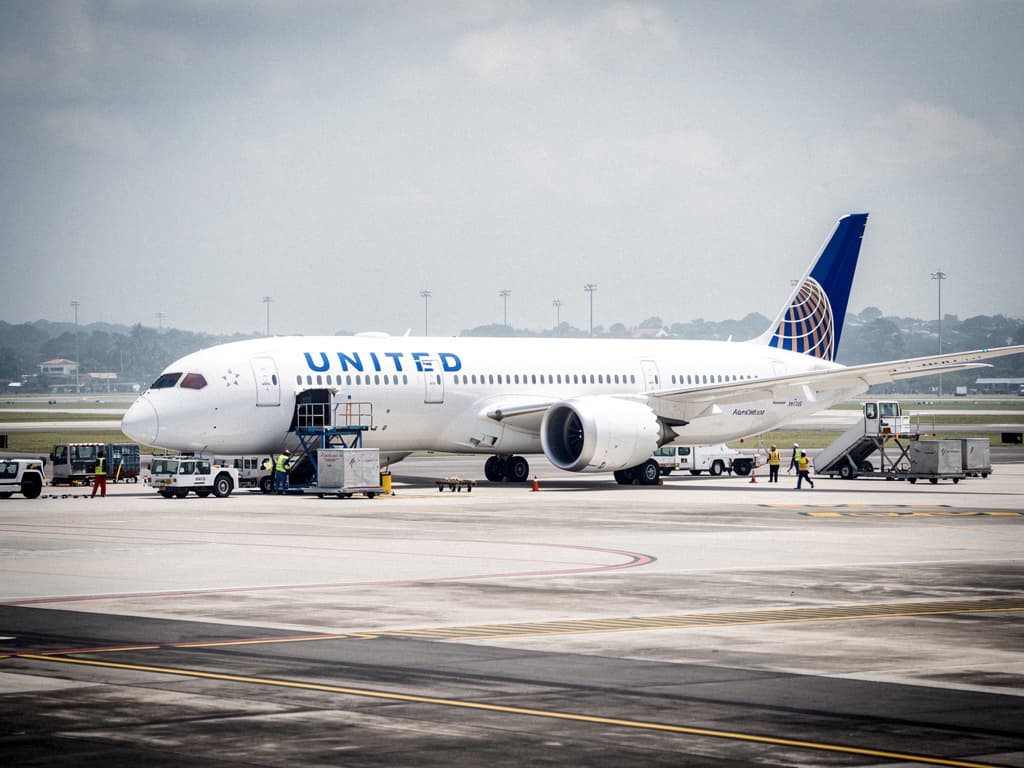
A service dog defecated four separate times in the aisle near row 7 on a recent United Airlines flight from Minneapolis (MSP) to San Francisco (SFO), forcing flight attendants to deploy paper towels, alcohol wipes, and bags of coffee grounds in a futile attempt to control the smell. By landing, the carpet had turned a “rich brown.” The dog had boarded wearing a guide dog harness — which was removed shortly after takeoff and never used again.
The cleaning crew was not warned before boarding the aircraft. A single row 7 passenger was relocated to the only available open seat; everyone else endured the flight as-is.
Some onboard incidents are forgettable. This one left a mark — literally. A dog presented as a service animal on a United Airlines MSP-SFO flight defecated in the cabin aisle four times during a single flight, triggering a cleanup operation that involved coffee grounds dumped directly onto the carpet and a post-landing scene that one passenger described as deeply unsanitary.
Flight attendants worked quickly after the first incident — paper towels, alcohol wipes, plastic bags. Then the dog went again. And again. By the time the aircraft touched down in San Francisco, the carpet around row 7 had reportedly turned a “rich brown,” a layered combination of repeated incidents and the coffee grounds crew used to mask the odor.
One passenger in row 7 was moved to an exit row — the only open seat on the plane. The owners deplaned without incident, leaving behind bags of soiled paper towels. The cleaning crew waiting at the gate had not been briefed. A fellow passenger had to alert them.
The dog had boarded wearing what appeared to be a guide dog harness, the kind specifically designed to help visually impaired handlers navigate. That harness was removed after boarding, stowed in the seatback pocket, and never touched again. The owner watched TV for the duration of the flight.
What the incident reveals about service animal policy gaps
The details here matter beyond the obvious gross-out factor. United’s current service animal policy, aligned with post-2021 DOT rules, permits trained service animals in the cabin without a carrier, provided the passenger completes a DOT Service Animal Air Transportation Form attesting to the animal’s health and training. No advance notice is required, though United recommends 48 hours notice. There is no harness requirement, no independent verification at the gate, and no behavioral pre-screening mechanism.
Trained service dogs — real ones — are conditioned to avoid relieving themselves in inappropriate environments. Four incidents on a single flight falls well outside that standard, whether the animal was legitimate or not. The dog may have been ill; the incidents don’t look like typical behavior even for poorly-trained animals. That possibility deserves acknowledgment. But it doesn’t resolve the underlying policy question.
This is not the first time United has faced this exact scenario. In April 2024, United Flight 422 from Houston to Seattle diverted to Dallas after a dog defecated in the first-class aisle near the lavatory. The incident was declared a biohazard. Ground crews cleaned for over two hours. The smell persisted. Food spoiled. United confirmed it as a medical issue — but the diversion cost the airline operationally and disrupted every passenger on board.
The FlyerTalk thread documenting the MSP-SFO incident has drawn significant engagement, with passengers debating both the legitimacy of the animal and the adequacy of United’s response protocols.
| Date | Airline / Route | Incident | Outcome | Policy response |
|---|---|---|---|---|
| April 2024 | United Airlines, Houston–Seattle | Dog defecated in first-class aisle near lavatory; declared biohazard | Flight diverted to Dallas; 2+ hour ground cleanup; food spoiled | United confirmed medical issue; no policy change announced |
| April 2026 | United Airlines, MSP–SFO | Dog defecated four times near row 7; coffee grounds used to mask odor | One passenger relocated; cleaning crew not pre-warned; owners deplaned without cleanup | No immediate policy response reported |
| Ongoing | American Airlines (all routes) | No comparable reported incidents | Stricter controls: harness/vest required, max 2 service dogs per flight, health attestation mandatory | Policy enforced at gate; fewer reported cabin hygiene incidents |
| Post-2021 | Delta Air Lines (all routes) | Emotional support animals banned following multiple incidents | Only trained service dogs permitted; advance form required | Proactive policy tightening ahead of DOT rule finalization |

Flight deals most people never see
Our AI monitors 150+ airlines for pricing anomalies that traditional search engines miss. Air Traveler Club members save $650 per trip per person on average: see how it works.
Each deal saves 40–80% vs. regular fares:

Why premium cabin passengers bear disproportionate exposure
Service animals are not assigned to specific cabin zones. On a narrowbody aircraft like the Boeing 737 operating MSP-SFO, domestic first class occupies rows 1 through 5 or 6 — putting premium passengers within immediate proximity of whatever happens in rows 7 and 8. The 2024 diversion involved a dog in the first-class aisle directly. The MSP-SFO incident centered on row 7, one row behind most domestic first configurations.
Unlike pets — which United requires to remain in an approved carrier stowed under the seat at all times — service animals are permitted to sit at their handler’s feet in the aisle or seat area. That positioning, combined with no behavioral pre-screening at the gate, means a single animal can affect an entire cabin section. On a $1,200+ one-way domestic first fare, that’s a meaningful service devaluation with no guaranteed remedy.
Air Traveler Club’s reporting on animal-related safety incidents at airports illustrates a broader pattern: aviation’s relationship with animals in passenger environments is increasingly strained, and institutional responses consistently lag behind the incidents themselves.
The coffee-ground solution deployed by United’s crew is telling — resourceful, but improvised. There is no standard cabin protocol for repeated animal hygiene incidents. Flight attendants are working without a playbook.
What the DOT rulemaking timeline means for onboard animal incidents
A pending DOT final rule — expected in Q2 2026 — would mandate submission of the US Service Animal Air Transportation Form at least three days before departure, rather than at the gate or day-of. If implemented, the rule would give airlines a pre-flight window to flag animals with documented health issues or incomplete attestations, potentially catching situations like this before boarding.
Watch whether the DOT finalizes that three-day advance submission requirement on schedule. If the rule takes effect as written, airlines including United would face fines for non-compliance — creating a financial incentive to enforce documentation standards that currently rely almost entirely on passenger self-certification. A second United diversion or a formal DOT complaint stemming from this MSP-SFO incident could accelerate that timeline.
FAQ
Can United deny boarding to a service animal that has had an onboard accident before?
Under current DOT rules, airlines cannot deny boarding to a service animal solely based on a prior incident unless the animal poses a direct threat to the health or safety of others. However, if an animal is actively ill or displaying behavior that constitutes a direct threat, the airline may deny transport. The pending DOT three-day advance form requirement would give carriers more lead time to assess documented health issues before the passenger reaches the gate.
What compensation is a passenger entitled to if a service animal incident ruins their flight?
There is no automatic compensation mandate for hygiene-related cabin disruptions. Passengers must file a claim under the airline’s Contract of Carriage, arguing that the service delivered was materially devalued. United has discretion to offer goodwill miles, travel credits, or partial refunds. Elite members — Premier Platinum and 1K — have stronger leverage through the Premier Priority Desk and documented precedent of receiving 5,000–25,000 bonus miles for significant service failures.
How is a service animal different from an emotional support animal under current rules?
Following 2021 DOT rule changes, airlines are only required to accommodate trained service dogs — defined as dogs trained to perform a specific task for a person with a disability. Emotional support animals no longer have a legal right to fly in the cabin and can be treated as pets, subject to carrier pet fees and crate requirements. Delta and American moved quickly to enforce this distinction; United’s implementation has been comparatively permissive.
Read more