Summary
Flight attendants in first class are watching — and remembering. From passengers who treat the call button as a personal concierge hotline to those who snap their fingers at safety professionals, six specific behaviors reliably generate galley conversation long after the wheels touch down. Alcohol-related incidents account for roughly 12% of all reported unruly passenger cases, and crew members are trained to document safety-demonstration non-compliance with the same attention they give to genuine emergencies.
The behaviors that earn the most post-flight discussion aren’t always the loudest ones. Entitlement, it turns out, is remarkably easy to spot from the aisle.
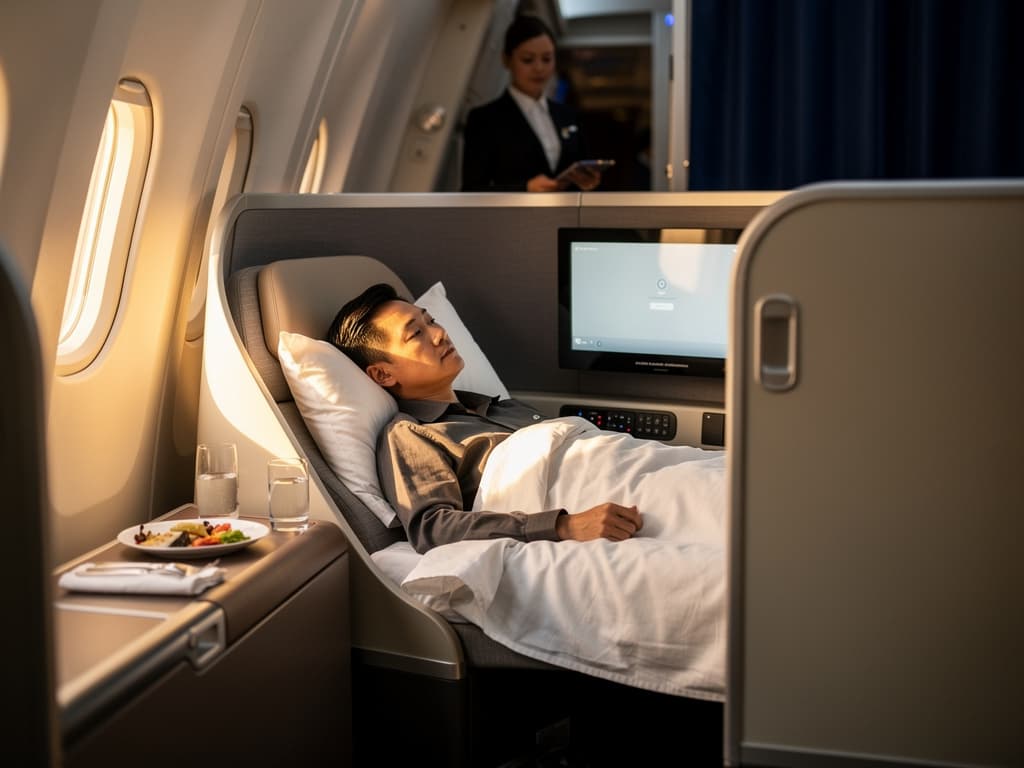
There’s an unspoken social contract in a first class cabin — and a surprising number of passengers misread it entirely. The ticket covers the seat, the meal service, and the premium bar. It does not purchase unconditional loyalty from a safety professional whose primary job is keeping everyone on the aircraft alive.
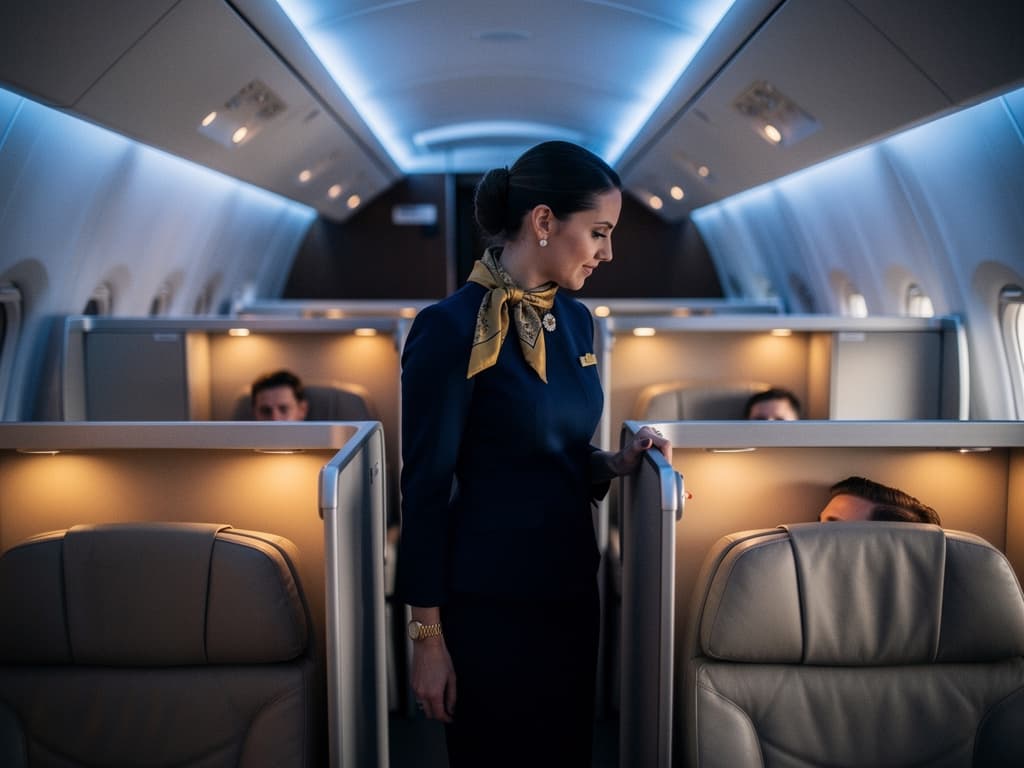
Crew members exchange stories in the galley that would make most frequent flyers wince in recognition. Six behaviors in particular surface again and again: call button overuse, physical contact to summon crew, status-name-dropping, ignoring safety demonstrations, relentless luxury complaints, and overindulging at the open bar. Each one is more visible to cabin crew than the passenger committing it typically realizes.
The stakes are real. Interfering with crew duties violates federal law. Alcohol impairment has been a documented factor in disruptive passenger incidents, with roughly half of all air rage incidents on Western airlines involving alcohol according to research from the School of Hotel and Tourism Management at Hong Kong Polytechnic University. And crew members — who notice everything — have long memories for the passengers who treated them well and those who didn’t.
This matters for anyone who flies first class regularly, books premium cabins on award redemptions, or holds elite status that depends on upgrade priority. The crew’s informal assessment of a passenger begins at boarding and doesn’t end until the jetway.
The six behaviors that follow you off the plane
Call button overuse tops the list. Using the call button is entirely appropriate — the problem is frequency and purpose. Asking crew to custom-blend a half-Diet-half-regular Coke with a specific lemon arrangement is the kind of request that becomes a galley story before the plane reaches cruising altitude. Flight attendants are safety professionals first; food-service expectations that treat them as personal concierges register immediately.
Physical contact to get attention is worse. Tugging a sleeve is already pushing the boundary. Snapping fingers — as one flight attendant put it plainly — is not how you address a human being. Crew members who experience it smile, keep walking, and return on their own schedule. The contrast with a passenger who simply learns a crew member’s name is stark, and the crew absolutely tracks which type you are.
The “do you know who I am” energy is, by most crew accounts, the all-time favorite story category. A veteran flight attendant with twelve years of experience noted that the passengers who feel compelled to announce their own importance are rarely as important as they believe — and that the genuinely influential ones tend to be the quietest in the cabin.
Ignoring the safety demonstration carries actual legal exposure. Interfering with crew duties violates federal law, and experienced crew document who was paying attention. In first class, where passengers sit closest to the crew during the briefing, the inattention is especially visible. What feels like minding your own business is being quietly filed away.
| Behavior | Crew visibility | Risk level | Documented consequence |
|---|---|---|---|
| Excessive call button use | High — logged per service cycle | Low-moderate | Deprioritized service response |
| Snapping fingers / physical contact | High — immediate | Moderate | Delayed service; crew avoidance |
| Status name-dropping / entitlement | High — galley discussion | Low | Negative crew reputation; reduced soft benefits |
| Ignoring safety demonstration | High — crew document compliance | High | Federal violation exposure; crew notation |
| Relentless complaints | Moderate-high | Low | Crew triage to other passengers |
| Alcohol overindulgence | High — trained detection | High | Service cutoff; incident report; potential diversion |
Relentless complaints occupy their own category. Legitimate grievances — broken seats, degraded champagne selections, inconsistent food quality — are valid, and crew know the difference. Research from the Fraunhofer Institute confirms that dry cabin air reduces sensitivity to salt and sugar by nearly 30%, which genuinely affects how food tastes at altitude. But the passenger who complains from pre-boarding through landing about thread counts and ice quantities is a known type, and the crew dealing with those grievances also has roughly two hundred other passengers to attend to.
Alcohol overindulgence is the highest-risk behavior on the list. In 2024, over a hundred unruly incidents specifically involved intoxicated travelers, accounting for roughly 12% of all reported cases. Crew are trained to spot slurred speech, strong smells, and unsteady movement — and they have no hesitation cutting off a first class passenger. Especially a first class passenger, actually. The expectation up front is that passengers know better.
Flight deals most people never see
Our AI monitors 150+ airlines for pricing anomalies that traditional search engines miss. Air Traveler Club members save $650 per trip per person on average: see how it works.
Each deal saves 40–80% vs. regular fares:

What the galley conversation actually costs you
The practical consequence of these behaviors isn’t just a story told at crew expense. It’s deprioritized service, reduced soft benefits, and a reputation that travels with you across flights on the same carrier. Flight attendants on long-haul routes often work the same premium cabin repeatedly — and they remember.
Air Traveler Club’s guide to aircraft that make long-haul flights genuinely comfortable addresses the hardware side of premium travel, but the human element is equally determinative. A passenger in a technically inferior seat who treats crew professionally will often receive more attentive service than one in a suite who doesn’t.
The alcohol dynamic deserves particular attention on ultra-long-haul routes. A 14-hour flight with an open premium bar and a passenger who treats it as a challenge creates compounding risk — altitude affects alcohol absorption, cabin pressure reduces tolerance, and crew are monitoring from the first drink. The free bar is one of first class’s genuine pleasures. Treating it as a competition is how passengers end up in incident reports.
How to be the passenger crew actually want to serve
This is an awareness story with a direct action dimension — the behaviors described are ongoing, and the adjustments are immediate. For anyone who flies first class regularly or holds elite status on a major carrier, the calculus is straightforward: crew perception directly affects service quality on every flight.
- Learn one crew member’s name at boarding and use it. This single action distinguishes you from the majority of first class passengers and sets a tone that carries through the entire flight.
- Watch the safety demonstration — fully, every time. Beyond the legal exposure, it signals to crew that you understand the professional context of the cabin. Crew document compliance; they also notice the passengers who make a point of paying attention.
- Pace alcohol consumption from the first service. Altitude reduces tolerance in ways that aren’t always perceptible until they are. Crew are trained to detect impairment early, and a cutoff in first class is both embarrassing and documented.
- Use the call button for genuine needs, not convenience requests that can wait for the next service pass. Crew triage by urgency and by passenger behavior — the passenger who uses the button judiciously gets faster response when it matters.
- Raise legitimate complaints once, clearly, and without escalation. Crew can address broken seats, service failures, and food quality issues. They cannot bend company policy, and repeated complaints about the same issue after acknowledgment signals the kind of passenger who generates galley conversation.
Watch: If FAA unruly passenger reports show alcohol-related incidents rising above 12% in 2026, expect major carriers to formalize first class bar policies — potentially limiting service rounds or requiring crew sign-off before additional pours. The informal tolerance that currently exists in premium cabins is not guaranteed to persist.
Read more