Summary
Kapila Chandrasena, former CEO of SriLankan Airlines and the central witness in a $2.3 billion Airbus bribery investigation, was found dead on May 8, 2026, at a relative’s home in Colombo — just 24 hours after a Colombo court ordered his re-arrest for allegedly bribing his own bail guarantors. Chandrasena had admitted to paying former President Mahinda Rajapaksa approximately $480,000 and former aviation minister Piyankara Jayaratne in connection with a 2013 Airbus deal for 10 aircraft. Sri Lanka’s police are investigating the cause and circumstances of his death.
The case now loses its most consequential witness at the moment political exposure was highest. Chandrasena had been released from custody on May 5 before the re-arrest order was issued the following day.
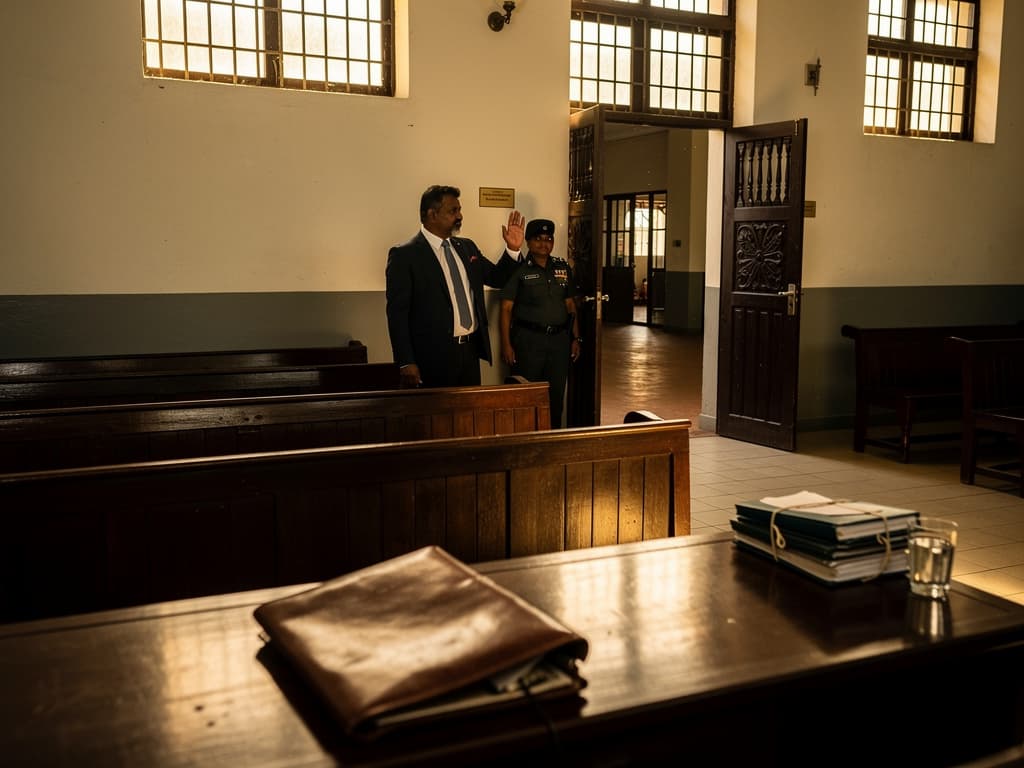
The most consequential witness in Sri Lanka’s largest aviation corruption case is dead. Kapila Chandrasena — former CEO of SriLankan Airlines, US-sanctioned bribery suspect, and the man who reportedly named a former head of state as a recipient of Airbus kickbacks — was found dead at a relative’s home in Colombo on May 8, 2026, police confirmed.
The timing is extraordinary. Chandrasena had secured bail on May 5, only for a Colombo court to order his re-arrest on May 7 after prosecutors alleged he had bribed two men to guarantee that bail. He was found dead the following morning.
His death arrives at the precise moment the case had escalated from a corporate corruption probe into a political crisis. After his arrest in March 2026, Chandrasena reportedly told investigators that a portion of the $16 million Airbus bribe had been channeled to then-President Mahinda Rajapaksa and then aviation minister Piyankara Jayaratne. A spokesman for Rajapaksa denied the allegation. Sri Lanka’s bribery commission told a court that Chandrasena had admitted to paying Rajapaksa 60 million rupees — approximately $480,000 — in 2013, as the airline sought cabinet approval for the Airbus order.
Police have not confirmed a cause of death. The investigation is ongoing.
The details of a decade-long corruption trail
The Airbus bribery case involving SriLankan Airlines did not emerge in isolation. Chandrasena’s name surfaced years earlier in the wider global Airbus corruption scandal, which culminated in 2020 when Airbus agreed to pay more than $3.9 billion in penalties to resolve foreign bribery and export-control investigations by authorities in the United States, the United Kingdom, and France. The US Department of Justice identified a pattern of Airbus using third-party business partners to bribe officials and airline executives across multiple countries to secure contracts.
British investigators specifically accused Airbus of failing to prevent people associated with the company from bribing directors or employees of SriLankan Airlines to obtain or retain business. The Sri Lanka case became one of the most cited examples in that broader investigation. The US Treasury Department sanctioned Chandrasena in December 2024, alleging he accepted a bribe while serving as CEO in exchange for ensuring Sri Lanka purchased Airbus aircraft above market value — a designation that extended to members of his immediate family.
Chandrasena served as CEO of SriLankan Airlines from 2011 to 2015, the period during which the contested aircraft purchase was finalized. The airline has continued to struggle financially in the years since, reporting accumulated losses of approximately $1.85 billion as of March 2025. Efforts to attract a private buyer for the state-owned carrier have so far failed.
Reporting on the timeline of Chandrasena’s arrest, bail, and death has been confirmed by multiple outlets. Full details on the bail proceedings and re-arrest order are available via reporting that directly accessed court records and police statements.
| Date | Event | Impact | Status |
|---|---|---|---|
| 2013 | SriLankan Airlines finalizes Airbus order for 10 aircraft; alleged bribe payments to Rajapaksa | Cabinet approval secured; deal valued at $2.3 billion | Under investigation |
| February 2020 | Airbus settles global bribery probes for $3.9 billion; SriLankan case cited | Sri Lanka named in US/UK/France enforcement actions | Settled (Airbus); local probe continued |
| December 2024 | US Treasury sanctions Chandrasena and family members | Travel and financial restrictions imposed | Active US designation |
| March 2026 | Chandrasena arrested; admits to $480,000 payment to former President Rajapaksa | Case escalates to political level; Rajapaksa denies allegation | Criminal proceedings initiated |
| May 5, 2026 | Chandrasena released on bail | Temporary release pending ongoing proceedings | Bail granted |
| May 7, 2026 | Court orders re-arrest; prosecutors allege Chandrasena bribed bail guarantors | Re-arrest warrant issued | Warrant active at time of death |
| May 8, 2026 | Chandrasena found dead at relative’s home in Colombo | Central witness lost; investigation into cause of death opened | Police investigation ongoing |

Flight deals most people never see
Our AI monitors 150+ airlines for pricing anomalies that traditional search engines miss. Air Traveler Club members save $650 per trip per person on average: see how it works.
Each deal saves 40–80% vs. regular fares:

Why the witness’s death reshapes the entire investigation
Chandrasena was not merely a defendant — he was the prosecution’s primary source of testimony linking Airbus payments to Sri Lanka’s political leadership. His reported admissions to investigators, including the specific figure of 60 million rupees paid to Rajapaksa across multiple installments, represented the evidentiary core of any case against senior political figures. That testimony is now gone.
Air Traveler Club’s detailed breakdown of the Chandrasena case and its implications for the Airbus bribery investigation tracks how this development fits within the broader pattern of the decade-long probe — including the original 2020 global settlement and the December 2024 US sanctions designation.
For those with bookings on SriLankan Airlines, the immediate operational picture has not changed. No fleet groundings, schedule suspensions, or route cancellations have been announced. The carrier continues to operate under its existing structure as a state-owned entity — which, paradoxically, provides a degree of short-term stability that a privately held airline in equivalent financial distress would not have.
The longer-term question is whether Sri Lanka’s government uses this moment to accelerate or abandon privatization efforts. A renewed governance crisis could deter the buyers who have already passed on the airline once.
What the investigation’s next 30 days will determine
Sri Lanka’s police investigation into the cause of Chandrasena’s death is the immediate variable. If investigators confirm suicide, the criminal proceedings against him close — but the bribery commission’s case against other named individuals, including political figures, continues on whatever documentary record exists independent of his testimony. If investigators determine foul play, the implications extend well beyond the airline and into Sri Lanka’s political establishment.
The bribery commission is expected to address the court by mid-May 2026 on how it intends to proceed. Watch that hearing closely — the commission’s posture will signal whether prosecutors believe they have sufficient evidence to pursue the case without Chandrasena’s direct testimony, or whether the investigation effectively stalls.
For SriLankan Airlines as an operating carrier, the 30-to-90-day window matters most. A government-ordered compliance audit of the airline’s Airbus fleet documentation — triggered either by the death investigation or by political pressure — is the scenario most likely to produce operational disruption. No such audit has been announced as of publication.
FAQ
What charges did Kapila Chandrasena face at the time of his death?
Chandrasena faced charges of conspiring to accept a $16 million bribe from Airbus in connection with a 2013 purchase of 10 aircraft by SriLankan Airlines, valued at $2.3 billion. He had also been accused by prosecutors of bribing two men to secure his bail, which led to a re-arrest order on May 7, 2026 — one day before he was found dead.
Does Chandrasena’s death affect SriLankan Airlines’ current operations?
As of May 8, 2026, SriLankan Airlines has not announced any schedule changes, fleet groundings, or route suspensions in connection with Chandrasena’s death. The airline operates as a state-owned carrier, which provides institutional continuity independent of individual legal proceedings. Passengers with existing bookings should monitor the airline’s official channels for any updates.
What was Airbus’s role in the SriLankan Airlines bribery case?
Airbus was accused by British investigators of failing to prevent people associated with the company from bribing directors or employees of SriLankan Airlines to secure the aircraft contract. In 2020, Airbus settled global bribery probes — covering conduct across multiple countries — for more than $3.9 billion in penalties paid to US, UK, and French authorities. The Sri Lanka case was among the examples cited in that settlement.
What happens to the bribery case now that the central witness is dead?
Sri Lanka’s bribery commission must now determine whether documentary evidence — financial records, wire transfers, cabinet correspondence — is sufficient to pursue cases against other named individuals, including political figures. Chandrasena’s reported admissions to investigators were the prosecution’s most direct link to senior political figures. Without that testimony, the commission faces a significantly higher evidentiary burden. A court hearing is expected by mid-May 2026.
Read more