Summary
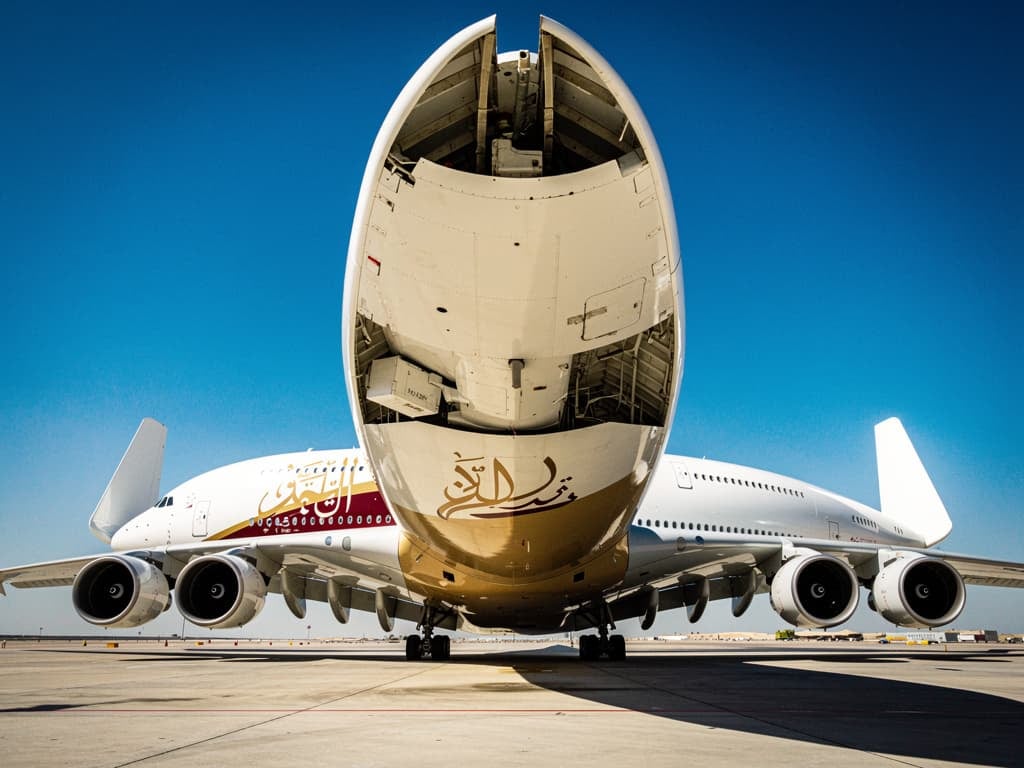
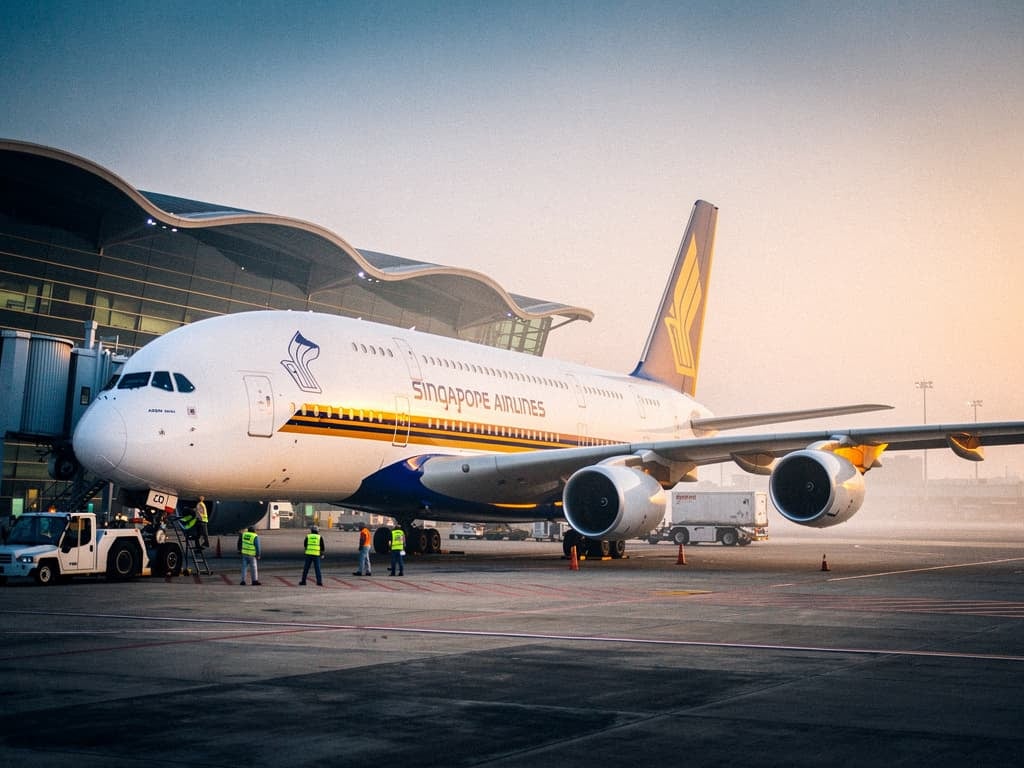
Five people — four passengers and a flight attendant — were injured aboard Eurowings flight EW635 on May 30, 2026, after the Airbus A320 encountered severe wake turbulence generated by an Emirates A380 over Sarajevo. The encounter happened at approximately 37,600 feet during a cleared climb to FL380, with the A380 operating as EK1 (Dubai–London Heathrow) reportedly 7.6 nautical miles ahead — beyond the ICAO-recommended minimum separation threshold of seven nautical miles for this aircraft pairing.
The A320, registration D-AEWS, continued to Cologne where medical teams met the aircraft at the gate. Flight data and cockpit voice recorders were secured during a four-hour inspection on the apron.
Wake turbulence is supposed to be a solved problem at 7.6 nautical miles. It wasn’t on Saturday.
A Eurowings Airbus A320 climbing through FL376 over Bosnia and Herzegovina was struck by residual wake vortices from an Emirates A380 that was already beyond the ICAO-mandated minimum separation distance — throwing four passengers and a flight attendant into the cabin ceiling. The violence of the encounter was enough to require immediate descent, onboard first aid, and hospital transport for all five injured occupants upon landing at Cologne Bonn Airport.
The incident challenges a core assumption in en route wake separation: that the seven nautical mile buffer established for A380-to-medium-category aircraft interactions is reliably protective during climb phases. On May 30, 2026, it wasn’t.
Flight EW635 had departed Rhodes International Airport (RHO) bound for Cologne (CGN) when air traffic control cleared the A320 to climb from FL360 to FL380, following the Emirates superjumbo on the same corridor. The A380, operating EK1 from Dubai to London Heathrow, was approximately 13 nautical miles northeast of Sarajevo at the time of the encounter. The Eurowings aircraft was well within the legal separation window — and still flew directly into a hazardous wake corridor.
What the incident record shows
Aviation safety databases confirm the aircraft involved: Eurowings operated an Airbus A320-214, registration D-AEWS (MSN 7439, 9.5 years old), while Emirates flew an Airbus A380-861, registration A6-EUF (MSN 218, 10.1 years old). The Aviation Herald’s incident record confirms EW635’s identity, the wake-turbulence encounter, and the subsequent handling at Cologne.
The A320 descended at 3,000 feet per minute back to FL360 immediately after the encounter. Onboard first aid was administered, and the captain determined the aircraft was airworthy enough to continue to Cologne — a judgment that proved correct, though the aircraft was held on the apron for over four hours for inspection before flight data and cockpit voice recorders were secured. A subsequent Venice rotation was delayed as a result.
The Emirates flight was unaffected and continued to London Heathrow without interruption.
| Detail | Eurowings A320 | Emirates A380 |
|---|---|---|
| Flight number | EW635 | EK1 |
| Aircraft type | Airbus A320-214 | Airbus A380-861 |
| Registration | D-AEWS | A6-EUF |
| Aircraft age | 9.5 years | 10.1 years |
| Route | Rhodes (RHO) → Cologne (CGN) | Dubai (DXB) → London Heathrow (LHR) |
| Altitude at encounter | FL376 (climbing to FL380) | FL380 (cruising) |
| Reported separation | 7.6 nautical miles (above ICAO 7 NM minimum) | |
| Outcome | 5 injured, 4-hour inspection, continued to CGN | No disruption, continued to LHR |

Flight deals most people never see
Our AI monitors 150+ airlines for pricing anomalies that traditional search engines miss. Air Traveler Club members save $650 per trip per person on average: see how it works.
Each deal saves 40–80% vs. regular fares:

Why this incident is more than a turbulence story
The seven nautical mile separation standard for A380-trailing interactions is derived primarily from departure and arrival sequencing data — airport environments where wake behavior is relatively well-modeled. En route climb scenarios, where aircraft are transitioning through multiple flight levels and wake vortices can descend and drift unpredictably with upper-level winds, present a different geometry. The EW635 encounter at FL376 — still 400 feet below the A380’s cruise level — suggests the A320 climbed into a wake corridor that had migrated downward from EK1’s track.
That distinction matters for what comes next. If investigators confirm that the wake had descended into the A320’s climb path rather than remaining at FL380, the finding points toward a procedural gap in how ATC issues climb clearances near super-heavy traffic — not a violation of existing rules. Air Traveler Club’s coverage of the SQ321 turbulence litigation illustrates how quickly passenger-injury incidents of this type move from operational event to legal claim, a trajectory that EW635 may follow.
The broader competitive context is worth noting. Emirates‘ A380 dominates trunk routes between the Gulf and Europe — EK1 is among the carrier’s flagship services — and the aircraft’s wake characteristics are an operational constant that European ATC manages daily. This incident doesn’t implicate the A380’s airworthiness or cabin product. It implicates the adequacy of en route climb separation logic when a super-heavy is involved.
What the NTSB timeline means for A380 wake separation standards
This is an awareness story with a specific forward signal worth tracking. Preliminary findings from the German or Bosnian accident investigation authority — whichever has jurisdiction over the airspace where the encounter occurred — are typically published within 30 days of an incident of this severity. The critical variable is whether investigators classify the wake encounter as within expected parameters for the approved separation or as evidence that the seven nautical mile standard is insufficient for en route climb scenarios.
If the flight data recorder confirms that the wake had descended significantly below FL380 before the A320 entered that altitude band, expect EASA and ICAO to open a formal review of climb-clearance procedures near super-heavy traffic. That review, if initiated, would likely produce interim guidance within six to twelve months — affecting ATC procedures across European airspace where A380 operations are concentrated.
Watch for any interim safety recommendation issued alongside the preliminary report: that is the signal that regulators consider the existing separation standard inadequate, not merely that an unusual event occurred.
FAQ
Were the five injured passengers and crew seriously hurt?
Industry reports confirm four passengers and one flight attendant were taken to a local hospital after the aircraft landed at Cologne. The severity of individual injuries has not been officially disclosed by Eurowings. All five were offered first aid onboard before landing, and the captain assessed the aircraft as fit to continue to its destination.
Was the Eurowings A320 within legal separation distance when the turbulence hit?
Yes. The reported separation of 7.6 nautical miles exceeded the ICAO-recommended minimum of seven nautical miles for an A380 leading an A320-class aircraft at the same altitude or within 1,000 feet. The incident is notable precisely because it occurred despite separation that met published standards.
What happens to the Eurowings aircraft now?
Registration D-AEWS was held on the apron at Cologne Bonn Airport for over four hours following arrival. Flight data and cockpit voice recorders were secured for investigation. A subsequent Venice rotation was delayed. The aircraft’s return to service depends on inspection results, though no grounding order has been reported as of publication.
Could this affect other flights behind Emirates A380s on European routes?
Not immediately. Existing ICAO separation standards remain in force. However, if the investigation determines that the wake had descended below the A380’s cruise level before the encounter — making the seven nautical mile standard insufficient for climb scenarios — regulators could issue interim guidance affecting ATC procedures on busy European corridors where the A380 operates frequently.
Read more