Summary
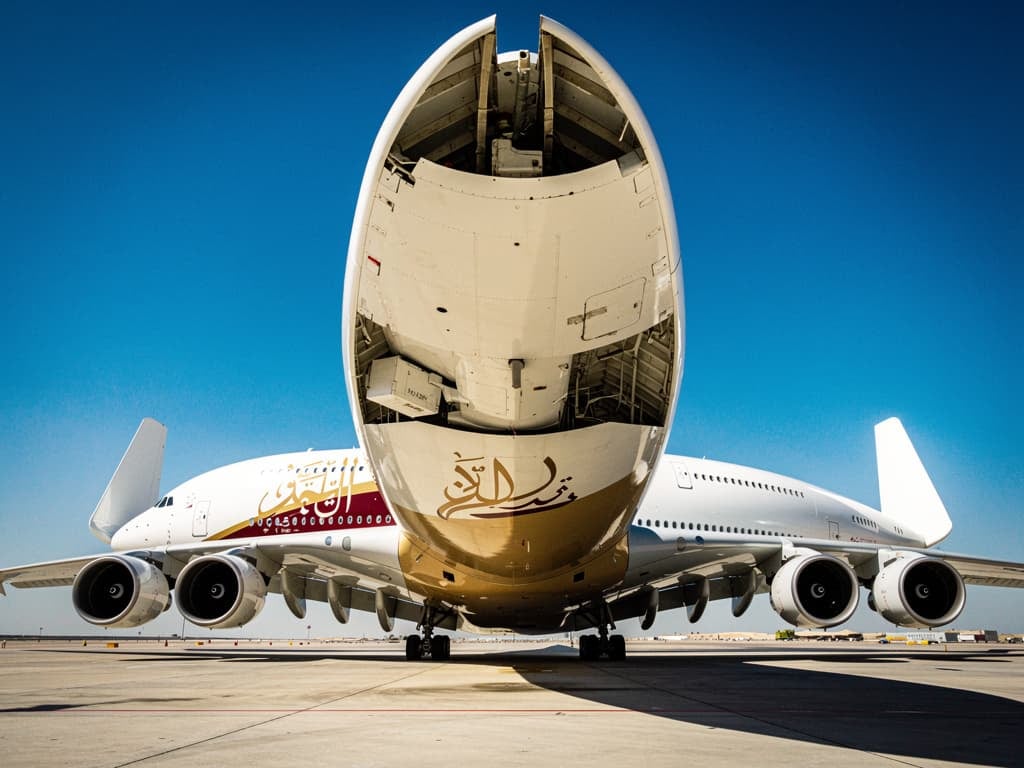
Emirates has completed the first retrofit of a two-class Airbus A380, placing 56 premium economy seats on the upper deck in a 2-3-2 seven-abreast layout — a configuration no twinjet can replicate because the superjumbo’s upper deck spans roughly 19 feet, a full three feet wider than a Boeing 777 cabin. The aircraft, registered A6-EUX, entered service on the Dubai–Birmingham EK39/40 rotation in May 2026 with 76 business class, 56 premium economy, and 437 economy seats.
The retrofit programme has now surpassed 104 aircraft as of mid-September 2026, with more than 3,800 premium economy seats installed fleet-wide. Emirates intends to convert all 15 remaining high-density two-class A380s by year-end — but with the first superjumbos dating to 2008 and retirement waves expected through the 2030s, this cabin advantage carries an expiration date.
When Emirates engineers relocated galleys, overhead bins, partitions, and plumbing on A6-EUX earlier this year, they did more than refresh an ageing superjumbo. They created a premium economy cabin that exploits the A380’s defining structural advantage — the widest passenger fuselage ever built — in a way that no twin-engine successor can match.
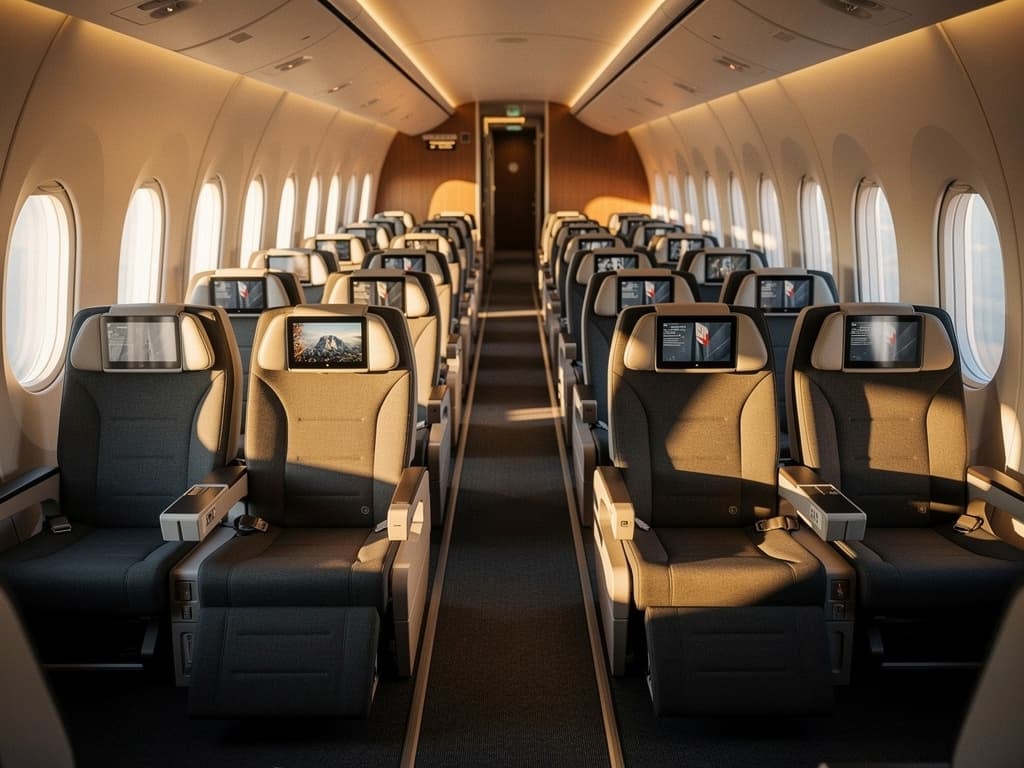
The upper deck of a former two-class A380 now holds 56 cream leather seats arranged seven-abreast, each with a raisable leg rest, six-way adjustable headrest, built-in charging ports, side cocktail table, and a 13.3-inch personal screen. That density — just seven seats across a deck roughly 19 feet wide — yields shoulder room that the Boeing 777-9, 787, or A350 cannot deliver at the same cabin height and acoustic profile.
The milestone matters because it transforms how Emirates deploys premium economy across its network. Until now, the airline’s premium economy lived exclusively on the main deck of four-class A380s and aboard select 777s. The two-class fleet — 15 high-density jets configured for leisure-heavy routes like Dubai–Birmingham, Dubai–Manchester, and Dubai–Mauritius — offered no middle ground between a constrained 58-seat business cabin and 557 economy seats. That gap is now closing.
Emirates confirmed the first converted aircraft began flying EK39/40 in May 2026, and the airline has since expanded the retrofitted A380’s deployment across additional cities. By 14 September 2026, 104 aircraft had completed the programme, with 137 aircraft now offering premium economy or newer cabins. The $5 billion retrofit programme spans 219 aircraft — 110 A380s and 109 Boeing 777s — and has already passed the halfway mark for widebody cabins.
For premium economy buyers, the operational signal is clear: an Emirates A380 on your route no longer guarantees the new product. You need to know which aircraft you are booking.
The geometry behind the seat
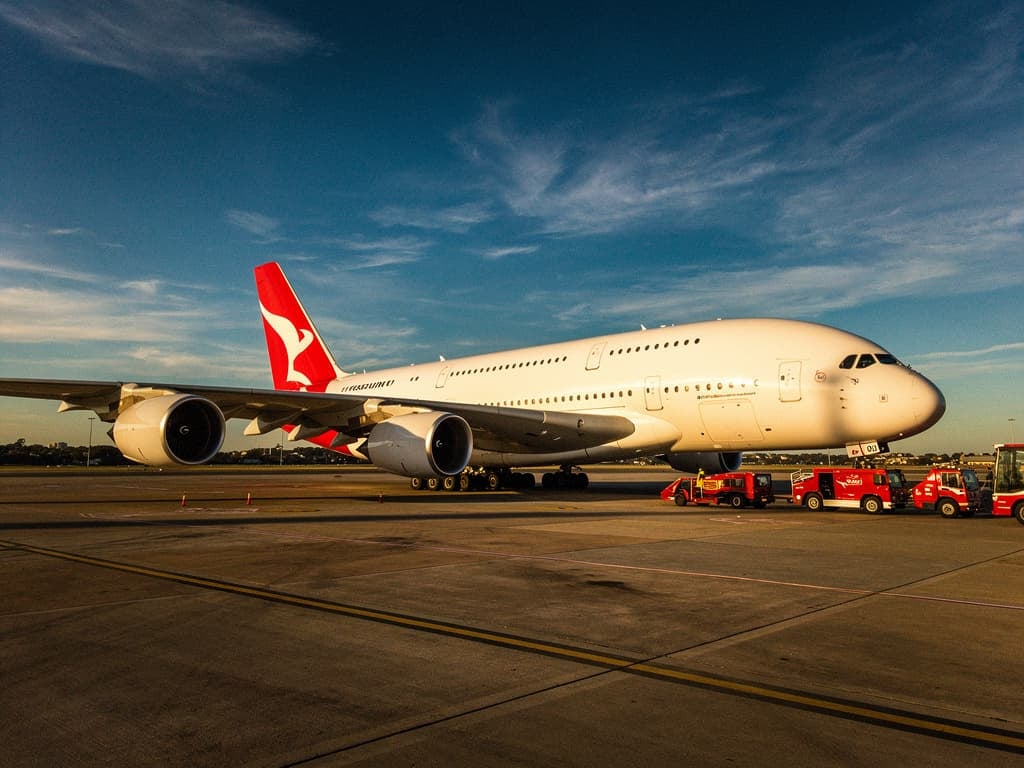
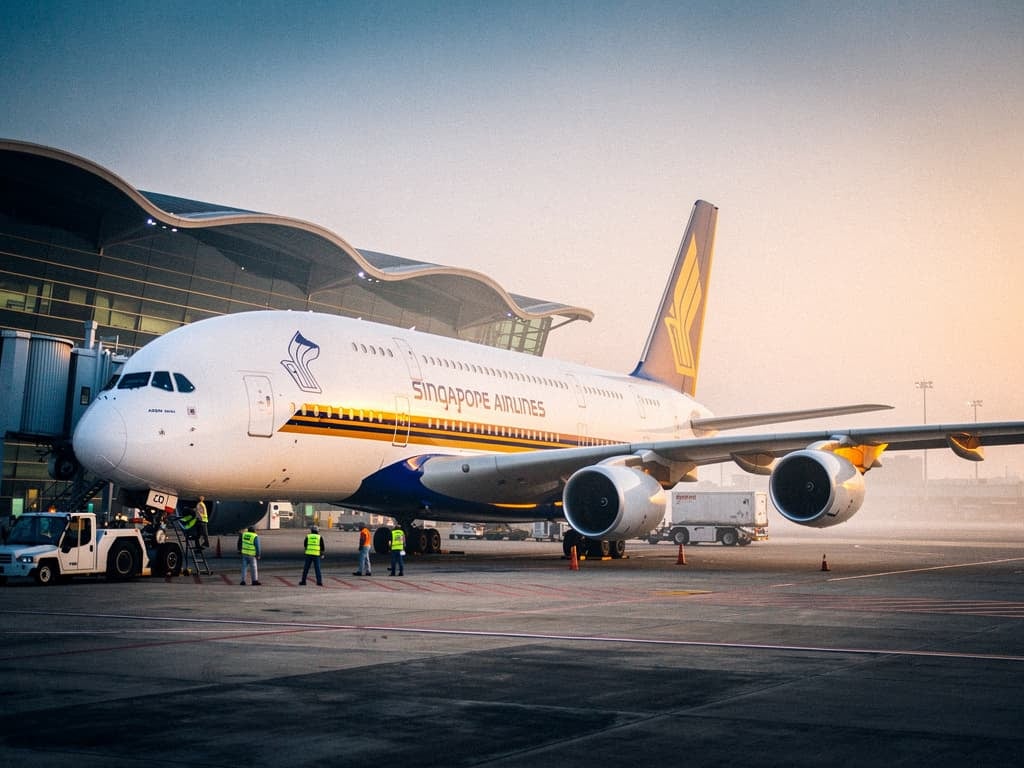
The Airbus A380’s main deck measures approximately 21.4 feet (6.54 metres) across — roughly 0.71 metres wider than the Boeing 777-300ER/777-9 and about one full metre wider than the A350-900/-1000. On the main deck, Emirates and competitors including British Airways, Singapore Airlines, Qantas, Lufthansa, and Etihad all configure premium economy eight-abreast in a 2-4-2 layout.
The upper deck narrows to roughly 19 feet (5.8 metres), yet that still exceeds the main-deck width of a Boeing 747-100. By comparison, the 747’s upper deck spans just 12 feet 4 inches — essentially a 737-sized tube. Emirates’ decision to go 2-3-2 on the retrofitted upper deck means passengers get the same seat count as the main-deck installation but with one fewer seat per row, yielding wider aisles and a distinctly more spacious feel.
Airbus itself recognised the potential. In 2017, the manufacturer proposed an A380plus concept with nine-abreast premium economy on the main deck, adding 11 seats. That never entered production, but the idea underscored how much latitude the fuselage width provides.
The contrast with Emirates’ own fleet is instructive. The airline’s A350-900s also use a 2-3-2 layout for premium economy — but on a main deck nearly a metre narrower. Emirates’ Boeing 777 retrofits add 24 premium economy seats in a 2-4-2 configuration, squeezing eight seats into a cabin that the A380 upper deck accommodates with seven. The airline’s own statements describe the A380 premium economy seats as more spacious than those on its 777s.
| Aircraft | Cabin location | Layout | Seat count | Screen size | Key differentiator |
|---|---|---|---|---|---|
| A380 four-class | Main deck, behind First | 2-4-2 | 56 | 13.3″ | Widest main-deck cabin; generous aisle width |
| A380 ex two-class | Upper deck | 2-3-2 | 56 | 13.3″ | Seven-abreast on upper deck; most exclusive feel |
| Boeing 777-300ER | Main cabin | 2-4-2 | 24 | — | Limited inventory; narrower cabin than A380 |
| A350-900 | Main cabin | 2-3-2 | 21–28 | — | Seven-abreast on newer airframe; regional and ULR variants |
The reconfiguration required more than swapping seat frames. Engineers relocated galleys, overhead bins, partitions, and electrical wiring — effectively rebuilding the upper deck’s architecture. Removing 120 economy seats made room for the new 56-seat premium economy cabin plus 18 additional business class seats, changing the class mix of aircraft that previously flew with just 58 business and 557 economy seats.
Emirates’ leadership has said demand for premium economy has exceeded expectations. President Tim Clark framed the retrofit as central to the airline’s brand promise, noting the programme “revolves around the central premise that we will offer our customers a truly elevated experience.” The two-class conversion, he added, “illustrates the extensive capabilities of our team.”

Flight deals most people never see
Our AI monitors 150+ airlines for pricing anomalies that traditional search engines miss. Air Traveler Club members save $650 per trip per person on average: see how it works.
Each deal saves 40–80% vs. regular fares:

Why the A380’s width cannot be replaced
Emirates has 235 Boeing 777-9s on order, with deliveries expected to begin in 2027. The 777-9 will be the largest twinjet ever built, but its cabin width — roughly 19.5 feet (5.94 metres) — falls short of the A380’s main deck by about 0.71 metres and essentially matches the superjumbo’s upper deck. That means the 777-9 could theoretically replicate the seven-abreast upper-deck experience, but only by sacrificing the main deck’s eight-abreast configuration. You cannot have both in a twin-aisle tube.
This geometry constraint is structural, not commercial. No amount of seat innovation or cabin design can add fuselage width. Emirates has floated the idea of an A380neo with Airbus, but a re-engined programme is considered highly unlikely — the business case collapsed years ago. The 777X is the replacement, and it will be narrower.
The upshot for premium economy buyers is that Emirates’ A380 product represents a cabin experience with no direct successor. Air Traveler Club’s analysis of the airline’s high-density A380 deployments highlighted the constraints of the two-class configuration on routes including Birmingham — the same rotation now served by A6-EUX. That analysis pre-dated the retrofit, making the conversion of these 15 jets a direct response to the inventory gap on leisure-heavy corridors.
How to book the upper-deck product before the window closes
The upper-deck premium economy cabin is bookable now on select routes, but accessing it requires more than choosing an Emirates A380 flight — you need the right A380.
- Check the seat map at booking. Emirates’ website displays the actual aircraft configuration for each flight. Look for a 2-3-2 premium economy layout on the upper deck — that is the signature of a converted former two-class jet. An eight-abreast layout on the main deck indicates a four-class A380, which also carries premium economy but on a different deck.
- Target former two-class routes first. Dubai–Birmingham was the launch rotation and remains the most predictable option. Manchester, Mauritius, and Kuala Lumpur also saw regular high-density A380 deployments before the retrofit programme began. These corridors are the most likely to receive converted aircraft as each jet completes its reconfiguration.
- Book with flexibility on timing. Emirates expects all 15 two-class A380s to finish retrofit work by end-2026. If your travel date falls in early 2027, the odds of landing an upper-deck seat rise materially as the converted subfleet grows. For bookings in the near term, verify the specific aircraft assignment — Emirates can and does swap A380 variants.
- Do not assume the 777X will replicate this. The 777-9’s cabin is narrower than the A380’s upper deck. When Emirates eventually retires its superjumbos — the first examples date to 2008, and phase-outs are expected through the 2030s — no replacement aircraft will match the upper-deck width that makes the 2-3-2 layout feel as spacious as it does.
- Watch the end-of-year retrofit total. If Emirates confirms all 15 two-class jets converted by late 2026, the upper-deck product transitions from novelty to standard fleet offering — at which point route availability expands considerably.
FAQ
How do I know if my Emirates A380 flight has the upper-deck premium economy cabin?
Check the seat map on emirates.com at the time of booking. A 2-3-2 premium economy layout on the upper deck identifies a converted former two-class aircraft. Standard four-class A380s show premium economy in a 2-4-2 configuration on the main deck. Emirates also tags newer-cabin flights in its booking flow, though aircraft swaps can occur.
Is the upper-deck premium economy seat different from the main-deck version?
The seat hardware is identical — cream leather, raisable leg rest, six-way headrest, 13.3-inch screen — but the cabin environment differs. The upper deck holds only 18 business class seats forward and no economy through-traffic, creating a quieter, more exclusive atmosphere with seven-abreast density versus eight-abreast on the main deck.
When will Emirates retire its A380s, and what replaces premium economy on those routes?
Emirates intends to operate A380s until at least 2040, though retirements are expected to accelerate through the 2030s as the first jets pass 25-30 years of service. The Boeing 777-9 is the designated replacement — it will carry premium economy but in a narrower cabin that cannot match the A380 upper deck’s shoulder room at the same seat density.
Read more