Summary
A LATAM Airlines Boeing 787-8 Dreamliner (registration CC-BBD) has been grounded at Mataveri Airport on Easter Island since May 29, 2026, after a main cabin door was torn from the fuselage when the aircraft rolled back with mobile airstairs still attached. The airport sits 3,759 km off the South American coast — one of the most isolated commercial airports on the planet — with no heavy-maintenance infrastructure capable of handling a repair of this scale.
Engineers are now weighing three options: a low-altitude unpressurized ferry flight, a temporary door plug, or flying in a replacement door and specialist team. Each scenario points to a grounding measured in days at minimum, and likely weeks.
A door doesn’t just fall off a widebody jet. It gets ripped off — and that distinction matters enormously when the aircraft is stranded on a volcanic island in the middle of the South Pacific with no maintenance hangar in sight.
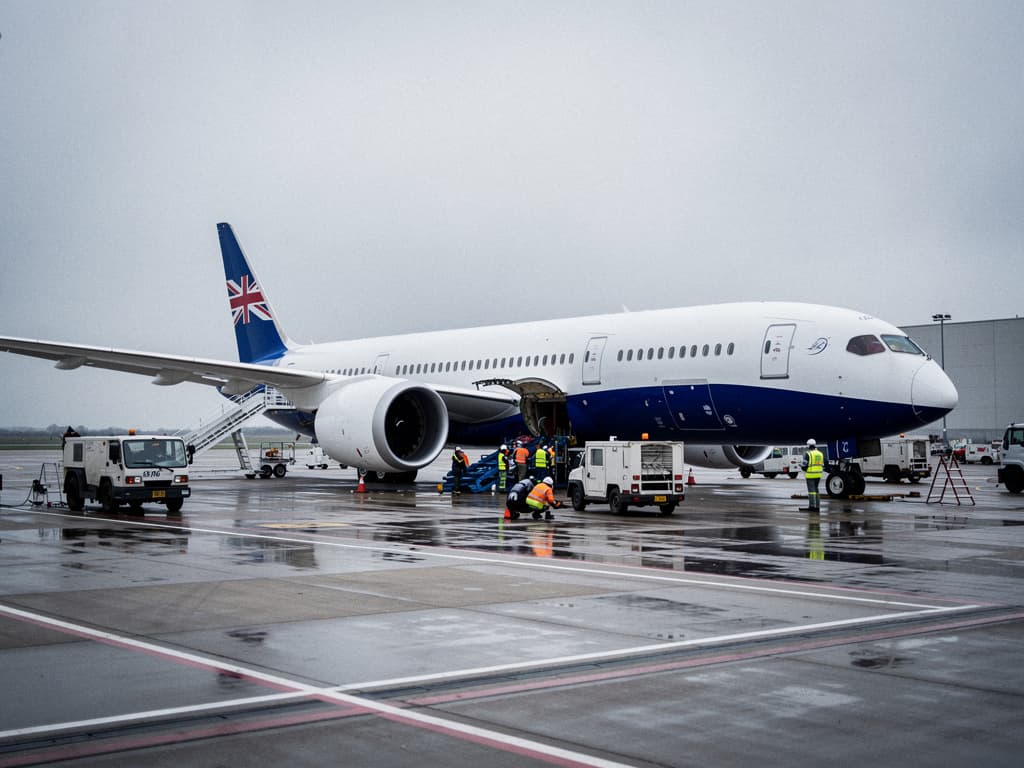
LATAM‘s Boeing 787-8 CC-BBD arrived at Mataveri Airport from Santiago on May 29 and hasn’t moved since. Because Easter Island’s airport operates without jetbridges, ground crews attached a set of mobile airstairs to Door 2L on the left side of the fuselage. The aircraft then appears to have rolled back while the stairs were still connected. The door was sheared clean from its frame and came to rest on top of the airstairs.
No passengers were aboard during the incident, and no injuries have been reported. The damage, however, is substantial enough that the 12-year-old aircraft cannot simply be patched and pushed back into service.
Mataveri handles one or two flights per day. There is no heavy engineering base, no Boeing-certified repair station, and no ready supply of 787-specific tooling or replacement parts. What would be a multi-day fix at a major hub becomes a logistical puzzle with no obvious solution at hand — and the clock is running on every passenger booked on LATAM’s Santiago–Easter Island service.
The details: what happened and what comes next
The mechanics of the incident follow a pattern seen before on the 787 platform. In 2023, an American Airlines Boeing 787 at Dublin International Airport lost Door 2L entirely when a jetbridge dropped unexpectedly while still attached to the aircraft. That aircraft was grounded for several days while repairs were completed — and Dublin has a full maintenance infrastructure. The Dublin incident is the closest direct comparator: same aircraft type, same door position, similar cause. The key difference is that Dublin could fix it. Easter Island almost certainly cannot — at least not quickly.
Three recovery scenarios are currently under consideration. The first involves flying CC-BBD back to Santiago unpressurized at low altitude, a five-plus-hour overwater flight that would require Boeing engineering sign-off and careful structural analysis of the composite fuselage. The second option is installing a temporary door plug to allow a pressurized ferry flight. The third — and most logistically demanding — is flying in a replacement door, specialist engineers, and the necessary tooling to complete the repair on-island.
Whether any structural damage has been caused to the carbon composite fuselage is the critical unknown. A clean door separation without frame deformation is a manageable repair. Any compromise to the fuselage structure changes the calculus entirely.
| Date | Aircraft / Airline | Incident type | Location | Outcome |
|---|---|---|---|---|
| May 29, 2026 | 787-8 CC-BBD / LATAM | Door 2L torn off by mobile airstairs during rollback | Easter Island (Mataveri) | Aircraft grounded; repair plan under formulation |
| April 2026 | Airbus A350 / China Airlines | Door partially torn off by jetbridge during rollback | Melbourne Tullamarine | Grounded 6 days; returned to service |
| July 2023 | 787 / American Airlines | Door 2L sheared off by dropping jetbridge | Dublin International | Flight canceled; multi-day repair; aircraft repositioned |
| January 2024 | 737-9 / Alaska Airlines | Mid-exit door plug separated in flight | Portland, OR (in-flight) | NTSB investigation; quality-control failures identified; fleet inspections ordered |

Flight deals most people never see
Our AI monitors 150+ airlines for pricing anomalies that traditional search engines miss. Air Traveler Club members save $650 per trip per person on average: see how it works.
Each deal saves 40–80% vs. regular fares:

Why location is the real problem here
The aviation industry has a well-established playbook for 787 door incidents. What it doesn’t have is a playbook for executing that repair on a remote island with one runway, no maintenance hangar, and supply chains measured in thousands of kilometers of open ocean.
Air Traveler Club’s ongoing coverage of the CC-BBD grounding tracks the repair timeline and ferry-flight developments as they emerge — the most useful live resource for anyone with upcoming LATAM Easter Island bookings.
The Santiago–Easter Island route is inherently fragile. LATAM operates it with limited frequency, and there is no competing widebody carrier that can absorb displaced passengers at scale. When the single aircraft assigned to a thin route goes down, the entire premium proposition for that corridor goes with it — not because the seats are unavailable, but because the aircraft itself is the bottleneck.
Historical precedent from Dublin and Melbourne shows that airports with maintenance depth can resolve door incidents in under a week. Easter Island is operating in a different category entirely. The binding constraint isn’t airworthiness theory or Boeing’s engineering willingness — it’s the physical reality of getting the right parts and people to a dot in the Pacific.
What the Easter Island grounding means for the repair timeline
This is an awareness story with a developing operational dimension — the aircraft is grounded, the repair path is unresolved, and the timeline will be set by logistics, not engineering theory. The NTSB’s findings on the Alaska Airlines door-plug separation established that door-related failures warrant thorough structural inspection before any return to service, and that standard applies here regardless of location.
NTSB preliminary findings in comparable incidents typically emerge within 30 days. If Boeing’s engineering review of CC-BBD identifies structural fuselage damage beyond the door frame itself, expect the grounding to extend well beyond the multi-day repair cycle seen at Dublin and Melbourne — potentially into weeks, with knock-on effects for LATAM’s Easter Island schedule through June.
Watch for a Boeing-authorized ferry-flight approval or an on-island door replacement announcement. Either development would signal that the structural assessment has cleared the aircraft for movement and that LATAM’s Easter Island service can begin recovering. Silence on both fronts means the logistics problem remains unsolved.
FAQ
Can a Boeing 787 fly without a cabin door attached?
Boeing and the airline would need to coordinate a specific ferry-flight plan, approved by the relevant aviation authority, to move the aircraft unpressurized at low altitude. This is technically possible but requires engineering sign-off confirming the fuselage can withstand the flight profile. It is not a standard operation and has never been confirmed for this specific incident as of publication.
How long could CC-BBD remain grounded at Easter Island?
Based on comparable incidents at airports with full maintenance infrastructure — Dublin in 2023 took several days, Melbourne in April 2026 took six days — a remote-island repair with no on-site heavy maintenance capability could extend to multiple weeks. The timeline depends on whether a ferry flight is approved or whether a replacement door and specialist engineers must be flown in.
Are LATAM passengers entitled to refunds for disrupted Easter Island flights?
Passengers affected by an involuntary cancellation or significant schedule change are generally entitled to rerouting or a full refund under LATAM’s conditions of carriage and applicable consumer protection regulations. No official LATAM waiver bulletin specific to this incident has been verified as of publication. Affected passengers should contact LATAM directly and avoid accepting voluntary changes before confirming their rights.
Is this incident related to the Alaska Airlines door-plug separation?
No. The Alaska Airlines 737-9 door-plug separation in January 2024 involved an in-flight structural failure linked to missing hardware and quality-control failures during manufacturing. The Easter Island incident is a ground-handling accident in which the aircraft rolled back while mobile airstairs were still attached to the door. The cause and mechanism are entirely different, though both underscore the importance of thorough structural inspection before any return to service.
Read more