Summary
A British Airways Boeing 787-10 Dreamliner (registration G-ZBLJ) has been grounded at London Heathrow since May 3, 2026, after engineering steps became lodged inside a fuselage hatch during routine maintenance — a freak sequence in which 126,000 liters of transatlantic fuel loaded onto the aircraft caused the fuselage to drop onto steps that had been left in place beneath it. Flight BA-299 to Chicago O’Hare was cancelled, leaving passengers stranded on buses for 90 minutes before being returned to the terminal.
As of May 5, the one-year-old aircraft remains grounded with no confirmed repair timeline. Passengers booked on BA-299 must act within 24–48 hours to secure alternative Club World seats before inventory tightens.
Even by the standards of aviation’s stranger maintenance mishaps, this one is hard to believe. A British Airways Boeing 787-10 Dreamliner — worth an estimated $355 million — sat immobilized at London Heathrow on May 3, 2026, with a set of yellow engineering steps embedded in its fuselage, visible to a crowd of engineers, airport staff, and at least one police officer who reportedly stopped by to take photographs.
The sequence of events is almost comically precise in its bad luck. Engineers needed to replace oxygen cylinders stored in a hatch beneath the fuselage. Steps were positioned under the aircraft to access the hatch — but the refueling truck hadn’t arrived yet. When it did, 126,000 liters of jet fuel were loaded for the transatlantic crossing to Chicago O’Hare. The 787’s fuselage, which sits higher when the aircraft is empty, dropped as weight increased. The steps, still in place, were driven into the hatch opening.
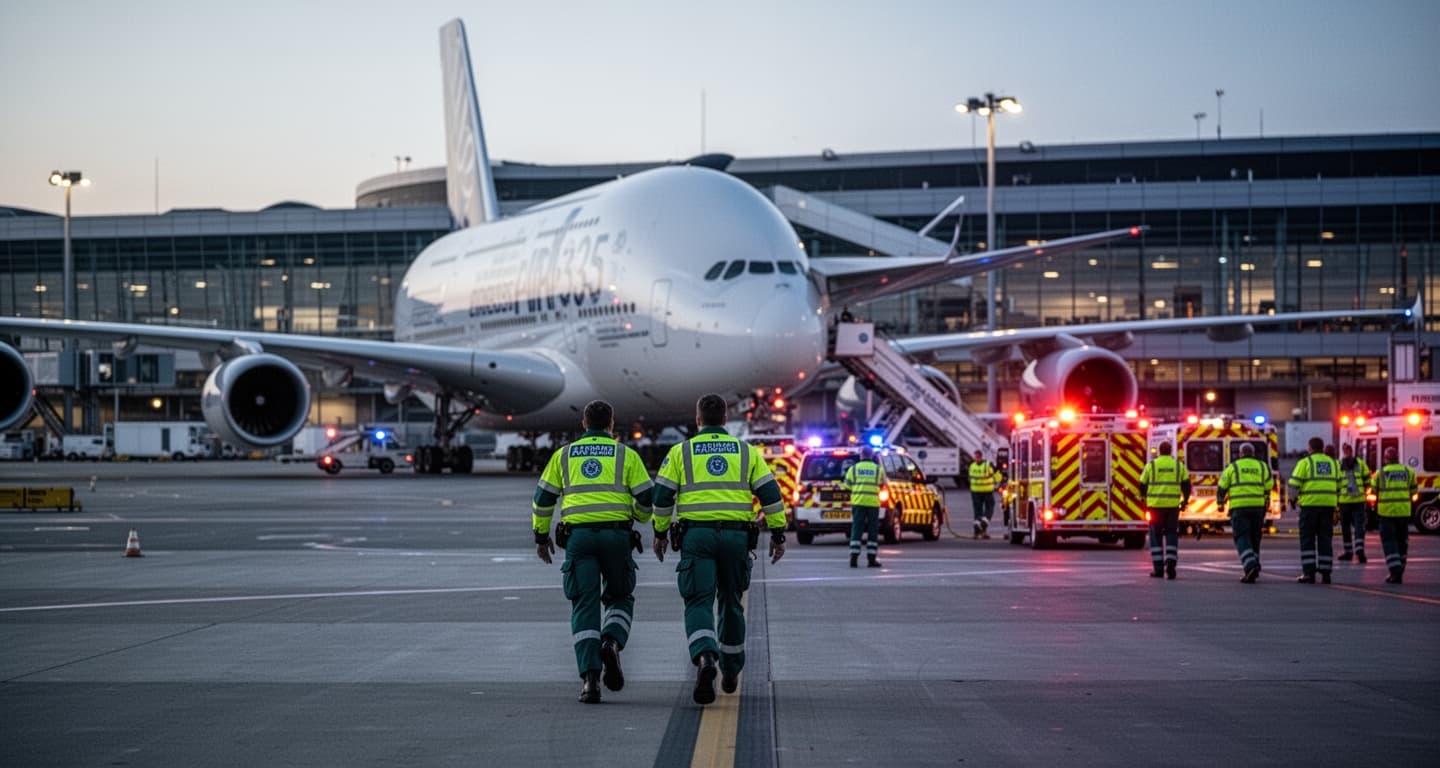
The aircraft couldn’t fly. The steps couldn’t easily be removed. And the passengers booked on BA-299 watched the entire spectacle from the windows of crowded buses on a remote stand.
“There has been probably 15–20 people come and look at it. Take photos. Stare… shrug and walk away,” one passenger wrote on Reddit. “Even the police have come to take photos (and probably laugh).” After 90 minutes on the buses, British Airways drove passengers back to the terminal and confirmed the aircraft wasn’t going anywhere.
What happened to G-ZBLJ — and what happens next
The affected aircraft, G-ZBLJ, is one of British Airways‘ newer Boeing 787-10 Dreamliners — approximately one year old at the time of the incident. The 787-10 is the longest variant of the Dreamliner family, typically seating 330–340 passengers in BA’s configuration, with Club World business class in a 1-2-1 layout offering direct aisle access and lie-flat beds.
The mechanics of the grounding are straightforward, if unusual. The 787’s composite fuselage sits at a measurably different height depending on fuel and cargo load — a characteristic of the aircraft’s design. Standard maintenance procedure requires engineers to account for this before positioning equipment beneath the fuselage. In this case, the steps were placed before refueling commenced, and the coordination gap between the maintenance team and the refueling crew created the conditions for the incident.
Two days after the event, the aircraft remained grounded at Heathrow. No repair timeline has been confirmed.
This is not the first time a British Airways 787 has been grounded at Heathrow following a maintenance-related incident. In June 2021, a Boeing 787-8 (registration G-ZBJB) suffered an inadvertent nose landing gear retraction while parked on stand — the result of a maintenance engineer inserting a downlock pin into the wrong hole. The AAIB investigation found that two holes on the nose gear assembly were positioned too close together, creating a design-level error opportunity. That aircraft sustained significant fuselage and engine cowling damage; two crew members suffered minor injuries. It was grounded for an extended period before returning to service.
| Date | Aircraft / Registration | Incident type | Cause | Status |
|---|---|---|---|---|
| June 18, 2021 | 787-8 / G-ZBJB | Nose landing gear retraction on stand | Downlock pin inserted in wrong hole; design flaw identified | Extended grounding; returned to service |
| May 3, 2026 | 787-10 / G-ZBLJ | Engineering steps lodged in fuselage hatch | Steps positioned before refueling; fuselage dropped onto steps under fuel load | Grounded at Heathrow as of May 5, 2026 |

Flight deals most people never see
Our AI monitors 150+ airlines for pricing anomalies that traditional search engines miss. Air Traveler Club members save $650 per trip per person on average: see how it works.
Each deal saves 40–80% vs. regular fares:

The pattern behind the incident
Two maintenance-induced groundings of British Airways 787s at Heathrow within five years is a pattern worth examining — not because either incident reflects a systemic fleet defect, but because both share a common thread: procedural coordination failure under operational time pressure.
The 2021 nose gear collapse, as the AAIB documented, occurred partly because the 787’s nose gear design differed from other Boeing aircraft that engineers were more familiar with — a training and familiarity gap that a design flaw amplified. The 2026 steps incident appears to reflect a different kind of gap: the handoff between a maintenance team and a refueling crew, with neither confirming the other’s status before work proceeded.
Air Traveler Club’s analysis of the 787 program’s design philosophy provides useful context here — the Dreamliner’s composite construction and variable ground clearance under load are features that distinguish it from aluminum-fuselage predecessors, and they require maintenance protocols that account for those differences.
For passengers on the Heathrow–Chicago route, the immediate consequence is a capacity squeeze on one of the North Atlantic’s most premium-heavy corridors. American Airlines (oneworld partner) operates daily Flagship Business service on this route via Boeing 787-9 and 777-300ER; United Airlines also flies Heathrow–Chicago with comparable widebody equipment. If G-ZBLJ’s grounding extends beyond two weeks, expect British Airways to deploy 777-300ER capacity on the route — a different Club World configuration that may trigger downgrade compensation claims for passengers who booked specifically for the 787-10 product.
What the repair timeline means for BA-299 passengers
This is an awareness story with a live operational consequence: G-ZBLJ’s grounding is ongoing, and the repair scope won’t be clear until engineers can fully assess the hatch damage. If the steps caused only superficial damage to the hatch door and surrounding structure, a return to service within 5–7 days is plausible. If the fuselage skin or underlying structure sustained more significant contact damage, the repair timeline extends to 3–4 weeks — at which point British Airways would almost certainly redeploy a 777-300ER permanently on this rotation, and Club World passengers booked on the 787-10 product would face systematic downgrade offers through June.
Watch for an AAIB preliminary report within 30 days of the incident. If investigators identify a procedural coordination gap between maintenance and ground services — rather than an isolated individual error — expect British Airways to issue revised ground operations protocols across its 787 fleet at Heathrow. A finding of that scope would carry implications beyond this single aircraft.
The more immediate signal to watch: whether BA updates the BA-299 schedule on BA.com to reflect a different aircraft type in the coming days. A swap to 777-300ER on that rotation would confirm an extended grounding and trigger the downgrade compensation process for affected bookings.
FAQ
Can the Boeing 787-10 fuselage be repaired after this kind of damage?
The 787’s composite fuselage is repairable, but the process depends on the extent of contact damage to the hatch structure and surrounding skin. Minor damage to hatch doors or seals can be addressed within days; damage to the composite fuselage skin itself requires specialized repair procedures and Boeing engineering sign-off, which can extend timelines to several weeks. The aircraft’s one-year age works in its favor — all structural data is current and warranty coverage may apply.
Is British Airways liable for compensation beyond rebooking?
Under UK261 (the post-Brexit equivalent of EU261), passengers on cancelled flights departing UK airports are entitled to compensation of up to £520 per person for long-haul routes, in addition to rebooking or full refund rights. The compensation applies unless the airline can demonstrate extraordinary circumstances — a maintenance-induced grounding of this nature is unlikely to qualify as extraordinary, meaning most BA-299 passengers have a strong compensation claim regardless of whether they accept rebooking.
Does this incident affect other British Airways 787 flights?
The grounding is specific to aircraft G-ZBLJ. No airworthiness directive or fleet-wide action has been issued in connection with this incident. Other BA 787-8, 787-9, and 787-10 aircraft continue to operate normally. The risk of cascading disruption exists only if BA’s Heathrow widebody capacity is already constrained — in which case the loss of one 787-10 frame could affect schedule reliability on other long-haul routes.
What happened to the engineering steps — were they removed?
Passengers on the remote stand reported that approximately 15–20 engineers and airport staff examined the situation over the course of roughly 90 minutes without resolving it on the stand. The aircraft was subsequently taken out of service, suggesting the steps were either removed after passengers were bused back to the terminal or the aircraft was towed to a maintenance bay for the extraction. No official statement on the removal process has been issued.
Read more