Summary
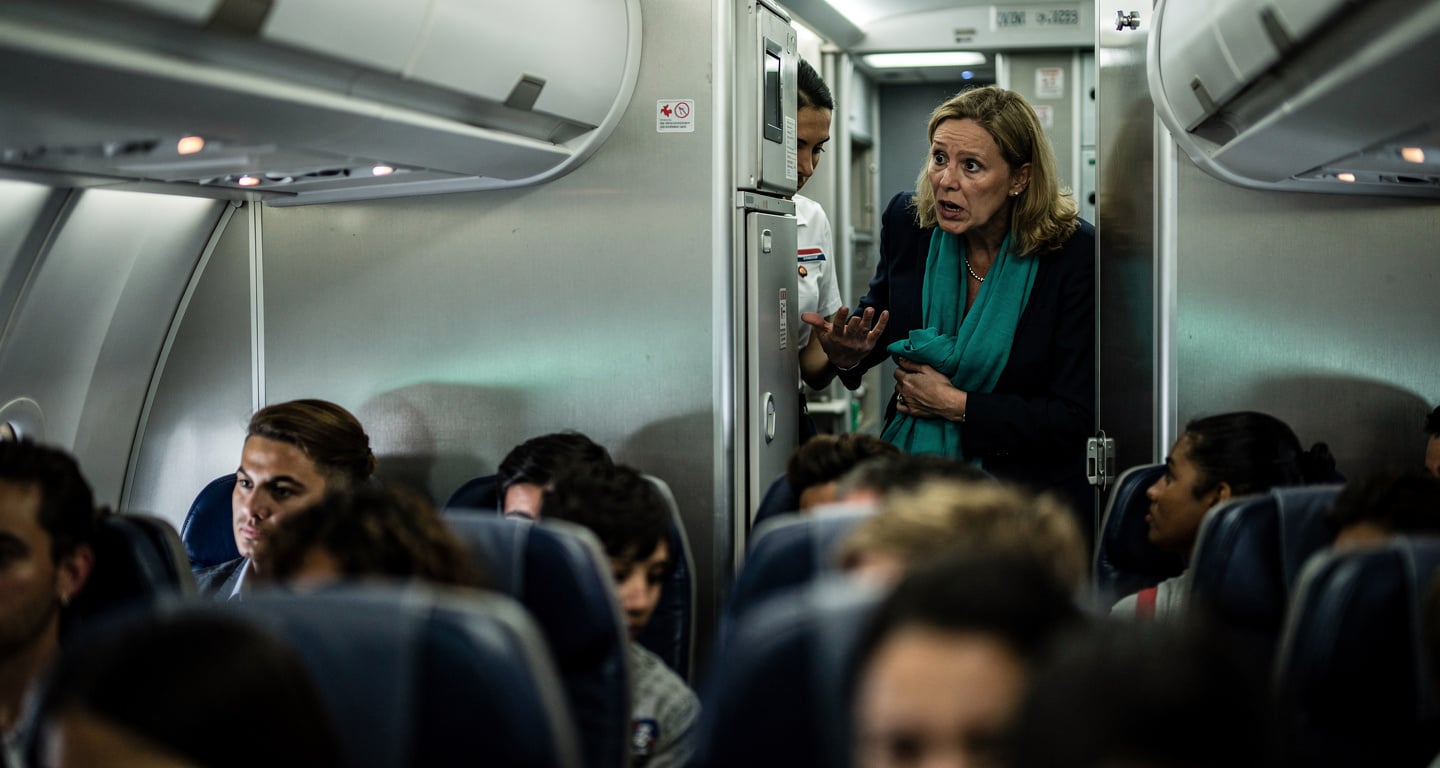
Passengers aboard Turkish Airlines flight THY663 endured a harrowing 30-minute ordeal on 10 September 2026, as the Airbus A321 battled severe turbulence and thick storm clouds during three aborted landing attempts at Tunis Carthage International Airport before diverting safely to Enfidha-Hammamet Airport. Cabin video captured intense passenger distress as the aircraft shook violently.
No injuries or damage were reported, and the aircraft later completed the short hop to Tunis. Affected travelers on the Istanbul–Tunis route should check Turkish Airlines’ announcements page for ticket validity extensions through 15 September.
A routine Istanbul–Tunis flight turned into a prolonged weather diversion on 10 September, when Turkish Airlines flight THY663 encountered severe convective storms on approach to Tunis Carthage International Airport. After three failed landing attempts, the Airbus A321 diverted to Enfidha-Hammamet Airport, landing safely but leaving passengers shaken and their onward plans disrupted.
The incident, captured in visceral cabin video, highlights how quickly seasonal Mediterranean weather can upend even a short-haul premium itinerary. The diversion affected approximately 220 passengers, with no reported injuries or aircraft damage.
Turkish Airlines later repositioned the aircraft to Tunis, arriving at 22:34 local time. For those booked on the Istanbul–Tunis city pair, the disruption is a reminder that autumn thunderstorm patterns along the North African coast can force last-minute alternates — even when the crew handles the situation without declaring an emergency.
The details
Flight-tracking data shows THY663 departed Istanbul at 15:40 local time and began its first approach into Tunis about two hours and 20 minutes later. Over roughly 30 minutes, the crew attempted three landings in deteriorating conditions — thick cloud, rain, and heavy turbulence — before electing to divert to Enfidha-Hammamet, south of Tunis. The aircraft landed at 16:50 local time without further incident.
Passenger-shot video captured audible distress inside the cabin, with some travellers later seen crying with relief and applauding after touchdown. The single-source claims of a “free-fall” sensation and specific shouted words remain unconfirmed and are not treated as established fact in any official account.
Turkish Airlines’ announcements page confirms that ticket validity for affected passengers can be extended through 15 September 2026 without fare difference or penalty, though the airline has not yet issued a formal incident statement.
| Time (local) | Event | Details |
|---|---|---|
| 15:40 | Departure from Istanbul (IST) | Airbus A321 takes off, bound for Tunis. |
| ~18:00 | First approach at Tunis (TUN) | Encountered severe weather; landing aborted. |
| ~18:10 | Second approach attempt | Continued turbulence and low visibility; aborted. |
| ~18:20 | Third approach attempt | Unable to land; crew decides to divert. |
| 16:50 | Landing at Enfidha-Hammamet (NBE) | Safe landing, no injuries or damage reported. |
| 22:10 | Departure from NBE | Aircraft repositions to Tunis. |
| 22:34 | Arrival at Tunis (TUN) | Flight completes journey after 24-minute hop. |

Flight deals most people never see
Our AI monitors 150+ airlines for pricing anomalies that traditional search engines miss. Air Traveler Club members save $650 per trip per person on average: see how it works.
Each deal saves 40–80% vs. regular fares:

The value-add
For premium travellers on the Istanbul–Tunis route, this incident underscores the operational reality that even a well-equipped A321 can be forced to divert when Mediterranean thunderstorms close in. Turkish Airlines’ handling of the disruption — rebooking, alternate airport logistics, and communication — will determine whether affected business-class passengers face a minor delay or a more significant itinerary breakdown.
The airline’s own announcements channel is the first place to check for waiver language, and passengers who paid with premium cards may have trip delay protections that kick in after a six-hour threshold. The event itself was a textbook weather diversion, but the passenger experience captured on video makes it a powerful reminder of why irregular-operations planning matters.
What this diversion means for Istanbul–Tunis travellers
Turkish Airlines has not declared an emergency or initiated an investigation, and no injuries or damage occurred. The event is likely to be classified as a routine weather diversion, but travellers should watch for any operational review that could affect future flight planning. If a formal statement emerges, it will clarify whether additional crew training or procedural changes are being considered.
FAQ
Was a formal emergency declared on flight THY663?
No. Available data indicates the crew diverted to an alternate airport due to weather without squawking an emergency code. The landing at Enfidha-Hammamet was a standard weather diversion.
What compensation are passengers entitled to for this weather diversion?
Under EU261-style regulations, weather events are typically considered extraordinary circumstances, so cash compensation is unlikely. However, Turkish Airlines has extended ticket validity through 15 September 2026 and may offer rebooking or refund options on a case-by-case basis.
Should I avoid Turkish Airlines on the Istanbul–Tunis route?
No. Weather diversions are a routine part of aviation, and Turkish Airlines’ crew followed standard safety protocols. The airline’s safety record remains strong, and this incident does not indicate any systemic issue.
Read more