Summary
Spirit Airlines has ceased all operations effective 3:00 AM ET on Saturday, May 2, 2026, converting its second Chapter 11 bankruptcy into a Chapter 7 liquidation after a $500 million government bailout failed and creditors rejected the rescue package. The shutdown cancels 809,638 seats across 4,119 domestic flights scheduled through May 15 — the largest U.S. airline failure in 25 years. Passengers holding direct credit or debit card bookings will receive automatic refunds; all others face an uncertain timeline through bankruptcy court.
Free Spirit points, vouchers, and travel agent bookings have no guaranteed refund path. Passengers currently mid-journey must secure alternative transportation immediately at their own expense.
The final chapter of Spirit Airlines closed quietly in the early hours of Saturday morning. Flight NK1833, departing Detroit at 22:31 local time Friday, touched down at Dallas-Fort Worth just after midnight — the carrier’s last revenue flight after 34 years of operation. By 3:00 AM ET on May 2, 2026, Spirit had formally begun an orderly wind-down, canceling every remaining flight and shutting down customer service entirely.
The collapse marks the first major U.S. airline liquidation since Aloha Airlines folded in 2008 — and by scope, it dwarfs that precedent. Spirit’s network served approximately 10 million passengers annually across more than 200 Airbus narrowbodies. The 277 flights scheduled for May 2 alone are now canceled, leaving passengers stranded at airports with no Spirit staff to assist them.
Two Chapter 11 filings in two years, seven consecutive years without profit, and a failed merger with JetBlue — blocked by the U.S. government — set the stage for this outcome. Soaring jet fuel costs tied to oil price volatility delivered the final blow, according to the airline’s wind-down announcement. The $500 million rescue package, which had been under negotiation with the Trump administration, collapsed when creditors rejected the terms.
Spirit’s restructuring portal at spiritrestructuring.com/guests is now the sole official resource for affected passengers. Customer service no longer exists in any form.
The details: what happened and what it means for ticket holders
Spirit’s official announcement, posted in the early hours of May 2, confirmed the immediate cancellation of all flights and the closure of all customer service channels. The airline directed passengers to claims agent Epiq for any further inquiries — reachable at SpiritAirlinesInfo@epiqglobal.com, by phone at (855) 952-6606 (U.S. and Canada) or (971) 715-2831 (international).
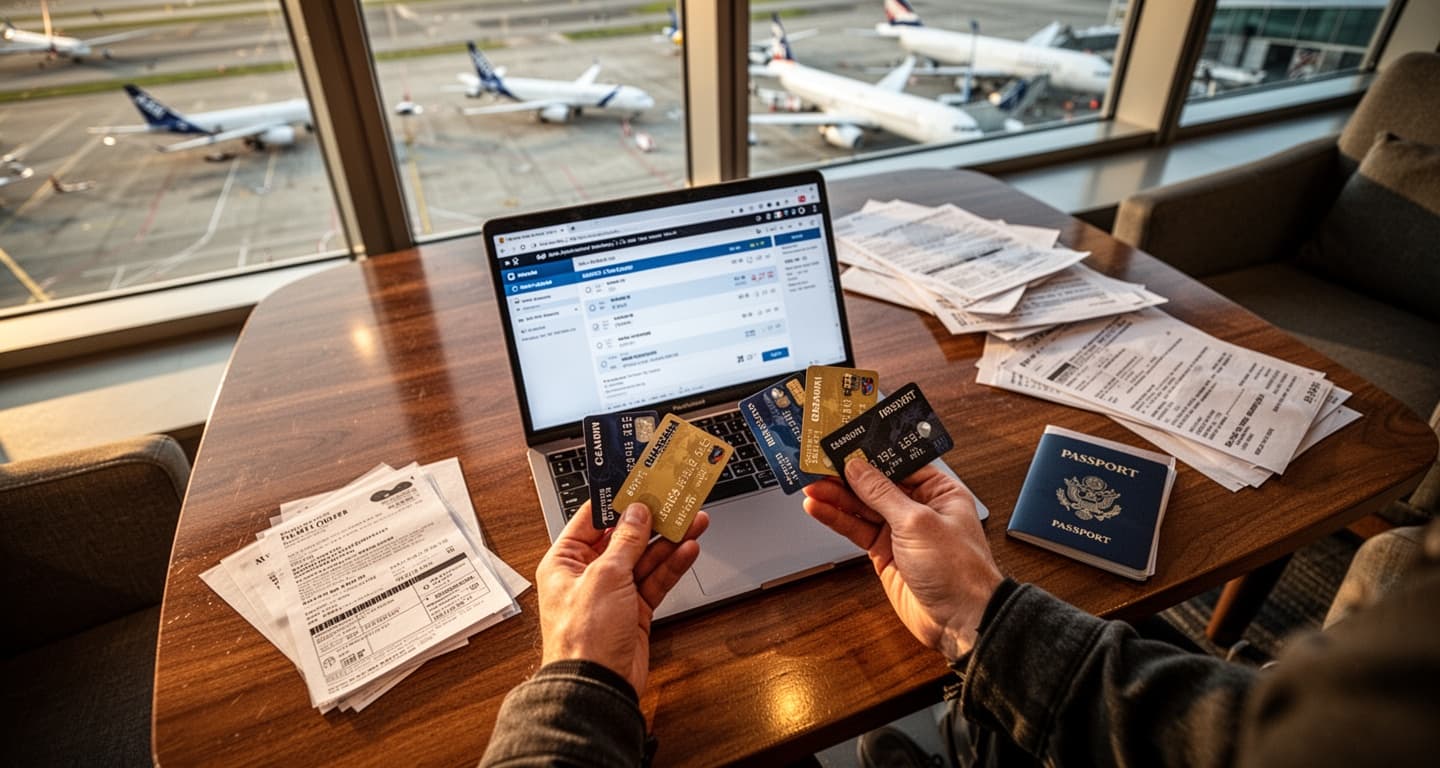
Refund treatment splits sharply by payment method. Passengers who purchased tickets directly from Spirit using a credit or debit card will receive automatic refunds to their original payment method — no action required beyond monitoring for the credit. Travel agent bookings require direct contact with the booking agent, who bears responsibility for initiating the refund process. Compensation for Free Spirit points, vouchers, and any non-card payment methods will be determined through bankruptcy court proceedings, with no guaranteed timeline or recovery amount.
Industry sources confirm that Spirit had not turned a profit in seven years and had exhausted restructuring options before the liquidation filing. The airline’s press release cited material increases in oil prices as a contributing factor alongside the failed bailout negotiations.
| Category | Detail | Passenger impact | Status |
|---|---|---|---|
| Cessation time | 3:00 AM ET, May 2, 2026 | All flights canceled immediately | Confirmed |
| Flights canceled (May 1–15) | 4,119 domestic flights | 809,638 seats eliminated | Confirmed |
| Credit/debit card refunds | Automatic to original payment | No action required; allow 7–10 business days | Processing |
| Travel agent bookings | Agent responsible for refund | Contact agent within 24 hours | Action required |
| Free Spirit points / vouchers | Bankruptcy court determination | No guaranteed recovery; file claim via Epiq | Pending court |
| Customer service | Shut down entirely | Epiq claims agent only: (855) 952-6606 | Closed |
| Final flight | NK1833, Detroit to Dallas-Fort Worth | Landed after midnight May 2 | Completed |

Flight deals most people never see
Our AI monitors 150+ airlines for pricing anomalies that traditional search engines miss. Air Traveler Club members save $650 per trip per person on average: see how it works.
Each deal saves 40–80% vs. regular fares:

The competitive fallout: who gains and what fares will do next
Spirit’s exit removes the most aggressive price anchor in U.S. domestic aviation. The carrier had been the primary driver of sub-$50 base fares on leisure-heavy routes — Florida, Las Vegas, the Caribbean — and its absence creates immediate pricing latitude for legacy carriers. Air Traveler Club’s analysis of Spirit’s cash crisis and its implications for stranded passengers had flagged credit card chargebacks as the primary financial recourse weeks before the shutdown became official.
Legacy carriers — United Airlines, American Airlines, and Delta Air Lines — now face reduced low-cost competition on hundreds of domestic routes. Basic economy and economy fares on former Spirit corridors could rise 5–15% over the coming months as market pricing adjusts to reduced capacity. Premium cabin pricing is expected to remain stable short-term, with potential softening of 2–3% in Q3 2026 as legacy carriers shift additional narrowbody capacity to economy to absorb Spirit’s former passenger base.
Frontier Airlines and Allegiant Air remain the primary ultra-low-cost options in the U.S. market. JetBlue — which attempted to acquire Spirit before the government blocked the merger — is positioned to expand selectively on profitable Spirit routes. Southwest, while not a traditional ULCC, competes on price-sensitive leisure routes and may absorb meaningful share.
What the Spirit liquidation means for your next booking decision
This is an awareness and action story simultaneously — passengers with existing Spirit bookings must act now, while the broader market implications will unfold over the coming weeks and months.
- Initiate your refund or chargeback within 48 hours: Credit and debit card holders receive automatic refunds, but if your card issuer doesn’t post the credit within 10 business days, file a chargeback immediately. Waiting weakens your dispute position.
- Free Spirit points are at serious risk: Loyalty currency in airline bankruptcies typically recovers cents on the dollar — if anything. File your claim with Epiq now to establish your position in the creditor queue, but do not count on full recovery.
- Book alternative flights today, not tomorrow: Demand on competing carriers will spike through the weekend as 800,000-plus displaced passengers seek alternatives. Fares on leisure routes will rise as inventory tightens. Booking Sunday or Monday will cost more than booking Saturday.
- Monitor DOT for passenger protection guidance: The Department of Transportation may issue emergency guidance on rebooking rights and fare caps for Spirit passengers. Any such directive would create enforceable rights against alternative carriers — watch for announcements within 72 hours.
- Fare increases on former Spirit routes are coming: If you regularly fly leisure routes Spirit served — Orlando, Fort Lauderdale, Las Vegas, Cancún — expect base economy fares to rise materially by Q3 2026. Locking in advance purchase fares on legacy carriers now, before the market reprices, is the rational response.
Watch: If the DOT announces mandatory rebooking requirements or compensation standards tied to this failure, it will signal the most significant shift in U.S. airline passenger protection in a decade — and set the template for how future airline collapses are managed.
FAQ
Will Spirit Airlines fly again under a new owner?
Chapter 7 liquidation — unlike Chapter 11 reorganization — means Spirit’s assets will be sold off, not restructured. The brand, slots, gates, and aircraft will be auctioned to the highest bidders. While another carrier could theoretically acquire the Spirit name, a revival of the airline as an operating entity is extremely unlikely. Frontier, JetBlue, or private equity could acquire specific route slots or aircraft.
What happens to Free Spirit miles and points?
Free Spirit points have no guaranteed recovery path. Their value — and whether holders receive any compensation — will be determined through bankruptcy court proceedings. Historically, loyalty currency ranks low in airline bankruptcy creditor hierarchies. File a claim with Epiq at SpiritAirlinesInfo@epiqglobal.com or (855) 952-6606 to establish your position, but expect a lengthy process with uncertain outcomes.
Is this the largest airline failure in U.S. history?
By passenger volume affected, Spirit’s collapse is among the largest. The last comparable U.S. airline liquidation was Aloha Airlines in March 2008. However, carriers like Pan Am (1991) and Eastern Air Lines (1991) were larger at the time of their failures. Spirit’s shutdown is notable for its speed — from Chapter 11 to full cessation — and for the immediate scale of disruption to domestic leisure travel.
Are airlines required to rebook Spirit passengers?
No. U.S. law does not require other airlines to rebook passengers from a failed carrier at any particular fare. Several carriers have voluntarily reduced fares or waived change fees as a goodwill measure, but these are discretionary policies, not legal obligations. The Department of Transportation may issue guidance, but as of May 2, 2026, no mandatory rebooking requirement exists.
Read more