Summary
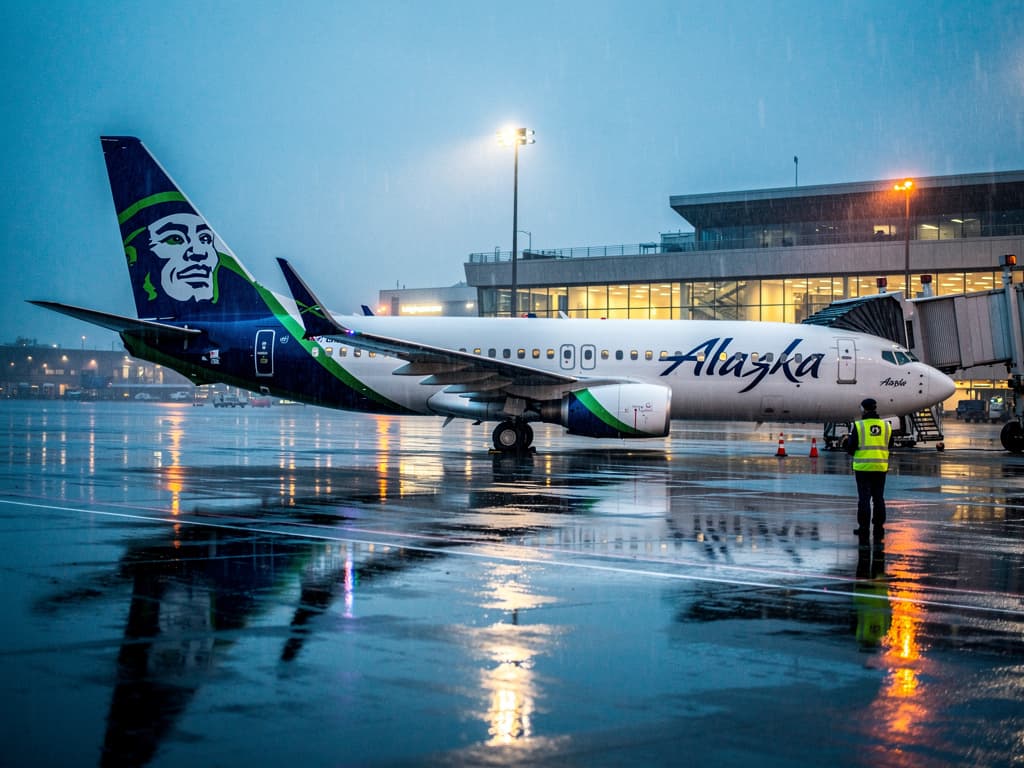
Alaska Airlines removed a passenger from a delayed Orlando–San Diego flight and banned her from its entire network after she delivered a brief sermon in the aisle, citing crew safety concerns. The ban, imposed pending a corporate security investigation, extends to Hawaiian Airlines and Horizon Air.
The passenger, a Florida evangelist with a large social media following, recorded the removal and posted it online, where a clip garnered over 3 million views within a day. No charges were filed, but she cannot use her flight credit while barred.
A viral confrontation between a self-described deliverance minister and Alaska Airlines crew has reignited debate over the limits of passenger expression at 35,000 feet. On a Thursday in late July 2026, Whitney Lynn stood in the aisle of a delayed flight at Orlando International Airport and preached for less than a minute, telling the cabin that God’s timing was perfect and they might be spared from danger.
She returned to her seat without being asked to stop. Minutes later, an airline employee approached and said the crew no longer felt safe. Lynn was ordered off the aircraft, an instruction she recorded and later posted across a multi-part Instagram series that quickly amassed millions of views.
The removal underscores the broad authority airlines hold under federal regulations and their contracts of carriage. When crew members perceive a threat to order—even from non-violent speech—they can deplane a passenger immediately. In this case, the airline’s response was swift and network-wide.
Alaska Airlines confirmed the passenger was removed “for safety reasons” and stated she will not be permitted to travel on its flights “for the foreseeable future.” The restriction covers Hawaiian Airlines and Horizon Air as well, effectively grounding her across the carrier’s entire operation while corporate security investigates.
The details
Lynn, a 40-year-old evangelist with more than 270,000 Instagram followers, regularly preaches on flights and has said passengers “have no choice but to hear the truth.” On this occasion, she was traveling to attend a funeral in California. After being told to leave, she argued with the crew, invoked freedom of speech, and continued filming. She later spent about 40 minutes speaking with airport police; no arrest or charges were filed.
Alaska Airlines issued a flight credit but the passenger cannot use it while the ban remains active. She rebooked on another carrier to reach San Diego. The airline has not disclosed what additional behavior, beyond the sermon and subsequent confrontation, contributed to the crew’s safety assessment.
Alaska Airlines confirmed the removal and ban, stating the passenger will not be permitted to travel “for the foreseeable future.” The carrier’s corporate security department is leading the investigation, and the ban applies to all three brands—Alaska, Hawaiian, and Horizon—until further notice.
| Date/Time | Event | Impact | Status |
|---|---|---|---|
| Late July 2026, pre-departure | Passenger delivers aisle sermon on delayed Orlando–San Diego flight | Crew reports feeling unsafe | Flight still at gate |
| Immediately after sermon | Crew instructs passenger to deplane | Passenger removed from aircraft | No arrest; police speak with passenger |
| Same day, post-removal | Passenger spends ~40 minutes with airport police | No charges filed | Passenger rebooks on another carrier |
| Within hours | Alaska corporate security emails ban notification | Ban covers Alaska, Hawaiian, Horizon; flight credit issued but unusable | Investigation ongoing |

Flight deals most people never see
Our AI monitors 150+ airlines for pricing anomalies that traditional search engines miss. Air Traveler Club members save $650 per trip per person on average: see how it works.
Each deal saves 40–80% vs. regular fares:

The value-add
The incident highlights a structural reality of U.S. aviation: private carriers are not bound by the First Amendment, and crew discretion over safety trumps passenger expression. While Lynn framed her removal as religious persecution, federal regulations and airline contracts of carriage give crews broad authority to remove anyone whose behavior they deem disruptive—even if that behavior is a 56-second sermon.
Air Traveler Club’s analysis of onboard disruption protocols shows that crew intervention is the safer protocol when passengers take matters into their own hands, but here the disruption came from the passenger herself. The airline’s swift escalation to a network-wide ban signals a zero-tolerance posture that other carriers are likely to emulate when crew safety is invoked.
What the Alaska Airlines ban signals for passenger conduct
Alaska’s corporate security investigation is the next decisive step. If the ban is made permanent, it will reinforce that even non-violent disruptions—especially those that make crew members feel unsafe—can lead to network-wide exclusion with no immediate recourse. The passenger has hinted at legal action, but First Amendment claims face an uphill battle against private carriers. For now, the practical outcome is clear: a flight credit that cannot be used, and a travel plan that required rebooking on a competitor.
FAQ
Can an airline ban you for preaching on a plane?
Yes. Airlines are private companies, and their contracts of carriage allow them to remove any passenger whose behavior disrupts the flight or makes crew members feel unsafe. Preaching, even if brief and non-aggressive, can be deemed disruptive if it interferes with crew duties or cabin order.
Does freedom of speech apply on a commercial flight?
No. The First Amendment restricts government action, not decisions by private carriers. Passengers do not have a constitutional right to express themselves in ways that the airline determines compromise safety or order.
How long do airline bans typically last?
Bans can range from a few days to permanent exclusion, depending on the severity of the incident and the outcome of the airline’s internal security review. In this case, Alaska Airlines stated the passenger is barred “for the foreseeable future” pending investigation, which could become permanent.
What should you do if you’re banned from an airline?
First, comply with the removal and avoid confrontation. Then, contact the airline’s corporate security or customer relations department to understand the terms of the ban and any appeal process. While banned, you cannot use flight credits on that carrier, so rebooking on another airline is the immediate solution.
Read more