Summary
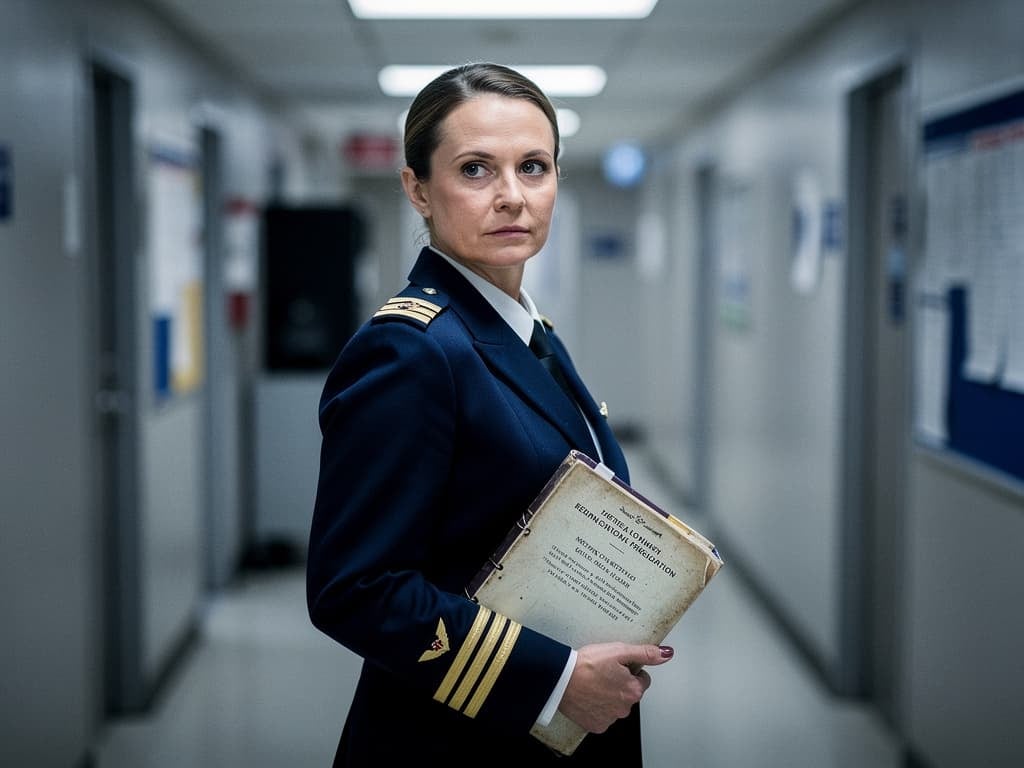
A three-day FAA hearing beginning May 19, 2026, in Denver is examining whether United Airlines wrongfully terminated captain Cynthia Clifford after she filed a voluntary safety report following an unauthorized cockpit intrusion on a Boeing 757 charter flight from Denver to Toronto in April 2024. A Colorado Rockies coach entered the cockpit and sat in the captain’s seat while Clifford was using the restroom — she reported the incident through United’s Flight Safety Action Program, and was subsequently fired. The first officer on the flight was also terminated.
Allegations now center on whether United used both pilots as scapegoats during an active FAA safety audit. The hearing runs through May 21, 2026, at the FAA Flight Standards Office in Denver.
A voluntary safety report — the exact tool the FAA designed to encourage crews to flag problems without fear of punishment — may have cost a United Airlines captain her career. That is the central allegation now being examined in a formal FAA hearing this week in Denver, and the details are difficult to dismiss.
In April 2024, the Colorado Rockies chartered a United Airlines Boeing 757 from Denver International Airport to Toronto Pearson. During cruise, captain Cynthia Clifford stepped away from the flight deck to use the restroom. While she was gone, a team coach entered the cockpit and sat in her seat — and posted video of it to social media. Clifford returned, learned what had happened, and did what the system asks crews to do: she filed a report with United’s Flight Safety Action Program (FSAP), a non-punitive voluntary reporting framework that exists precisely for situations like this.
She was fired anyway.
The first officer was also terminated. The coach faced no reported consequences. United did not end its charter relationship with the Colorado Rockies. A three-day FAA hearing — scheduled for May 19–21, 2026 — is now examining the circumstances of Clifford’s termination, and the allegations surfacing from that proceeding raise serious questions about how United manages safety culture when public optics are at stake.
The details: what the hearing record shows
On charter flights, an open cockpit door is not unusual. Industry practice — particularly on sports and entertainment charters — has long tolerated a more relaxed cabin boundary, with coaches, executives, and VIP passengers occasionally visiting the flight deck at cruising altitude. What is not tolerated, under any circumstances, is an unauthorized person occupying a pilot’s seat while the aircraft is airborne.
That line was crossed on the Rockies charter. The coach’s social media post made the incident public and impossible to contain. United was simultaneously undergoing an FAA safety audit — a period of heightened regulatory scrutiny that followed a series of high-profile operational incidents. The allegation now being made publicly is that United terminated both pilots to demonstrate decisive safety action to regulators, not because the captain bore meaningful responsibility for what happened while she was in the lavatory.
The FSAP report Clifford filed should have provided protection. The FAA’s voluntary safety reporting framework is built on a non-punitive principle: crews who proactively disclose safety events in qualifying circumstances are shielded from disciplinary action. According to the hearing record, United’s three-person Event Review Committee initially accepted her report — which would have closed the matter. The allegation is that the FAA member on that committee was subsequently replaced with someone who voted differently, and the report’s protection was then voided on the grounds that alcohol was involved — because the coach had been drinking. That provision was designed to cover crew members who report their own alcohol use, not passengers.
The first officer’s situation is separately troubling. According to the hearing record, union attorneys allegedly pressured him to sign a statement admitting willful FAR violations in exchange for a reduced FAA penalty and the possibility of keeping his job — a deal that, by the account now on record, his original union representative warned him against accepting.
| Date | Event | Impact | Status |
|---|---|---|---|
| April 2024 | Colorado Rockies charter DEN–YYZ; coach enters cockpit, sits in captain’s seat, posts video | Incident goes viral; FAA audit of United already underway | Confirmed |
| April 2024 | Captain Clifford files FSAP voluntary safety report upon flight conclusion | Report initially accepted by three-person Event Review Committee | Confirmed |
| Mid-2024 | FAA committee member allegedly replaced; FSAP protection voided; both pilots terminated | Captain and first officer lose positions; coach faces no reported consequences | Alleged — under hearing review |
| 2024–2025 | ALPA union involvement; FO allegedly pressured to admit willful FAR violation | FO’s legal position weakened; original union rep reportedly sidelined | Alleged — under hearing review |
| May 19–21, 2026 | FAA Flight Standards Office hearing, Denver — Clifford case examined publicly | Potential regulatory findings on FSAP integrity and retaliation | Active |

Flight deals most people never see
Our AI monitors 150+ airlines for pricing anomalies that traditional search engines miss. Air Traveler Club members save $650 per trip per person on average: see how it works.
Each deal saves 40–80% vs. regular fares:

Why this matters beyond one captain’s case
This story is not primarily about a cockpit door left open. It is about whether voluntary safety reporting systems function as designed when an airline faces simultaneous regulatory scrutiny and public embarrassment — and the answer emerging from Denver this week is not reassuring.
Air Traveler Club’s analysis of how airline safety regulations actually work in practice is worth revisiting here: regulatory frameworks and operational reality frequently diverge, and the gap tends to widen precisely when airlines are under external pressure. The Clifford case fits that pattern almost exactly. An FAA audit was underway. A viral video had created public embarrassment. The airline needed to be seen acting decisively. Two pilots were terminated. The coach who caused the incident kept his job.
The broader charter context matters too. United’s charter product — operated through its cargo and charter division — positions itself as bespoke service for teams, corporations, and high-value clients. That positioning implies tighter operational control, not looser cabin discipline. Yet the hearing record suggests that an informal, unwritten norm of open cockpit doors on sports charters had been operating for years, known to management and tolerated until it became a liability.
NetJets, Flexjet, and VistaJet compete in the premium charter segment on a fundamentally different model — dedicated aircraft, private terminals, no shared cabin workflow with commercial operations. Their pitch is control. United’s charter economics depend on airline-scale aircraft and crew, which means commercial operating norms apply even when the passenger manifest looks nothing like a commercial flight.
What the NTSB timeline means for charter safety accountability
This is an awareness story with a live regulatory timeline. The FAA hearing concludes May 21, 2026. Preliminary findings — if made public — could arrive within weeks. If investigators determine that FSAP protection was improperly stripped, or that the committee process was compromised, expect the FAA to issue formal guidance on FSAP administration that would apply across all Part 121 carriers, not just United.
The more consequential signal to watch is whether the FAA addresses the underlying charter cockpit-access norm. An informal industry practice of open flight deck doors on sports charters has apparently persisted for years across multiple airlines. If the hearing record establishes that United management was aware of this practice and tolerated it, the regulatory response could extend to formal cockpit-access standards for charter operations — a change that would affect every airline operating team and corporate charters.
Watch for any United statement on FSAP policy or charter operating procedures in the days following the hearing’s conclusion. Silence would be its own signal.
FAQ
What is the Flight Safety Action Program, and does it always protect pilots who file reports?
FSAP is an FAA-sanctioned voluntary safety reporting framework that provides non-punitive protection to airline crew members who proactively disclose safety events. Protection is not absolute — it does not apply when a crew member’s own substance use is involved, and it requires acceptance by a joint Event Review Committee. The Clifford case turns on whether United correctly applied the alcohol exclusion to a passenger’s drinking rather than the crew’s, and whether the committee process was properly administered.
Could the FAA hearing result in United reinstating captain Clifford?
The FAA hearing is an administrative proceeding examining the circumstances of the termination and the integrity of the FSAP process — it is not a reinstatement order. However, findings adverse to United could support separate legal action under AIR21, the federal whistleblower protection statute for aviation employees, which provides remedies including reinstatement and back pay.
Does United’s contract of carriage offer any special protections for charter passengers?
United’s standard contract of carriage governs all passengers traveling on United-operated flights, including charters. There is no separate “charter passenger” exemption from standard liability and carriage terms. Passengers on United-operated charters retain the same rights as retail ticket holders under those terms, though the charter booking process itself runs through United’s cargo and charter inquiry channel rather than standard retail ticketing.
Is it legal for passengers to visit the cockpit on charter flights?
Post-9/11 regulations under 49 U.S.C. § 44902 and TSA rules prohibit unauthorized persons from entering the flight deck of a commercial aircraft in flight. There is no charter exemption. An informal industry norm of open cockpit doors on sports charters does not override federal law — and sitting in a pilot’s seat while airborne is a clear violation regardless of how the flight was booked.
Read more