Summary
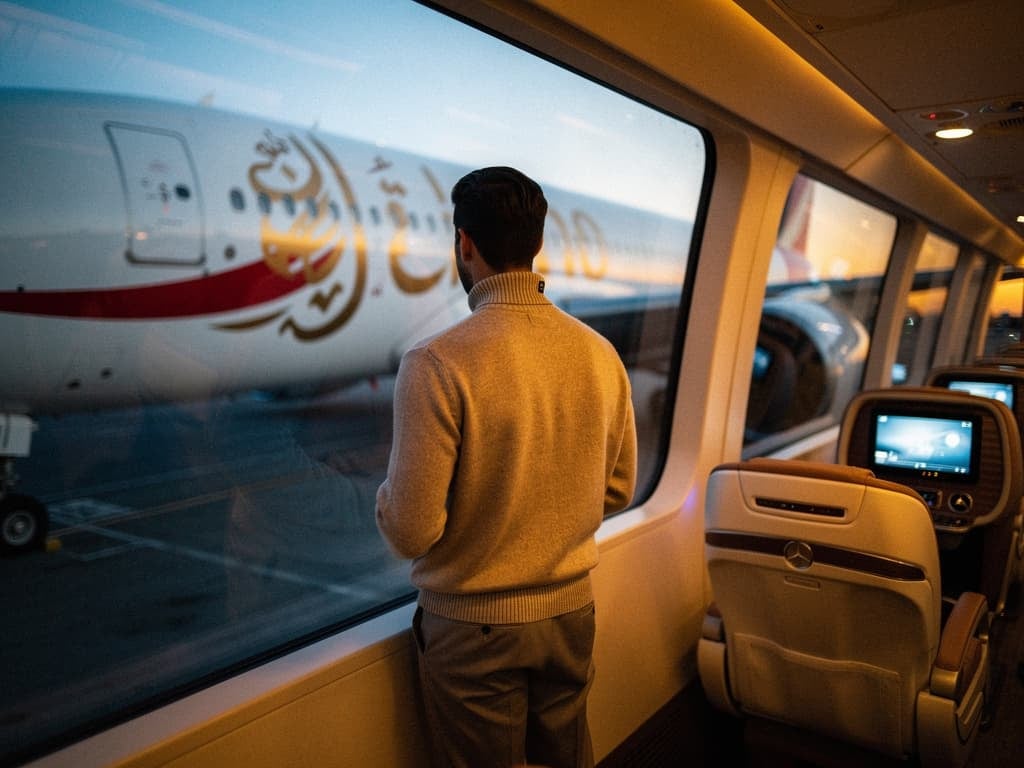
Emirates flight EK-213, a Boeing 777-300ER carrying up to 328 passengers from Dubai, declared a full “mayday” fuel emergency at Miami International Airport on Sunday, May 17, 2026, after two consecutive landing attempts failed due to thunderstorm-driven wind shear and a runway incursion by another aircraft. The crew had already been airborne for 17 hours and 16 minutes — nearly an hour beyond the route’s normal block time — when they escalated from a “minimum fuel” advisory to a formal emergency declaration. The aircraft landed safely on its third attempt.
The incident occurred just 17 days after Emirates resumed the Dubai–Miami route following a two-month suspension. Passengers booked on EK-213 or connecting onward to Bogotá should verify rebooking status through Emirates’ official channels immediately.
Two failed landing attempts, a runway blocked by another aircraft, and a fuel state that left no margin for error — Emirates flight EK-213 turned into one of the more dramatic arrivals at Miami International Airport in recent memory on Sunday morning. The crew of the Boeing 777-300ER declared a formal mayday at approximately 10:30 AM local time, triggering emergency priority clearance that moved other aircraft out of the landing pattern and got the flight on the ground within minutes.
The sequence began with headwinds. Strong Atlantic crosswinds pushed EK-213’s total flight time to 17 hours and 16 minutes — well beyond the route’s typical 15.5-to-16.5-hour block. That extended burn ate into the fuel reserves the crew had calculated for contingencies.
Then Miami’s weather intervened. Thunderstorms moving through the area created low visibility and wind shear on Runway 09, forcing the first go-around. The crew declared “minimum fuel” — not yet an emergency, but a formal advisory to air traffic control that no significant delay could be absorbed. Controllers directed EK-213 toward Runway 12, which offered a better wind angle.
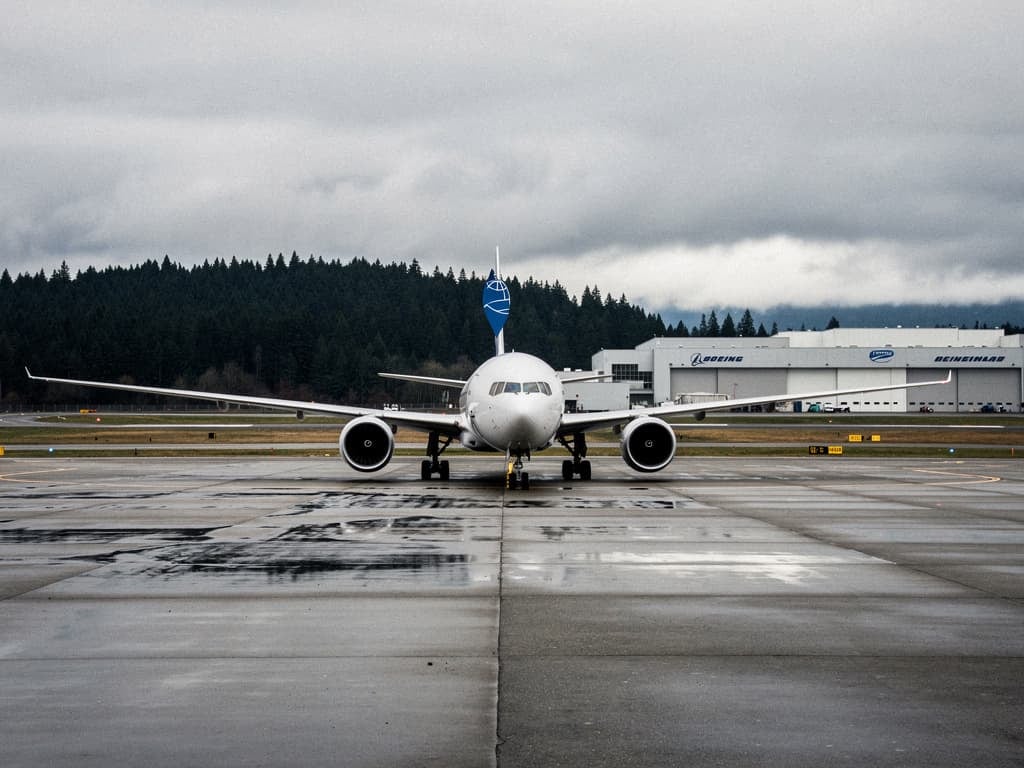
The second attempt came within less than 100 feet of touchdown. At that point, controllers spotted another aircraft still occupying the runway and ordered an immediate go-around. That instruction triggered the mayday call. From that moment, ATC was obligated to treat EK-213 as a priority emergency, clearing the path for an immediate third approach. The aircraft landed on Runway 12 without further incident and taxied to the gate under its own power.
The details: what the incident record shows
Flight tracking data confirms EK-213 departed Dubai International and operated the DXB–MIA segment on May 17, with the extended block time attributable to headwind conditions over the Atlantic. The route had only resumed on May 1, 2026, after a two-month suspension linked to the conflict in Iran — making this disruption particularly notable given how recently the service was restored.
The escalation from “minimum fuel” to “mayday” reflects a precise regulatory distinction. Minimum fuel is an advisory: the crew is informing ATC that they cannot accept holding or significant delay, but the situation is not yet an emergency. A mayday fuel declaration, by contrast, is a formal distress call — it obligates controllers to provide immediate priority handling and clears other traffic from the approach sequence. The crew’s decision to escalate after the second go-around was operationally correct given the circumstances.
Aviation incident reporting confirms the full emergency declaration was resolved without injury or aircraft damage. Industry sources confirm the aircraft taxied to the gate under its own power, and no passengers required medical attention as a result of the incident.
Detailed coverage of the emergency sequence, including the runway incursion that forced the second go-around, is documented at One Mile at a Time’s incident report.
| Time (approx.) | Event | Impact | Status |
|---|---|---|---|
| ~10:30 AM ET | First approach to Runway 09 abandoned — wind shear and low visibility from thunderstorms | Crew declares “minimum fuel” advisory to ATC | Resolved — go-around executed |
| ~10:40 AM ET | Second approach to Runway 12 — runway incursion by another aircraft forces second go-around within 100 feet of touchdown | Crew escalates to full “mayday” fuel emergency declaration | Resolved — ATC clears emergency priority |
| ~10:45 AM ET | Third approach to Runway 12 — emergency priority clearance granted, all other traffic moved | Aircraft lands safely, taxis to gate under own power | Resolved — no injuries reported |
| May 1, 2026 | Emirates resumes DXB–MIA service after two-month suspension | Route restored following Iran conflict-related suspension | Ongoing — service active |
| May 17, 2026 | Total flight time: 17 hours 16 minutes (normal: 15.5–16.5 hours) | Extended block time accelerated fuel burn, reducing contingency margin | Under review |

Flight deals most people never see
Our AI monitors 150+ airlines for pricing anomalies that traditional search engines miss. Air Traveler Club members save $650 per trip per person on average: see how it works.
Each deal saves 40–80% vs. regular fares:

Why this incident reveals more than a weather delay
The operational reality of ultra-long-haul flying is that fuel planning is a precise calculation, not a conservative buffer. Pilots file for enough fuel to complete the flight, execute one missed approach, and divert to an alternate airport — in this case, Fort Lauderdale. What EK-213’s crew encountered was a compounding sequence that consumed each layer of that margin in rapid succession: extended block time from headwinds, a weather-forced go-around, and then a runway incursion that forced a second go-around at the worst possible moment.
None of those factors, individually, would have created an emergency. Together, they did.
Air Traveler Club’s reporting on the American Airlines 777 diversion over the Atlantic earlier this month illustrates a broader pattern: widebody long-haul operations are absorbing a higher frequency of in-flight emergencies in 2026, with weather and mechanical factors converging on routes that leave little room for deviation. EK-213 is the fuel-margin version of that same structural pressure.
For the DXB–MIA route specifically, the timing matters. Emirates restored this service only 17 days before the incident, after a two-month suspension. The airline is operating a route that is already at the edge of the 777-300ER’s practical range under normal conditions — strong headwinds compress the margin further, and Miami’s convective weather season is just beginning.
What the EK-213 mayday means for DXB–MIA operations going forward
This is an awareness story — the aircraft landed safely, no injuries were reported, and the emergency was resolved on May 17. There is no ongoing disruption requiring immediate booking action beyond what affected passengers on EK-213 should already be managing.
The forward signal worth monitoring is how Emirates adjusts dispatch planning on the DXB–MIA route as Miami’s convective weather season intensifies through June and July. If the airline responds with more conservative fuel uplift policies or schedule padding on this and similarly stretched ultra-long-haul services, that will show up in block time adjustments on the Emirates Miami route page over the coming weeks.
Watch for any NTSB or FAA preliminary findings on the runway incursion element of this incident — the second go-around was triggered by another aircraft failing to vacate Runway 12 in time, which is a separate operational question from the fuel emergency itself. If investigators identify a procedural gap at MIA’s tower, expect updated separation protocols on that runway configuration during peak convective weather periods.
FAQ
Was the Emirates EK-213 mayday actually dangerous, or is this routine?
A mayday fuel declaration is a formal emergency, not a routine advisory. It means the crew assessed that the aircraft could no longer safely remain in a holding pattern and required immediate priority landing clearance. The aircraft was not about to run out of fuel mid-air, but the crew had exhausted the planned contingency margins — one missed approach and a divert to Fort Lauderdale — and needed ATC to clear the runway immediately. The aircraft landed safely on the third attempt with no injuries.
What is the difference between “minimum fuel” and a “mayday” fuel declaration?
“Minimum fuel” is an advisory to air traffic control that the crew cannot accept significant delay or holding — it is not an emergency declaration and does not obligate ATC to provide priority handling. A “mayday” fuel declaration is a full distress call that legally requires ATC to treat the aircraft as an emergency, clear other traffic from the approach sequence, and provide immediate landing priority. EK-213’s crew escalated from minimum fuel to mayday after the second go-around made it clear that any further delay was unsafe.
Why didn’t the pilots simply load more fuel in Dubai to prevent this?
Fuel planning on ultra-long-haul routes is a precise calculation, not a fill-the-tank exercise. Extra fuel adds weight, which increases fuel burn, slows the aircraft, and raises emissions — creating a compounding effect. Pilots calculate fuel for the planned flight time, one missed approach, and a divert to an alternate airport. EK-213’s crew had planned for exactly those contingencies. The problem was that headwinds extended the flight by nearly an hour, and then two consecutive go-arounds consumed the remaining margin faster than any single contingency would have.
Is the Emirates Dubai–Miami route still operating after this incident?
Yes. The route resumed on May 1, 2026, after a two-month suspension related to the conflict in Iran, and remains active. The May 17 incident was an operational emergency that was resolved on landing — it does not indicate a suspension or schedule change. Travelers booked on future EK-213 departures should monitor the Emirates Miami route page for any schedule adjustments as the airline reviews its dispatch planning for this service.
Read more