Summary
A Delta Air Lines passenger upgraded from Premium Select to Delta One on the 15+ hour Atlanta–Seoul route for $17.34 on July 15, 2026 — a 99% drop from the $1,671 price just hours earlier. The collapse is likely a system glitch, turning one of the longest premium cabin upgrades in the world into a transaction cheaper than an airport meal.
The anomaly surfaced after the traveler modified the return segment onto a Korean Air 747, triggering a fare-class repricing that sent Delta’s algorithm reeling. With the passenger confirmed in a lie‑flat seat for the cost of a sandwich, the incident exposes the razor’s edge between diligent monitoring and sheer luck in the opaque world of cash upgrade pricing.
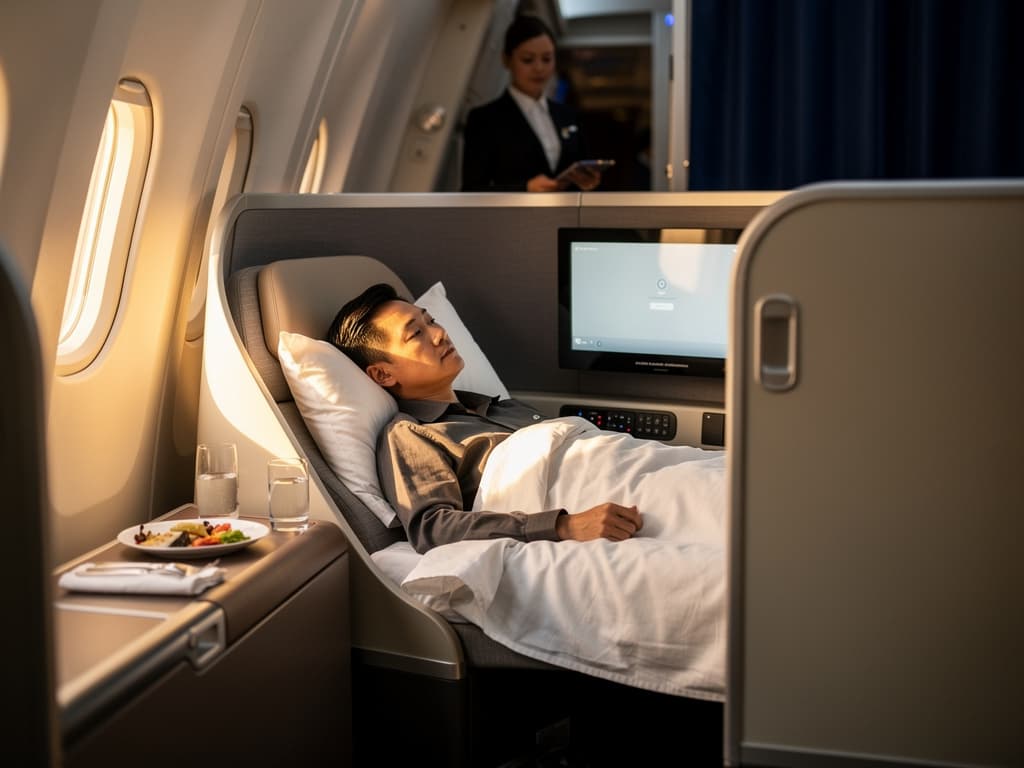
On a route where a cash upgrade to business class usually runs well over $2,000, a Delta Air Lines passenger managed to purchase a confirmed Delta One seat for $17.34 — a figure that defies commercial logic. The upgrade, offered roughly six weeks before departure on the Atlanta (ATL) to Seoul Incheon (ICN) flight, appeared after a cascade of repricing events that saw the same seat priced at $2,390, $2,661, $1,812, and $1,671 in the preceding days.
Aviation insiders suspect the algorithm that powers Delta’s post-booking upgrade offers suffered a catastrophic logic failure — using erroneous fare-bucket inputs after the passenger swapped a Hong Kong return onto Korean Air‘s 747-8, which recoded the original booking’s fare classes. The result was an overnight plummet from four figures to pocket change.
For travelers holding premium economy tickets on ultra-long-haul Pacific routes, the episode is more than a curiosity. It underscores a narrow but real opportunity: pricing volatility can be triggered by itinerary modifications, and those who monitor the “Upgrade with Cash” tool like hawk may stumble onto five-sigma anomalies. The scope is concentrated on Delta’s ATL–ICN nonstop — a flagship service typically operated with Boeing 787-9 or Airbus A350 aircraft equipped with lie-flat suites — but the mechanics apply to any international booking where cash upgrades are dynamically priced.
How the $17.34 upgrade unfolded
Detailed logs of the pricing swings show an algorithm losing its grip overnight. The passenger, originally booked in Premium Select on the ATL–ICN leg, had been methodically checking for an upgrade priced below $700. On May 28, after a ticket change, the quoted Delta One upgrade sat at $2,390. It ticked up to $2,661 on July 13, dropped to $1,812 the next day, and then fell to $1,671 minutes after the return segment was shifted onto Korean Air’s 747 — a move that recoded fare classes on the entire itinerary. By 8:13 a.m. EDT on July 15, the price had collapsed to $17.34.
The passenger purchased immediately and received confirmation. No post‑purchase clawback has been reported. A similar pricing anomaly in August 2021 saw a Delta reservation bug automatically upgrade two travelers to first class after a fare-class recoding error — evidence that the carrier’s revenue management systems have a history of temporarily unravelling under edge-case conditions.
| Date (2026) | Event | Upgrade price |
|---|---|---|
| May 28 | Itinerary modified | $2,390 |
| July 13 | Price increase | $2,661 |
| July 14, daytime | Price decrease | $1,812 |
| July 14, evening | Return rebooked on Korean Air 747; fare classes recoded | $1,671 |
| July 15, 8:13 a.m. EDT | Glitch price appears; passenger purchases | $17.34 |

Flight deals most people never see
Our AI monitors 150+ airlines for pricing anomalies that traditional search engines miss. Air Traveler Club members save $650 per trip per person on average: see how it works.
Each deal saves 40–80% vs. regular fares:

Why Delta’s algorithm broke — and what it means
Delta’s upgrade pricing engine weighs a vast matrix of inputs — original fare paid, elite status, remaining inventory, booking class, and time to departure — but its logic is entirely opaque. The overnight collapse from $1,671 to $17.34 suggests the algorithm latched onto a corrupted fare-bucket value after the itinerary change, treating the premium economy leg as if it were already a deep-discount business class ticket.
The carrier’s history gives little reason to expect a clawback. While Delta has not issued a formal statement, it honored the 2021 reservation glitch and has historically allowed dynamic pricing to stand — partly because reversing a confirmed transaction after the fact opens regulatory and customer-relations risks. Air Traveler Club’s recent exposé on SkyMiles upgrade absurdities found that Delta’s revenue management misfires extend well beyond one-off glitches, with agents quoting $440,000 for a Sydney upgrade before correcting a currency error.
How to capture volatile upgrade pricing on Pacific routes
For Delta One aspirants on ultra-long-haul flights, upgrade pricing is increasingly a game of vigilance rather than value — and this glitch reveals the pockets where systems can break.
- Check immediately after any itinerary change. Even a minor rebook — especially onto a partner airline — can reset fare classes and collapse cash upgrade costs overnight.
- Use Delta.com’s “Upgrade with Cash” tool and pair it with ExpertFlyer alerts for fare-bucket shifts on your specific flight to spot sudden drops.
- For ATL–ICN, peak volatility clusters 6–8 weeks out. Revenue management algorithms aggressively rebalance inventory in this window, creating narrow opportunities for mispricing.
- Partner awards provide a reliable hedge. Virgin Atlantic Flying Club often prices 60,000–80,000 points one-way in business class from the U.S. to Korea — far more predictable than waiting for a glitch.
Watch for Delta’s Q3 customer service report — expected by September 2026. If it addresses “upgrade pricing errors,” the airline may introduce a formal correction policy, closing the window on these windfalls.
FAQ
Did Delta honor the $17.34 upgrade, and can it be canceled?
The passenger received immediate confirmation and the charge appeared on their card. As of publication, Delta has not reversed the upgrade. Historically, the airline honors such glitch-driven pricing, though it reserves the right to audit reservations after the fact.
Can I intentionally trigger a similar upgrade repricing glitch?
It is not reliably replicable. The specific combination of multi-segment itinerary changes, fare-class recoding, and algorithm timing was likely a one-off system error. Deliberately modifying tickets to chase a repricing anomaly risks a higher fare or outright cancellation.
What is the most reliable way to find cheap Delta One upgrades?
Monitor cash upgrade offers daily on Delta.com starting 3–5 months out, especially after itinerary modifications. Tools like ExpertFlyer can alert to inventory changes. For dependable premium cabin access, partner awards through Virgin Atlantic Flying Club or Air France-KLM Flying Blue offer transparent pricing with stable 60,000–80,000 point one-way rates.
Read more