Summary
The new business class suites flooding long-haul fleets are not hospitality upgrades but meticulously engineered financial instruments. Delta Air Lines confirmed premium cabin revenue reached $5.4 billion in Q1 2026 alone—a 14% surge that brought it within $41 million of overtaking the entire main cabin. Non-economy revenue streams now constitute 62% of Delta’s enterprise total, proving the front of the aircraft has become the core business.
Airlines are rapidly unbundling business class into tiered, basic-fare products that charge separately for seat selection and lounge access. Delta’s unbundled fare structure is scheduled for rollout by the end of 2026, giving premium travelers a narrowing window to lock in legacy full-fare benefits.
The sliding doors, champagne lists, and high thread-count bedding that dominate airline marketing materials tell exactly half the story. What carriers are actually building, quarter by quarter and retrofit by retrofit, is a floating asset management platform where luxury suites function as high-yield capital allocation tools—not hospitality showcases.
IATA’s own projections paint the picture starkly. Pure flight operations were forecast to generate a 3.9% profit margin in 2026—roughly $7.90 per passenger carried. With fuel volatility and labor costs compressing those already-thin margins, the standard economy cabin cannot deliver meaningful shareholder value.
The solution has been to flip the aircraft configuration model entirely.
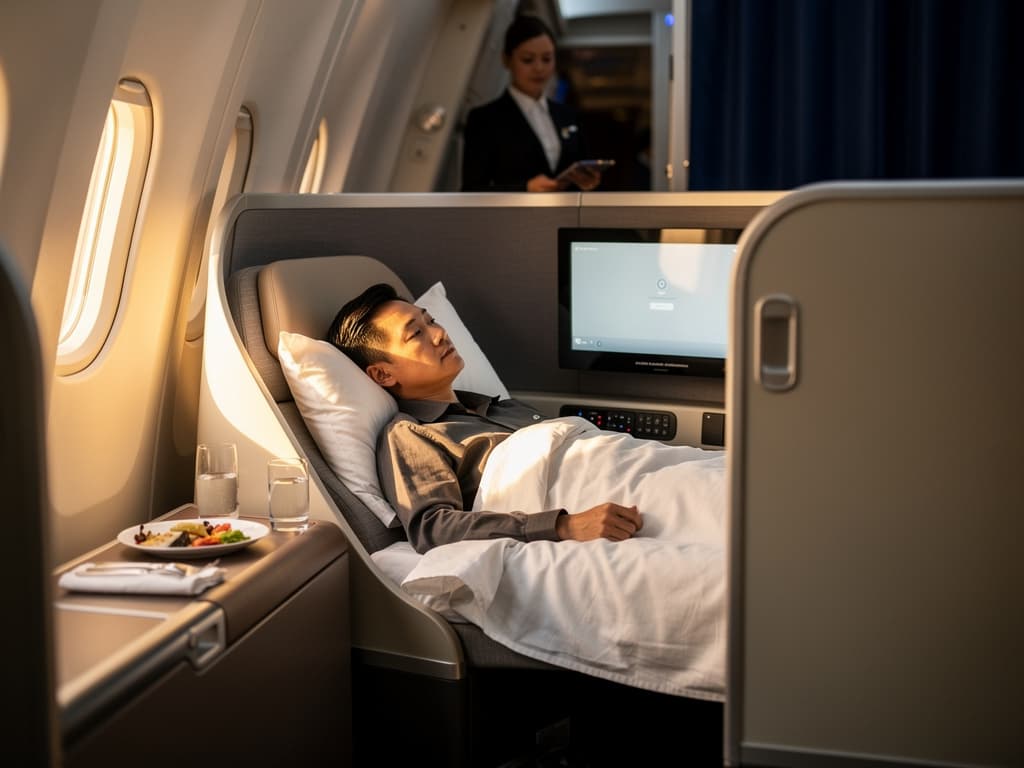
Modern twin-aisle aircraft entering international fleets now dedicate up to 50% of total cabin space to premium seating tiers, a structural departure from the 30% baseline common just a few years ago. Delta’s new Airbus A350-1000 configurations embody this shift—the carrier has aggressively stripped out standard economy rows to install enclosed suites that squeeze maximum revenue from every square foot of fixed fuselage space. For those flying business class on these routes, the experience feels like elevated luxury. For airline CFOs, it is simply yield optimization at industrial scale.
This inversion works because premium retention metrics behave like a one-way valve. Delta’s leadership has confirmed that customer retention rates for travelers who purchase premium cabin products consistently hover in the mid-80% range. Once a passenger experiences an international flight inside an enclosed suite, returning to the main cabin becomes psychologically difficult—creating a reliable, recurring stream of high-margin revenue that transforms the back of the plane into a customer acquisition funnel for the front.
The loyalty engine that eclipses flying
Behind every enclosed business-class cocoon sits a financial architecture that dwarfs the operational airline itself. The five largest US carriers collectively generated $28 billion in loyalty and credit card partnership revenue in a single year, according to industry analysis—programs operating with margins that make flight operations look like break-even charity work. Delta’s recent investor disclosures confirmed that remuneration from its American Express co-branded card partnership surpassed $2 billion for Q1 2026 alone, reflecting 10% growth year-over-year.
These suites are the ultimate prize keeping that ecosystem churning.
The promise of an enclosed space on a 12-hour flight is the psychological driver that convinces millions of consumers to swipe co-branded credit cards for everyday purchases. American Airlines credits its AAdvantage program for driving up to 77% of all premium cabin bookings. Without aspirational business-class suites as the redemption goal, demand for mileage-earning credit cards would collapse—and with it, the most profitable segment of the airline’s portfolio. The loyalty programs themselves carry independent market valuations that frequently surpass the standalone value of the airlines operating the aircraft.
| Revenue stream | Q1 2026 / annual figure | Year-over-year change | Share of enterprise revenue |
|---|---|---|---|
| Delta premium cabin revenue | $5.4B (Q1 2026) | +14% | Near parity with main cabin |
| Delta Amex partnership remuneration | $2B+ (Q1 2026) | +10% | High-margin non-operating income |
| Top 5 US airlines loyalty/credit card revenue | $28B (annual) | Sustained growth | Exceeds flight ops profitability |
| Delta non-economy revenue (incl. cargo, MRO) | 62% of enterprise total | Structural shift ongoing | Dominant share |
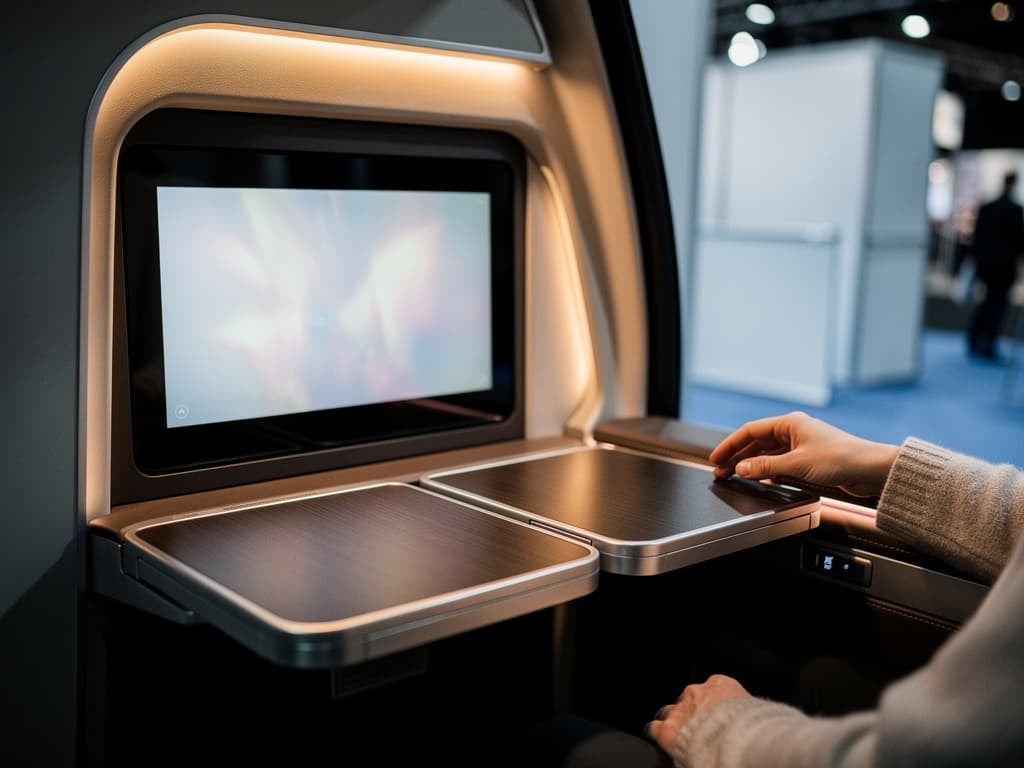
The engineering challenge of cramming more premium seats into fixed fuselage dimensions has produced spatial wizardry of remarkable sophistication. Japanese carriers lead this discipline. All Nippon Airways pioneered The Room—a counter-directional layout interlocking forward- and rear-facing seats like puzzle pieces, delivering a massive 36-inch wide cushion surface while compressing the pitch footprint. Japan Airlines achieved similar structural victory inside its new A350-1000 suites, using ultra-thin translucent panels and sliding doors that add negligible weight while satisfying the premium traveler’s demand for complete isolation.
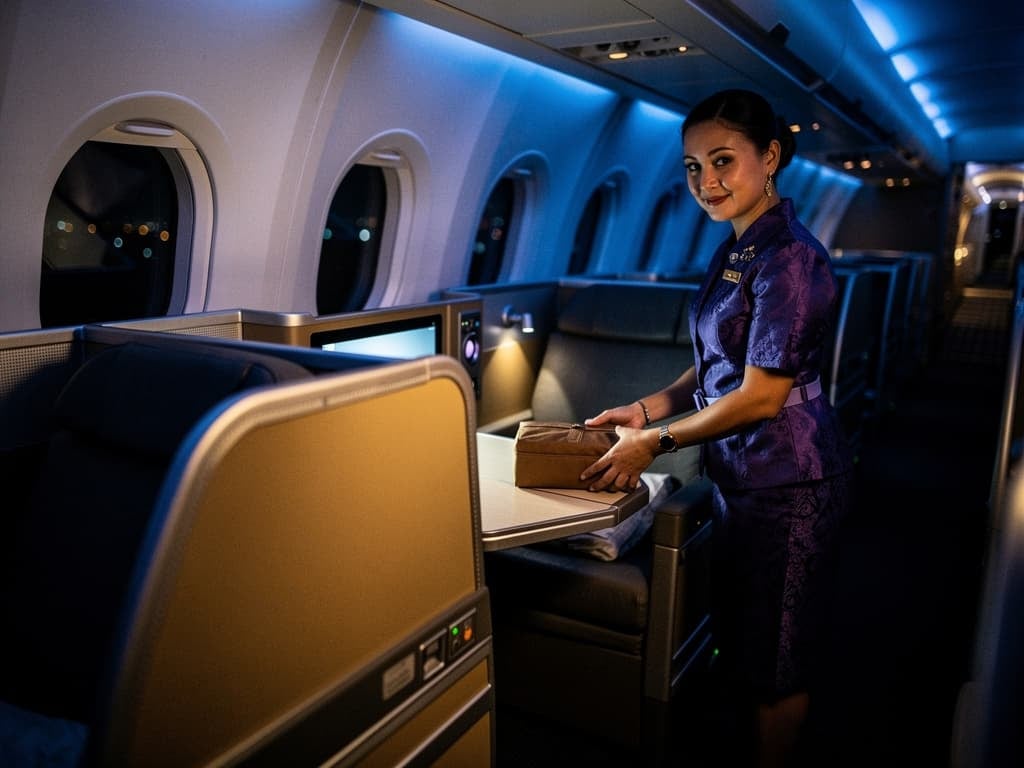
Every component—headphone-free headrest speakers, nested footwells, staggered entry paths—is engineered to compress high-yielding passenger zones into the fuselage, converting physical space directly into net margin.

Flight deals most people never see
Our AI monitors 150+ airlines for pricing anomalies that traditional search engines miss. Air Traveler Club members save $650 per trip per person on average: see how it works.
Each deal saves 40–80% vs. regular fares:

When business class stops being business class
The final accounting maneuver is the deliberate dismantling of the all-inclusive business class proposition. United Airlines has already introduced a tiered basic business product on its incoming Polaris Studio suites—separating seat selection, lounge access, and other traditional perks into individually priced line items. Delta confirmed its own unbundled premium fare structures are on track for rollout by the end of 2026. The financial logic is surgical: a corporate executive whose travel policy covers full fare still receives every amenity, while a leisure passenger redeeming points might be assigned to a lower tier requiring additional cash payment simply to select a seat or enter the departure lounge.
The revenue divergence confirms the strategy works. During the 2025 fiscal year, Delta recorded premium cabin revenue climbing 7% year-over-year, while main cabin passenger revenue dropped 5% during the exact same period. This is the ecosystem in action: Air Traveler Club’s analysis of eight upgraded long-haul business class products documents how carriers are standardizing full-height privacy doors across new suites while simultaneously fragmenting the fare structures attached to them.
How to secure full-fare benefits before the window closes
The 3–6 month window is critical for premium travelers who value the traditional all-inclusive business class proposition. Once Delta’s unbundled fares go live and United’s Studio Suites enter service with tiered pricing, locking in legacy full-fare products on US-Europe routes becomes significantly harder.
- Book Delta Business Class directly through Delta.com before Q3 2026 earnings confirm unbundling. Full-fare tickets booked now retain lounge access, seat selection, and all traditional perks without separate add-on charges that will appear by early 2027.
- Elite status holders should prioritize United 1K or Delta 360 thresholds. Top-tier loyalty status preserves lounge access and seat selection even under basic business fare structures, effectively grandfathering premium benefits that lower-tier fares will strip away.
- Monitor United’s 787-9 Studio Suites delivery timeline via ExpertFlyer alerts. If those aircraft enter service with tiered pricing in Q4 2026, switch to full-fare business or prepare to pay cash add-ons for core perks like lounge entry—typically $50–$80 per segment under similar unbundled models tested by European carriers.
- Avoid redeeming miles for basic business products unless prepared to pay cash add-ons. The entire industry trend points toward miles-based redemptions being routed into lower-tier fare buckets that monetize seat selection and lounge access separately, reducing the value proposition of co-branded credit card mileage accumulation for occasional premium travelers.
Watch for Delta’s Q3 2026 earnings call as the definitive signal. If unbundled fare rollout receives specific implementation dates, the clock accelerates for anyone who values the full business class experience at a single, predictable price point.
Read more