Summary
A Delta business-class upgrade became a viral status performance after a New York City-based Black traveler said a seatmate asked what she did for work — a question she interpreted as gatekeeping. Her “rich mom” response, complete with a Hermès Birkin bag and a private-jet persona, drew more than 988,000 views in under a week as of September 20, 2026.
The seatmate has not spoken publicly, and the traveler’s account remains unverified. A separate Hawaii-bound luggage dispute ended with an apology after online backlash, showing how fast cabin moments become public judgments.
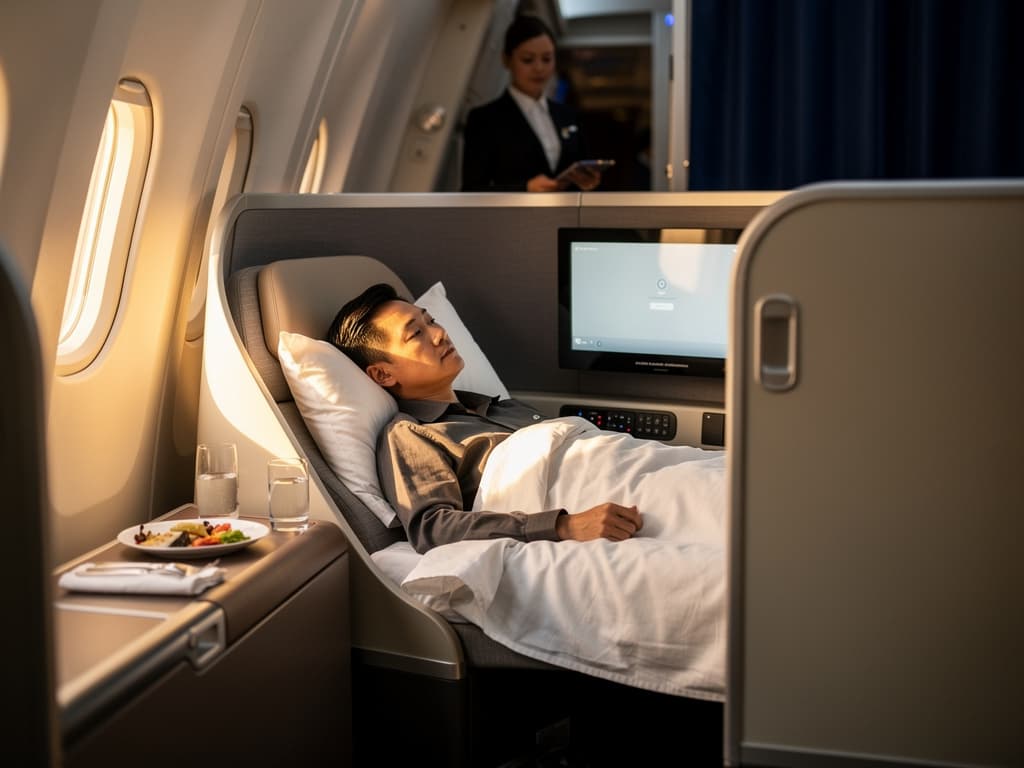
A routine question in a premium cabin — “What do you do for work?” — became the trigger for a viral status performance in September 2026. A New York City-based traveler who upgraded to Delta Air Lines business class posted a TikTok video saying her seatmate looked her up and down before asking the question. She interpreted it as a challenge to her right to sit there.
Her response was a “rich mom” act: she claimed to fly only private, asked if he worked for the airline, and requested that he stow her Hermès Birkin bag. The video surpassed 988,000 views in under a week as of September 20, 2026. The same discussion has drawn in a separate Hawaii-bound luggage dispute and an earlier American Airlines first-class boarding-pass challenge. For frequent business-class passengers, the episode exposes an uncomfortable reality: premium cabins remain social spaces where status is performed and, at times, interrogated.
The encounters span U.S. domestic premium corridors from New York-origin flights to Hawaii-bound leisure routes. Neither the Delta seatmate nor the Hawaii poster’s counterpart has offered a public account.
Inside the Delta cabin encounter
The traveler said the exchange began within moments of taking her upgraded seat. Rather than answer, she turned the question back on her seatmate — “Do you work for Delta Air Lines?” — and built the persona from there. American Airlines‘ conditions of carriage require respectful behavior in cabins, but the rules address passenger conduct, not the unspoken social tests that can precede it. Neither passenger has spoken publicly since.
| Incident | Airline/Cabin | Trigger | Aftermath |
|---|---|---|---|
| Delta business-class seatmate exchange | Delta Air Lines, business class | Seatmate asked “What do you do for work?” | Traveler’s “rich mom” response drew more than 988,000 views |
| Hawaii-bound luggage dispute | Unnamed U.S. carrier | Seatmate declined to lift a heavy bag | Poster apologized after online threats |
| American Airlines boarding-pass check | American Airlines, first class to Miami | Flight attendant asked to verify boarding pass | Viral account reignited premium-cabin bias debate |

Flight deals most people never see
Our AI monitors 150+ airlines for pricing anomalies that traditional search engines miss. Air Traveler Club members save $650 per trip per person on average: see how it works.
Each deal saves 40–80% vs. regular fares:

Why premium cabin virality keeps repeating
The spread of these cabin videos is not random. Premium cabins have become status theaters: upgrades, Birkin bags, and private-jet references signal that a passenger belongs, while an intrusive question can feel like a gatekeeping test. Air Traveler Club’s report on a Delta first-class passenger removed over an invisible disability shows how quickly premium cabins can become profiling environments.
The viral moment is less about the actual exchange than the audience that judges it.
Delta Air Lines and American Airlines both rely on crew-led de-escalation, not peer enforcement. The winning airline response, industry insiders say, is to keep these disputes invisible. Every public cabin argument makes the premium product look less exclusive and more socially brittle.
How to handle intrusive seatmate questions without derailing the flight
The viral response is entertaining, but the practical takeaway for business-class passengers is to keep cabin interactions brief and crew-directed.
- Expect questions, but not obligation. Passengers in premium cabins are not required to explain their seat, income, or upgrade history to a seatmate. A brief, polite deflection is enough.
- Keep it crew-directed. If a seatmate’s question turns intrusive or a baggage request becomes awkward, ask cabin crew to intervene rather than escalating at the seat. Airline policies place enforcement with staff, not peers.
- Document, don’t perform. If an interaction feels discriminatory, note the flight number, date, and details silently. The viral “rich mom” act worked for the TikTok, but real recourse runs through complaint channels.
- Watch for new guidance. Any Delta or American etiquette memo or DOT conduct language in late 2026 or 2027 would signal that airlines now treat premium-cabin friction as a reputational risk.
FAQ
What should a business-class passenger do if a seatmate asks an intrusive question?
Passengers have no obligation to explain their seat, income, or upgrade history. A brief, polite deflection is sufficient, and cabin crew can intervene if the exchange becomes uncomfortable or disruptive.
Are airlines required to mediate seatmate disputes in premium cabins?
Airlines do not require passengers to help one another with luggage or answer personal questions. Conduct rules require respectful behavior, but enforcement runs through cabin crew and complaint channels rather than peer pressure.
Did the Delta traveler face the same online backlash as the Hawaii luggage poster?
As of the viral TikTok’s first week, no public reports indicated a similar backlash against the Delta traveler. The Hawaii luggage dispute followed a different path because the poster’s tone drew criticism, leading to an apology after threats.
Read more