Summary
Business class now delivers roughly 80–85% of the international first-class experience at around half the price, as lie-flat suites, privacy doors, and direct aisle access become standard while dedicated first-class cabins shrink. Industry data shows the number of airlines offering a separate first class has fallen by more than 40% since 2019, making the premium cabin a rarer and often harder-to-justify expense.
The decisive factors are route, aircraft assignment, and whether unique ground perks — like Lufthansa’s Frankfurt First Class Terminal or Emirates’ A380 shower — justify a fare that can run two to three times higher. On five major long-haul carriers, the smarter buy in 2026 is increasingly the business-class seat.
The debate over whether international first class is still worth the splurge has never been louder. As airlines pour investment into next-generation business suites — adding full-height doors, dine-on-demand menus, and 24-inch 4K screens — the once-vast gulf between the two premium cabins has narrowed to a handful of extras. For the traveler paying cash, the question is no longer which cabin is better, but whether the remaining first-class perks justify thousands of extra dollars.
Across the five carriers examined here — Cathay Pacific, Air France, Lufthansa, Singapore Airlines, and Emirates — business class now solves the core long-haul needs: a fully flat bed, direct aisle access, and elevated dining. First class still offers more space, greater privacy, and, in some cases, ground experiences that feel like a private terminal. But those advantages are often tied to specific aircraft, routes, or operating hours, making the upgrade a gamble without careful research.
The shift is strategic. Carriers are reducing or eliminating dedicated first-class cabins while introducing sub-tiers within business class to capture higher-spending passengers. The result is a premium landscape where business class has absorbed much of what first class once exclusively offered, leaving the top cabin as a niche product for bucket-list journeys or redemptions at favorable rates.
The details
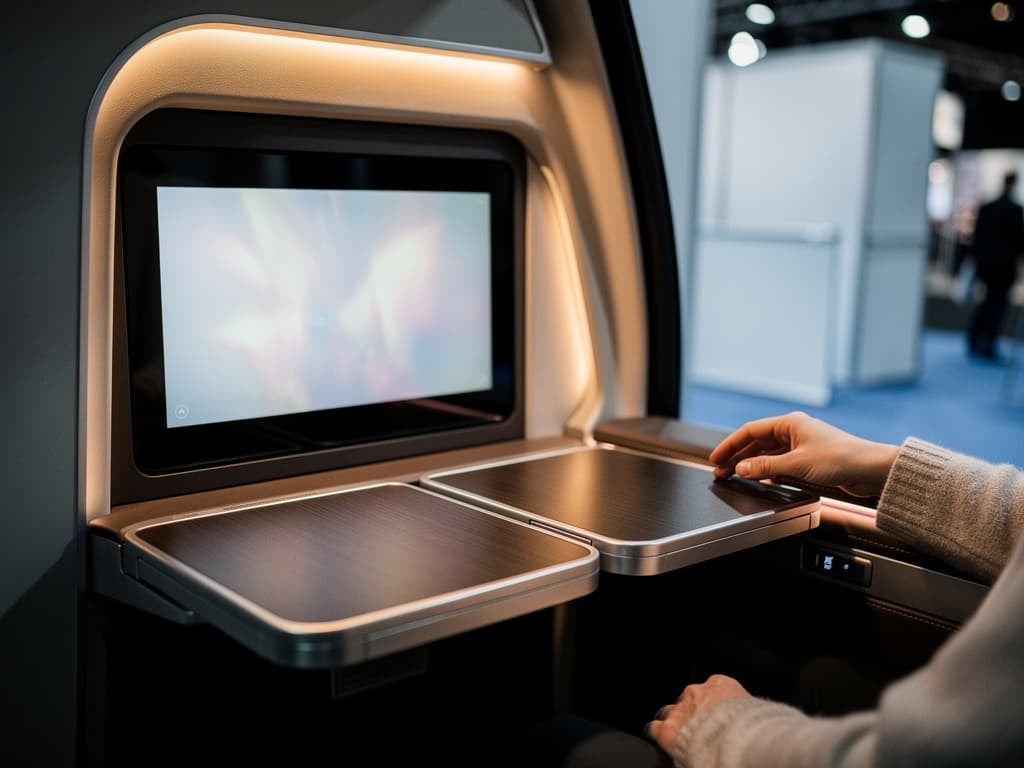
Cathay Pacific’s Aria Suite, rolling out on selected Boeing 777-300ER aircraft, exemplifies the convergence. The 1-2-1 configuration gives every passenger a sliding privacy door, a fully flat bed, and direct aisle access — features once reserved for first class. The airline’s Aria Suite product page confirms a 24-inch 4K screen and dine-on-demand ordering through its Choose My Meal platform. Cathay’s first class remains more spacious, but the incremental gain is mostly about exclusivity rather than a fundamentally different sleep experience.
Air France’s La Première is among the world’s finest first-class products, yet it operates only on a subset of 777-300ERs. The carrier serves 13 destinations from Paris Charles de Gaulle, but a route listed with La Première may not have it on a specific departure. Meanwhile, Air France’s business class — ranked fifth globally by Skytrax — offers private, lie-flat seats on most long-haul routes, making the steep La Première premium hard to justify unless the itinerary aligns perfectly.
Lufthansa’s first-class advantage is concentrated on the ground. The Frankfurt First Class Terminal provides personal assistants, dedicated security, à-la-carte dining, and a chauffeur transfer to the aircraft — but it operates only from 5:30 a.m. to 10:00 p.m. daily. In the air, Lufthansa’s business class still lacks universal direct aisle access, yet its lie-flat seat and service capture much of the flight experience. For many, the terminal alone may not be worth the fare gap.
Singapore Airlines’ A380 Suites offer separate sleeping and seating areas across an estimated 50 square feet, but its long-haul A350 business class uses a 1-2-1 layout with fully flat beds around 78 inches long and direct aisle access. With the airline winning Skytrax’s best first-class seat and second-best business class in 2025, the business product already delivers exceptional comfort. Emirates’ A380 business class includes a fully flat bed, mattress, and access to the onboard lounge, while first class adds a shower spa and enclosed suites. First-class fares are generally two to three times higher, making business the clear value choice for cash-paying travelers.
| Airline | What first class adds | Why business class can be smarter | Approximate fare gap |
|---|---|---|---|
| Cathay Pacific | Larger suite, elevated dining, greater exclusivity | Aria Suite offers privacy door, lie-flat bed, dine-on-demand | 2–3x business class |
| Air France | La Première private suite, premium ground service, French fine dining | Strong business class on most routes; La Première limited to select 777-300ERs | Often 3x or more |
| Lufthansa | Frankfurt First Class Terminal, personal assistant, chauffeur transfer | Competitive lie-flat seat; terminal access tied to specific hours | 2–3x business class |
| Singapore Airlines | A380 Suites with separate bed and seating, 50 sq ft space | A350 business class: 1-2-1, 78-inch bed, direct aisle access | 2–3x business class |
| Emirates | A380 shower spa, fully enclosed suites, more elaborate dining | Business class: flat bed, mattress, onboard lounge access | 2–3x business class |

Flight deals most people never see
Our AI monitors 150+ airlines for pricing anomalies that traditional search engines miss. Air Traveler Club members save $650 per trip per person on average: see how it works.
Each deal saves 40–80% vs. regular fares:

What’s driving the shift — and where it leaves premium travelers
The contraction of first class is not a temporary trend. Airlines are reconfiguring widebody fleets to pack more high-yield business suites while removing first-class rows that often fly with low load factors. Cathay’s Aria Suite deployment across its 777-300ER fleet — already serving Los Angeles, Sydney, and San Francisco — mirrors moves by other carriers to make business class the de facto top cabin on most routes. Lufthansa’s Allegris business class, with beds up to 86 inches, further blurs the line.
Air Traveler Club’s analysis of 2026 business class upgrades shows full-height privacy doors are now standard across eight major products, and elite status holders are competing for limited award inventory at the 330-day booking window. The practical takeaway: unless a specific first-class feature — like the Frankfurt terminal or an A380 shower — is central to the journey, business class now captures the essentials at a fraction of the cost.
How to decide whether first class is worth it on these five airlines
The narrowing gap means the decision hinges on route, aircraft, and whether you’ll actually use the unique first-class perks. Here’s how to approach the booking decision for each carrier.
- Check the aircraft before booking. On Cathay Pacific, only selected 777-300ERs have Aria Suite; use the seat map to confirm. For Air France, verify that La Première is actually operating on your specific flight — a route may list it but not every departure offers it.
- Value the ground experience separately. Lufthansa’s First Class Terminal is a genuine differentiator, but it operates only from 5:30 a.m. to 10:00 p.m. If your connection falls outside those hours, the first-class premium largely evaporates.
- Consider the sleep proposition first. Singapore Airlines’ A350 business bed is 78 inches long and fully flat — enough for most travelers. Unless the separate Suite bed and enormous personal space are essential, business class solves the core overnight need.
- Use miles strategically. Award charts often price first class at a 50–70% premium over business, but the experience gain is marginal. Redeem for business and save miles for additional trips, or use upgrade instruments if your elite status allows.
- Emirates business class is the clearest value play. The A380 onboard lounge and lie-flat bed come standard; the shower and enclosed suite are the only meaningful first-class additions. For cash fares two to three times higher, the upgrade rarely pencils out.
Watch for broader Aria Suite deployment and Lufthansa’s Allegris rollout — as more aircraft get next-generation business seats, the case for paying up for first class will weaken further.
FAQ
How much more does international first class cost than business class?
First-class fares are typically two to three times higher than business class on the same route, though the gap can reach four times on carriers like Air France. For example, a round-trip business class ticket from New York to Singapore may cost around $4,500, while Singapore Suites can exceed $14,000.
Which airline offers the best business class value compared to first class?
Emirates provides the clearest value proposition: its A380 business class includes a fully flat bed, mattress, and access to the onboard lounge — the same core features as first class — at roughly one-third the price. The shower and enclosed suite are the only meaningful upgrades.
Can I use miles to upgrade from business to first class on these airlines?
Yes, but availability is extremely limited. Programs like Singapore Airlines KrisFlyer and Cathay Pacific Asia Miles allow waitlisting for first-class awards, while Emirates Skywards occasionally releases upgrade space close to departure. The miles premium often ranges from 50% to 70% more than a business-class award.
Is Lufthansa’s First Class Terminal worth the extra cost?
Only if you have a long connection in Frankfurt during the terminal’s operating hours (5:30 a.m. to 10:00 p.m.) and highly value a private, chauffeur-driven airport experience. For most travelers, the onboard business-class product already delivers a competitive lie-flat seat and service.
Will more airlines eliminate first class in the future?
The trend points toward further reduction. Industry data shows a 40% decline in airlines offering dedicated first class since 2019, and carriers are increasingly introducing sub-tiers within business class to capture higher-spending passengers without maintaining a separate first-class cabin.
Read more