Summary
A malfunctioning first-class seat on American Airlines flight AA171 from New York JFK to Los Angeles on July 21, 2026, ignited a viral confrontation when a passenger whose seat was broken allegedly occupied another traveler’s assigned seat 6A and refused to leave. The intruder claimed the rightful occupant—an AAdvantage Executive Platinum member traveling on an upgrade—had no right to the seat because he hadn’t paid for it.
The upgraded passenger, who had been asleep, reclaimed his seat after a heated exchange that was recorded and quickly amassed millions of views. The incident highlights the vulnerability of premium cabin upgrades when equipment fails and the critical role crew must play in stopping self-help seat swaps before they escalate.
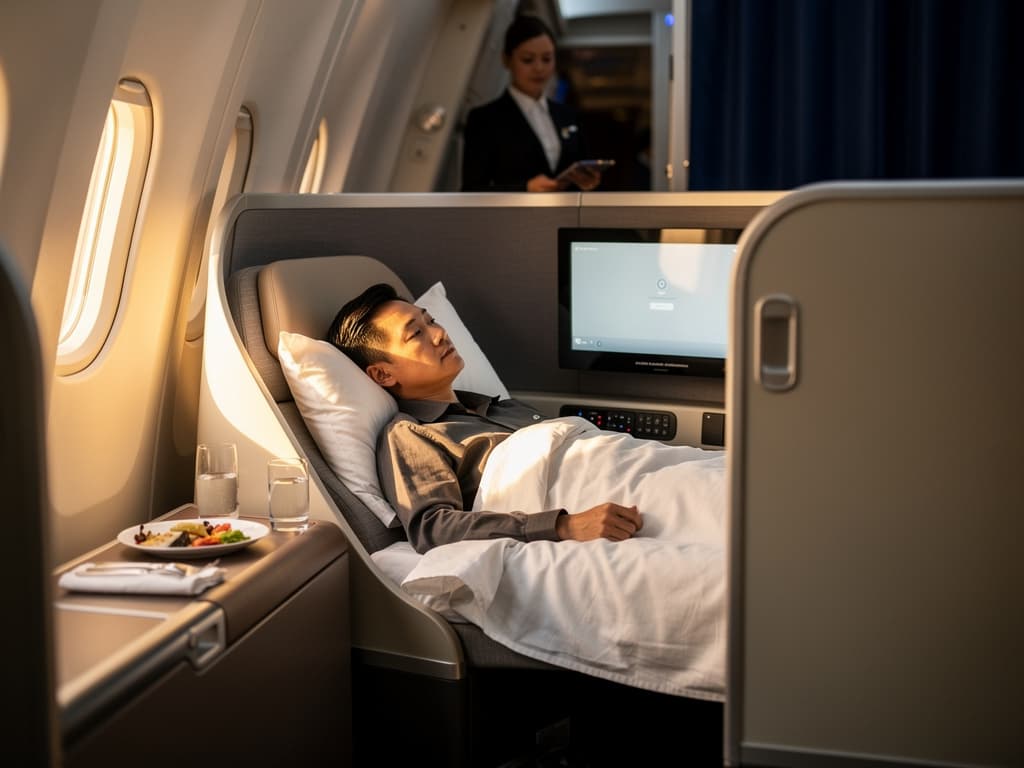
A five-and-a-half-hour transcontinental flight became a viral flashpoint Monday when a broken first-class seat on American Airlines flight 171 from JFK to LAX triggered a direct confrontation between two passengers. The dispute, captured on video and viewed millions of times within hours, revolved around seat 6A — an upgrade seat assigned to an AAdvantage Executive Platinum member — and seat 3F, which the other passenger said would not recline.
The sequence that unfolded was swift: the passenger originally assigned to 6A was already settled in when the woman approached, asked to swap, and, when refused, simply sat down in his seat and refused to move. “She didn’t even say please or thank you,” the upgrade passenger later recounted. “Just bolted over to my chair & wouldn’t get up.”
The woman argued that because the rightful occupant had not paid for the seat — he was upgraded thanks to his top-tier status — he had no claim to it. The claim, though legally unfounded, underscores a persistent tension in premium cabins: the perceived hierarchy between revenue passengers and those seated on elite upgrades. The incident was eventually resolved when the woman relinquished the seat, though not before the exchange had been posted to social media, drawing millions of views and sharp commentary on traveler etiquette and crew oversight.
For the airline’s highest-tier elite members, the episode is a stark reminder that upgrade priority does not guarantee a protected seat when equipment failures create a scramble for available inventory. The flight, AA171, operated the competitive New York–Los Angeles corridor, a route where multiple carriers offer premium transcontinental products and where cabin service recovery can make or break loyalty.
The details of the seat standoff
According to accounts from the upgrade passenger, the confrontation began when the woman in 3F approached seat 6A and asked to switch. She said her own first-class seat was broken and would not recline. When the occupant declined, she allegedly walked around and sat in 6A anyway, refusing to relinquish it. The video, which circulated widely, shows the woman clutching her forehead while the upgrade passenger pleads: “You gotta get out of my seat. This is crazy.”
The woman reportedly told others that the upgrade passenger had no right to stay because he hadn’t paid for the seat. The upgrade passenger, however, showed his boarding pass marked 6A. The standoff lasted several minutes, with the woman eventually gathering her belongings and leaving the seat after being challenged repeatedly. The passenger across the aisle later quipped, “Bro, you almost got robbed.”
American Airlines has not issued a public statement on the incident as of July 24, and no independent confirmation of the seat malfunction or crew actions has been released. The carrier’s policy for broken premium seats typically involves the crew attempting to reseat affected passengers, but the exact protocol — and whether any compensation was offered — remains unclear. A similar American Airlines seat dispute on a Dallas–Los Angeles flight earlier this year ended with the aircraft being emptied so police could intervene and remove the recalcitrant passenger.
| Time / phase | Event | Impact |
|---|---|---|
| Pre-departure | Passenger assigned to 3F discovers her first-class seat does not recline. | Creates a premium-cabin seat deficit. |
| Boarding / early taxi | She approaches passenger in 6A and asks to swap; he declines. | Conflict escalates when she takes the seat anyway. |
| During delay | Woman refuses to leave 6A, claiming upgrade passenger has no right to it. | Flight is held up while the confrontation plays out. |
| After repeated pleas | Woman finally gathers belongings and returns to 3F or another seat. | Upgrade passenger reclaims 6A; flight departs normally. |
| Post-flight | Video is posted to social media and rapidly amasses millions of views. | Incident becomes a viral flashpoint on cabin etiquette and crew oversight. |

Flight deals most people never see
Our AI monitors 150+ airlines for pricing anomalies that traditional search engines miss. Air Traveler Club members save $650 per trip per person on average: see how it works.
Each deal saves 40–80% vs. regular fares:

The viral standoff and the upgrade hierarchy
What happened on AA171 is more than a one-off viral moment. It exposes how the premium-cabin ecosystem — where paid revenue seats, elite upgrades, and broken equipment collide — can generate conflict that the standard crew response may not readily resolve. Air Traveler Club’s analysis of a similar passenger confrontation on an Alaska Airlines flight shows that when passengers take matters into their own hands, outcomes can swing from swift resolution to dangerous escalation.
The incident also highlights the fragility of the upgrade promise. An Executive Platinum member who cleared an upgrade only to find the seat occupied by a self-appointed gate-crasher is a scenario that tests loyalty. The absence of an immediate, visible crew intervention — at least in the video — suggests that carrier protocols for broken-seat reassignments may not be robust enough to prevent inter-passenger disputes from boiling over.
What the AA171 standoff means for premium cabin protocols
American Airlines has not publicly commented on the seat dispute. If the carrier issues a customer-relations response, it will indicate whether it treats the event as a routine cabin-service failure or an escalated conduct issue. Until then, the outcome remains a narrative of one passenger’s viral standoff — and a reminder that elite upgrade priority does not shield a traveler from the chaos of broken equipment and self-help seat-swapping.
Watch for any operational statement or crew report tied to AA171 — expected within days — if it appears, it will signal that the airline is addressing the dispute beyond social media.
FAQ
What exactly happened on American Airlines flight AA171?
A passenger whose first-class seat in 3F was broken allegedly occupied seat 6A, which had been assigned to an AAdvantage Executive Platinum member traveling on an upgrade. When the rightful occupant refused to swap, the woman sat in 6A anyway and refused to leave, claiming the upgraded passenger had no right to the seat. The standoff was recorded and went viral before she eventually relinquished the seat.
Was the passenger who occupied seat 6A removed by the crew?
The video and accounts available do not show a crew member physically intervening or removing the passenger. The woman eventually left the seat on her own after being repeatedly challenged by the upgrade passenger. American Airlines has not confirmed whether cabin crew took any formal action.
What are American Airlines’ policies for broken first-class seats?
American’s standard protocol for an inoperable premium seat on the ground typically involves attempting to reseat the affected passenger in the same cabin, if available. The exact re-accommodation and compensation rules are not publicly detailed, and the airline has not yet commented on this specific incident. Passengers who encounter a broken seat should document the issue and request assistance from the purser or gate agent for a post-flight complaint.
Read more