Summary
A first-class passenger on an American Airlines flight from Dallas to Newark was physically restrained with zip ties and duct tape by fellow travelers after a violent outburst on September 3, 2026. The 67-year-old Arizona real estate agent now faces criminal charges and has been terminated by his employer, Long Realty, following the midair meltdown.
The flight diverted to Baltimore/Washington International Thurgood Marshall Airport, where Maryland Transportation Authority Police took the man into custody. The FBI is now reviewing the case for potential federal charges.
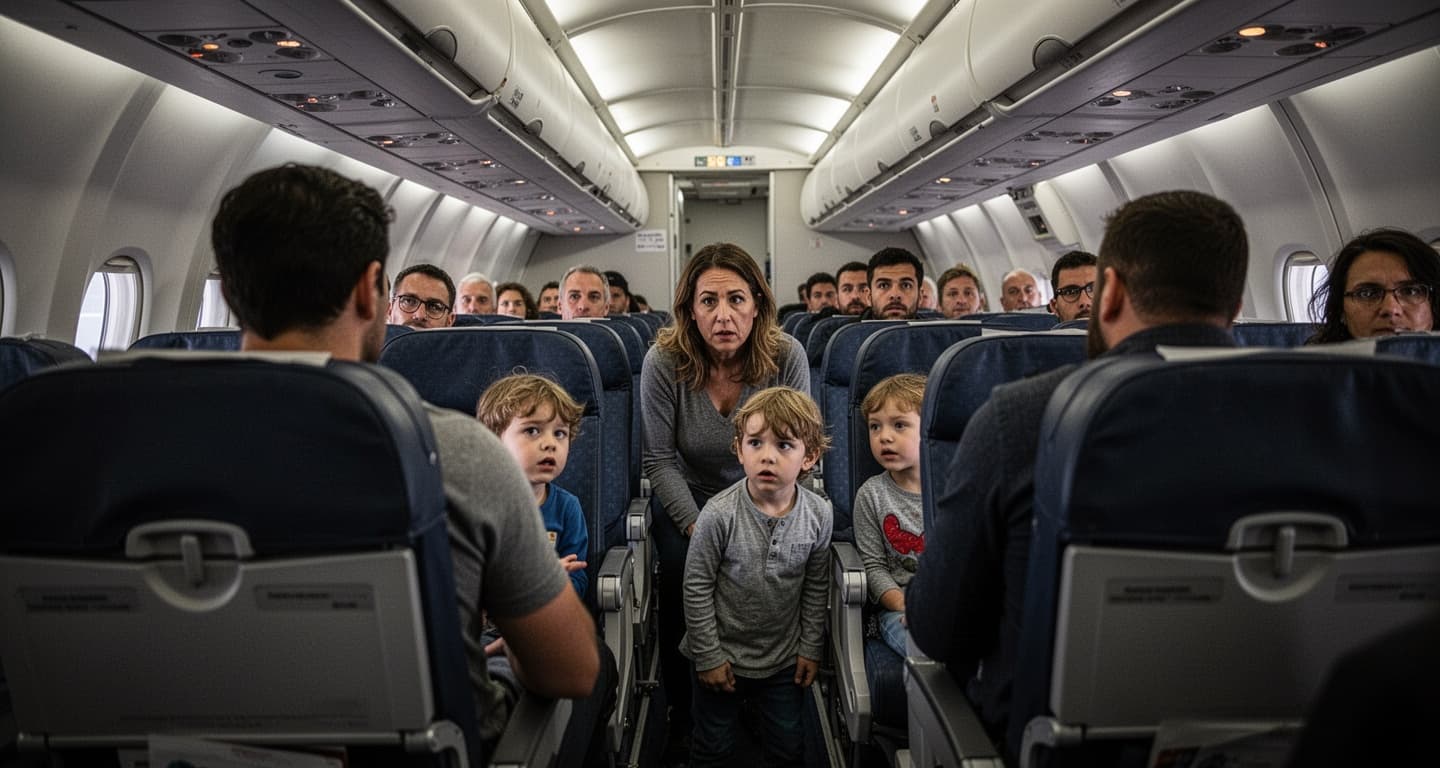
The first two hours of American Airlines flight 1798 were unremarkable. Then, at roughly 10 p.m., a passenger in the first-class cabin began yelling about religion, hell, and damnation. Within minutes, the situation escalated into a physical assault that would force the flight to divert and leave blood in the cabin.
The 67-year-old passenger, who appeared intoxicated according to multiple witness accounts, directed a racial slur at a Black flight attendant and made homophobic remarks. He then struck a nearby passenger and grabbed another by the throat. When a woman seated behind him struck him in response, he hit her back.
Two passengers — a 53-year-old New Jersey gun shop owner and his employee, a retired police officer returning from a Reno gun expo — intervened. Using zip ties provided by a flight attendant and duct tape from their own luggage, they secured the man to his seat for the remainder of the flight. The restrained passenger bit the retired officer and attempted to bite the gun shop owner during the struggle. At one point, he looked directly at one of his restrainers and warned that the plane was going to crash.
The incident, which unfolded on the Dallas-Fort Worth to Newark corridor, forced an unscheduled landing at Baltimore/Washington International Thurgood Marshall Airport. Maryland Transportation Authority Police and federal agents boarded the aircraft, handcuffed the passenger, and removed him in a wheelchair. The man had injured his arm during the altercation, leaving blood that required two cleaning visits and further delaying the flight.
What happened on the ground
The passenger now faces Maryland charges of disorderly conduct and second-degree assault. The FBI is considering whether to add federal charges under statutes governing interference with flight crew and attendants. The FAA’s zero-tolerance policy for unruly passenger behavior, established in 2021, provides the enforcement framework — and the agency has already initiated 72 enforcement actions through August 2026 out of 1,163 unruly passenger reports.
Long Realty, the Tucson-based firm where the passenger worked as a real estate agent, moved swiftly. CEO Kevin Kaplan confirmed the company ended its affiliation with the individual immediately upon learning of the allegations. “The conduct described in the reports is wholly inconsistent with the professionalism, integrity, compassion, and respect for others that Long Realty expects from those affiliated with the company,” Kaplan said.
| Time/Phase | Event | Impact | Status |
|---|---|---|---|
| ~8:00 p.m. CDT | Flight departs Dallas-Fort Worth | Routine first two hours | Completed |
| ~10:00 p.m. CDT | Passenger begins verbal tirade, uses slurs | Crew alerted, cabin on edge | Escalation trigger |
| ~10:15 p.m. CDT | Physical assaults begin — striking, throat grab | Two passengers intervene, zip ties deployed | Restraint in progress |
| ~10:30 p.m. CDT | Duct tape applied to torso and head; passenger bites interveners | Flight diverted to BWI | Diversion declared |
| ~11:30 p.m. EDT | Landing at BWI; police board, handcuff passenger | Passenger removed in wheelchair; cabin blood cleanup | Custody transfer |
| Post-incident | Maryland charges filed; FBI review; employer termination | Legal and professional consequences unfolding | Ongoing |

Flight deals most people never see
Our AI monitors 150+ airlines for pricing anomalies that traditional search engines miss. Air Traveler Club members save $650 per trip per person on average: see how it works.
Each deal saves 40–80% vs. regular fares:

When premium cabins become pressure cookers
The first-class setting adds a layer of expectation that makes these incidents particularly jarring. Premium cabins promise control, service, and separation — but they offer no insulation from the behavioral volatility that can erupt on any commercial flight. The confined space of a domestic first-class cabin, where passengers sit closer to crew and each other, can actually accelerate confrontation when tensions rise.
This case also highlights the legal gray zone for passengers who intervene. The two men who restrained the passenger used improvised tools — zip ties from the crew, duct tape from personal luggage — and made judgment calls about safety, including declining to tape the man’s mouth over breathing concerns. Air Traveler Club’s analysis of airline liability protocols shows why carriers train employees to avoid physical engagement — touching a passenger can trigger assault claims or injury liability. For civilians, those risks are even less defined.
What this means for in-flight safety expectations
The FAA’s enforcement data shows unruly passenger incidents remain a persistent operational reality, not a pandemic-era anomaly. For travelers, the practical takeaway is that the booking itself — even in first class — provides no shield against immediate removal or later sanctions. American Airlines’ conduct rules apply across the entire ticketed journey, and the carrier can impose travel bans independently of any criminal process.
- Intervention carries legal exposure. Passengers who physically restrain others act without the liability protections that shield crew members. The decision to use zip ties and duct tape, while effective here, could face scrutiny in different circumstances.
- Crew protocols prioritize de-escalation. Flight attendants are trained to manage disruptions without physical engagement where possible. The provision of zip ties in this case suggests the crew assessed the situation as beyond verbal de-escalation.
- Employment consequences can be immediate. Long Realty terminated the passenger within days, demonstrating that onboard conduct now carries professional risk independent of legal outcomes.
- Federal charges would raise the stakes. If the FBI proceeds, penalties can include substantial fines and prison time under statutes governing interference with flight crew.
FAQ
Can passengers legally restrain an unruly traveler on a flight?
Passengers who intervene physically operate in a legal gray zone. While crew members have specific liability protections under federal aviation regulations, civilians do not. The FAA encourages reporting disruptive behavior to crew rather than direct intervention. However, courts have generally recognized that reasonable force used to prevent imminent harm may be defensible. The specific circumstances — including proportionality of the restraint and whether crew requested assistance — would factor into any legal assessment.
What penalties does the passenger face?
The passenger currently faces Maryland state charges of disorderly conduct and second-degree assault. If the FBI files federal charges, potential penalties include fines up to $35,000 and imprisonment under statutes governing interference with flight crew and attendants. American Airlines may also impose its own travel ban, independent of criminal proceedings.
How common are passenger-assisted restraints on US flights?
While precise data on passenger-assisted restraints is not systematically tracked, FAA data shows 1,163 unruly passenger reports through August 2026, with 89 investigations initiated. Physical intervention by fellow passengers occurs in a small fraction of these cases, typically when crew resources are insufficient and the threat level requires immediate containment.
Read more