Summary
American Airlines has slashed its 2026 delivery forecast to just 48 new aircraft, down from an initial plan of 55, as Boeing 787-9 shipments slip entirely into 2027 or later. The carrier will not receive a single Dreamliner this year, delaying the rollout of its new Flagship Suite premium seats on key long-haul routes.
The delivery drought coincides with a strategic push to raise narrowbody premium seating from 25% to 40% of capacity. For travelers, the immediate impact is a slower-than-expected expansion of the newest business-class cabins, even as American adds more premium inventory on existing aircraft.
American Airlines’ aggressive push to dominate premium transatlantic and transcontinental markets is hitting a familiar industry wall: a supply chain that cannot keep up. The Fort Worth-based carrier now expects 48 new aircraft in 2026, a figure that has eroded from 55 at the start of the year to 49 in April, and down again in its latest fleet update. The culprit is a complete absence of Boeing 787-9 deliveries, every one of which has been pushed out of this year.
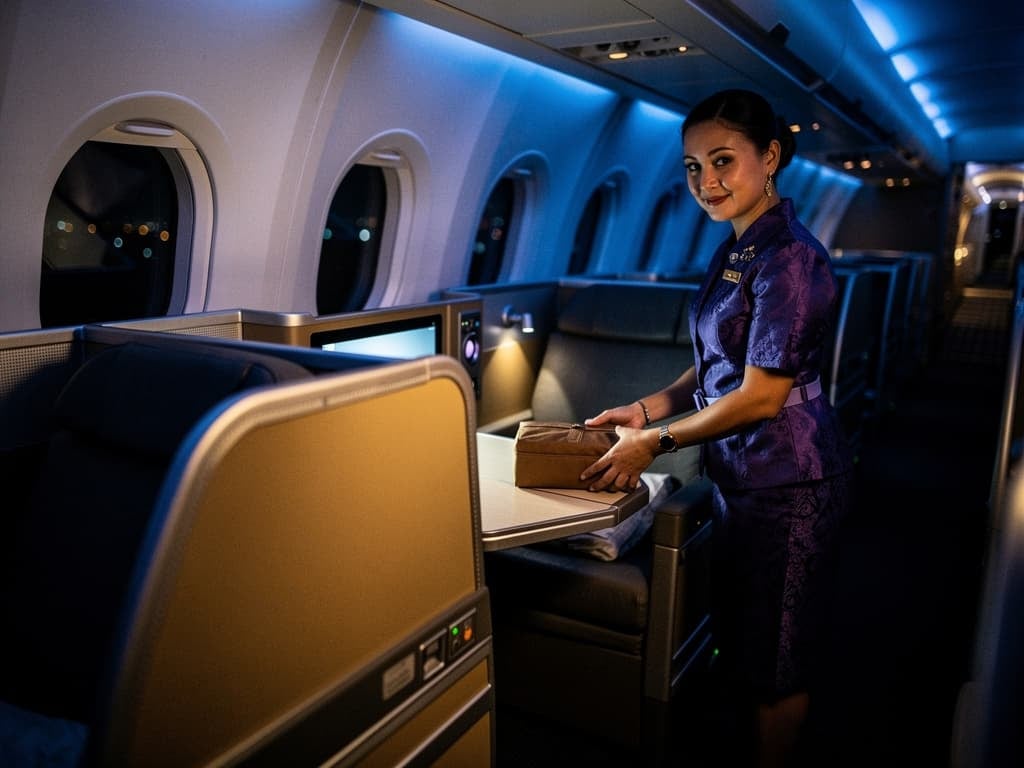
This means the airline’s newest long-haul business-class product, the Flagship Suite seat, will appear more slowly than planned. American has staked its premium revival on deploying these suites across incoming 787-9s and Airbus A321XLRs, while retrofitting older 777s. With zero widebodies arriving in 2026, the flagship experience remains concentrated on the A321XLR fleet and a limited number of upgraded 777-300ERs.
The remaining 2026 intake tells the story of a narrowbody-focused year. American has taken roughly 22 aircraft so far — a mix of 737 MAX 8s, A321neos, and A321XLRs — and expects 15 more A320-family jets and 11 Embraer E175s before year-end. The 19 Dreamliners on order have been reshuffled: one moved from 2026 to 2027, two pulled forward from 2028. The total remains unchanged, but the timeline does not.
For premium flyers on routes like Dallas/Fort Worth to London or Miami to São Paulo, the practical consequence is uncertainty. Aircraft assignments will remain fluid, with older 777-200ERs — the very planes American is looking to replace — continuing to shoulder much of the long-haul workload through at least 2027.
The delivery numbers behind the delay
American’s order book stands at 280 aircraft: 102 A321neos, 44 A321XLRs, 115 Boeing 737 MAX 10s, and 19 787-9s, with options for 28 additional Dreamliners. But the delivery cadence tells a story of near-term constraint and a backloaded future. The airline now expects no 787s in 2026, six in 2027, three in 2028, and 10 in 2029. Boeing’s production has been hampered by GE Aerospace GEnx engine delays and premium-seat supply chain bottlenecks, keeping output below the target of ten aircraft per month.
In a parallel move, American exercised six additional A320-family options in July, but simultaneously pushed roughly 12 aircraft out of 2028 and added about 16 into 2029 and beyond. The reshuffling cut 2028 aircraft and engine commitments by $873 million while adding $953 million in 2029, bringing total remaining commitments to $24.324 billion. The financial engineering buys time, but it also means older, less fuel-efficient aircraft will stay in the fleet longer as fuel costs climb — American’s Q1 2026 fuel bill hit $2.9 billion, up 13.2% year-over-year.
| Aircraft Family | Remainder of 2026 | 2027 | 2028 | 2029 |
|---|---|---|---|---|
| Airbus A320 family | 15 | 25 | 36 | 91 |
| Boeing 787 Dreamliner | — | 6 | 3 | 10 |
| Boeing 737 family | — | — | — | 115 |
| Embraer E175 | 11 | 14 | 17 | 30 |
The 737 MAX 10 — the largest single block in American’s order book at 115 aircraft — remains uncertified. Boeing reports certification flight testing is 98% complete, with an enhanced angle-of-attack system now in testing. However, all MAX 10 deliveries sit in the 2029-and-beyond bucket, and even if the FAA grants approval soon, Boeing’s production ramp will determine when American actually receives its first jet.

Flight deals most people never see
Our AI monitors 150+ airlines for pricing anomalies that traditional search engines miss. Air Traveler Club members save $650 per trip per person on average: see how it works.
Each deal saves 40–80% vs. regular fares:

The competitive calculus American cannot ignore
American’s delivery delays arrive at a moment when United Airlines is flooding the market with premium capacity. United plans to add 68 Airbus A321neo and A321XLR aircraft by April 2028, doubling premium lie-flat seats compared to the Boeing 757s they replace. Air Traveler Club’s analysis of United’s A321neo strategy shows how the carrier has already increased premium seats per North American departure by 40% since 2021, positioning itself to capture high-margin demand.
American’s response is the 40% narrowbody premium seating target and the eventual MAX 10 influx. But timing matters. United’s Polaris-equipped A321XLRs will debut on transatlantic routes before American’s own XLR fleet reaches critical mass. And while American waits for MAX 10 certification, United is absorbing A321neos at pace.
The upcoming 777-200ER replacement decision — American issued an RFP to Boeing and Airbus in June — will define the next decade of long-haul competition. Whether American selects additional 787s or pivots to the Airbus A350, the resulting order will determine how quickly it can retire its aging 777s and standardize a modern premium cabin across the widebody fleet.
How to navigate American’s fragmented premium product
For travelers booking premium cabins on American in 2026 and 2027, the delivery delays create a practical challenge: the airline’s best product is distributed unevenly across aircraft types, and seat-map research before purchase is essential.
- Target the A321XLR for the newest premium experience right now. These aircraft carry Flagship Suite seats and are increasingly deployed on transatlantic routes from New York and Philadelphia. Check aircraft type during booking — the XLR’s seat map shows a 1-1 layout in first class.
- Watch for upgraded 777-300ERs re-entering service. American’s first retrofitted 777-300ER returned to Dallas/Fort Worth in August 2026 after cabin upgrades. As more 777s cycle through modification, premium availability on key long-haul routes will improve before any new 787s arrive.
- Starlink connectivity arrives in 2027. American plans to equip more than 500 narrowbody aircraft with SpaceX Starlink Wi-Fi starting next year. Combined with the 4K seatback screen rollout beginning in 2028 across 800-plus aircraft, the onboard workability gap with United — which deploys Starlink fleet-wide by mid-2026 — will narrow over time.
Read more