Summary
AirAsia co-founder Tony Fernandes confirmed on May 7, 2026, that he is preparing to launch a new airline, with a formal announcement expected within the next one to two months. Speaking from Montreal following AirAsia‘s landmark order for 150 Airbus A220 aircraft, Fernandes said aircraft are already being reallocated for the new venture — with Vietnam and Bahrain-based Gulf operations cited as potential markets. To fund the expansion, AirAsia is raising up to US$600 million in bonds and negotiating a major refinancing with Malaysian banks.
No business model has been officially confirmed, though the new carrier is expected to follow AirAsia‘s established low-cost framework. The announcement timeline points to a June or July 2026 reveal.
Tony Fernandes has never been accused of playing it safe — and his latest move confirms that reputation. The AirAsia co-founder announced he is launching yet another airline, even as jet fuel prices batter the industry and AirAsia‘s own shares have fallen roughly 35% since the Iran conflict began.
The announcement came from Montreal, where Fernandes had just overseen what Canadian Prime Minister Mark Carney described as the largest purchase of Canadian-made commercial aircraft in history: a 150-aircraft Airbus A220 order valued at over $14 billion USD at list price. That deal, designed to extend AirAsia‘s reach into thinner secondary routes across Asia, now appears to be the foundation for something larger.
Fernandes offered few specifics on the new carrier beyond confirming that planes are already being moved. Industry sources point to Vietnam and Bahrain as the most likely launch markets — the former representing intensifying Southeast Asian competition, the latter a potential foothold in Gulf intra-regional flying.
The scope of what’s being built is significant. AirAsia already operates through affiliates in Malaysia, Thailand, and Indonesia, with a fleet of approximately 250 single-aisle aircraft and a backlog that will grow to around 550 jets following the A220 commitment. A new carrier would extend that network further, not consolidate it.
The details: funding, fuel, and a familiar playbook
Fernandes’s expansion logic is deliberately contrarian. “Why waste a crisis? There are opportunities in a crisis,” he said in the Montreal interview. The statement reflects a pattern that has defined his career — AirAsia launched AirAsia X for long-haul low-cost flying in 2007 during a fuel spike, and entered India in 2012 amid post-financial-crisis turbulence. Both ventures expanded network reach despite the headwinds they launched into.
Funding the new venture is a parallel challenge. AirAsia is preparing to sell up to US$600 million in bonds and is in active talks with Malaysian banks for a refinancing facility designed to reduce interest costs. Fernandes also plans to meet with Canadian pension funds to attract institutional capital — a signal that the new airline is being structured as a standalone investment proposition, not simply an internal reallocation.
The fuel hedging question hangs over all of it. AirAsia does not hedge fuel costs — a position that has cost the company dearly as oil prices surged. Fernandes remains unrepentant, arguing that over longer cycles, hedging underperforms spot purchasing. Regulatory filings and market data confirm the near-term pain: the company has acknowledged it will likely miss its initial profit target for the year, though revenue is expected to track close to forecast. The full details of the revised guidance are expected to be disclosed shortly.
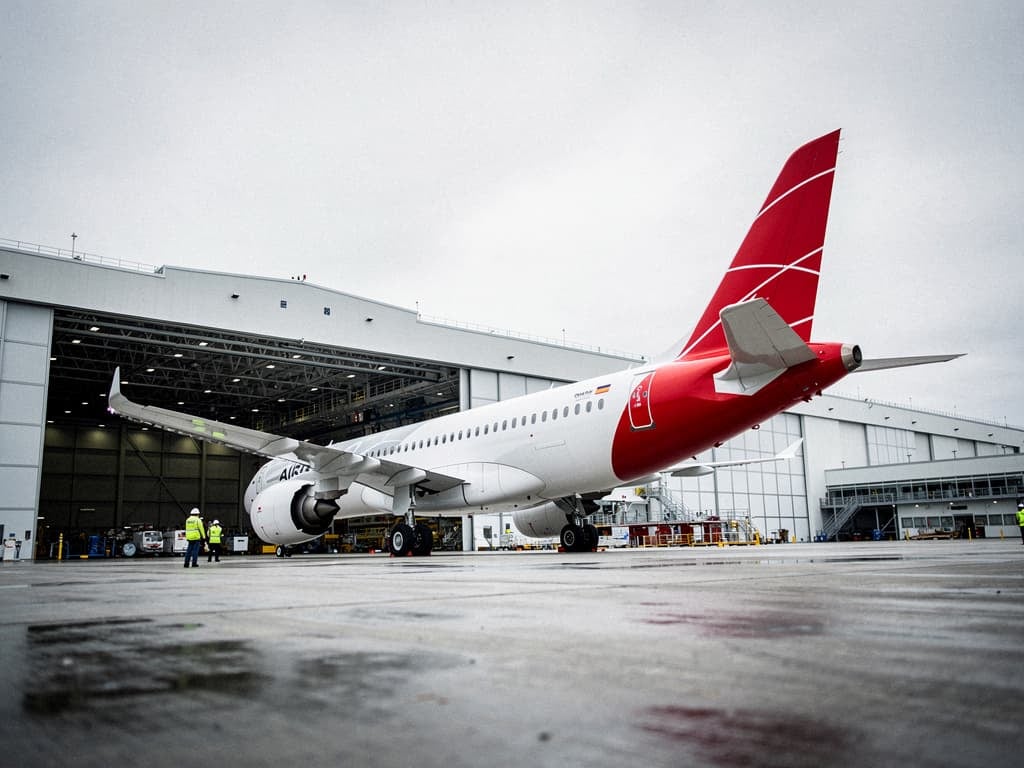
The 150 A220s on order — with first deliveries no earlier than Q4 2027 — give the new carrier a natural aircraft type. The A220’s economics favor thinner routes and secondary airports, which aligns with the Vietnam and Gulf market signals. Fernandes confirmed aircraft are already being repositioned, suggesting the new entity could begin operations before the full A220 delivery stream begins. Reporting confirms the announcement is expected within one to two months.
| Date | Event | Market | Status |
|---|---|---|---|
| 2007 | AirAsia X launched for long-haul low-cost | Southeast Asia / Australia | Operating; restructured post-COVID |
| 2012 | AirAsia India joint venture announced | India domestic | Divested 2023 |
| May 6, 2026 | 150-aircraft Airbus A220 order signed in Montreal | Asia-wide secondary routes | Confirmed; deliveries from Q4 2027 |
| May 7, 2026 | Fernandes confirms new airline in development | Vietnam / Bahrain (unconfirmed) | Announcement expected June–July 2026 |
| Mid-2026 | Bond issuance up to US$600M + bank refinancing | Capital markets | In preparation |
| Q4 2027 | First A220 deliveries begin | TBD per new carrier routes | Scheduled |

Flight deals most people never see
Our AI monitors 150+ airlines for pricing anomalies that traditional search engines miss. Air Traveler Club members save $650 per trip per person on average: see how it works.
Each deal saves 40–80% vs. regular fares:

What the new carrier means for APAC aviation’s competitive map
The strategic significance here extends beyond one more AirAsia affiliate. A Vietnam-focused launch would place the new carrier in direct competition with VietJet Air and Bamboo Airways on domestic routes, while also challenging Vietnam Airlines‘ economy feeders into its Hanoi and Ho Chi Minh City hubs. A Gulf launch from Bahrain would target intra-regional flying currently dominated by Gulf Air and economy feeders for Emirates and Qatar Airways — without touching the premium cabin products those carriers rely on for yield.
The A220 is the key variable. Unlike the A320 family that forms AirAsia‘s backbone, the A220 opens airports with shorter runways and lower passenger volumes — exactly the secondary markets where legacy carriers don’t compete aggressively and where a lean LCC can build network density quickly.
Air Traveler Club’s analysis of the jet fuel crisis and its impact on AirAsia’s network provides essential context for understanding how Fernandes is framing this expansion — as a structural opportunity created by competitors’ fuel-driven retrenchment, not a bet against oil prices recovering.
The competitive pressure on full-service carriers is indirect but real. Economy capacity flooding into Vietnam or Gulf secondary markets compresses base fares, which in turn raises the premium-to-economy fare ratio — historically a trigger for business travelers to reconsider whether the premium is justified on shorter intra-Asia segments.
What the announcement timeline means for the APAC market
This is a developing story with no immediate action required — the new airline has no name, no confirmed routes, and no booking platform. The June–July 2026 announcement window is the first meaningful checkpoint.
If the reveal confirms Vietnam as the primary market with A220 operations, expect VietJet and Bamboo Airways to respond with capacity adjustments within weeks — and Vietnam Airlines to face renewed pressure on its economy pricing on domestic trunk routes. A Bahrain-based Gulf launch would be a slower-burn competitive development, with regulatory approvals and slot negotiations likely pushing meaningful operations into 2027.
The funding picture is the near-term watch item. AirAsia‘s US$600 million bond issuance and the Malaysian bank refinancing are prerequisites for the expansion proceeding at the pace Fernandes has outlined. Any delay in capital markets execution — particularly if oil prices remain elevated through Q3 2026 — could push the launch timeline beyond the initial one-to-two-month window. Watch for the bond prospectus filing and the revised profit guidance announcement, both expected in the coming weeks, as the clearest indicators of whether this timeline holds.
FAQ
What markets is the new AirAsia airline expected to serve?
Vietnam and Bahrain have been identified as the most likely launch markets, based on industry sources familiar with the expansion discussions. Vietnam would represent intensified Southeast Asian LCC competition, while Bahrain would position the carrier for Gulf intra-regional flying. No routes have been officially confirmed as of May 7, 2026.
What aircraft will the new airline use?
Fernandes confirmed that aircraft are already being reallocated for the new venture but did not specify the type. The most likely candidate is the Airbus A220, given AirAsia‘s 150-aircraft order signed in Montreal on May 6, 2026. First A220 deliveries are not expected before Q4 2027, so initial operations may use existing single-aisle aircraft from the current fleet.
Will the new airline have a premium cabin or business class product?
No premium cabin has been announced or indicated. Fernandes provided no product details, and the expansion follows AirAsia‘s established low-cost model. AirAsia X offers a “Premium Flatbed” product on long-haul routes, but the new carrier’s focus on thinner secondary routes makes a premium cabin unlikely at launch.
How is AirAsia funding the new airline amid high fuel costs?
AirAsia is preparing to raise up to US$600 million through a bond issuance and is in active negotiations with Malaysian banks for a refinancing facility. Fernandes also plans to engage Canadian pension funds as potential investors. The company has acknowledged it will likely miss its initial profit target for 2026, though full-year revenue is expected to remain broadly on track.
Read more