Summary
SWISS International Air Lines is splitting transatlantic premium economy into two distinct architectures with its new fixed-shell seat on the Airbus A350-900, guaranteeing that no reclining neighbor will ever invade a passenger’s workspace — but at a steep ergonomic cost for anyone over six feet tall.
The hard-shell design, now flying Zurich–Boston, locks the distance between seat backs, but forces recline to happen by sliding the seat pan forward, directly eating into knee room. For tall travelers, the choice between this and Emirates’ cradle-style recliner with an electric privacy screen will define comfort on eight-hour sectors.
SWISS has drawn a clear line in the premium economy sand with its new A350 cabin, which entered service on the Zurich–Boston route and introduces a fixed-back shell that redefines personal space at the expense of legroom. The seat’s rigid composite structure prevents the passenger ahead from reclining into your lap, but the mechanism that achieves this — sliding the seat pan forward and downward — squeezes forward knee clearance, a trade-off that competing carriers like Emirates and Air India have explicitly rejected.
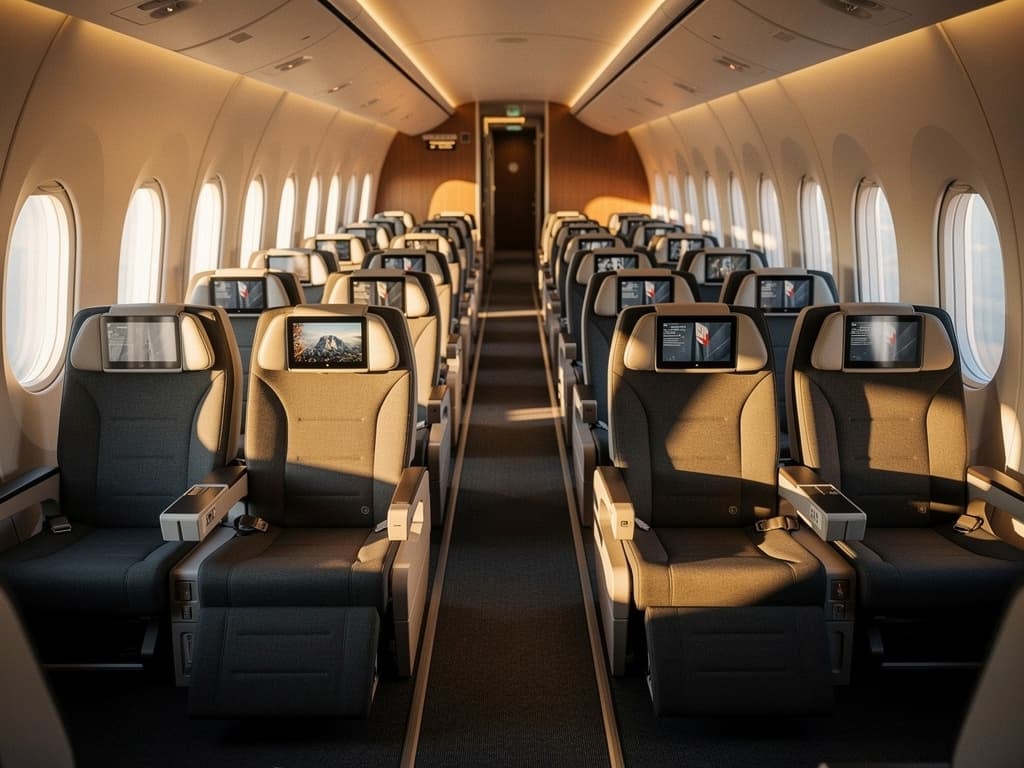
The 38-seat premium economy cabin, configured 2-3-2 across six rows, offers 39 inches (99 cm) of pitch, a 15.6-inch 4K OLED screen, wireless charging, and Bluetooth audio pairing. The product will expand to Shanghai and Johannesburg in late 2026 and 2027, testing whether corporate travelers accept the legroom compromise for undisturbed workspace. For the first time on a major European network carrier, the fixed-shell concept is being deployed on premium-heavy transatlantic sectors where business travelers often use the cabin as a mobile office.
The hard-shell gamble and its rivals
The SWISS Senses premium economy seat, supplied by ZIM, uses a rigid composite shell that keeps the distance between seat backs constant regardless of recline. In a conventional cradle recliner, the passenger ahead can tilt backward by up to 8 inches (20 cm), instantly shrinking the usable space behind. SWISS eliminates that intrusion entirely — but the recline motion must happen inward. The seat pan slides forward and drops down, directly reducing forward knee clearance and pushing taller passengers’ knees against the hard seatback structure.
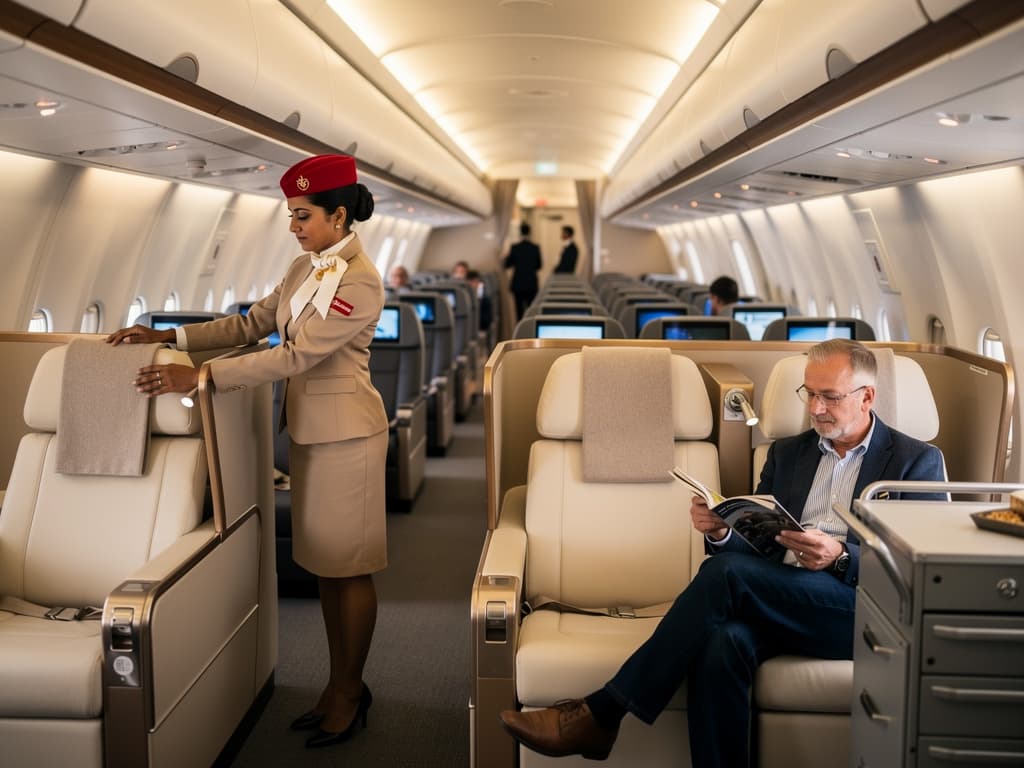
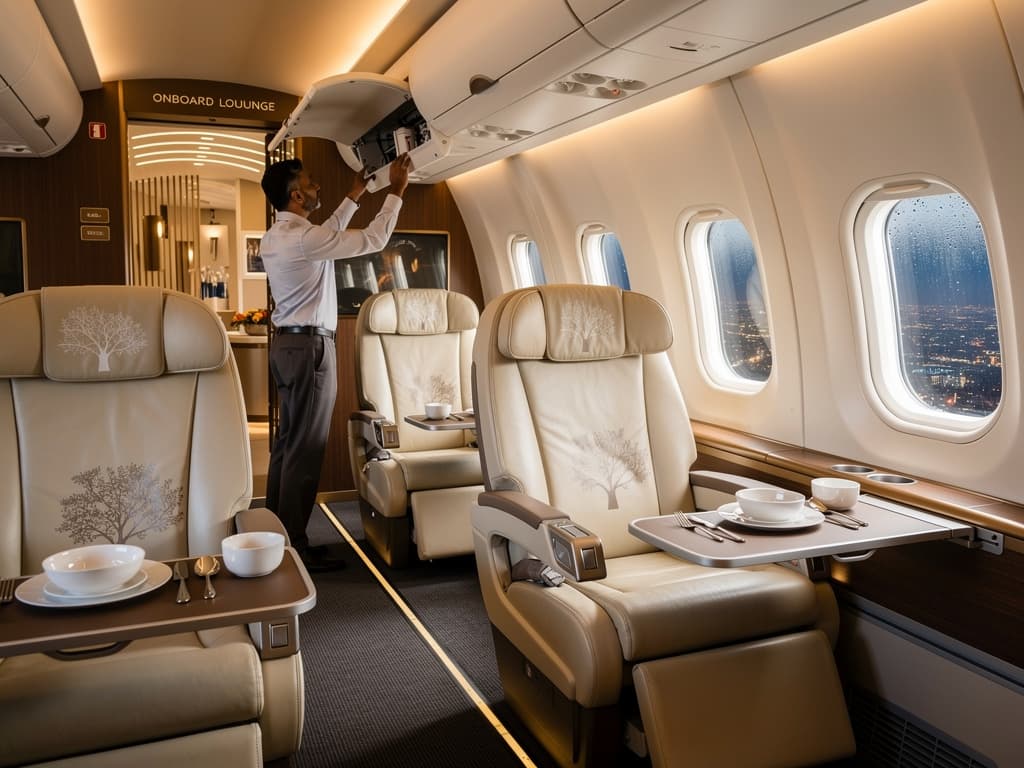
This design philosophy stands in stark contrast to the Recaro PL3530 platform chosen by Emirates and Air India. Those carriers prioritize leg extension and deep recline, accepting that the row behind will lose personal space. Emirates’ A380 premium economy offers 40 inches (102 cm) of pitch and 8 inches (20 cm) of recline, while Air India’s version provides a 7-inch (18 cm) recline with a three-position calf rest. Both preserve forward knee clearance by pivoting the seat bucket backward rather than sliding the occupant forward.
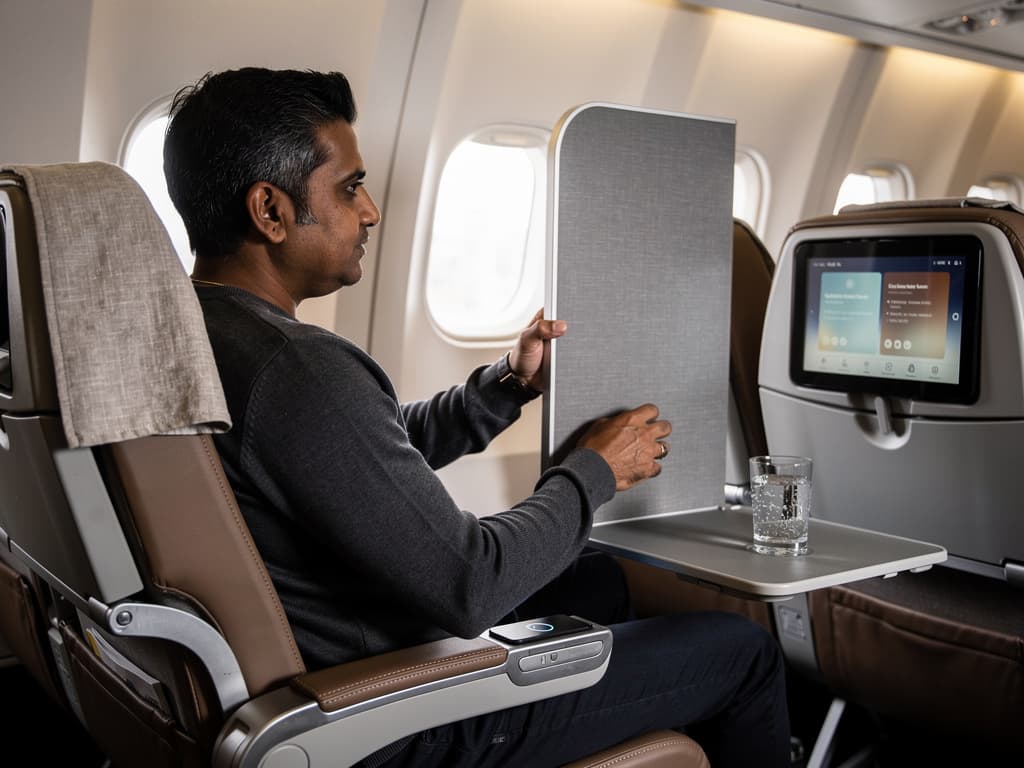
Emirates has further raised the stakes on its A350 with an electrically powered full-height privacy screen between passengers, wireless charging, and a 13.3-inch 4K HDR screen — adding a layer of personal boundary control without sacrificing the cradle recline that tall flyers value.
SWISS’s fixed shell, by contrast, offers absolute head and shoulder privacy via built-in headrest wings, but the manual armrest controls require noticeable effort and the sliding recline restricts lower-body movement. Lufthansa Group’s cabin factsheet confirms the 15.6-inch 4K OLED display, Bluetooth, and wireless charging — making the seat tech-forward, yet the physical trade-off remains the defining booking variable.
| Airline & Aircraft | Seat Type | Pitch | Width | Recline | Key Feature |
|---|---|---|---|---|---|
| SWISS A350-900 | Fixed shell | 39 in (99 cm) | 19 in (48 cm) | Sliding pan (forward knee reduction) | Zero back-row encroachment, 15.6-in 4K OLED |
| Emirates A380 | Cradle recliner (Recaro PL3530) | 40 in (102 cm) | 19.5 in (50 cm) | 8 in (20 cm) | Deep recline, articulating footrest |
| Emirates A350 | Cradle recliner with electric privacy screen | Up to 39 in | 20 in (51 cm) | Cradle-style | Full-height powered privacy divider, 13.3-in 4K HDR |
| Air India widebodies | Cradle recliner (Recaro PL3530) | 38 in (97 cm) | Standard widebody | 7 in (18 cm) | Three-position calf rest, leg support |

Flight deals most people never see
Our AI monitors 150+ airlines for pricing anomalies that traditional search engines miss. Air Traveler Club members save $650 per trip per person on average: see how it works.
Each deal saves 40–80% vs. regular fares:

Why the shell choice matters for booking
The SWISS fixed shell is not a universal upgrade — it is a deliberate bet on workspace protection over physical stretch. On an eight-hour daylight sector like Zurich–Boston, a corporate traveler working on a laptop may prize the guarantee that no reclining seat will crush their screen. But on the overnight return, a six-foot passenger will feel the knee pinch as the seat pan slides forward. That split makes the product highly route- and passenger-dependent, and it explains why Emirates and Air India have stayed with cradle recliners that favor body extension.
The 38-seat premium economy cabin is small and will sell unevenly. The official Airbus A350-900 seatmap shows it alongside 3 First, 45 Business, and 156 Economy seats — so travelers who want the new cabin must specifically target the A350-900 rather than older SWISS widebodies. As the product expands to Shanghai and Johannesburg, booking patterns will reveal whether corporate loyalty holds or whether tall flyers migrate to competitors.
How to choose between privacy and legroom
For anyone booking transatlantic premium economy in the coming months, the seat architecture now directly dictates comfort. The decision hinges on height, flight purpose, and tolerance for neighbor intrusion.
- Check your height against the shell. If you are over six feet tall, the SWISS fixed-shell recline will reduce forward knee room significantly. On overnight flights, Emirates’ A380 or A350 cradle recliner — with 40 inches of pitch and deep recline — will likely feel more spacious.
- Prioritize the A350-900 when booking SWISS. The new cabin is only on this aircraft type. Use the seatmap to confirm the 38-seat premium economy layout before purchase; older widebodies lack the SWISS Senses product entirely.
- Book early for Zurich–Boston. The 38-seat premium cabin is limited, and corporate demand on this route is high. Award space and paid inventory will tighten as the product gains visibility.
- Match the seat to the flight purpose. On daylight sectors where you plan to work, the fixed shell’s undisturbed workspace is a genuine advantage. On overnight flights where sleep matters, the cradle recliner’s leg extension may be the better call.
Watch for early customer reviews from Zurich–Boston — if knee pressure complaints dominate, SWISS may adjust cushion thickness or recline articulation on future deliveries. The Shanghai and Johannesburg launches will also test whether the shell design holds up on ultra-long-haul sectors with different passenger profiles.
FAQ
Is the SWISS fixed-shell seat uncomfortable for all passengers?
No. Passengers under six feet tall may find the seat perfectly comfortable, especially when working upright. The fixed shell guarantees that the person ahead cannot recline into their space, which is a major benefit for laptop use. Discomfort primarily affects taller travelers when the seat pan slides forward during recline, reducing knee clearance.
Will other Lufthansa Group airlines adopt this seat?
It is too early to say. If corporate satisfaction remains high on SWISS’s Zurich–Boston route and the upcoming Shanghai and Johannesburg services, the fixed-shell concept could influence future widebody orders across Lufthansa Group carriers. However, if tall flyers migrate to competitors, the group may stick with conventional cradle recliners.
Read more