Summary
Korean Air’s Prestige Class on the Boeing 737 MAX 8 between Seoul Incheon and Tokyo Narita ditches lie‑flat seats and seatback screens. Yet the service, full‑size Frette bedding, and long‑haul‑quality meals render the hardware shortcomings irrelevant on a 1‑hour‑48‑minute hop. Only 8 seats exist in the cabin — every one a recliner, none with a privacy divider.
The miniscule premium inventory means award and upgrade space is vanishingly thin. SkyTeam flyers connecting through Seoul should target advance seat selection, ideally at booking, or accept that the soft product will upstage any spec‑sheet deficit.
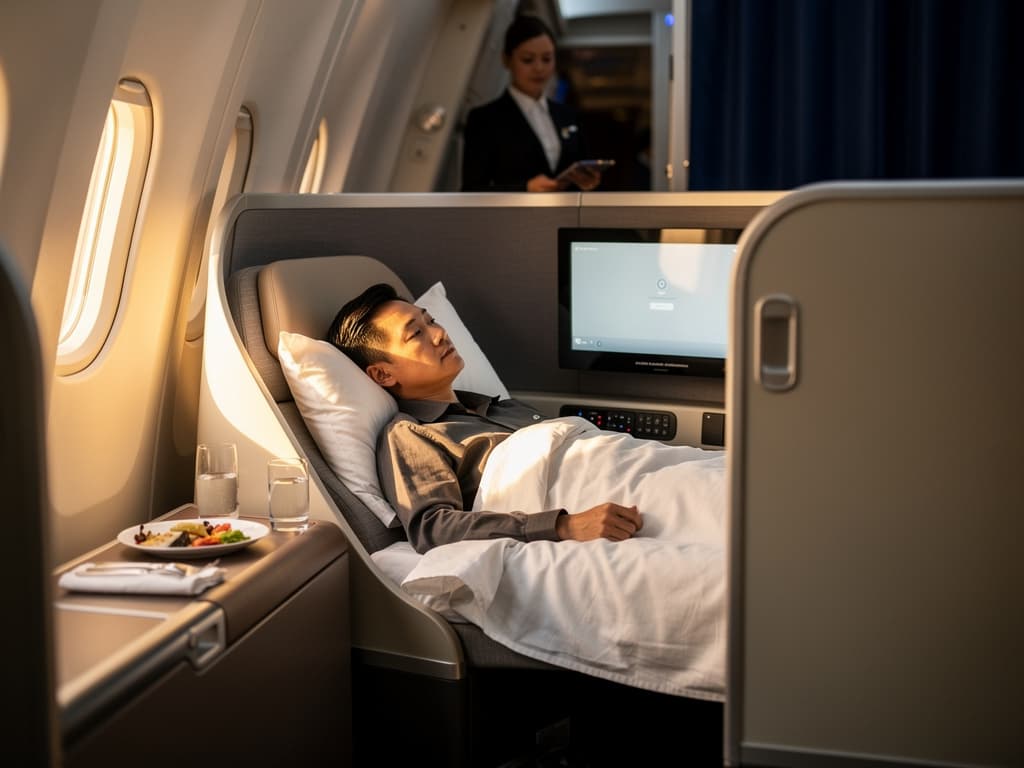
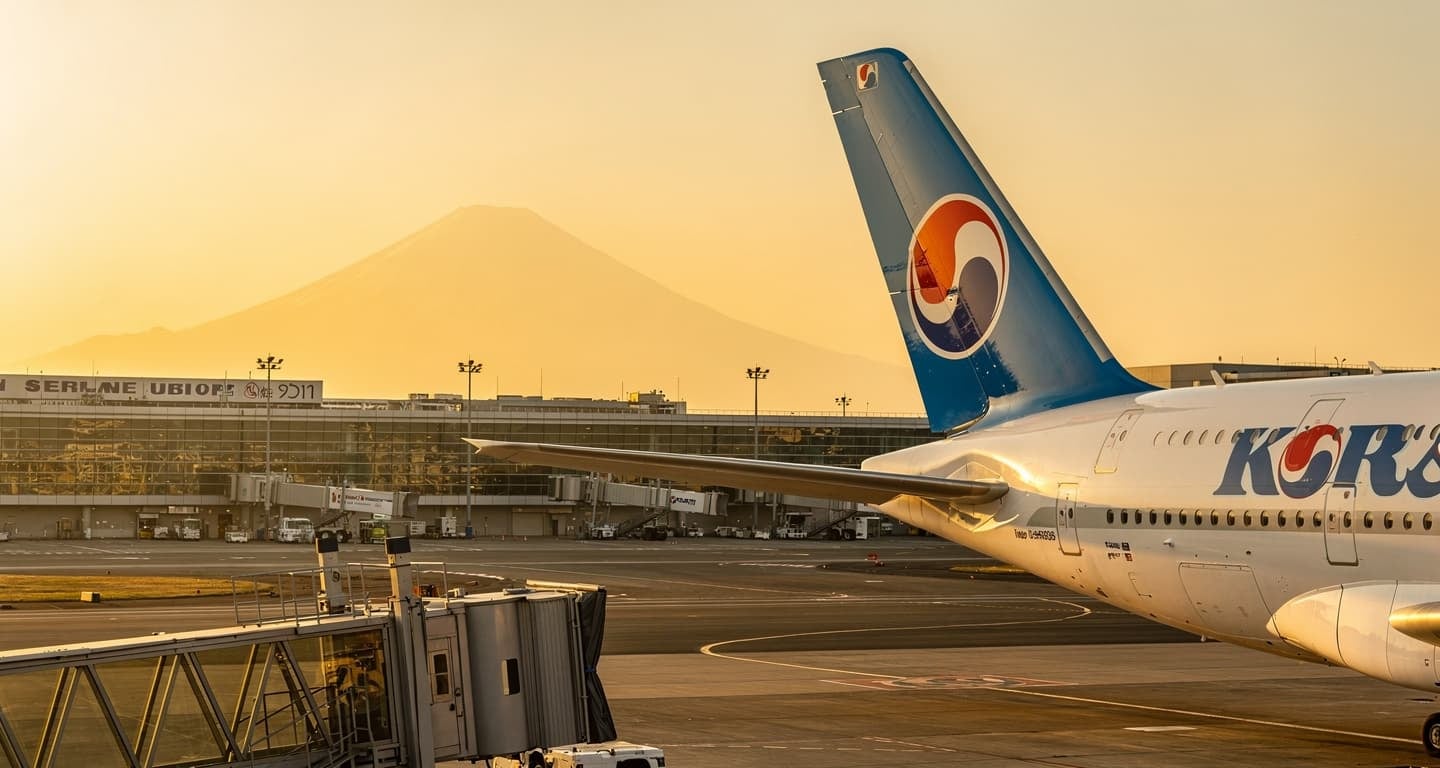
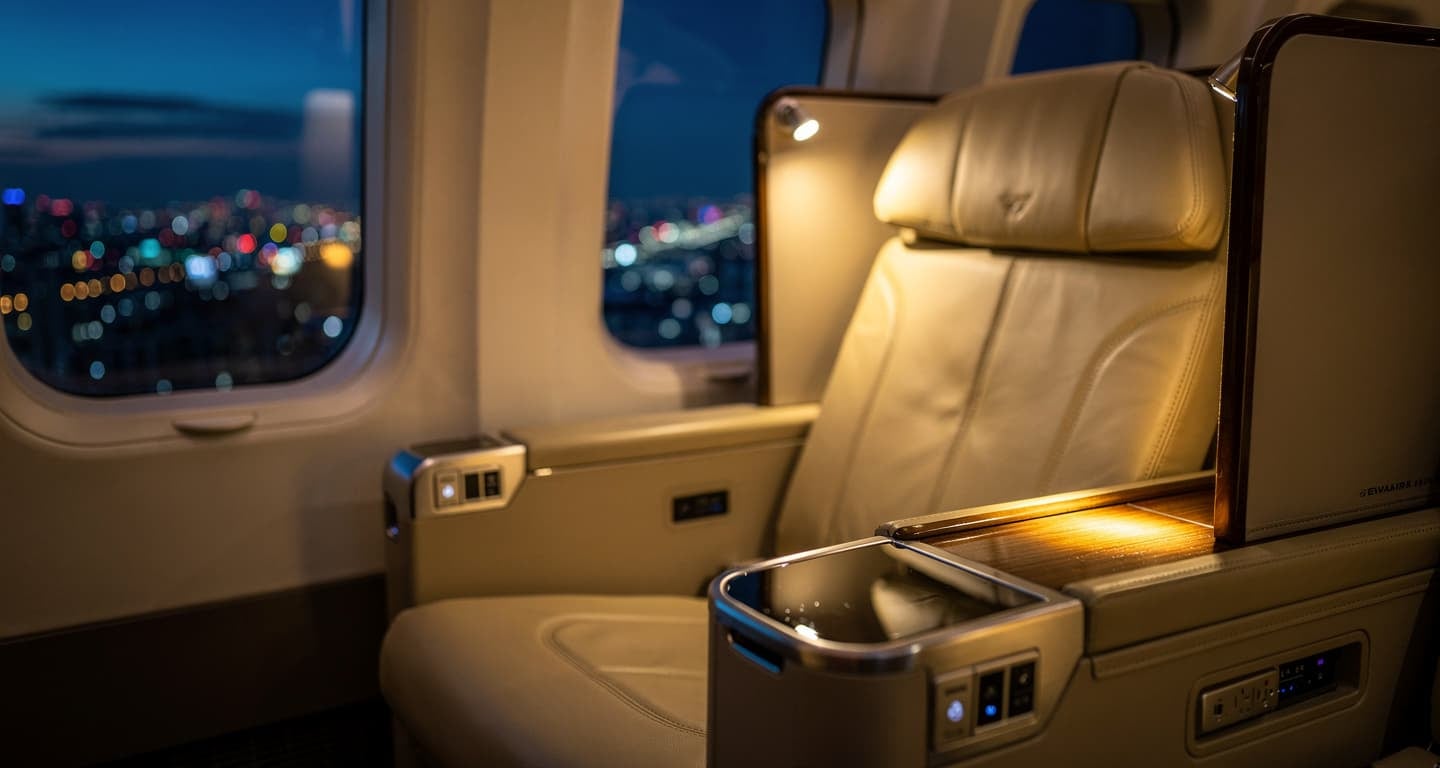
A narrowbody business class with no lie‑flat beds and no seatback television should, by all conventional measures, disappoint. Yet on Korean Air flight KE713 — a Boeing 737 MAX 8 registered HL8349 departing Seoul Incheon for Tokyo Narita on June 7, 2026 — the reality was exactly the opposite. The Prestige Class cabin contains just eight recliner seats in a 2‑2 configuration, and not a single screen interrupts the seatback. Still, the crew, the catering, and the Italian‑made Frette blankets and pillows create an experience that feels decidedly long‑haul premium.
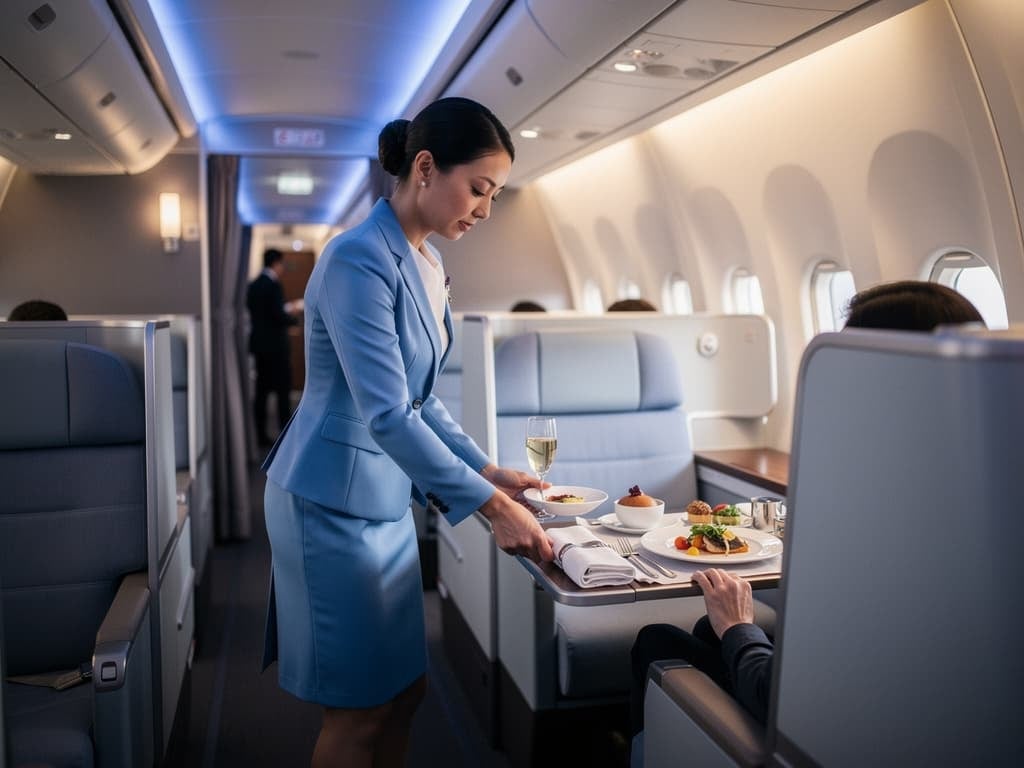
The secret is that sub‑two‑hour flights don’t need a bed. When the airborne time is 1 hour 48 minutes, a deep recline, extendable leg rest, and exceptionally generous legroom do the job. Add a proactive, personalized crew that pours champagne before pushback and presents a wine list alongside a proper meal, and the spec sheet evaporates. For business‑class passengers connecting from North America or Europe to Tokyo through Seoul Incheon, the hard‑product sacrifice on this final leg is more than compensated by the soft product continuity with Korean Air’s long‑haul service. The catch, of course, is getting one of those eight seats in the first place.
The details of the MAX 8 Prestige Class cabin
The 2‑2 layout in rows 7 and 8 is as intimate as business class gets on a narrowbody. Window‑seat passengers can access the aisle regardless of the neighbor’s recline, a small but meaningful design note. Power outlets and USB ports live under the armrest, and the extendable leg rest — often an afterthought on recliners — is present and functional. The absence of in‑seat screens forces reliance on personal devices for wireless streaming entertainment. Korean Air sells Prestige seats from ticket purchase until online check‑in closes, but that long window doesn’t make the eight available spots any easier to secure.
A full‑size blanket and pillow from Frette, Italy’s luxury linen house, awaits on every seat. No amenity kit appears, yet the pre‑departure drink choice — champagne, water, guava juice — and the multi‑course meal with wine pairings echo the airline’s wide‑body international service. The western option on the reviewed flight, poached chicken with Rouille sauce, was accompanied by a fresh salad, bread, and fruit; the Korean option reportedly smelled better but carried a spice warning. For a flight that barely crosses the Sea of Japan, the meal commitment is remarkable.
| Airline / aircraft | Seat type | Seats in cabin | In‑flight entertainment | Soft product highlight |
|---|---|---|---|---|
| Korean Air 737 MAX 8 | Recliner | 8 | Wireless streaming | Frette bedding, full meal service |
| Korean Air A321neo | Lie‑flat | — (not disclosed) | In‑seat screens | Comparable catering, lie‑flat privacy |
| Singapore Airlines 737 MAX 8 | Lie‑flat | — (pending verification) | In‑seat screens | Flat bed, enclosed suite feel |

Flight deals most people never see
Our AI monitors 150+ airlines for pricing anomalies that traditional search engines miss. Air Traveler Club members save $650 per trip per person on average: see how it works.
Each deal saves 40–80% vs. regular fares:

Why soft product trumps hardware on a 1‑hour flight
The Korean Air narrowbody strategy is deliberately bifurcated: the A321neo gets lie‑flat seats and seatback screens, while the 737 MAX 8 acts as a high‑comfort regional workhorse. For premium passengers, that distinction only matters if the flight is long enough to sleep. Seoul–Tokyo clocks in under two hours — too short for meaningful rest, just right for a restaurant‑grade meal and attentive service. The bedding, sourced from the same Frette stockpile that dresses the airline’s long‑haul Prestige Suite, is a luxury that competing recliner cabins rarely match.
As we previously reported, Korean Air’s consistent 5‑star Skytrax rating — detailed in our coverage of the January 2026 audit — is built on exactly this crew‑service consistency and catering strength. Air Traveler Club’s premium cabin booking playbook examines how to weigh soft‑product excellence against hard‑product specs when points charts don’t tell the whole story. On this route, the soft product wins.
Seat strategy for an 8‑seat premium cabin
Securing one of the few Prestige Class seats on the MAX 8 requires deliberate planning. The product isn’t going to suit every traveler, but for those who value service over hardware, a few tactics improve the odds.
- Book as early as Korean Air’s schedule allows. With only eight seats, award inventory and paid upgrade space evaporate quickly. Same‑day gate upgrades are vanishingly unlikely.
- Don’t dismiss the MAX 8 if you’re connecting from a long‑haul Korean Air flight. The crew‑service continuity and familiar Frette bedding make the transition seamless, even without a flat bed.
- Check the aircraft type during booking. Korean Air labels the aircraft as “737‑8” — not “MAX 8” — so look for that designation. If lie‑flat is a must, target the A321neo flights or partner‑operated alternatives.
- SkyTeam elite members should use priority seat selection immediately after ticketing. Even paid Prestige reservations risk being assigned rear‑cabin seats if the business cabin sells out.
Watch for any fleet reassignment announcements. If Korean Air shifts more premium Japan flying to the A321neo, the 737 MAX 8 will firmly settle into a regional comfort role — and the window to sample this uniquely service‑driven cabin could narrow.
FAQ
Does Korean Air’s 737 MAX 8 business class ever have lie‑flat seats?
No. The MAX 8 is equipped exclusively with recliner‑type seats. For lie‑flat seats on a Korean Air narrowbody, choose
Read more