Summary
Korean Air has finalized a binding order for 103 Boeing aircraft valued at $44.6 billion, locking in the fleet transformation that will retire its remaining 747 and A380 flagships. The September 16, 2026 agreement covers 20 777-9s, 25 787-10s, 50 737-10s, and 8 777-8F freighters, with Boeing confirming it as the largest widebody commitment ever from an Asian airline.
Deliveries span through 2039, meaning premium cabin renewal arrives gradually rather than immediately. The A380s serving Seoul–Los Angeles will continue flying into the 2030s, pushed back from the previous 2026 retirement target.
The scale of this order is difficult to overstate. Korean Air just committed to a fleet expansion that will grow its widebody count by 46% while nearly doubling the narrowbody operation — a transformation with no parallel in the carrier’s 55-year history.
The binding agreement, finalized in Seoul on September 16, 2026, converts the August 2025 memorandum of understanding into contractual reality. It also carries geopolitical weight: the deal emerged from bilateral trade negotiations between Washington and Seoul, with the Boeing commitment serving as a cornerstone of economic cooperation between the two governments.
For premium passengers, the practical implications are more nuanced than the headline numbers suggest. The Boeing 777-9 and Boeing 787-10 deliveries won’t begin until certification completes — expected in early 2027 for both the 777-9 and the 737 MAX 10. That timeline means the current Airbus A380 experience on routes like Seoul–Los Angeles remains in place for years.
Korean Air Chairman and CEO Walter Cho framed the order as central to fleet modernization, citing fuel-efficiency gains and passenger experience improvements. The carrier now operates 5 A380s and 15 passenger 747s — aircraft that will gradually disappear as the new Boeings arrive.
The details
The order breaks down into 95 passenger aircraft and 8 freighters. The 20 additional 777-9s bring Korean Air’s total order book for the type to 40 airframes, positioning the carrier as one of the largest customers for Boeing’s delayed flagship. The 25 Boeing 787-10s target high-demand medium-haul Asia routes where the larger 777X would be overkill, while the 50 737 MAX 10s supplement an existing fleet of 23 737-family aircraft spanning the 737-800, 737-900, 737-900ER, and 737 MAX 8 variants.
The cargo component carries its own strategic weight. Korean Air currently operates 12 Boeing 777F freighters averaging 11.4 years old, plus a handful of 747-400F and 747-8F aircraft. The new 777-8F offers roughly 11 tonnes more structural payload than the 777F at the same 5,000 nautical mile range, with lower operating costs per tonne. The freighters will support integration of Korean Air and Asiana cargo networks — a critical piece of the merger puzzle.
Notably, Korean Air also holds orders for 7 Airbus A350F freighters, which would introduce an Airbus freighter type to its currently all-Boeing cargo operation. The full order details confirm Boeing’s largest Asian widebody commitment, with separate GE Aerospace and CFM International agreements worth $8.6 billion covering spare engines and 15 years of maintenance support.
| Aircraft type | Quantity | Primary role | Certification status |
|---|---|---|---|
| Boeing 777-9 | 20 | Long-haul flagship replacement for 747-8 and A380 | Expected early 2027 |
| Boeing 787-10 | 25 | High-demand medium-haul Asia routes | Certified, in service globally |
| Boeing 737 MAX 10 | 50 | Narrowbody expansion and replacement | Expected early 2027 |
| Boeing 777-8F | 8 | Cargo network integration and freighter renewal | In development |

Flight deals most people never see
Our AI monitors 150+ airlines for pricing anomalies that traditional search engines miss. Air Traveler Club members save $650 per trip per person on average: see how it works.
Each deal saves 40–80% vs. regular fares:

The value-add
Korean Air’s deal is a fleet strategy reset disguised as a purchase announcement. The airline is buying time as much as aircraft: it can keep premium transpacific capacity stable while waiting for certification and deliveries, then use the 777-9 and 787-10 to modernize cabins and lower unit costs. The big watch item is how fast the carrier retires A380s once replacements actually land.
Air Traveler Club’s analysis of Korean Air’s A380 strategy on regional routes shows the carrier has already extended superjumbo operations beyond original retirement dates. That pattern — keeping quad-jets flying longer than planned — now extends to long-haul as well. The 2021 plan called for all 747s to exit by 2031, but A380 retirements originally targeted for 2026 have already slipped to the 2030s.
What makes this order different from typical fleet announcements is scale. 103 aircraft is not a refresh — it’s a re-founding. Korean Air is positioning itself to compete with Asia-Pacific premium carriers on cabin consistency, cargo integration, and route economics simultaneously.
How to plan around the fleet transition
For travelers booking transpacific premium cabins in the next two to three years, the practical implications of this order are limited but not zero. The aircraft you fly today will remain in service through at least 2027 for most routes.
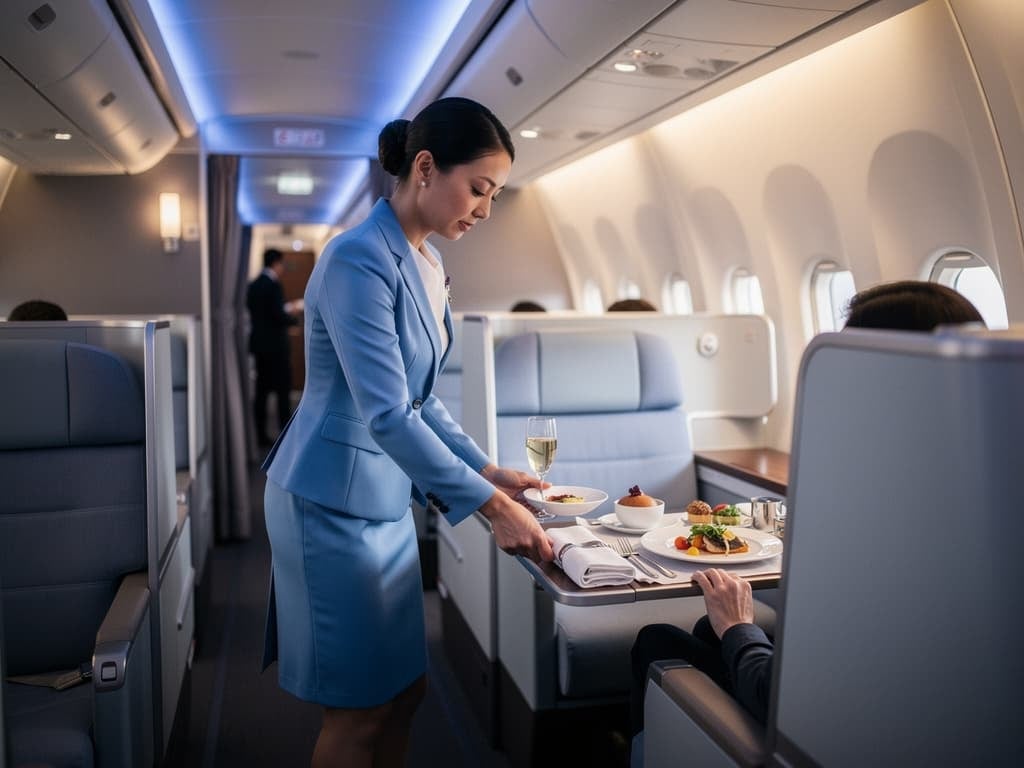
- Book the A380 on Seoul–Los Angeles while you can. The superjumbo’s 94-seat business cabin and 12 enclosed first class suites remain available on this route into the 2030s. Once retirements begin, that capacity disappears permanently.
- Watch for delivery announcements starting in 2027. When Korean Air names first delivery years for the 777-9 and 787-10, that’s your signal for which routes will see cabin modernization first.
- Don’t expect immediate seat improvements. Certification delays have already pushed timelines back once. The 777-9’s entry into service is now targeted for early 2027, but Korean Air’s first deliveries could lag that milestone.
- Monitor Seoul–Los Angeles equipment changes. This route is most likely to show the fleet transition first, given its status as the A380’s flagship premium operation.
FAQ
When will Korean Air’s new Boeing aircraft enter service?
The Boeing 777-9 and 737 MAX 10 are both expected to receive certification in early 2027. Korean Air’s first deliveries will follow certification, with the full 103-aircraft order spanning through 2039.
Will Korean Air retire its A380s soon?
No. Korean Air operates 5 A380s and Asiana operates 6 more, with rapid retirements now expected to begin in the 2030s — pushed back from the previous 2026 target. The A380 will continue serving Seoul–Los Angeles for years.
What happens to Korean Air’s Boeing 747 fleet?
Korean Air operates 4 747-400s averaging 21 years old and 11 747-8s averaging 11.7 years old. A 2021 plan calls for all 747s to be retired by 2031, with 777-9 deliveries serving as the replacement capacity.
Does this order affect cargo operations?
Yes. The 8 Boeing 777-8F freighters will add roughly 11 tonnes more structural payload than the current 777F at the same 5,000 nautical mile range. Korean Air also has 7 Airbus A350F freighters on order, which would introduce an Airbus freighter type to its all-Boeing cargo fleet.
Read more