Summary
An American Airlines Boeing 787-9 flying a New York JFK–Rome red-eye on July 23 was forced to use scraps of paper to block a broken electrochromic window shade after it failed in the transparent state, letting bright morning sun flood the Premium Economy cabin. The eight-year-old Dreamliner’s advanced dimming system defaulted to full clarity when the button had no effect, and the crew’s improvised paper barrier left light still piercing through.
The incident echoes a 2025 British Airways 787 failure where all shades on one side malfunctioned, but on this flight only a single window was affected — still, on an overnight transatlantic sector where sleep is the product, any light intrusion erodes the premium cabin promise.
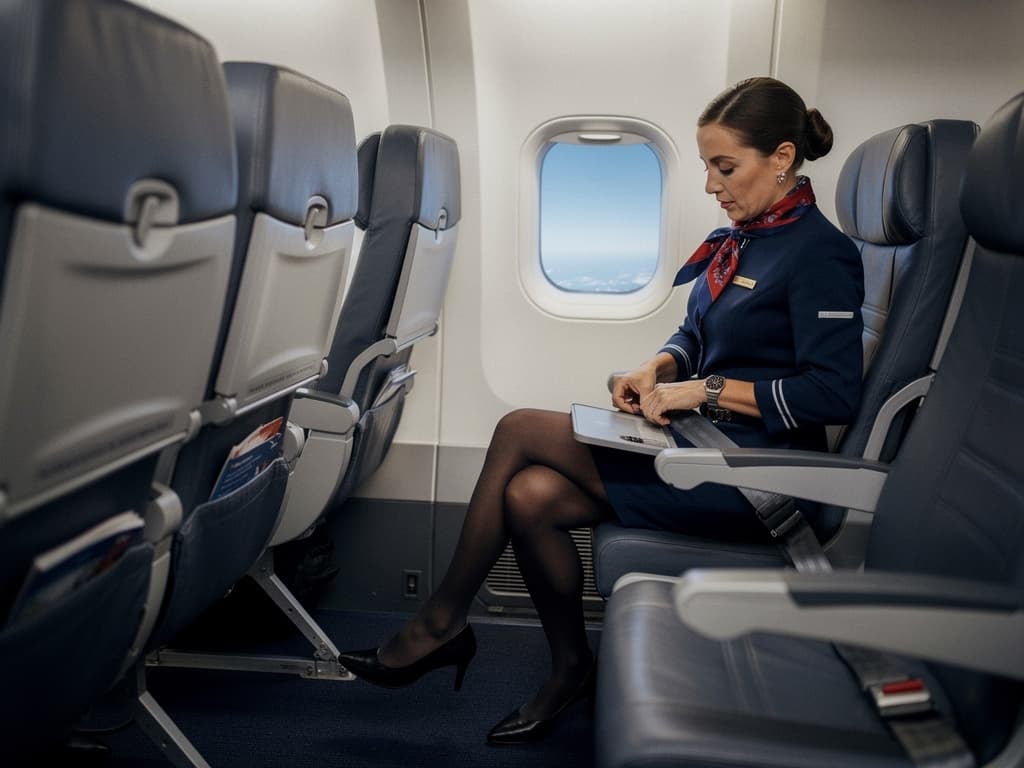
Overnight premium transatlantic travel is supposed to deliver a restful cocoon. But at about 5 a.m. local time over the North Atlantic, passengers in Premium Economy on American Airlines Flight 118 woke to sunlight flooding through a window that would not dim — an eight-year-old Boeing 787-9’s electrochromic shade system had failed. Instead of the advertised push-button darkness, the gel layer remained stubbornly transparent, and flight attendants resorted to thin sheets of paper that barely covered the pane.
The aircraft’s departure from JFK at 8:30 p.m. meant the defect was hidden during the night. By sunrise, however, the 7.5-hour flight’s sleep window was shattered. One passenger, posting on a travel forum, described the attempt as “scraps of paper” that didn’t block the light and promised a formal complaint, criticizing the absence of a manual shade backup. The incident, while minor on the safety spectrum, punctures the idea that American Airlines’ 787 product delivers consistent cabin comfort on long-haul red-eyes.
American Airlines operates a fleet of 787-9s on transatlantic routes, including the JFK–Rome service. The aircraft involved was eight years old, and while that is mid-life for a widebody, interior wear — from broken tray tables to non-reclining seats — has been a recurring talking point in frequent-flyer forums. The broken window adds a new, visually absurd chapter to that narrative.
The details
The Boeing 787’s electrochromic windows are controlled by an electric current through a gel sandwiched in the glass; when the system loses power or malfunctions, the window defaults to a clear state. On this flight, the button in Premium Economy had no effect, and the crew’s ad-hoc paper solution left gaps around the edges. Boeing provides airlines with peel-and-stick rubber shades that can be applied in seconds — but they were not deployed on this flight, and it remains unclear why they weren’t available.
A nearly identical scenario unfolded in April 2025, when a British Airways 787 flying Tokyo–London suffered a failure of every electrochromic shade on one side of the cabin. Ground staff covered each window with paper, and passengers endured a 14-hour flight entirely in daylight. That episode demonstrated the vulnerability of a system that, for all its innovation, has no simple mechanical fallback.
The Federal Aviation Administration has not issued any airworthiness directives related to the window dimming system, and American Airlines has not publicly commented on the July 23 incident. Nevertheless, the event highlights a design trade-off: a high-tech amenity becomes a liability when it fails on a dark-cabin-required overnight route. For more details, read the full account of the incident.
| Date | Aircraft/Airline | Incident type | Outcome | Regulatory response |
|---|---|---|---|---|
| July 23, 2026 | 787-9 / American Airlines | Single window shade stuck clear in Premium Economy | Crew applied paper; passenger disturbed | None reported |
| April 2025 | 787 / British Airways | All shades on one side failed fully transparent | Ground staff papered every window; 14-hour daylight flight | None reported |
| Various dates (unverified) | Multiple 787 operators | Anecdotal reports of individual shade failures | Manual shade applications, passenger complaints | No service bulletins issued; data pending verification |

Flight deals most people never see
Our AI monitors 150+ airlines for pricing anomalies that traditional search engines miss. Air Traveler Club members save $650 per trip per person on average: see how it works.
Each deal saves 40–80% vs. regular fares:

The value-add
What makes the electrochromic window debate so persistent is the gap between its premium promise and its real-world failure mode. On a daytime short-haul flight, a stuck-clear shade is an annoyance; on a transatlantic red-eye where business-class and premium-economy fares charge a premium for sleep, it fundamentally undercuts the product. The AA incident also exposes a logistical breakdown: the rubber shades exist on paper but weren’t available when needed, raising questions about whether cabin crews are consistently equipped or trained to deploy them.
The 787’s windows were revolutionary in 2009, but as the fleet ages, the gel-layer reliability will face more scrutiny — and so will the airlines that choose not to stock the simple peel-off countermeasure. Without regulatory pressure, passengers are left to fend for themselves with eye masks and seat-selection strategies.
What to do if you’re on an overnight Dreamliner
The window failure on AA’s JFK–Rome flight is a single-point incident, but it exemplifies a vulnerability on all 787 long-haul red-eyes. For premium-cabin and premium-economy passengers whose booking revolves around sleep, a few steps can mitigate the risk.
- Pack an eye mask regardless of cabin class. Even in lie-flat business, a broken shade can ruin rest; a simple sleep mask is the only guaranteed blackout.
- Verify your aircraft type at booking and check-in. American’s 787-9s are identified by flight number and schedule; use the airline’s official app to confirm the specific tail if possible, and opt for a seat away from windows if you’re especially sensitive.
- If a shade fails during your flight, ask the crew for the Boeing-supplied rubber shade. The peel-off solution exists, and knowing to request it may prompt a search. If unavailable, document the issue with photos and note the crew’s response for post-flight compensation claims.
- File a complaint with American’s customer relations citing the specific flight and seat; it may yield a goodwill gesture or miles, and it builds the paper trail that regulators track.
- Monitor for an American Airlines maintenance update or fleet-wide bulletin. If the carrier publicly acknowledges the gap and commits to restocking shades, it signals they’re treating the problem as systemic rather than isolated.
FAQ
Why didn’t flight attendants use the rubber shades Boeing supplies?
It’s unclear. Boeing’s peel-and-stick rubber covers are designed for exactly this failure, but American hasn’t explained whether they were stocked on board or if crew were trained to locate them. The absence suggests a possible procedural gap rather than a material shortage.
Will American Airlines compensate passengers affected by this window failure?
Compensation is not automatic, but filing a complaint with specific details — flight number, date, seat, and impact on sleep — may yield a goodwill gesture such as miles or a travel voucher. American’s customer relations team reviews these on a case-by-case basis.
Could this lead to new rules requiring manual backup shades on 787s?
Currently, no regulator has proposed such a requirement. The FAA and EASA rely on service difficulty reports to trigger airworthiness directives. If a pattern of failures emerges with formal findings, a manual backup mandate could be considered — but for now, it’s up to airlines to voluntarily equip cabins with the rubber covers.
Read more