Summary
American Airlines is implementing a significant operational change to protect flight attendants from turbulence injuries: cabin preparation will now begin at 18,000 feet, and crew must be strapped into their jumpseats no later than 10,000 feet on descent — a threshold that previously marked the start of cabin preparation, not its end. The Association of Professional Flight Attendants confirmed the policy shift in an internal memo, citing NTSB research showing that 36% of turbulence-related accidents occur during descent, with flight attendants accounting for nearly 80% of serious injuries.
The change mirrors a procedure Southwest Airlines adopted nearly two years ago, but American’s version applies uniform service standards even on its shortest domestic routes. Flights in the 250–300 mile range face the tightest service compression.
Flight attendants on American Airlines are about to sit down sooner — and that shift carries real consequences for what happens in the cabin during descent. The airline is moving its jumpseat-securement deadline from the traditional 10,000-foot cabin-preparation trigger to a hard requirement: crew seated by 10,000 feet, with cabin preparation beginning at 18,000 feet. That doubles the altitude buffer and compresses the entire pre-landing service window.
The Association of Professional Flight Attendants spelled out the rationale in an internal memo obtained by industry observers. “Turbulence remains one of the leading causes of occupational injuries for flight attendants,” the APFA wrote. “Unlike passengers, flight attendants are frequently standing, walking, conducting service, or completing compliance duties when turbulence occurs.” The revised procedures, the memo states, are designed to reduce that exposure window and sharpen communication between the flight deck and cabin crew.
The policy is broadly aligned with what Southwest Airlines implemented roughly two years ago. American’s version, however, applies the same service expectations across all domestic flights — including short sectors where the service window was already thin.
The stakes are not abstract. NTSB data from 2009 to 2018 shows that more than 65% of descent-phase turbulence accidents occurred below 20,000 feet. Flight attendants absorbed nearly 80% of serious injuries in those events, with 40% of those injuries happening during compliance walks through the cabin. The galley at the rear of the aircraft was the most common injury site.
What the policy change actually requires
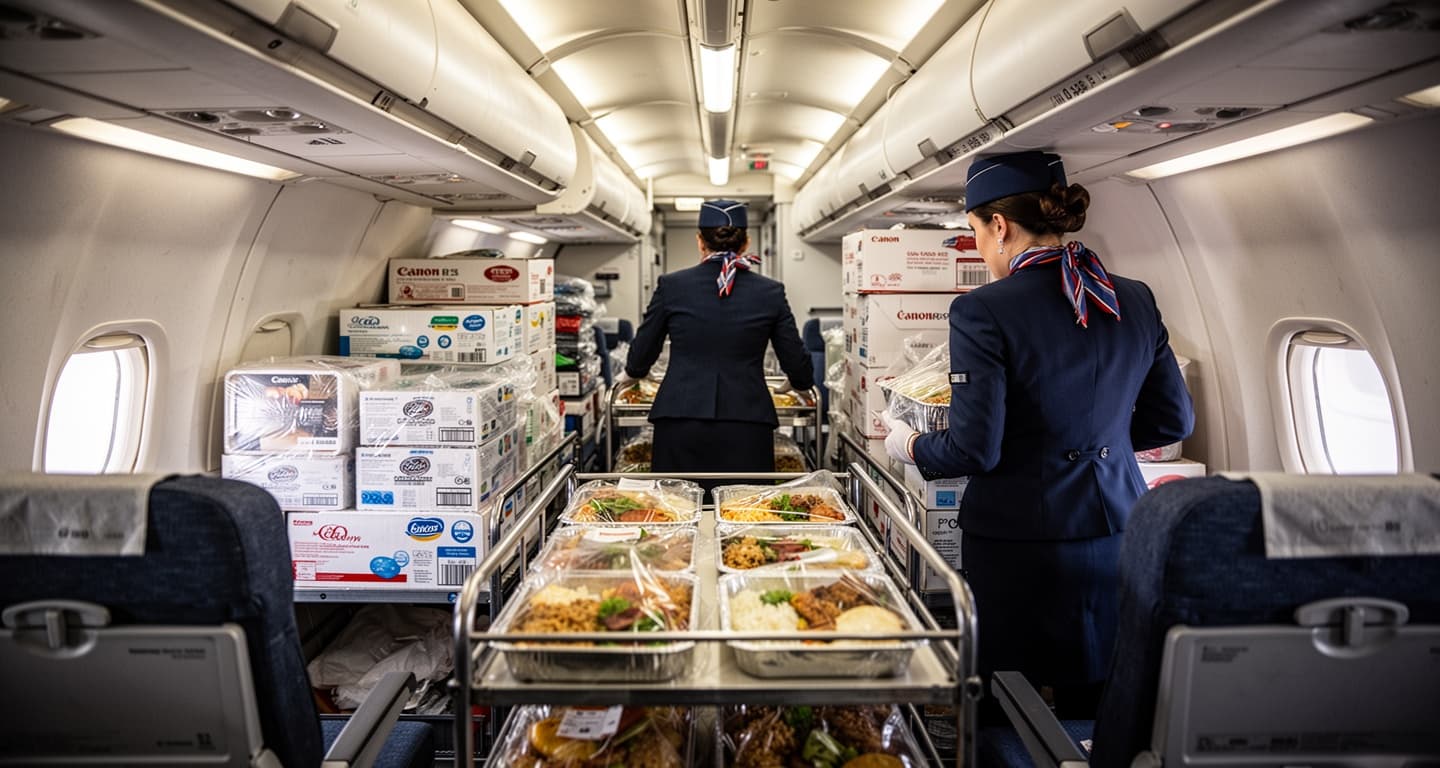
The mechanics of the new procedure are straightforward but operationally significant. Where flight attendants previously began cabin preparation — collecting cups, stowing tray tables, conducting compliance checks — at around 10,000 feet, that work now starts at 18,000 feet. Pilots will sound chimes at 10,000 feet as the hard jumpseat deadline. Crew must already be seated.
On longer domestic routes, the additional 8,000 feet of preparation altitude is manageable. On short-haul sectors between 250 and 300 miles — think Phoenix to Las Vegas or Philadelphia to Boston — the math gets tight. American has not announced plans to alter its cabin service menu on these routes, but the time available to complete that service before crew must secure will be meaningfully shorter. On some flights, not every passenger will receive service before the cutoff.
Passengers will also notice the change directly: tray tables, laptops, and all glassware must be stowed earlier than before, and seatbelts must be fastened for a longer portion of the descent. The chime at 10,000 feet has historically been a signal that landing is approaching — going forward, it marks the moment crew are already seated, not the moment they begin preparing.
The APFA memo frames the change as a safety imperative, not a service reduction. “The Inflight Manual reinforces that flight attendants should not jeopardize their personal safety during turbulent conditions,” it states, “and emphasizes that communication between the flight deck and cabin crew is essential to avoiding turbulence-related injuries.”
| Metric | Finding | Source | Implication |
|---|---|---|---|
| Descent-phase accident share | 36% of all turbulence accidents | NTSB (2009–2018) | Descent is the highest-risk flight phase for crew |
| Altitude of descent accidents | 65%+ occurred below 20,000 ft | NTSB (2009–2018) | Justifies earlier 18,000 ft preparation trigger |
| Flight attendant injury share | ~80% of serious turbulence injuries | NTSB (2009–2018) | Crew are disproportionately at risk vs. seated passengers |
| Compliance-walk injury share | 40% of FA injuries during cabin walks | NTSB (2009–2018) | Moving through cabin is the highest-risk crew activity |
| JSAT recommended altitude | ~20,000 ft for jumpseat securement | Joint Safety Analysis Team | American’s 10,000 ft deadline remains below JSAT guidance |
Flight deals most people never see
Our AI monitors 150+ airlines for pricing anomalies that traditional search engines miss. Air Traveler Club members save $650 per trip per person on average: see how it works.
Each deal saves 40–80% vs. regular fares:

Why this matters beyond the safety headline
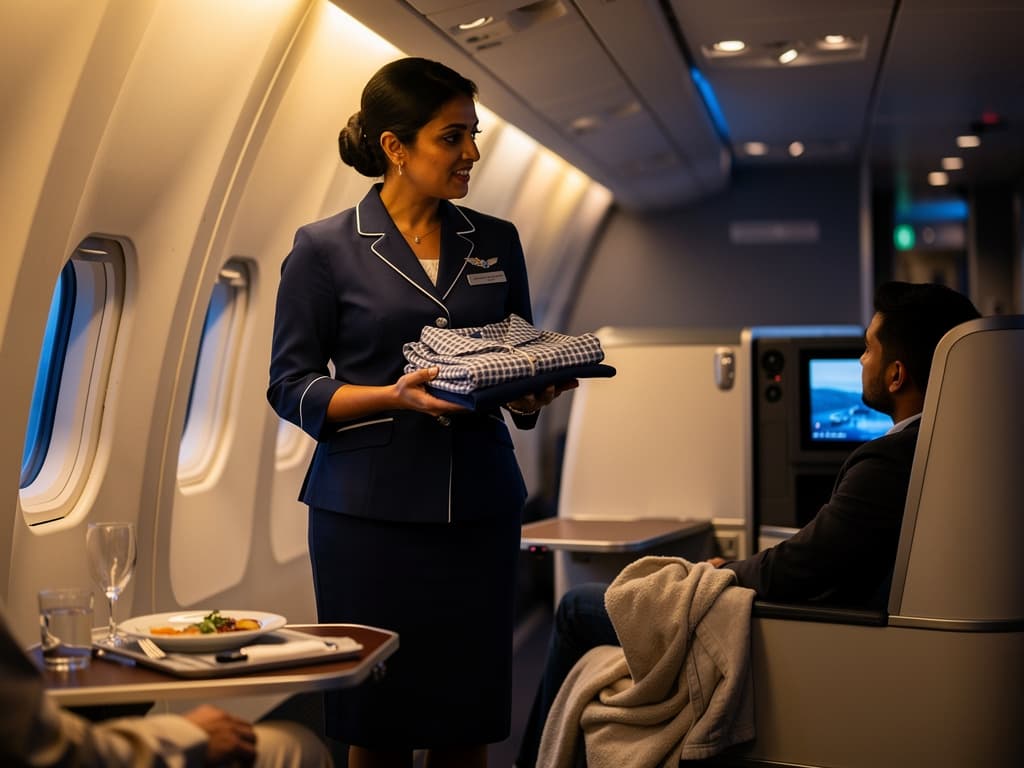
The operational layer of this change is where it intersects with the passenger experience — particularly on domestic first class, where the pre-landing routine is already compressed on short sectors. American’s domestic first class is not a long-haul premium product; it is a seat upgrade with a meal and a drink on routes where the entire service arc can run under 45 minutes. Shaving that window further, even by a few minutes, means some passengers will have trays collected mid-meal or beverages removed before they finish.
American has not announced any adjustment to its service standards, which means flight attendants will be expected to deliver the same cabin service in less time. That tension — same product, shorter window — is where the friction will surface on routes like Phoenix–Las Vegas or Philadelphia–Boston.
Air Traveler Club’s coverage of the Alaska Airlines turbulence negligence lawsuit illustrates how quickly these incidents move from operational disruption to legal liability — context that explains why carriers are moving proactively on crew-securement timelines rather than waiting for regulatory mandates.
The broader competitive picture is relatively contained. Southwest has already normalized earlier descent preparation, and other major U.S. carriers are likely watching American’s rollout closely. If turbulence injuries continue generating NTSB reports and litigation, the industry standard will almost certainly migrate toward the JSAT’s 20,000-foot recommendation — not away from it.
What the new descent timeline means for your next American flight
This is an awareness story with a practical edge: passengers cannot opt out of crew safety procedures, but understanding the new timeline helps set realistic expectations — especially on short domestic sectors where service timing was already tight.
Watch for an official American Airlines or APFA bulletin confirming the effective date. Until that announcement, the policy is in transition — reported but not yet confirmed as live across the fleet. If a second major U.S. carrier announces a similar earlier jumpseat deadline in the coming months, that signals the change is becoming a network-wide operating standard rather than an American-specific response to recent incidents.
The JSAT’s 20,000-foot recommendation remains the benchmark to monitor. American’s new 10,000-foot requirement is a significant improvement over previous practice, but it still falls 10,000 feet short of what the industry’s own safety analysis team has recommended. Whether the FAA formalizes any of this into regulatory guidance — rather than leaving it to airline discretion — is the longer-term question worth tracking.
FAQ
Will American Airlines flight attendants still serve drinks and meals in first class under the new policy?
American has not announced changes to its domestic first class service menu. The expectation is that flight attendants will complete the same service in a shorter window — beginning cabin preparation at 18,000 feet rather than 10,000 feet. On very short sectors (250–300 miles), some passengers may have service cut off before completion if crew run out of time before the 10,000-foot jumpseat deadline.
How does American’s new policy compare to what other airlines require?
Southwest Airlines adopted earlier descent-preparation procedures roughly two years ago, and American’s new policy is broadly similar. The Joint Safety Analysis Team for Commercial Aviation has recommended jumpseat securement at approximately 20,000 feet — American’s new 10,000-foot hard deadline is a significant improvement over previous practice but still falls short of that industry-body recommendation. No other major U.S. legacy carrier has publicly announced a matching policy change as of May 2026.
When does the new American Airlines descent procedure take effect?
The airline has indicated the changes are expected to be implemented soon, but a specific effective date has not been publicly confirmed. Travelers should monitor the American Airlines app and official communications for any operational advisory confirming the rollout date.
Will passengers be required to do anything differently under the new procedure?
Yes. Passengers will be required to have tray tables stowed, laptops put away, and all glassware removed earlier in the descent than under current procedures. Seatbelts must be fastened for a longer portion of the approach to landing. Pilots will sound cabin chimes at 10,000 feet — the point at which crew must already be seated, not the point at which preparation begins.
Read more